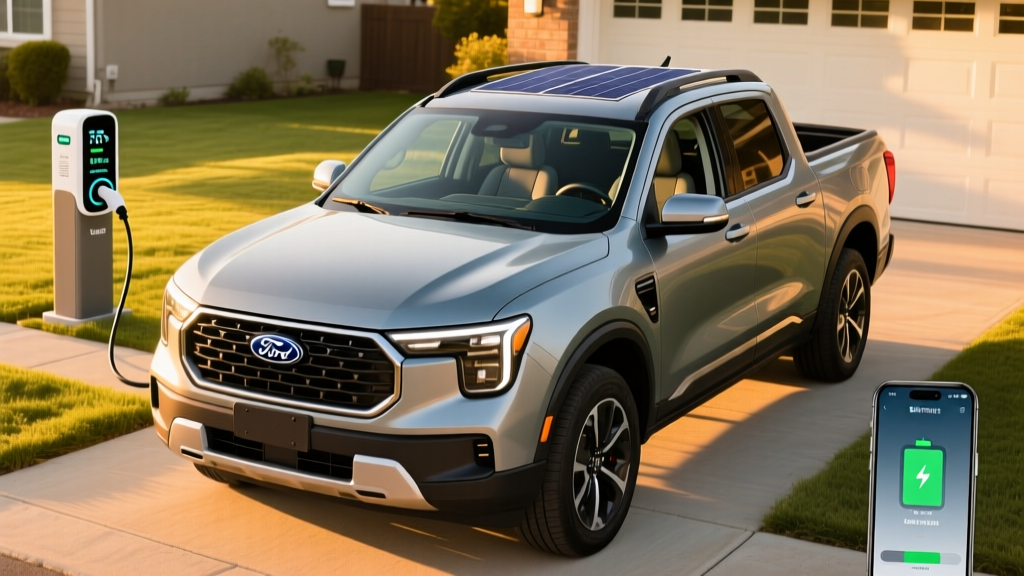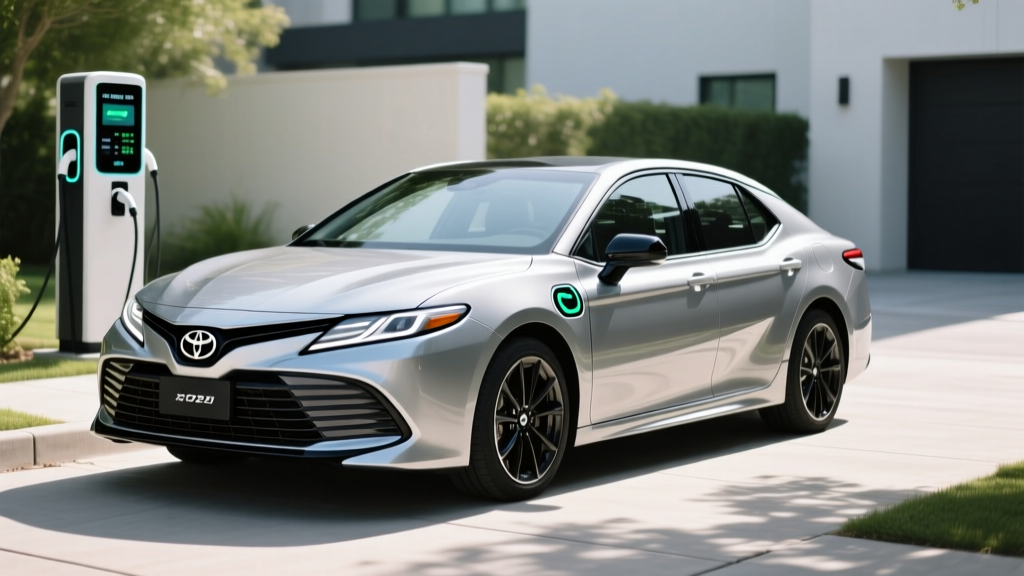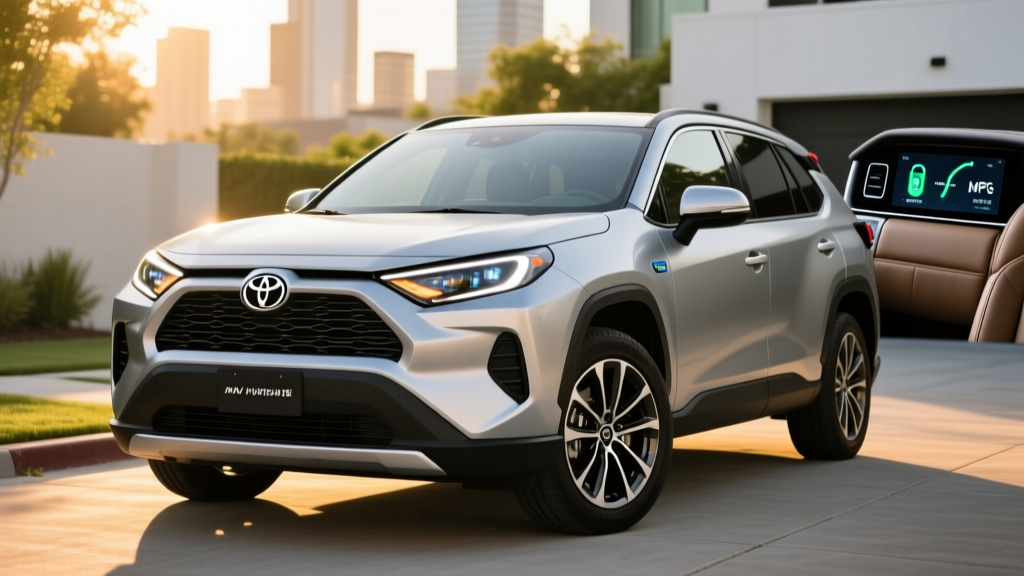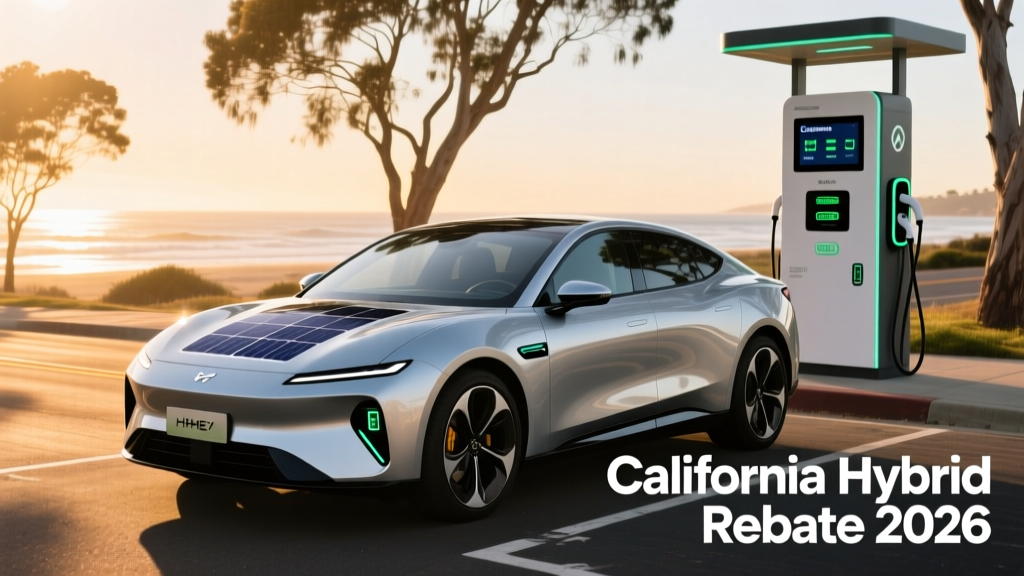
California's Hybrid Incentive Landscape Has Changed — Here's What Still Works
If you've searched for a "California hybrid rebate" recently, you may have noticed something frustrating: the state's flagship Clean Vehicle Rebate Project (CVRP), which once offered up to $7,000 for eligible electrified vehicles, ran out of funding and closed to new applicants. As of 2026, California does not offer a universal point-of-sale rebate for conventional hybrids (HEVs) or plug-in hybrids (PHEVs) the way it once did. But that doesn't mean incentives have disappeared entirely — they've just shifted.
Today's California hybrid buyer needs to navigate a patchwork of federal tax credits (for PHEVs that qualify under IRS §30D), utility company rebates, local air-district programs, and the state's Clean Air Vehicle (CAV) decal program for HOV lane access. Conventional hybrids and plug-in hybrids are treated very differently under each of these programs, and confusing the two is the single most common mistake buyers make.
This guide breaks down exactly what's available, which vehicles qualify, and how to maximize your savings whether you're eyeing a Toyota Prius HEV or a RAV4 Prime PHEV.
HEV vs PHEV: Why the Distinction Determines Your Rebate Eligibility
Before we map incentives, you need to know which type of hybrid you're considering — because California and federal programs draw a hard line between them.
| Feature | Conventional Hybrid (HEV) | Plug-In Hybrid (PHEV) |
|---|---|---|
| Plug-in charging required? | No — regenerative braking & engine charge the battery | Yes — plug in to access electric-only range |
| Battery size | 0.6–1.6 kWh (small buffer) | 13–22 kWh (usable) |
| Electric-only driving | Minimal (low-speed assist only) | 20–45 miles typical |
| Federal §30D tax credit | Not eligible | Up to $7,500 (if vehicle & buyer qualify) |
| CAV HOV decal (CA) | Not eligible | Eligible (income-dependent, limited availability) |
| Example models | Toyota Prius, Honda CR-V Hybrid | Toyota RAV4 Prime, Chrysler Pacifica PHEV |
The takeaway: if your goal is to capture the largest possible financial incentive, a PHEV is the only hybrid type that can still access federal tax credits and certain California perks. A conventional hybrid delivers excellent fuel economy with zero lifestyle change, but it won't unlock rebate dollars.
Federal Tax Credits for PHEVs: IRS §30D Rules for 2026
The federal IRS §30D Clean Vehicle Credit remains the most significant incentive available to California PHEV buyers in 2026. However, eligibility is far from automatic. Here's the current framework:
- Credit amount: Up to $7,500 ($3,750 for meeting critical-minerals requirements + $3,750 for battery-component sourcing)
- Buyer income caps: Modified AGI ≤ $150,000 (single), ≤ $225,000 (head of household), ≤ $300,000 (joint)
- MSRP caps: ≤ $80,000 for SUVs, pickups, vans; ≤ $55,000 for sedans and other body styles
- Battery sourcing: Critical minerals and battery components must meet phased-in percentages from U.S. or free-trade-agreement partners
- Point-of-sale transfer: Eligible buyers can transfer the credit to the dealer for an immediate price reduction rather than waiting to claim it on their tax return
- PHEV minimum battery: At least 7 kWh of battery capacity
Not every PHEV on the market qualifies for the full $7,500 — and some qualify for only $3,750 or nothing at all depending on where their battery minerals and components are sourced. The IRS maintains a list of eligible vehicles at fueleconomy.gov that updates periodically. Always verify your specific model and trim before signing a purchase agreement.
California-Specific Programs: What's Still Available for Hybrid Buyers
With CVRP closed, California hybrid and PHEV buyers in 2026 should investigate these remaining programs:
Clean Air Vehicle (CAV) Decal Program
Qualifying PHEVs (those meeting California's Enhanced AT-PZEV or TZEV emissions standards) can receive a CAV decal granting single-occupant access to carpool lanes. This is not a cash rebate, but for commuters on the 405 or 101, the time savings can be worth thousands of dollars annually. Conventional HEVs no longer qualify. Check the CARB CAV program page for the current eligibility list and decal expiration timeline.
Utility Company Rebates
Several California investor-owned utilities offer rebates for PHEV purchases or home charging equipment:
- PG&E: Periodic EV/PHEV rebate programs (amounts and availability vary by year — check pge.com for current offerings)
- SCE (Southern California Edison): Charge Ready program may offer rebates for home charging infrastructure
- SMUD (Sacramento): Residential EV/PHEV charging rebates available periodically
- LADWP: Has offered rebates for Level 2 charger installation
These programs are utility-specific, often have limited funding windows, and typically apply to charging infrastructure rather than the vehicle itself. Check your utility's website before purchasing.
Local Air District Incentives
Certain California air-quality management districts — particularly in the San Joaquin Valley and South Coast — offer additional incentives for residents who purchase or lease qualifying low-emission vehicles, including some PHEVs. These are often income-targeted and can stack with federal credits. Contact your local air district directly.
Top PHEV Models for California Buyers: Specs, MPG, and Credit Eligibility
Here's how the most popular PHEVs stack up for a California buyer evaluating incentives, efficiency, and real-world usability:
| Model (2026 MY est.) | EPA Electric Range | EPA Combined MPG (gas) | Battery (kWh usable) | Combined HP | DC Fast Charge? | Base MSRP | §30D Credit (est.) |
|---|---|---|---|---|---|---|---|
| Toyota RAV4 Prime | 42 mi | 38 MPG | 14.9 kWh | 302 hp | No | ~$44,500 | $3,750* |
| Chrysler Pacifica PHEV | 32 mi | 30 MPG | 16.0 kWh | 260 hp | No | ~$51,000 | $7,500* |
| Toyota Prius Prime | 44 mi (SE) | 48 MPG | 13.6 kWh | 220 hp | No | ~$34,000 | $3,750* |
| Jeep Wrangler 4xe | 22 mi | 20 MPG | 17.3 kWh | 375 hp | No | ~$51,000 | $3,750* |
| Hyundai Tucson PHEV | 33 mi | 35 MPG | 13.8 kWh | 261 hp | No | ~$39,500 | $0–$3,750* |
* §30D credit estimates based on latest IRS sourcing data. Confirm current eligibility at fueleconomy.gov before purchase. Credit amounts and vehicle eligibility change as sourcing requirements tighten.
Battery Warranty Standard: Virtually every PHEV sold in the U.S. carries a hybrid/EV battery warranty of at least 8 years / 100,000 miles (California-emissions states often extend to 10 years / 150,000 miles). This covers capacity loss below a defined threshold (typically 60–70% of original capacity). Out-of-pocket replacement costs for PHEV batteries currently range from roughly $4,000 to $8,000 depending on the model, though replacements within the warranty period are covered.
Top Conventional Hybrids: No Rebate, But Outstanding Efficiency
If you don't need electric-only range and simply want maximum MPG without plugging in, conventional hybrids remain compelling — even without a California hybrid rebate. Here's how the leaders perform:
| Model (2026 MY) | EPA City | EPA Highway | EPA Combined | Combined HP | Base MSRP |
|---|---|---|---|---|---|
| Toyota Prius (LE) | 57 MPG | 56 MPG | 57 MPG | 194 hp | ~$28,500 |
| Honda CR-V Hybrid (Sport) | 43 MPG | 36 MPG | 40 MPG | 204 hp | ~$36,000 |
| Toyota Camry Hybrid (LE) | 53 MPG | 50 MPG | 52 MPG | 225 hp | ~$30,000 |
| Hyundai Elantra Hybrid (Blue) | 54 MPG | 58 MPG | 56 MPG | 139 hp | ~$27,500 |
| Toyota RAV4 Hybrid (LE) | 41 MPG | 38 MPG | 39 MPG | 219 hp | ~$33,000 |
Real-world MPG note: Conventional hybrids often exceed their EPA city estimates because regenerative braking captures more energy in stop-and-go traffic. Highway MPG may run 2–5 MPG below the sticker at sustained 75+ mph speeds. In mixed California driving (city errands, freeway commutes), expect combined figures within ±3 MPG of the EPA rating.
Hybrid vs PHEV vs Full EV: Which Powertrain Fits Your Situation?
Choose a conventional hybrid (HEV) if:
- You have no access to home or workplace charging
- You want maximum MPG with zero behavior change
- Your budget is under $35,000 and you don't need a tax credit to justify the purchase
- You drive primarily in city traffic where regen braking maximizes efficiency
Choose a plug-in hybrid (PHEV) if:
- You can install a Level 2 charger at home (240V) and want to drive 25–44 miles on electricity daily
- You take regular road trips where EV range anxiety is a concern
- Your household income is under the §30D cap and you want to capture up to $7,500 in federal credits
- You want HOV lane access via California's CAV decal (subject to availability)
Choose a full battery-electric vehicle (BEV) if:
- You have reliable home Level 2 charging
- Your daily driving is under 250 miles and you can plan around DC fast charging for road trips
- You want zero tailpipe emissions and the lowest per-mile fuel cost (electricity at $0.13–$0.30/kWh vs. gasoline at $4.50–$5.50/gallon in California)
- You want to maximize federal and potential state incentives
PHEV Charging at Home: What California Buyers Need to Know
Most PHEVs come with a small battery (13–22 kWh usable), which means home charging is fast and doesn't require a panel upgrade:
- Level 1 (120V standard outlet): Adds roughly 3–5 miles of range per hour. A full overnight charge (10–12 hours) replenishes most PHEV batteries completely.
- Level 2 (240V home charger): Adds roughly 15–25 miles of range per hour. A full PHEV charge takes 2–4 hours on a 32-amp Level 2 unit.
- DC fast charging: Most PHEVs do not support DC fast charging. The Mitsubishi Outlander PHEV is a rare exception. Plan on Level 1 or Level 2 exclusively.
A basic Level 2 home charger installation in California typically runs $800–$2,000 total (equipment + licensed electrician + permit) if your electrical panel has sufficient capacity. If a panel upgrade from 100A to 200A is needed, add $1,500–$3,000. Always get a quote from a licensed electrician before committing.
PHEV Pros for California Buyers
- Electric-only daily commuting (25–44 mi) at ~$0.04–$0.08/mile electricity cost
- Gas engine eliminates range anxiety on road trips
- Federal §30D credit up to $7,500 (model-dependent)
- Potential HOV lane access via CAV decal
- No need for DC fast charging infrastructure
- 8–10 year / 100,000–150,000 mile battery warranty
PHEV Cons for California Buyers
- No universal California state rebate (CVRP closed)
- Higher purchase price than equivalent HEV
- Most cannot DC fast charge — public charging is impractical
- Two systems to maintain (engine + electric powertrain)
- Electric-only range drops in cold weather and at highway speeds
- §30D credit eligibility varies by model and sourcing rules
Frequently Asked Questions
Is there a California hybrid rebate available in 2026?
California's CVRP rebate program has closed to new applicants due to exhausted funding. There is currently no universal state rebate for purchasing a hybrid or PHEV. However, PHEV buyers may qualify for the federal §30D tax credit (up to $7,500), CAV HOV decals, and utility-specific rebates depending on their provider. Conventional HEVs do not qualify for any of these incentives.
How many MPG does a typical hybrid get in real-world California driving?
Top conventional hybrids like the Toyota Prius (57 MPG combined EPA) and Camry Hybrid (52 MPG combined) deliver results very close to their EPA ratings in mixed driving. City MPG often exceeds the EPA estimate thanks to regenerative braking in stop-and-go traffic. Highway-only driving at 75+ mph may return 2–5 MPG less than the sticker. PHEVs report MPG differently: once the battery is depleted, expect 30–48 MPG combined depending on the model.
How far can a PHEV go on electric-only power?
Current PHEVs offer 22–44 miles of EPA-rated electric-only range. The Toyota Prius Prime leads at 44 miles (SE trim), while the RAV4 Prime delivers 42 miles. Real-world electric range may be 10–20% lower at sustained highway speeds or in cold weather. For most California commuters with a sub-30-mile round trip, a PHEV can handle daily driving entirely on electricity.
Are hybrid batteries reliable, and what does replacement cost?
Hybrid and PHEV batteries from major manufacturers (Toyota, Honda, Hyundai) have proven highly reliable, with many lasting well beyond 150,000 miles. All are covered by a minimum 8-year/100,000-mile warranty (10-year/150,000-mile in California and other CARB states). Out-of-warranty replacement costs range from approximately $2,000–$4,000 for conventional hybrid batteries to $4,000–$8,000 for larger PHEV batteries, depending on the model and whether you use OEM or refurbished units.
Does a conventional hybrid qualify for any tax credit?
No. The federal §30D Clean Vehicle Credit requires a minimum battery capacity of 7 kWh and the ability to charge from an external power source. Conventional hybrids (HEVs) charge their small batteries exclusively through regenerative braking and the gasoline engine, making them ineligible for the federal credit and most state incentive programs.
Can I get HOV lane access with a hybrid in California?
Only qualifying PHEVs and BEVs are eligible for California's Clean Air Vehicle (CAV) decal, which grants single-occupant carpool lane access. Conventional hybrids no longer qualify. CAV decals have limited availability and income requirements may apply. Check the current CARB eligibility list before purchasing if HOV access is a priority.