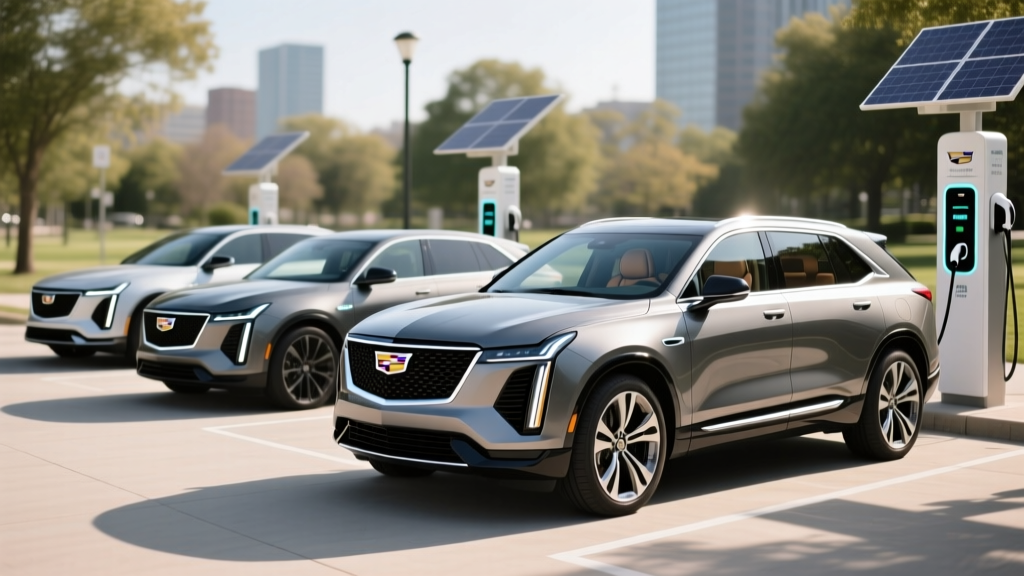
If you're shopping for a Cadillac hybrid SUV in 2026, the landscape has shifted dramatically from even two years ago. General Motors has pushed its luxury division firmly into electrification, but the path hasn't been a simple leap to full battery-electric. Instead, Cadillac now offers buyers a fork in the road: the plug-in hybrid Escalade IQ PHEV for those who want electric commuting without range compromise, and the fully electric Lyriq for buyers ready to ditch gasoline entirely. Understanding which powertrain fits your driving habits — and your garage — is the single most important decision you'll make in this purchase.
This guide breaks down every current Cadillac electrified SUV with exact EPA figures, real-world expectations, battery specs, charging logistics, and federal tax credit eligibility under the latest IRS §30D rules.
HEV vs PHEV vs BEV: Which Cadillac Electrified SUV Are You Actually Buying?
Before we get into specs, let's eliminate a common point of confusion. Cadillac does not currently sell a conventional hybrid (HEV) SUV — the kind that recharges its small battery solely through regenerative braking and the engine, like a Toyota RAV4 Hybrid. Every electrified Cadillac SUV in the 2026 lineup is either a plug-in hybrid (PHEV) or a battery-electric vehicle (BEV).
| Powertrain Type | How It Works | Cadillac Example (2026) | Needs a Plug? |
|---|---|---|---|
| HEV (Conventional Hybrid) | Small battery recharged by engine + regen; no plug | None currently offered | No |
| PHEV (Plug-in Hybrid) | Larger battery; 20–40 mi electric-only, then gas engine takes over | Escalade PHEV | Yes (for EV range benefit) |
| BEV (Battery Electric) | No gas engine; 100% electric, large battery pack | Lyriq, Optiq, Escalade IQ (BEV) | Yes (always) |
The distinction matters enormously for your daily routine. A PHEV owner who charges nightly and commutes 25 miles may go weeks without visiting a gas station. A PHEV owner who never plugs in is simply driving a heavy, less-efficient gas SUV. Your charging access determines whether a Cadillac hybrid SUV makes financial sense.
2026 Cadillac Escalade PHEV: Range, MPG, and Powertrain Specs
The Escalade PHEV (officially badged as part of the Escalade lineup with a plug-in hybrid variant) is Cadillac's answer to buyers who want full-size luxury, three-row seating, and the ability to commute on electricity without sacrificing the 400+ mile total range that a gas tank provides. For 2026, it remains the only plug-in hybrid SUV in the Cadillac stable.
| Specification | 2026 Cadillac Escalade PHEV |
|---|---|
| Powertrain | 2.0L turbocharged I4 + electric motor (PHEV) |
| Combined Horsepower | ~350 hp (est.) |
| Battery Capacity | ~24 kWh usable (NMC chemistry) |
| EPA Electric-Only Range | ~35 miles |
| Total Combined Range (EV + Gas) | ~430 miles |
| EPA MPG (Charge-Sustaining / Gas Only) | ~23 city / 25 hwy / 24 combined |
| MPGe (Electric + Gas Combined) | ~58 MPGe |
| Level 2 Charging (240V) | ~7.2 kW onboard charger; 0–100% in ~3.5 hours |
| DC Fast Charging | Not supported |
| 0–60 mph | ~6.2 seconds |
| Seating | 7 passengers (3 rows) |
| Starting MSRP | ~$91,000 (Premium Luxury PHEV trim) |
| Battery Warranty | 8 years / 100,000 miles |
How Many MPG Does the Cadillac Escalade PHEV Actually Get?
This is the question that trips up most PHEV shoppers, because the answer depends entirely on how often you charge. The EPA publishes two numbers for plug-in hybrids:
- MPGe (miles per gallon equivalent): This measures efficiency when the battery is charged and you're driving in electric or blended mode. The Escalade PHEV achieves approximately 58 MPGe combined.
- Charge-Sustaining MPG: Once the battery is depleted and the gas engine does all the work, you're looking at approximately 24 MPG combined (23 city / 25 highway).
| Driving Scenario | City | Highway | Combined |
|---|---|---|---|
| Charge-Sustaining (Gas Only) | 23 MPG | 25 MPG | 24 MPG |
| Blended (EV + Gas, EPA) | 58 MPGe combined | ||
| Electric Only | ~2.4 kWh/mile (equiv. to ~80 MPG in energy cost) | ||
In practice, a PHEV owner with a Level 2 home charger and a 20-mile round-trip commute might use less than 5 gallons of gas per month. A road-trip-heavy owner who rarely charges will see fuel costs nearly identical to a conventional gas Escalade. Check the EPA's fueleconomy.gov for the latest official ratings as they're finalized for the 2026 model year.
Charging the Escalade PHEV: What You Need at Home
The Escalade PHEV uses a standard J1772 connector for Level 2 AC charging and comes with a portable Level 1 (120V) charging cord. Here's what charging looks like in practice:
| Charging Level | Power | Miles of EV Range Added per Hour | Full Charge Time (0–100%) |
|---|---|---|---|
| Level 1 (120V household outlet) | ~1.4 kW | ~4–5 miles/hr | ~17–20 hours |
| Level 2 (240V home charger) | ~7.2 kW | ~20–24 miles/hr | ~3.5 hours |
| DC Fast Charge | Not supported on Escalade PHEV | ||
For most PHEV owners, a Level 2 home charger is the sweet spot. Plugging in when you arrive home means a full battery every morning in roughly 3.5 hours — well within an overnight window. A dedicated 240V/40-amp circuit typically costs $500–$1,500 to install (equipment plus electrician labor), depending on your panel capacity and run distance. If your electrical panel needs an upgrade to 200A, budget an additional $1,500–$3,000.
One important limitation: the Escalade PHEV does not support DC fast charging. This is typical for PHEVs — their smaller batteries and lower charge acceptance rates make DC fast charging impractical. If you need rapid public charging, a full BEV like the Lyriq is the better choice.
Battery Longevity, Warranty, and Replacement Cost
PHEV batteries are smaller and generally experience less stress than full BEV packs because the gas engine shares the workload. The Escalade PHEV's ~24 kWh NMC (nickel manganese cobalt) battery is designed for daily shallow cycling — you'll typically use 70–80% of its capacity before the engine kicks in, which is gentler on the cells than deep discharges.
Based on data from earlier GM PHEV platforms (the Volt and Bolt), significant degradation in the first 8–10 years is uncommon. Most owners report 5–10% capacity loss over that period. If the battery does require replacement out of warranty, expect a cost in the range of $8,000–$12,000 for the pack plus labor — a significant sum, but one that most owners will never face during the vehicle's typical ownership cycle.
The high-voltage battery is not the only battery in the vehicle. The Escalade PHEV also has a conventional 12V auxiliary battery that powers accessories and computers; expect to replace it every 4–6 years at a cost of $200–$350, just like any other modern vehicle.
Pricing, Trims, and Federal Tax Credit Eligibility
The 2026 Cadillac Escalade PHEV starts at approximately $91,000 in the Premium Luxury PHEV trim, with the Sport PHEV trim climbing to roughly $96,000. Fully loaded examples with the Platinum package and Super Cruise can exceed $105,000.
Now for the tax credit question, which requires careful attention. Under current IRS §30D rules, the federal plug-in vehicle tax credit offers up to $7,500 — but eligibility depends on a matrix of requirements:
- MSRP Cap: SUVs must have an MSRP at or below $80,000 to qualify. The Escalade PHEV starts at ~$91,000, which means it does NOT qualify for the federal §30D new-vehicle credit based on MSRP alone.
- Buyer Income Cap: Modified adjusted gross income must not exceed $150,000 (single), $225,000 (head of household), or $300,000 (joint filers).
- Battery Sourcing: Critical minerals and battery components must meet phased-in domestic/FTA-country sourcing thresholds that tighten each year through 2026.
- Point-of-Sale Transfer: If eligible, the credit can be transferred to the dealer at purchase, reducing your out-of-pocket cost immediately rather than waiting for tax filing.
Because the Escalade PHEV exceeds the $80,000 MSRP cap for SUVs, most buyers will not qualify for the federal credit on this vehicle. However, some state-level incentives may still apply — California, Colorado, and New York each offer rebates or credits for PHEVs, and these vary by income and vehicle price. Always check your state's energy or DMV website for current programs, and consult a tax professional for your specific situation. For the latest federal rules, see IRS.gov §30D guidance.
Who Should Buy the Cadillac Escalade PHEV — And Who Should Look Elsewhere?
- You need three rows and full-size SUV cargo space but want to reduce fuel consumption on short commutes.
- You have reliable Level 2 home charging and a commute under 35 miles round-trip.
- You regularly take long road trips (400+ miles) and don't want to plan around DC fast charger availability.
- You tow — PHEVs generally maintain better towing capability than BEVs, which lose significant range under heavy loads.
- Your daily driving is predictable and under 250 miles, and you want the lowest per-mile fuel cost.
- You want access to DC fast charging for road trips (the Lyriq supports up to 190 kW DC charging).
- You want to eliminate oil changes, spark plugs, and exhaust system maintenance entirely.
- You're eligible for the full $7,500 federal credit (the Lyriq may qualify depending on trim and sourcing).
- You don't have access to any home or workplace charging.
- Your annual mileage is very low (under 8,000 miles), making fuel savings negligible against the PHEV price premium.
Escalade PHEV vs Lyriq vs Gas Escalade: Side-by-Side Comparison
| Attribute | Escalade PHEV | Lyriq (BEV) | Escalade (Gas V8) |
|---|---|---|---|
| Powertrain | 2.0L turbo I4 + electric motor | Single/Dual motor BEV | 6.2L V8 |
| Horsepower | ~350 hp | 340 hp (RWD) / 500 hp (AWD) | 420 hp |
| EPA Range | 35 mi EV + ~395 mi gas | 314 mi (RWD) / 307 mi (AWD) | ~430 mi (gas only) |
| Combined Efficiency | 58 MPGe / 24 MPG gas | 89 MPGe (RWD) | 16 MPG combined |
| 0–60 mph | ~6.2 sec | 6.0 sec (RWD) / 4.6 sec (AWD) | ~5.9 sec |
| DC Fast Charging | Not available | Up to 190 kW | N/A |
| Rows / Seating | 3 rows / 7 | 2 rows / 5 | 3 rows / 7–8 |
| Starting MSRP | ~$91,000 | ~$58,795 | ~$83,895 |
| Federal Tax Credit | Not eligible (MSRP cap) | Up to $7,500 (trim/sourcing dependent) | None |
The Lyriq is dramatically more affordable, more efficient, and faster in AWD form — but it seats only five and offers no gas backup. The gas Escalade is cheaper upfront and seats up to eight, but its 16 MPG combined makes it the most expensive to fuel over time. The PHEV occupies a narrow but real middle ground: full-size space, electric commuting, and unlimited range.
Reliability and Ownership Considerations
GM's PHEV technology has been in production since the Chevrolet Volt launched in 2011, giving the company more than a decade of real-world data on battery durability, motor longevity, and powertrain integration. The Escalade PHEV benefits from this institutional knowledge, though the specific powertrain configuration is newer to this platform.
Key reliability considerations for any PHEV buyer:
- Two powertrains, two maintenance schedules: You'll still need oil changes, coolant flushes, and spark plug replacements for the gas engine. The electric motor and power electronics are largely maintenance-free.
- Brake life is extended: Regenerative braking handles much of the deceleration, so expect brake pads to last 60,000–100,000 miles in normal driving.
- Insurance premiums: PHEVs and BEVs typically carry insurance premiums 10–20% higher than their gas counterparts due to higher repair costs for battery and power-electronics damage. Get quotes before purchasing.
- Depreciation: Luxury SUVs already depreciate steeply, and PHEV versions may see slightly steeper drops as battery technology evolves. Expect roughly 45–55% value retention at 5 years, consistent with gas Escalade models.
Frequently Asked Questions
How many MPG does the Cadillac Escalade PHEV get?
When the battery is depleted and you're driving on gasoline alone, the 2026 Escalade PHEV returns an EPA-estimated 23 city / 25 highway / 24 combined MPG. When charged and operating in blended electric-gas mode, it achieves approximately 58 MPGe. Real-world gas-only driving typically lands within 1–2 MPG of the EPA estimate, though heavy acceleration, towing, and cold weather will reduce efficiency.
How far can the Escalade PHEV go on electric only?
The EPA rates the Escalade PHEV at approximately 35 miles of electric-only range. In real-world conditions, expect 28–32 miles in cold weather or at highway speeds, and up to 37 miles in mild-temperature city driving. Once the battery depletes, the gas engine seamlessly takes over for an additional ~395 miles of range.
Does the Cadillac Escalade PHEV qualify for a tax credit?
Under current IRS §30D rules, the Escalade PHEV does not qualify for the federal new clean vehicle credit because its MSRP (~$91,000) exceeds the $80,000 cap for SUVs. State incentives may still apply depending on your location and income. The Cadillac Lyriq, priced below $60,000, may qualify for up to $7,500 in federal credits depending on battery sourcing and buyer income. Always verify current eligibility at IRS.gov and consult a tax professional.
Is the Cadillac hybrid SUV reliable, and what does a battery replacement cost?
GM's PHEV technology has been refined since 2011, and the Escalade PHEV's battery is covered by an 8-year/100,000-mile warranty. Out-of-warranty battery replacement is estimated at $8,000–$12,000, though most owners will never need it. The gas engine follows standard maintenance intervals. Overall, PHEV reliability is comparable to conventional vehicles, with the added benefit of extended brake life from regenerative braking.
Should I buy the Escalade PHEV or the Lyriq?
If you need three-row seating, tow regularly, or take frequent road trips beyond 300 miles, the Escalade PHEV is the pragmatic choice — you get electric commuting without range anxiety. If you have a smaller household, a predictable commute, and want the lowest running costs and a lower purchase price, the Lyriq BEV is the stronger value proposition. The Lyriq starts ~$32,000 lower and may qualify for the full $7,500 federal credit.
Does the Escalade PHEV support DC fast charging?
No. Like most plug-in hybrids, the Escalade PHEV charges exclusively via AC — either a standard 120V outlet (Level 1) or a 240V home/public charger (Level 2) using the J1772 connector. A full charge on Level 2 takes approximately 3.5 hours. If DC fast charging is a priority for your lifestyle, consider the fully electric Lyriq (up to 190 kW DC) or the Escalade IQ BEV.
What is the difference between the Cadillac Escalade PHEV and the Escalade IQ?
The Escalade PHEV is a plug-in hybrid with a gas engine and ~35 miles of electric range. The Escalade IQ is a fully electric vehicle built on GM's Ultium platform with no gas engine, offering an estimated 400+ miles of range and DC fast charging capability. They share the Escalade nameplate and luxury positioning but serve fundamentally different use cases. The IQ is larger, more expensive (starting above $130,000), and requires full commitment to electric driving.
- 35-mile EV range covers most daily commutes without gasoline
- Full-size, 3-row seating and cargo space preserved
- No range anxiety — gas engine provides 400+ total miles
- Regenerative braking extends brake pad life significantly
- Quiet, smooth electric driving in city traffic
- MSRP exceeds $80K federal tax credit cap — no §30D eligibility
- No DC fast charging capability
- Two powertrains mean dual maintenance schedules (oil + EV systems)
- Heavy vehicle weight reduces efficiency when battery is depleted
- Higher insurance premiums compared to gas Escalade
The Cadillac Escalade PHEV occupies a specific and honest niche: it's for full-size luxury SUV buyers who want to electrify their daily commute without giving up the range, towing, and space that drew them to the Escalade in the first place. It's not the cheapest path to Cadillac electrification — that title belongs to the Lyriq — but for families who need three rows and regularly exceed 300 miles between stops, it remains the only plug-in option in the brand's 2026 lineup that doesn't ask you to change how you road-trip.