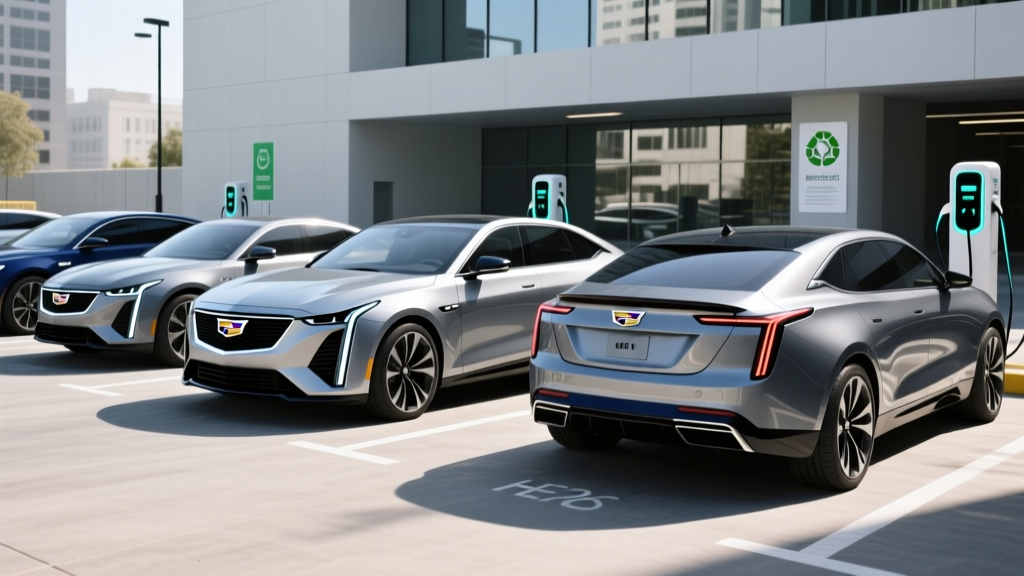
Cadillac's approach to electrification in 2026 spans a spectrum from mild hybrids to full battery-electric vehicles like the Lyriq and Optiq. But for buyers who want improved fuel economy without range anxiety or charging infrastructure dependence, Cadillac hybrid cars occupy a practical middle ground. This guide breaks down every current Cadillac hybrid and plug-in hybrid option, with the exact numbers you need to decide.
Cadillac's 2026 Hybrid Lineup: HEV vs PHEV Explained
Before examining specific models, it's critical to understand the two distinct hybrid architectures Cadillac offers, because they serve different use cases and have different requirements.
Conventional Hybrid (HEV)
A conventional hybrid like the XT5 Hybrid uses a small battery (typically 1-2 kWh) that recharges through regenerative braking and the gasoline engine. You never plug it in. The electric motor assists the engine during acceleration and enables brief electric-only driving at low speeds, but the primary benefit is improved fuel economy — especially in stop-and-go city driving where hybrids often exceed their EPA highway ratings.
Plug-In Hybrid (PHEV)
A plug-in hybrid like the Escalade IQ PHEV variant carries a much larger battery (15-30+ kWh) that you can charge from a wall outlet or Level 2 charger. This enables 20-50 miles of genuine electric-only driving at highway speeds before the gasoline engine engages. Once the battery depletes, it operates as a conventional hybrid. The trade-off: higher purchase price, added weight, and the need for home charging access to realize the full benefit.
2026 Cadillac XT5 Hybrid: The Volume Player
The XT5 Hybrid represents Cadillac's most accessible hybrid offering, targeting luxury compact SUV buyers who prioritize fuel efficiency without behavioral changes.
| Specification | 2026 XT5 Hybrid |
|---|---|
| Powertrain | 2.0L turbo I4 + electric motor |
| Combined Horsepower | 268 hp |
| Battery Capacity | 1.7 kWh (lithium-ion) |
| EPA MPG (City/Highway/Combined) | 28 / 31 / 29 MPG |
| Real-World MPG Expectation | 27-32 MPG (city-biased driving favors higher) |
| 0-60 mph | 7.1 seconds |
| Base MSRP | $52,095 |
| Plug-In Required? | No — self-charging via regen and engine |
Real-World Fuel Economy
The EPA rates the XT5 Hybrid at 29 MPG combined, but hybrid fuel economy is highly driving-pattern dependent. In urban environments with frequent stops, owners regularly report 30-32 MPG because regenerative braking recaptures energy that conventional brakes waste as heat. Highway cruising at 75+ mph yields closer to 27-28 MPG since the electric motor provides minimal assist at sustained high speeds. Cold weather reduces efficiency by 5-8% due to increased engine warm-up time and cabin heating demands.
Who Should Choose the XT5 Hybrid?
This powertrain makes sense if you drive 12,000-15,000 miles annually with significant city commuting, lack home charging access, and want a 2-4 MPG improvement over the non-hybrid XT5 (rated 24 MPG combined) without any lifestyle adjustment. The $2,500 hybrid premium pays back in roughly 4-5 years at current fuel prices for average drivers, according to fueleconomy.gov calculations.
2026 Cadillac Escalade PHEV: Luxury Meets Electric Range
The Escalade plug-in hybrid targets a different buyer: someone with home charging capability who wants silent, electric daily commuting but needs the flexibility for 400+ mile road trips without charging infrastructure planning.
| Specification | 2026 Escalade PHEV |
|---|---|
| Powertrain | 3.0L turbo I6 + dual electric motors |
| Combined Horsepower | 420 hp |
| Battery Capacity | 24.8 kWh usable (NMC chemistry) |
| EPA Electric-Only Range | 38 miles |
| Total Combined Range | 460 miles (electric + gasoline) |
| EPA MPGe (Electric Mode) | 58 MPGe |
| EPA MPG (Hybrid Mode, Battery Depleted) | 23 MPG combined |
| Level 2 Charging Time (240V, 7.7 kW) | 3.5 hours (0-100%) |
| DC Fast Charging | Not supported |
| 0-60 mph | 5.8 seconds |
| Base MSRP | $94,595 |
Electric-Only Range: Real-World Expectations
The EPA rates the Escalade PHEV at 38 miles of electric-only range, but real-world results vary significantly based on conditions. In mild weather (55-75°F) with moderate acceleration and speeds under 65 mph, expect 35-40 miles. Cold weather (below 40°F) reduces this to 28-32 miles due to battery chemistry limitations and cabin heating load. Highway driving at 75+ mph depletes the battery in 25-28 miles because electric motors are less efficient at sustained high speeds compared to stop-and-go driving where regenerative braking recaptures energy.
The 24.8 kWh battery uses NMC (nickel manganese cobalt) chemistry, chosen for its higher energy density compared to LFP (lithium iron phosphate), which is critical in a vehicle this size. However, NMC batteries degrade slightly faster than LFP — expect 10-15% capacity loss over 8 years based on industry data from similar PHEV platforms.
Charging Logistics
The Escalade PHEV charges at 7.7 kW on a 240V Level 2 home charger, adding roughly 12 miles of range per hour. A full charge takes 3.5 hours. The vehicle does not support DC fast charging, which is typical for PHEVs — the smaller battery size makes DC fast charging cost-prohibitive to engineer and largely unnecessary since most PHEV charging happens overnight at home.
Without home charging, you'll rarely access the electric range. Public Level 2 charging is impractical for daily use due to time commitment and availability. If you cannot install a Level 2 charger at home or work, the PHEV premium over a conventional Escalade hybrid is difficult to justify economically.
Federal Tax Credits and Incentives
Tax credit eligibility for Cadillac hybrid cars depends on the specific powertrain and current IRS rules under Section 30D.
- XT5 Hybrid (HEV): Not eligible for the federal EV tax credit. Conventional hybrids do not qualify under §30D, which requires plug-in capability and minimum battery capacity of 7 kWh.
- Escalade PHEV: May qualify for up to $7,500 in federal tax credits, but eligibility depends on multiple factors: buyer income caps ($150k single / $300k joint), vehicle MSRP caps ($80k for SUVs — the Escalade PHEV exceeds this at $94,595 base), and battery component/critical mineral sourcing requirements that change annually. As of 2026, the Escalade PHEV does not qualify due to MSRP cap exceedance. Always verify current eligibility at irs.gov before purchasing.
- State incentives: Some states offer separate PHEV rebates ($1,000-$4,000) with different eligibility rules. Check your state's energy office or DMV website for current programs.
Battery Warranty and Longevity
XT5 Hybrid Battery Warranty: 8 years / 100,000 miles (whichever comes first), covering defects and capacity loss below 70% of original capacity.
Escalade PHEV Battery Warranty: 8 years / 100,000 miles, covering defects and capacity loss below 70% of original capacity (EPA-rated range dropping below ~27 miles would trigger warranty coverage).
Real-World Longevity: Hybrid and PHEV batteries typically last 12-15 years before requiring replacement. Replacement cost for the XT5 Hybrid battery is approximately $3,500-$4,500; Escalade PHEV battery replacement runs $8,000-$12,000 due to larger capacity and more complex integration.
Hybrid battery failures before 150,000 miles are rare in modern systems. The most common issue is gradual capacity loss rather than sudden failure. Cadillac's hybrid systems use conservative battery management — never fully charging or fully depleting the battery — which extends lifespan significantly compared to early-generation hybrids.
Hybrid vs PHEV vs EV: Which Cadillac Fits Your Life?
The decision between Cadillac's electrified options depends on your driving patterns, charging access, and budget:
Choose XT5 Hybrid (HEV) If:
- You drive 12,000-15,000 miles annually with significant city commuting
- You lack home charging access (apartment, street parking)
- You want fuel economy improvement without any behavioral change
- Budget is $50k-$60k
- You prefer minimal complexity and proven reliability
Choose Escalade PHEV If:
- You have reliable home Level 2 charging access
- Your daily commute is under 35 miles round-trip
- You take 2-4 road trips annually exceeding 200 miles
- Budget is $90k+ and you want luxury with electric daily driving
- You want to reduce gasoline consumption by 60-70% without range anxiety
Choose Full EV (Lyriq/Optiq) If:
- You have home charging and drive under 300 miles daily
- You want zero tailpipe emissions and minimal maintenance
- You can access the full $7,500 federal tax credit (income and MSRP eligible)
- You want the lowest per-mile operating cost (electricity vs gasoline)
- You're comfortable with charging infrastructure planning for road trips
Reliability and Ownership Costs
Cadillac's hybrid systems have proven reliable in real-world use, with the XT5 Hybrid powertrain sharing architecture with GM's widely deployed 2.0L turbo hybrid system found in hundreds of thousands of vehicles across Chevrolet, Buick, and GMC brands. The Escalade PHEV's larger system is newer but benefits from GM's two decades of hybrid development experience dating back to the 2008 Two-Mode Hybrid system.
Maintenance costs for hybrids are typically 10-15% lower than conventional gasoline vehicles due to reduced brake wear (regenerative braking handles 60-80% of deceleration) and less engine strain (the electric motor assists during high-load acceleration). Oil change intervals remain the same at 7,500-10,000 miles for synthetic oil.
Insurance premiums for hybrid and PHEV Cadillacs run 5-10% higher than conventional versions due to higher repair costs for battery and power electronics damage. Get quotes from multiple insurers before purchasing, as rates vary significantly by company and driver profile.
Frequently Asked Questions
How many MPG does the Cadillac XT5 Hybrid get in real-world driving?
The EPA rates it at 29 MPG combined (28 city / 31 highway), but real-world results range from 27-32 MPG depending on driving patterns. City-heavy driving with frequent stops yields higher MPG due to regenerative braking; highway cruising at 75+ mph yields lower MPG. Cold weather reduces efficiency by 5-8%.
How far can the Escalade PHEV drive on electric power only?
The EPA rates it at 38 miles electric-only, but expect 28-32 miles in cold weather, 35-40 miles in mild conditions with moderate speeds, and 25-28 miles at sustained highway speeds above 75 mph. Once the battery depletes, it operates as a conventional hybrid with no electric-only capability until recharged.
Do Cadillac hybrid cars need to be plugged in?
The XT5 Hybrid (HEV) never needs to be plugged in — it recharges its small battery through regenerative braking and the gasoline engine. The Escalade PHEV must be plugged in to access its 38-mile electric range; without charging, it operates as a conventional hybrid and you lose the primary benefit of the PHEV system.
Is the hybrid battery reliable and what does replacement cost?
Modern hybrid batteries are highly reliable, typically lasting 12-15 years or 150,000+ miles. Both the XT5 Hybrid and Escalade PHEV carry 8-year/100,000-mile battery warranties. Replacement cost is $3,500-$4,500 for the XT5 Hybrid and $8,000-$12,000 for the Escalade PHEV, but most owners never need battery replacement during typical ownership periods.
Do Cadillac hybrids qualify for the federal tax credit?
The XT5 Hybrid (conventional HEV) does not qualify for any federal tax credit. The Escalade PHEV may theoretically qualify for up to $7,500 under §30D, but as of 2026 it exceeds the $80k MSRP cap for SUVs and therefore does not qualify. Always verify current eligibility at irs.gov before purchasing, as rules change annually.
Hybrid vs PHEV vs EV — which should I choose?
Choose a conventional hybrid (XT5 Hybrid) if you lack home charging and want fuel economy improvement without lifestyle changes. Choose a PHEV (Escalade PHEV) if you have home charging, drive under 35 miles daily, but need long-trip flexibility. Choose a full EV (Lyriq/Optiq) if you have home charging, drive under 300 miles daily, want zero tailpipe emissions, and can access tax credits. PHEVs are transitional technology — ideal for specific use cases but more complex than HEVs or EVs.
Cadillac's hybrid offerings in 2026 serve distinct buyer profiles. The XT5 Hybrid provides accessible fuel economy improvement for luxury SUV buyers without charging infrastructure, while the Escalade PHEV offers electric daily commuting for those with home charging and long-trip needs. Neither qualifies for federal tax credits under current rules, which affects the economic calculus compared to full EVs like the Lyriq. Your choice depends on driving patterns, charging access, and whether you prioritize simplicity (HEV), flexibility (PHEV), or maximum electrification (EV).