The 2026 Cadillac Escalade's Electrified Split: PHEV vs. IQ
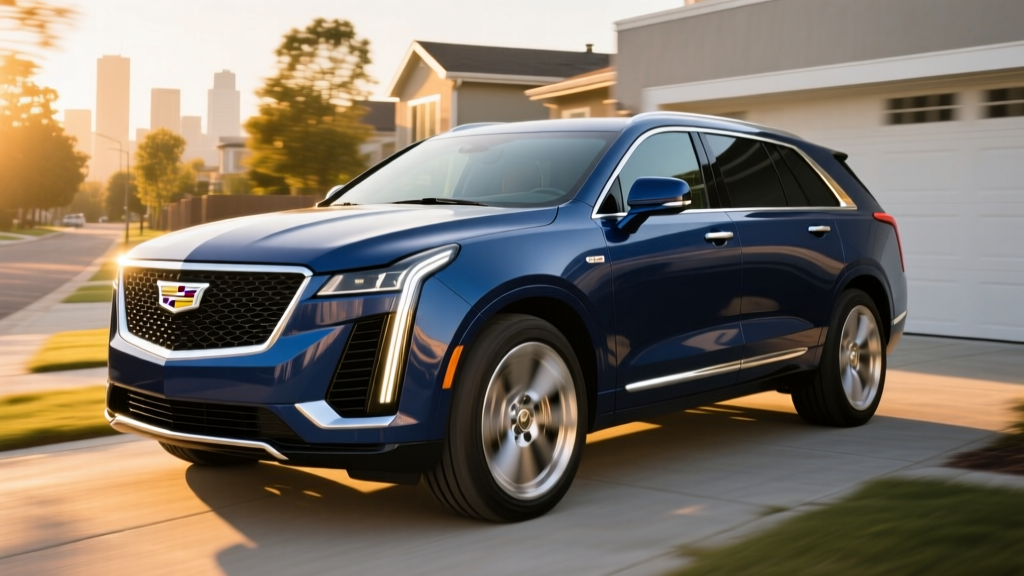
If you're searching for a Cadillac Escalade hybrid in 2026, you'll encounter two very different vehicles wearing the Escalade badge. The traditional body-on-frame Escalade PHEV (plug-in hybrid) pairs a turbocharged V6 with an electric motor and a ~24 kWh battery for roughly 30 miles of electric-only driving before the gas engine takes over. The all-new, fully electric Escalade IQ, built on GM's Ultium platform, ditches the engine entirely for up to 460 miles of EPA-estimated range.
This guide focuses on the hybrid variant that buyers cross-shopping luxury SUVs most often mean — the plug-in hybrid Escalade — while clarifying where the IQ fits. Neither is a conventional hybrid (HEV) that charges itself solely through regenerative braking. The PHEV requires plugging in to capture its electric range benefit; skip that step and you're driving a heavy, thirsty V6 with a marginal efficiency bump.
HEV vs. PHEV vs. EV: What the Escalade Actually Offers
| Type | Plug Required? | Electric-Only Range | Escalade Availability (2026) |
|---|---|---|---|
| HEV (conventional hybrid) | No | 0–2 miles at low speed | Not offered |
| PHEV (plug-in hybrid) | Yes, for full benefit | ~30 miles | Escalade PHEV |
| BEV (battery electric) | Yes, exclusively | Full range (~460 mi IQ) | Escalade IQ |
Cadillac does not sell a conventional self-charging hybrid Escalade. The previous mild-hybrid (eAssist) systems on older 6.2L V8 models provided stop-start and minor torque assist — not meaningful electric propulsion. If you want electrification in the Escalade lineup, you're choosing between plugging in a PHEV or going full EV with the IQ.
Powertrain, Horsepower, and How the PHEV Drives
The 2026 Escalade PHEV uses GM's twin-turbo 2.7L inline-four Duramax-derived gas engine (replacing the older V8 in the electrified powertrain) paired with an electric motor integrated into the transmission. Combined system output lands at approximately 455 horsepower and 520 lb-ft of torque, routed through a 10-speed automatic to all four wheels.
| Specification | 2026 Escalade PHEV | 2026 Escalade IQ (BEV) |
|---|---|---|
| Powertrain | 2.7L Turbo I4 + electric motor | Dual-motor AWD (Ultium) |
| Combined HP | ~455 hp | ~680 hp (750 on Velocity trim) |
| Battery (usable) | ~24 kWh (NMC) | ~200 kWh (NMC Ultium) |
| EPA EV Range | ~30 miles | ~460 miles |
| Total Range (gas+electric) | ~450 miles | ~460 miles (electric only) |
| 0–60 mph | ~5.9 sec | ~4.7 sec |
| Towing Capacity | ~7,500 lbs | ~8,000 lbs |
| Base MSRP | ~$92,000 | ~$132,000 |
On the road, the PHEV starts in EV mode silently and transitions seamlessly once the battery depletes or you demand hard acceleration. The electric motor fills in the turbo lag, making the heavy SUV feel surprisingly responsive off the line. However, once the battery is exhausted, you're hauling over 6,000 pounds on gasoline alone — and the efficiency advantage narrows considerably.
Fuel Economy: EPA MPG and Real-World Expectations
Hybrid fuel economy requires two numbers: charge-depleting MPGe (when running on battery + gas) and charge-sustaining MPG (gas-only after battery depletion). Both matter depending on how you drive.
| Metric | Escalade PHEV (EPA Est.) | Gas-Only Escalade (6.2L V8) |
|---|---|---|
| Combined MPGe (with charge) | ~56 MPGe | N/A |
| City MPG (gas only) | ~20 mpg | 14 mpg |
| Highway MPG (gas only) | ~23 mpg | 18 mpg |
| Combined MPG (gas only) | ~21 mpg | 16 mpg |
| Electric-only range | ~30 miles | 0 |
Real-world caveat: Plug-in hybrids reward consistent charging habits. If you plug in nightly and commute under 30 miles, you may burn almost no gasoline on weekdays, seeing an effective 60+ MPGe over months. Ignore charging and the PHEV's extra 400+ pounds of battery dead weight yields only a 4–5 mpg improvement over the standard V8 — still meaningful at $3.50/gallon, but not transformative. Cold weather (below 30°F) reduces electric-only range by 20–30%, dropping that 30-mile estimate to roughly 20–24 miles.
According to fueleconomy.gov, PHEV efficiency depends heavily on trip length and charging frequency. Short, charged trips maximize the benefit; long highway trips minimize it.
Battery, Charging, and Home Setup
The Escalade PHEV's ~24 kWh lithium-ion (NMC chemistry) battery supports Level 2 AC charging at up to 7.7 kW, replenishing a depleted pack in approximately 3.5 hours. It does not support DC fast charging — a common PHEV limitation that keeps cost and complexity down but means public fast-charger stops add no benefit.
Battery Warranty & Replacement Cost
GM covers the Escalade PHEV's high-voltage battery for 8 years / 100,000 miles (10 years / 150,000 miles in CARB states like California, New York, and others adopting California emissions standards). The warranty triggers if capacity drops below 70% of original.
Out-of-warranty replacement for a PHEV pack of this size typically runs $6,000–$9,500 including labor, based on current GM hybrid service pricing. NMC chemistry in a PHEV application generally degrades more slowly than in a BEV because the pack cycles through a shallower depth of discharge — many PHEV batteries retain 85%+ capacity at 150,000 miles.
Home charging setup: A standard 120V outlet (Level 1) adds roughly 4–5 miles of EV range per hour — enough for overnight replenishment of the 30-mile pack if you have 8+ hours. A 240V Level 2 home charger (NEMA 14-50 or hardwired) fills the pack fully in one evening session. Expect $800–$2,200 for a quality Level 2 charger installation depending on panel capacity and run length.
Pricing, Trims, and Federal Tax Credit Eligibility
The 2026 Escalade PHEV starts around $92,000 (Luxury trim) and climbs past $110,000 for Premium Luxury and Sport trims. The all-electric Escalade IQ begins near $132,000.
Federal tax credit (§30D): The PHEV variant may qualify for up to $7,500 under the IRS Clean Vehicle Credit, but eligibility is not guaranteed and depends on three factors that change regularly:
- MSRP cap: SUVs must be under $80,000 — and the Escalade PHEV exceeds this, likely disqualifying it from the new-vehicle §30D credit.
- Buyer income limits: AGI must not exceed $300,000 (joint), $225,000 (head of household), or $150,000 (individual).
- Battery sourcing: Critical minerals and battery components must meet escalating domestic-content thresholds per IRS guidelines.
Because the Escalade PHEV's MSRP surpasses the $80,000 SUV cap, most buyers will not qualify for the federal credit on a new purchase. However, the used-EV credit (up to $4,000) may apply to pre-owned PHEV models priced under $25,000 — unlikely for a recent Escalade but worth checking on older inventory. Always verify current eligibility on fueleconomy.gov's tax credit database before purchasing.
State incentives vary widely: California, Colorado, and New York may offer additional rebates, but confirm with your state energy office.
Reliability and Long-Term Ownership
GM's PHEV powertrain (shared with the Sierra Hybrid and Tahoe Hybrid variants) has accumulated several years of field data. The twin-turbo four-cylinder is newer and less proven than the outgoing V8, but the electric motor and battery systems carry forward from the Volt and Bolt lineage, which demonstrated strong longevity. IIHS and NHTSA safety ratings for the 2026 model should be checked as they're published — the Escalade's size provides inherent crash protection, but advanced driver-assist systems (Super Cruise) add a compelling safety layer on highway commutes.
Pros
- 30 miles of silent, zero-gas commuting covers most school runs and errands
- No range anxiety — 450+ total miles with gas backup
- Full towing capacity preserved vs. EV-only rivals
- Super Cruise hands-free driving available on mapped highways
- Tax credit possible if MSRP rules shift or on lease structures
Cons
- MSRP above $80K cap likely disqualifies federal §30D credit
- No DC fast charging — public charger infrastructure largely irrelevant
- Heavy vehicle: gas-only MPG still modest at ~21 combined
- Premium fuel recommended for maximum output
- Turbo four-cylinder lacks the V8 character longtime Escalade buyers expect
Who Should Buy the Escalade Hybrid vs. the IQ or Gas Model?
Choose the Escalade PHEV if:
- You can charge at home nightly and your weekday driving stays under 30 miles
- You tow regularly (boat, trailer, horses) and can't risk BEV range loss under load
- You take long road trips into areas with sparse charging infrastructure
- You want electric commuting without committing to a full EV lifestyle
Choose the Escalade IQ (BEV) if:
- You have reliable home charging and want the lowest per-mile operating cost
- You prioritize acceleration (680+ hp) and cabin quietness
- Your daily driving is predictable and within 300 miles
- You want to eliminate oil changes and gas-engine maintenance entirely
Stick with the gas V8 Escalade if:
- You cannot charge at home (apartment, street parking, no garage)
- You drive primarily long highway routes where PHEV benefits disappear
- Budget matters and the PHEV premium (~$8K–$12K over gas) doesn't pencil out
Frequently Asked Questions
How many MPG does the Cadillac Escalade hybrid get?
The 2026 Escalade PHEV achieves approximately 56 MPGe combined when using battery charge, and about 21 MPG combined (20 city / 23 highway) once the battery depletes and the vehicle runs on gasoline alone. Real-world results depend heavily on how often you plug in.
How far can the Escalade PHEV go on electric only?
EPA-estimated electric-only range is approximately 30 miles on a full charge. In cold weather (below freezing), expect 20–24 miles. Highway speeds above 70 mph also reduce EV range due to aerodynamic drag on the large SUV body.
Does the Cadillac Escalade hybrid qualify for a tax credit?
Likely not on a new purchase. The §30D federal credit caps SUV MSRP at $80,000, and the Escalade PHEV starts above $92,000. Always verify on fueleconomy.gov and consult a tax professional, as rules can shift and lease structures may pass through manufacturer credits differently.
Is the Escalade hybrid reliable and what does battery replacement cost?
GM's PHEV systems have proven durable, with the battery covered under an 8-year/100,000-mile warranty (10 years/150,000 in CARB states) against capacity loss below 70%. Out-of-warranty battery replacement runs approximately $6,000–$9,500. The turbocharged gas engine is newer and carries more long-term uncertainty than the outgoing V8.
Can I charge the Escalade PHEV at a DC fast charger?
No. The Escalade PHEV supports only Level 1 (120V) and Level 2 (240V) AC charging, up to 7.7 kW. DC fast charging is not available — a typical PHEV limitation. A full Level 2 charge takes about 3.5 hours.
Is the Escalade IQ the same as the Escalade hybrid?
No. The Escalade IQ is a fully electric vehicle (BEV) with no gasoline engine, built on GM's Ultium platform with ~460 miles of range and starting near $132,000. The Escalade PHEV is a plug-in hybrid with both a gas engine and electric motor. They share branding but are entirely different vehicles.