If you've been searching for a Buick plug-in hybrid, you've likely noticed the results are thin. Unlike Hyundai, Toyota, or Jeep, Buick has not sold a plug-in hybrid (PHEV) in the United States since the second-generation Velite 6 was discontinued in China and no plug-in successor arrived stateside. For 2026, Buick's U.S. electrification strategy focuses on battery-electric vehicles (BEVs) under the Electra nameplate, leaving a conspicuous gap in the PHEV space.
This guide explains exactly where Buick stands on plug-in hybrids for 2026, clarifies the difference between conventional hybrids (HEVs) and plug-in hybrids (PHEVs), explores what Buick does offer, and helps you decide whether a competitor PHEV, a full EV, or a conventional hybrid better suits your driving needs.
The Buick Plug-In Hybrid Situation in 2026
As of the 2026 model year, Buick does not offer a plug-in hybrid vehicle in the United States. The current U.S. lineup — consisting of the Envista, Encore GX, Enclave, and the Electra E5 (Buick's first dedicated BEV) — contains no PHEV variant. General Motors, Buick's parent company, has invested heavily in its Ultium battery-electric platform and has steered Buick toward full electrification rather than the bridge technology that PHEVs represent.
This is a deliberate corporate choice. GM's PHEV technology (the Voltec powertrain used in the Chevrolet Volt and the second-gen Malibu Hybrid) was retired years ago. The automaker's current hybrid offerings are concentrated in the Chevrolet and Cadillac lineups, and even those are limited. If you want a Buick-badged electrified vehicle in 2026, your options are the conventional mild-hybrid setups in some trims and the fully electric Electra E5.
HEV vs PHEV vs BEV: What's the Difference?
Because Buick's lineup touches multiple electrification categories, it's critical to understand what each term means before making a purchase decision.
| Feature | HEV (Conventional Hybrid) | PHEV (Plug-In Hybrid) | BEV (Battery Electric) |
|---|---|---|---|
| Plug in to charge? | No — self-charging via regenerative braking and engine | Yes — has a larger battery you charge via outlet or charger | Yes — battery is the only energy source |
| Electric-only range | Typically under 1 mile at low speed | Typically 20–50 miles on battery alone | 200–400+ miles (full battery) |
| Gas engine? | Yes — works with electric motor | Yes — kicks in after battery depletes | No |
| Example (GM family) | Chevrolet Malibu Hybrid (discontinued) | Chevrolet Volt (discontinued) | Buick Electra E5 |
| Federal tax credit | Generally no | Up to $7,500 if eligible under §30D | Up to $7,500 if eligible under §30D |
The bottom line: A conventional hybrid (HEV) never plugs in — it captures energy from braking and the engine to charge a small battery. A plug-in hybrid (PHEV) has a much larger battery you charge at home or at public stations, giving you real electric-only driving before the gas engine takes over. A BEV has no gas engine at all.
Buick's Current Electrified Options: Mild Hybrid and BEV
While a Buick PHEV isn't available, some 2026 Buick models feature mild-hybrid technology — a small 48-volt system that assists the gas engine during acceleration and enables smoother stop-start operation. This is not the same as a full hybrid (HEV) or a PHEV.
2026 Buick Electra E5 (BEV)
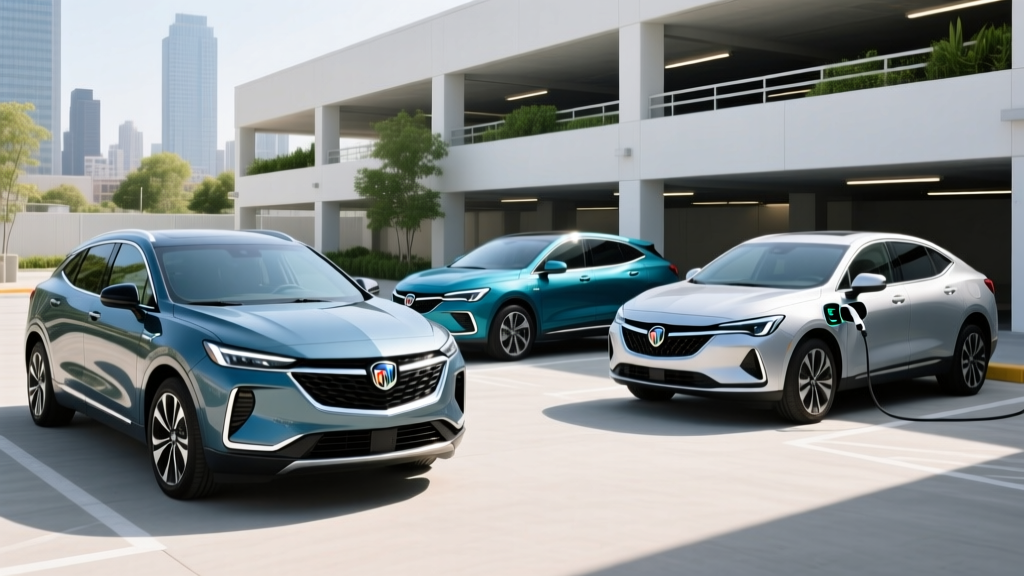
The Buick Electra E5 is the brand's first all-electric SUV built on GM's Ultium platform. It's the closest thing to a "Buick plug-in" vehicle — but it's a full EV, not a hybrid.
| Powertrain | Single-motor FWD / Dual-motor AWD |
| Horsepower | ~288 hp (FWD) / ~343 hp (AWD) |
| Battery | ~85 kWh usable (Ultium, NMC chemistry) |
| EPA Range (est.) | ~260–300 miles depending on configuration |
| DC Fast Charging | Up to ~150 kW (10–80% in ~30 min) |
| Level 2 Charging | ~11.5 kW onboard charger |
| Base MSRP | ~$38,000–$45,000 (varies by trim) |
| Federal Tax Credit | Eligibility depends on battery sourcing, MSRP caps, and buyer income — verify at IRS.gov |
If you were hoping for a Buick with a plug and a gas backup, the Electra E5 gives you the plug but no gas tank. For buyers with reliable home charging and daily commutes under 250 miles, this covers most needs — but it doesn't eliminate range anxiety for road trips through charging deserts.
Mild-Hybrid Buick Models (Not PHEV, Not Full HEV)
Certain 2026 Buick trims (particularly in the Encore GX and Enclave) may feature GM's eAssist mild-hybrid system. This provides marginal fuel economy improvement — typically 1–2 MPG combined — but does not offer any electric-only driving and cannot be plugged in. Think of it as a slightly more efficient gas car, not a true hybrid.
Competitor Plug-In Hybrids to Consider Instead
If a Buick plug-in hybrid is what you need — a premium-feeling crossover with 20–40 miles of electric range and a gas engine for longer trips — several competitors fill that gap effectively in 2026:
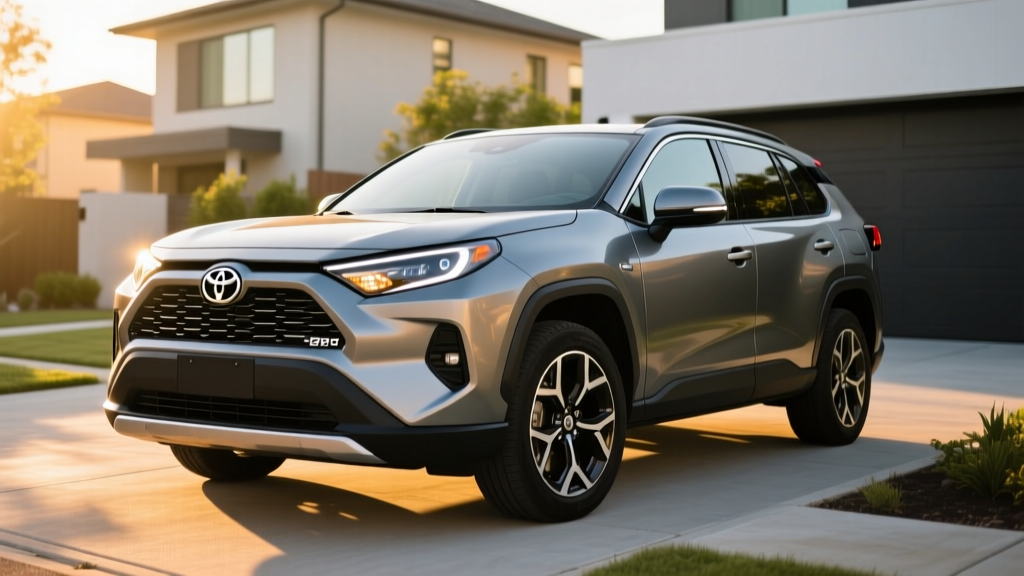
Best Overall PHEV SUV: Toyota RAV4 Prime
- Electric-only range: 42 miles (EPA)
- Combined MPG (gas mode): 38 MPG combined
- Horsepower: 302 hp
- Battery: 18.1 kWh (NMC)
- Base MSRP: ~$44,000
- Federal credit: Subject to §30D sourcing and income rules
Best Premium PHEV SUV: Hyundai Tucson PHEV
- Electric-only range: ~33 miles (EPA)
- Combined MPG (gas mode): 35 MPG combined
- Horsepower: 261 hp
- Battery: 13.8 kWh
- Base MSRP: ~$39,000
- Federal credit: Eligibility varies — check IRS §30D rules
Both of these vehicles offer what a hypothetical Buick PHEV would: a comfortable, quiet cabin, solid electric-only commuting range, and a gas engine that eliminates range anxiety. The RAV4 Prime in particular comes close to the Buick ethos of understated comfort with strong isolation from road noise.
Fuel Economy and Range: What to Expect From a PHEV
Understanding PHEV fuel economy requires looking at two separate numbers: electric-only efficiency (measured in MPGe or kWh/100mi) and gas-engine efficiency after the battery depletes.
| Metric | Toyota RAV4 Prime | Hyundai Tucson PHEV | Ford Escape PHEV |
|---|---|---|---|
| Electric-only range | 42 mi | 33 mi | 37 mi |
| MPGe (electric mode) | 94 MPGe | 80 MPGe | 105 MPGe |
| MPG combined (gas) | 38 MPG | 35 MPG | 40 MPG |
| MPG city (gas) | 40 MPG | 36 MPG | 42 MPG |
| MPG highway (gas) | 36 MPG | 33 MPG | 37 MPG |
| Total combined range | ~600 mi | ~440 mi | ~520 mi |
Real-world note: Hybrids and PHEVs in gas mode often exceed their EPA city estimates in real-world urban driving, because regenerative braking recaptures more energy in stop-and-go traffic. Highway MPG, however, tends to fall 2–4 MPG below the EPA sticker, especially at sustained speeds above 70 mph. In cold weather (below 30°F), expect PHEV electric-only range to drop 20–30% due to battery chemistry limitations and cabin heating demands.
Charging a PHEV: What You Need to Know
One advantage of PHEVs over full EVs is that their smaller batteries charge quickly on standard household power. Most PHEV owners never need to install a dedicated Level 2 charger, though having one adds convenience.
| Charging Level | Power (kW) | Time to Full (approx.) | Notes |
|---|---|---|---|
| Level 1 (120V household outlet) | ~1.4 kW | 9–13 hours | Sufficient for overnight charging for most PHEVs |
| Level 2 (240V home/public) | ~3.3–7.2 kW | 2–4.5 hours | Faster top-ups; useful for mid-day charging |
| DC Fast Charging | Varies | N/A for most PHEVs | Most PHEVs do NOT support DC fast charging — the RAV4 Prime, for example, tops out at Level 2 |
kW vs kWh reminder: kW (kilowatts) measures the rate of charging — like water flow from a hose. kWh (kilowatt-hours) measures the battery's capacity — like the size of the bucket. A 13.8 kWh battery charged at 3.3 kW takes roughly 4.2 hours from empty to full (13.8 ÷ 3.3 ≈ 4.2).
Battery Longevity, Warranty, and Replacement Cost
Hybrid and PHEV batteries are one of the top concerns for buyers — but the data shows they're more durable than most expect.
PHEV Battery Warranty Standards
Federal law mandates that hybrid and PHEV batteries carry a minimum warranty of 8 years / 100,000 miles. In California Air Resources Board (CARB) states (including CA, NY, WA, OR, and others), that extends to 10 years / 150,000 miles. Most manufacturers match or exceed these minimums.
The warranty typically guarantees the battery will retain at least 60–70% of its original capacity over the warranty period. If degradation exceeds that threshold, the manufacturer must repair or replace the battery at no cost.
Real-world degradation data: Toyota's PHEV and hybrid batteries have demonstrated strong longevity. Independent fleet data and owner surveys show that RAV4 Hybrid and Prime batteries typically retain 85–90% of original capacity after 100,000 miles. PHEV batteries are smaller and cycle more frequently than BEV batteries, but they also have larger buffer zones (the portion of the battery the car won't let you use) to protect longevity.
Replacement cost if out of warranty: A PHEV battery replacement typically runs $4,000–$8,000 depending on the model. This is significantly less than a full BEV battery replacement ($10,000–$20,000+) because PHEV batteries are smaller. For context, conventional 12V starter batteries cost $150–$300 and are separate from the high-voltage traction battery.
Tax Credits and Incentives: Does a PHEV Qualify?
Under the current IRS §30D Clean Vehicle Credit, qualifying new PHEVs can receive up to $7,500 — but eligibility is far from guaranteed. Here's what determines whether you actually get the credit:
- Battery capacity: The vehicle must have a battery of at least 7 kWh (most PHEVs meet this)
- MSRP caps: SUVs, vans, and pickups must have an MSRP at or below $80,000; sedans at or below $55,000
- Buyer income limits: Modified adjusted gross income must not exceed $300,000 (joint), $225,000 (head of household), or $150,000 (individual)
- Battery component sourcing: A percentage of battery components must be manufactured or assembled in North America (threshold increases annually)
- Critical minerals: A percentage of critical minerals must be sourced from the U.S. or free-trade-agreement partners
- Point-of-sale transfer: As of 2024, you can transfer the credit to the dealer for an immediate price reduction at purchase, rather than waiting to claim it on your tax return
Important caveat: Battery sourcing requirements have tightened significantly. Several popular PHEVs that previously qualified for the full $7,500 have seen their credit reduced to $3,750 or eliminated entirely as sourcing thresholds increase. Always verify current eligibility on fueleconomy.gov before purchasing.
Who Should Choose a PHEV vs a Full EV or Conventional Hybrid?
Choose a Plug-In Hybrid (PHEV) If:
- Your daily commute is under 30–40 miles round-trip (you'll drive almost entirely on electricity)
- You have access to home or workplace charging (even a standard 120V outlet works)
- You regularly take longer road trips where charging infrastructure is sparse
- You want to reduce fuel costs without committing to a full EV
- You live in an apartment or area where public charging access is unreliable
Choose a Full EV (BEV) If:
- You can install a Level 2 home charger
- Your daily driving is under 200 miles and you rarely exceed 250 miles in a day
- You want minimal maintenance (no oil changes, no gas engine upkeep)
- You want maximum federal/state incentives and lowest per-mile fuel cost
Choose a Conventional Hybrid (HEV) If:
- You have no access to charging at home or work
- You want better fuel economy without changing any habits
- You want a lower purchase price (HEVs are typically $3,000–$6,000 cheaper than PHEVs)
- You drive mostly in city traffic where regenerative braking maximizes efficiency
Pros and Cons: The PHEV Ownership Experience
Pros of Owning a PHEV
- Electric-only commuting with zero tailpipe emissions on daily trips
- No range anxiety — gas engine covers long trips seamlessly
- Charges on a standard 120V outlet overnight — no expensive electrical work needed
- Lower fuel costs if you charge regularly (electricity is cheaper than gas per mile)
- Regenerative braking extends brake pad life
- Potential federal tax credit up to $7,500 (if eligible)
Cons of Owning a PHEV
- Higher purchase price than an equivalent gas or conventional hybrid model
- Two powertrains to maintain (engine + electric motor/battery)
- Electric-only range is limited (20–50 miles) — less impactful for long commutes
- Cargo space may be reduced due to battery placement
- If you never plug in, you're carrying dead weight — a PHEV driven only on gas is less efficient than a dedicated HEV
- Most PHEVs lack DC fast charging — road-trip top-ups are slow
Frequently Asked Questions
Does Buick make a plug-in hybrid in 2026?
No. As of the 2026 model year, Buick does not sell a plug-in hybrid in the United States. The brand's electrified lineup consists of the Electra E5 (a full battery-electric SUV) and mild-hybrid assist systems in select gas-engine models. GM has not announced a Buick PHEV for the U.S. market.
What's the difference between a Buick hybrid and a Buick plug-in hybrid?
A conventional hybrid (HEV) charges its battery through regenerative braking and the gas engine — you never plug it in. A plug-in hybrid (PHEV) has a larger battery that you charge from an outlet or charging station, giving you 20–50 miles of electric-only driving before the gas engine activates. Buick currently offers neither a full HEV nor a PHEV in the U.S. — only mild-hybrid assist and full electric.
How far can a PHEV go on electric only?
Most 2026 PHEV SUVs deliver 20–50 miles of electric-only range. The Toyota RAV4 Prime leads the segment at 42 miles (EPA). Real-world electric range drops 20–30% in cold weather and at sustained highway speeds above 65 mph.
How many MPG does a PHEV get after the battery runs out?
Once the battery is depleted, a PHEV operates as a conventional hybrid. Expect 33–40 MPG combined depending on the model. Check fueleconomy.gov for EPA city/highway/combined breakdowns by specific vehicle.
Is a PHEV battery reliable, and what does replacement cost?
PHEV batteries are federally warranted for 8 years/100,000 miles (10 years/150,000 in CARB states). Real-world data shows most PHEV batteries retain 85%+ capacity after 100,000 miles. Out-of-warranty replacement typically costs $4,000–$8,000 — less than a full EV battery because PHEV packs are smaller.
Does a PHEV qualify for the $7,500 federal tax credit?
Some PHEVs qualify, but eligibility depends on battery sourcing requirements, MSRP caps ($80,000 for SUVs), buyer income limits, and annual threshold increases. Verify current eligibility on IRS.gov or fueleconomy.gov before purchasing. The credit can be transferred to the dealer at point of sale for an immediate price reduction.
Should I buy a PHEV or a full EV?
If you have reliable home charging and rarely drive more than 200 miles in a day, a full EV like the Buick Electra E5 offers lower operating costs and less maintenance. If you frequently take long road trips, lack consistent charging access, or want to ease into electrification, a competitor PHEV like the RAV4 Prime or Tucson PHEV is the better bridge option.
The Bottom Line on Buick Plug-In Hybrids
If you're loyal to the Buick brand and want a plug-in hybrid, you're currently out of luck in the U.S. market. Buick has chosen to leapfrog PHEVs entirely, moving from conventional gas powertrains straight to full battery-electric vehicles with the Electra E5. That's a bold strategy, but it leaves buyers who want the flexibility of a plug-in hybrid looking at competitors.
The good news: the PHEV segment is well-served by the Toyota RAV4 Prime, Hyundai Tucson PHEV, and Ford Escape PHEV — all of which offer 33–42 miles of electric range, strong combined MPG, and quiet, comfortable cabins that align with what Buick buyers typically value. If you can install a Level 2 charger at home and want to go fully electric, the Buick Electra E5 is a compelling premium EV SUV worth test-driving.
Whatever you choose, verify current tax-credit eligibility on IRS.gov, check real-world efficiency data on fueleconomy.gov, and confirm safety ratings at NHTSA before signing any paperwork.