The State of Buick's Electrified Lineup in 2026
If you've been searching for a Buick PHEV (plug-in hybrid), the honest answer for 2026 is that Buick does not currently sell a plug-in hybrid electric vehicle in the United States. The brand's electrification strategy has pivoted decisively toward full battery-electric vehicles (BEVs) under GM's Ultium platform, alongside conventional mild-hybrid and standard-hybrid systems in select models. That said, Buick's hybrid and EV offerings are worth understanding — especially if you're cross-shopping between a conventional hybrid (HEV), a PHEV, or a full EV from the GM family.
This guide covers what Buick actually offers in the hybrid and electrified space for the 2026 model year, how those options compare to the PHEVs you might be considering from competing brands, and how to decide whether a Buick hybrid, a competitor's PHEV, or a full EV is the right fit for your driving habits.
HEV vs. PHEV vs. EV: Clearing Up the Confusion
Before evaluating Buick's options, it's essential to distinguish between the three main types of electrified vehicles, because the differences directly affect your fuel costs, charging needs, and tax-credit eligibility.
Hybrid (HEV) vs. Plug-In Hybrid (PHEV) vs. Full EV (BEV)
| Feature | Conventional Hybrid (HEV) | Plug-In Hybrid (PHEV) | Full EV (BEV) |
|---|---|---|---|
| Plugs in? | No — charges via regenerative braking and engine | Yes — Level 1 or Level 2 charging | Yes — Level 1, Level 2, or DC fast charging |
| Electric-only range | Less than 1 mile (motor assist only) | Typically 20–50 miles | 200–400+ miles |
| Battery size | ~1–2 kWh | ~10–25 kWh | ~60–120+ kWh |
| Federal tax credit | No | Up to $7,500 (if §30D eligible) | Up to $7,500 (if §30D eligible) |
| Home charging needed? | No | Recommended for max benefit | Essential for most owners |
A conventional hybrid like those Buick offers never needs to be plugged in. It captures energy through regenerative braking and the gasoline engine to charge a small battery that assists the motor. A PHEV, by contrast, has a larger battery you charge by plugging in, giving you 20–50 miles of pure electric driving before the gas engine takes over.
What Buick Actually Offers: Hybrid and Electrified Models for 2026
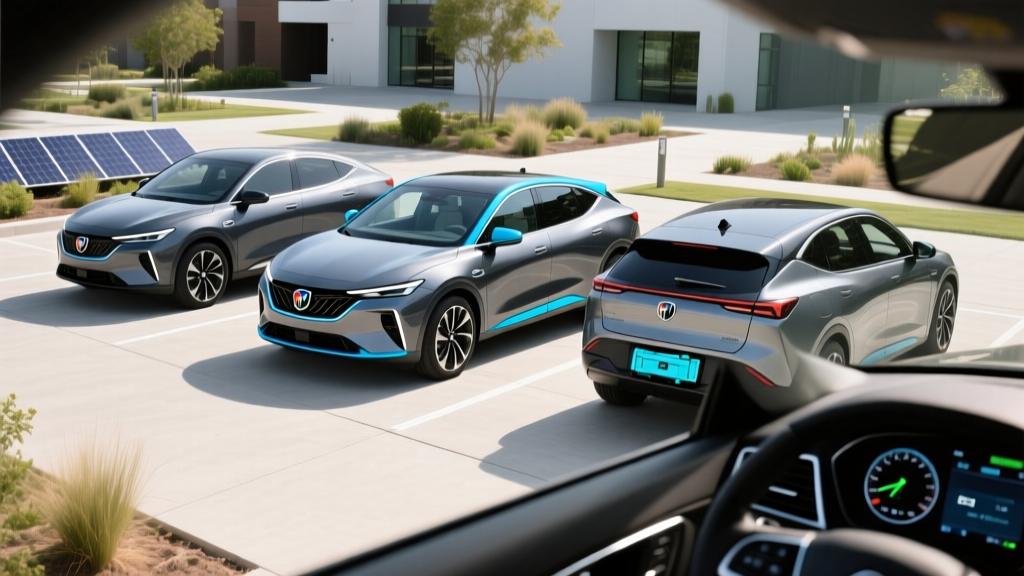
Buick's 2026 U.S. lineup centers on crossovers, and the brand's electrification comes in two forms: mild-hybrid assist systems on certain trims, and the fully electric Buick Electra E5 (built on GM's Ultium platform). Here's how the current lineup breaks down:
| Model | Powertrain Type | EPA MPG (City/Hwy/Combined) | Starting MSRP |
|---|---|---|---|
| Buick Encore GX (2026) | Turbo 3-cyl (no hybrid) | 29 / 31 / 30 MPG | ~$27,000 |
| Buick Envista (2026) | Turbo 3-cyl (no hybrid) | 28 / 32 / 30 MPG | ~$23,500 |
| Buick Enclave (2026) | Turbo 4-cyl (mild-hybrid assist available) | ~22 / 29 / 25 MPG (est.) | ~$45,000 |
| Buick Electra E5 (2026) | Full EV (BEV) — Ultium platform | ~260–300 mi EPA range / ~95 MPGe | ~$48,000 (est.) |
As the table shows, Buick does not offer a true conventional hybrid (HEV) with the kind of fuel-economy gains you'd see from a Toyota RAV4 Hybrid or Honda CR-V Hybrid, nor does it offer a PHEV. The mild-hybrid assist system available on the Enclave provides marginal efficiency improvement — it smooths stop-start operation and provides slight torque assist, but it does not enable electric-only driving or meaningfully change the MPG picture.
Why Doesn't Buick Have a PHEV?
GM's corporate strategy has directed Buick toward full electrification rather than the intermediate PHEV step. While brands like Toyota, Hyundai, and Chrysler (with the Pacifica PHEV) have invested heavily in plug-in hybrid platforms, GM has largely skipped PHEVs in the U.S. market, betting instead on the Ultium BEV architecture. The Buick Electra E5 represents this approach — a full electric crossover rather than a plug-in hybrid variant of an existing model.
For buyers specifically seeking a Buick PHEV, the practical reality is that you'll need to either:
- Consider a conventional gas Buick and accept the fuel economy as-is
- Look at the Buick Electra E5 if you're ready for a full EV
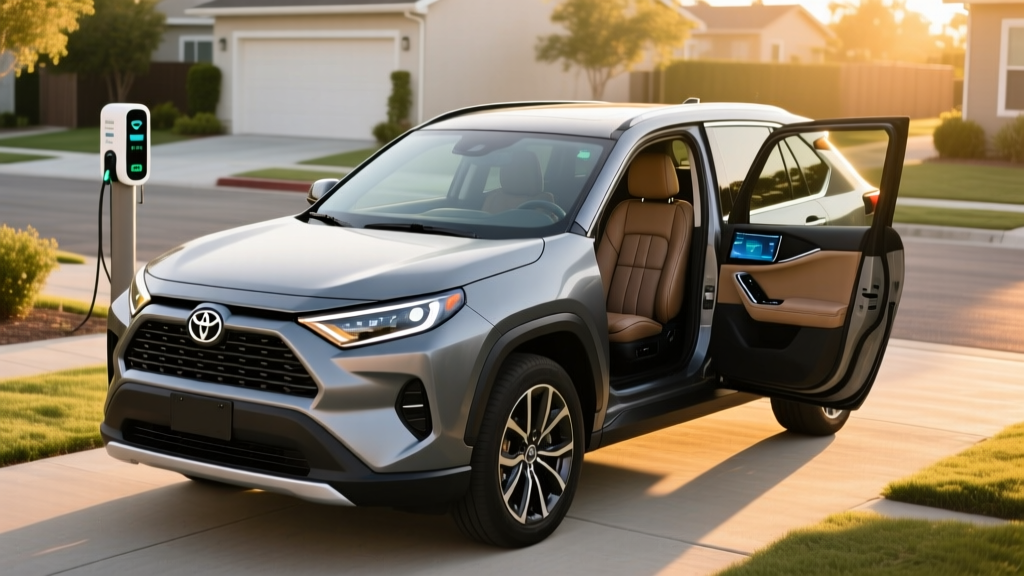
- Cross-shop competitor PHEVs like the Toyota RAV4 Prime, Hyundai Tucson PHEV, or Chrysler Pacifica PHEV
Competitor PHEVs: What You Could Buy Instead
Since Buick doesn't offer a PHEV, here's how the leading plug-in hybrid crossovers and minivans stack up for buyers who want the Buick-like comfort and space with a plug-in powertrain:
| Model | Electric-Only Range | Combined MPG (gas) | Battery (kWh) | Combined HP | Base MSRP | §30D Credit Eligible? |
|---|---|---|---|---|---|---|
| Toyota RAV4 Prime (2026) | 42 miles | 38 MPG | 18.1 kWh | 302 hp | ~$45,000 | Unlikely (Japan-built, sourcing rules) |
| Hyundai Tucson PHEV (2026) | 33 miles | 35 MPG | 13.8 kWh | 261 hp | ~$39,500 | Check current IRS list |
| Chrysler Pacifica PHEV (2026) | 32 miles | 30 MPG | 16.0 kWh | 260 hp | ~$51,000 | Eligible (U.S.-assembled, check sourcing) |
| Ford Escape PHEV (2026) | 37 miles | 40 MPG | 14.4 kWh | 210 hp | ~$40,000 | Check current IRS list |
Source: EPA data via fueleconomy.gov side-by-side comparison tool. MSRP figures are approximate base pricing for 2026 model year. Always verify §30D eligibility on the IRS clean vehicle credits page, as battery sourcing and critical-mineral requirements change frequently.
Tax Credit Reality: PHEVs vs. Buick's EV
One of the most common reasons buyers search for a PHEV is to capture the federal §30D clean vehicle tax credit (up to $7,500) while retaining a gas engine for longer trips. However, the credit's eligibility rules have tightened significantly. For 2026, qualifying vehicles must meet:
- MSRP caps: Vans, SUVs, and pickups must be under $80,000; sedans under $55,000
- Buyer income limits: Modified AGI must not exceed $150,000 (single) or $300,000 (joint filing)
- Battery sourcing: Increasing percentages of critical minerals and battery components must come from the U.S. or FTA partner nations — this rule eliminates many foreign-built PHEVs
- Final assembly: Vehicle must be assembled in North America
- Point-of-sale transfer: As of 2024, the credit can be transferred to the dealer at purchase, reducing the sale price directly rather than waiting for tax filing
Most competitor PHEVs (especially those built in Japan or Korea) have struggled to meet the critical-mineral and battery-component sourcing thresholds. Always verify eligibility before purchasing — the fueleconomy.gov tax credit page maintains a current list of qualifying vehicles.
The Buick Electra E5, as a U.S.-assembled BEV on the Ultium platform, is more likely to qualify for at least a partial credit, depending on the battery-sourcing status at time of purchase. Consult a tax professional for your specific situation.
Reliability and Battery Warranty: What to Expect
Whether you're considering a Buick hybrid system, a competitor PHEV, or the Electra E5, battery longevity is a legitimate concern. Here's what the data and warranties tell us:
Battery Warranty Coverage
GM/Buick hybrid and EV battery warranty: 8 years / 100,000 miles (whichever comes first), covering defects and excessive capacity loss. GM typically defines excessive loss as falling below ~60–70% of original capacity, though exact thresholds vary by model.
PHEV competitor warranties: Toyota covers the RAV4 Prime hybrid battery for 10 years / 150,000 miles. Hyundai covers the Tucson PHEV battery for 10 years / 100,000 miles. Both exceed the federal minimum requirement of 8 years / 80,000 miles for emissions-related components.
Real-world degradation: PHEV batteries are smaller and cycle more frequently than BEV batteries, but data from earlier-generation PHEVs (Chevy Volt, Prius Prime) shows most packs retain 85–90%+ capacity after 100,000 miles when properly maintained. Avoid routinely charging to 100% and leaving the vehicle at full charge in extreme heat.
Replacement cost: PHEV battery replacement (out of warranty) typically runs $4,000–$8,000 depending on the model. BEV replacement (Electra E5 Ultium pack) is significantly higher — estimated $10,000–$18,000+ — though full-pack replacement is rare; individual module repairs are often possible.
Real-World MPG and Efficiency: What the EPA Numbers Don't Tell You
If you're cross-shopping a Buick gas model against a competitor PHEV, understanding real-world efficiency is critical:
- Conventional hybrids and mild hybrids: Real-world MPG often exceeds EPA city estimates in stop-and-go traffic (where regenerative braking recovers the most energy) but may fall 2–4 MPG below EPA highway estimates at sustained 70+ mph speeds.
- PHEVs: The EPA combined MPG figure assumes you start with a full battery and drive a mix of electric and gas miles. If you charge daily and drive under the electric-only range (say, 30 miles), you may use zero gas for weeks. If you never charge, a PHEV operates as a heavy conventional hybrid and may get worse MPG than a dedicated HEV due to the extra battery weight.
- Cold weather impact: Expect 15–30% reduction in electric-only range for PHEVs in sub-freezing temperatures, as battery chemistry slows and cabin heating draws energy. Gas-engine MPG also drops 10–15% in winter due to cold-start enrichment and winter fuel blends.
- Buick gas models: The Encore GX and Envista, without hybrid assist, deliver real-world combined MPG close to their EPA ratings in mixed driving but can dip to 22–24 MPG in heavy city traffic — a gap a conventional hybrid would close.
Who Should Buy What: A Decision Framework
Choose a Buick Gas Model (Encore GX, Envista, Enclave) If:
- You want the Buick brand's quiet ride, premium interior, and dealer network
- You cannot charge at home (no garage, apartment living, no outlet access)
- Your annual mileage is moderate (under 12,000 miles) and fuel cost isn't a primary concern
- You want the lowest upfront purchase price and simplest ownership
Choose a Competitor PHEV (RAV4 Prime, Tucson PHEV, Escape PHEV) If:
- You can charge at home (even a standard 120V outlet adds ~4 miles of range per hour — enough to refill a PHEV overnight)
- Your daily commute is under 40 miles round-trip (you'll run mostly on electricity)
- You take occasional road trips and want gas-engine range flexibility
- You want to reduce fuel costs without committing to full EV infrastructure
Choose the Buick Electra E5 (Full EV) If:
- You want Buick's brand and are ready for a fully electric vehicle
- You can install a Level 2 home charger (240V, ~$500–$2,000 installed depending on panel capacity)
- Your daily driving is under 200 miles and you're comfortable planning DC fast-charging stops on road trips
- You want maximum fuel-cost savings and zero tailpipe emissions
Frequently Asked Questions
Does Buick make a plug-in hybrid (PHEV) in 2026?
No. As of the 2026 model year, Buick does not sell a plug-in hybrid electric vehicle in the U.S. market. Buick's electrified options include conventional gas models (some with mild-hybrid assist) and the fully electric Buick Electra E5. GM has directed Buick toward full BEVs rather than PHEVs.
How many MPG do Buick's current models get?
The 2026 Buick Encore GX achieves approximately 29 city / 31 highway / 30 combined MPG. The Envista rates around 28 city / 32 highway / 30 combined. The three-row Enclave, being larger and heavier, delivers roughly 22 city / 29 highway / 25 combined MPG. None of these are conventional hybrids, so they don't achieve the 38–42 MPG combined figures you'd see from a Toyota RAV4 Hybrid or Honda CR-V Hybrid.
What is the electric-only range on a Buick PHEV?
Since Buick does not offer a PHEV, there is no electric-only range to report. The Buick Electra E5, as a full EV, offers an EPA-estimated range of approximately 260–300 miles depending on trim and battery configuration — far more than any PHEV's electric-only range, but requiring plug-in charging.
Is a Buick hybrid system reliable?
Buick's mild-hybrid assist systems (available on the Enclave) are relatively simple — they use a small belt-driven motor-generator rather than a full hybrid drivetrain. This simplicity generally means fewer failure points. GM covers hybrid and EV battery components for 8 years / 100,000 miles. For comparison, Toyota's full-hybrid systems in the RAV4 Hybrid have demonstrated excellent long-term reliability, with many examples exceeding 200,000 miles on the original hybrid battery.
Does any Buick qualify for the federal EV tax credit?
The Buick Electra E5 (full EV) may qualify for up to $7,500 under the §30D clean vehicle credit, depending on battery-sourcing compliance at the time of purchase. Buick's gas and mild-hybrid models do not qualify for any federal EV or hybrid tax credit. PHEVs from competing brands may or may not qualify — always verify on the official fueleconomy.gov tax credit list and consult a tax professional.
Hybrid vs. PHEV vs. EV — which is right for me?
If you have no home charging access and want simplicity, a conventional hybrid (HEV) is ideal — but Buick doesn't offer one, so you'd look to Toyota or Honda. If you can charge at home and drive under 40 miles daily, a PHEV gives you electric commuting with gas-engine backup. If you're ready to go fully electric and can install a home charger, the Buick Electra E5 offers Buick's premium experience with 260+ miles of range and lower per-mile fuel costs. Your choice ultimately depends on charging access, daily mileage, and budget.