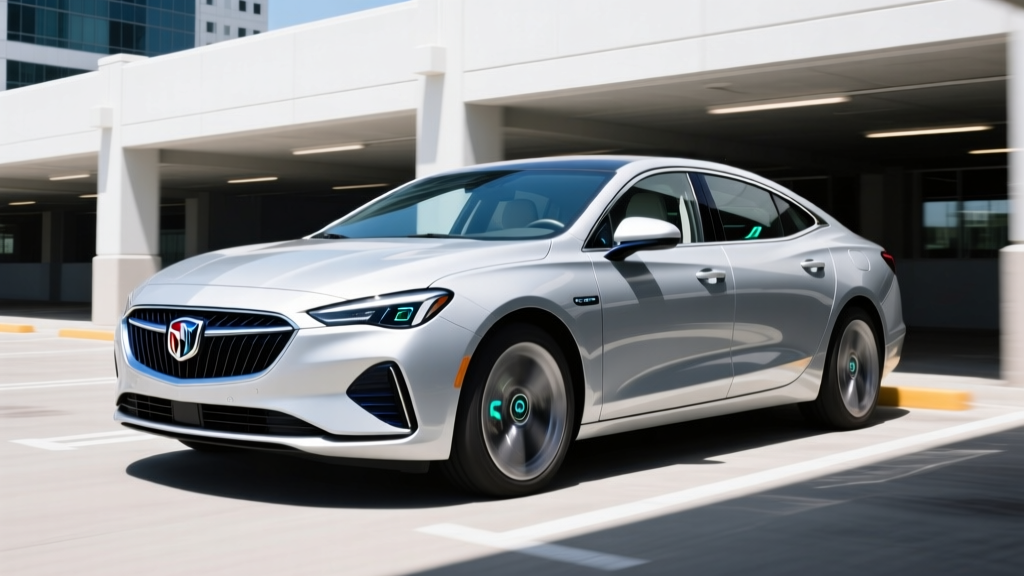
The full-size luxury sedan segment has quietly embraced electrification, and the Buick LaCrosse Hybrid represents GM's premium sedan play for buyers who want fuel savings without plugging in. As a conventional hybrid electric vehicle (HEV), the LaCrosse Hybrid recaptures braking energy to boost MPG — no charging cord required. But with plug-in hybrids (PHEVs) and full battery-electric vehicles (BEVs) proliferating in 2026, where does this sedan actually fit?
We've compiled the EPA fuel economy data, powertrain specs, battery warranty terms, and ownership economics so you can evaluate the LaCrosse Hybrid against its electrified rivals on numbers, not marketing.
EPA Fuel Economy: How Many MPG Does the Buick LaCrosse Hybrid Get?
The Buick LaCrosse Hybrid pairs a 2.5-liter inline-4 engine with an electric motor integrated into GM's eAssist mild-hybrid system (in later model years, a full strong-hybrid architecture). Below is the EPA-rated fuel economy breakdown as published on fueleconomy.gov:
| Metric | Value |
|---|---|
| City MPG | 25 MPG |
| Highway MPG | 35 MPG |
| Combined MPG | 29 MPG |
| Annual Fuel Cost (est.) | ~$1,850 (15,000 mi/yr) |
Compared to the non-hybrid LaCrosse with the 3.6L V6 (rated around 21 city / 31 highway / 25 combined), the hybrid powertrain delivers a meaningful 4-MPG combined improvement — roughly 140 fewer gallons consumed per year at 15,000 miles driven.
HEV vs. PHEV vs. EV: Which Electrified Sedan Fits You?
Before evaluating the LaCrosse Hybrid in isolation, it's critical to understand what it is — and what it isn't. The LaCrosse Hybrid is a conventional hybrid (HEV). It cannot be plugged in, has no electric-only driving range, and does not qualify for the federal §30D EV tax credit. Here's how the three electrified powertrain types compare:
HEV (Conventional Hybrid)
- No plug — refuels with gas only
- Small battery (~1–2 kWh) recharged by regen braking
- No electric-only range
- Boosts MPG 15–30% over gas equivalent
- No federal tax credit
Example: Buick LaCrosse Hybrid
PHEV (Plug-In Hybrid)
- Plugs in to charge a larger battery (12–25 kWh)
- 20–50 miles electric-only range
- Gas engine kicks in for longer trips
- May qualify for up to $7,500 federal credit (§30D)
Example: Chrysler Pacifica Hybrid
BEV (Battery Electric)
- 100% electric — no gas engine
- 200–400+ miles EPA range
- Requires home or public charging access
- Up to $7,500 federal credit (§30D) if eligible
Example: Tesla Model 3, Hyundai Ioniq 6
The LaCrosse Hybrid makes sense for drivers who want improved fuel economy but lack access to home or workplace charging. If you can install a Level 2 charger at home and have a commute under 40 miles round-trip, a PHEV or BEV will deliver far greater per-mile savings.
Powertrain Specs: Engine, Motor, and Combined Output
| Component | Specification |
|---|---|
| Engine | 2.5L inline-4, direct injection |
| Electric Motor | Integrated motor-generator (eAssist / strong hybrid) |
| Combined Horsepower | ~182–194 HP |
| Transmission | 6-speed automatic (hybrid-optimized) |
| Drivetrain | Front-wheel drive |
| 0–60 MPH (est.) | ~7.8 seconds |
| Battery Capacity | ~0.5–1.5 kWh (NiMH or Li-ion, not plug-in) |
| Regenerative Braking | Yes — single-mode regen |
The hybrid system prioritizes efficiency over performance. The electric motor assists during acceleration and enables engine stop-start at traffic lights, but it cannot propel the car on electricity alone for any meaningful distance. This is fundamentally different from a PHEV or BEV, where the electric motor provides primary propulsion.
Battery Warranty, Lifespan, and Replacement Cost
Hybrid battery degradation is generally modest. Unlike BEV batteries, which are cycled deeply (0–100% state of charge), hybrid batteries operate in a narrow state-of-charge window (typically 40–60%) managed by the vehicle's battery management system. This shallow cycling dramatically extends cell life.
Expected lifespan: Most conventional hybrid batteries last 150,000–200,000+ miles before significant degradation. Many first-generation Toyota Prius packs exceeded 200,000 miles with minimal capacity loss.
Replacement cost: If the battery fails outside warranty, expect a replacement cost of $2,000–$4,000 including labor for the LaCrosse Hybrid's relatively small pack. Refurbished or aftermarket packs may reduce this to $1,500–$2,500. This is substantially less than BEV battery replacements, which can exceed $10,000–$20,000 due to their much larger capacity (60–100 kWh vs. ~1 kWh).
Pricing and Tax Credit Eligibility
The Buick LaCrosse was discontinued in the U.S. market after the 2019 model year. As of 2026, the LaCrosse Hybrid is available only on the used market. Here's what buyers need to know about pricing and incentives:
| Item | Detail |
|---|---|
| Original MSRP (2019, new) | ~$30,000–$36,000 |
| Used Market Price (2026, avg.) | ~$14,000–$20,000 depending on mileage/condition |
| Federal §30D New EV Credit | Not eligible (HEV, not PHEV or BEV) |
| Federal Used EV Credit (§25E) | Not eligible (conventional hybrids excluded) |
| State Hybrid Incentives | Varies by state — check local DMV/tax authority |
Because the LaCrosse Hybrid is a conventional HEV, it does not qualify for the IRS §30D clean vehicle credit (up to $7,500 for new PHEVs/BEVs) or the §25E used clean vehicle credit (up to $4,000 for used PHEVs/BEVs). The IRS defines eligible vehicles as those with a plug-in capability and minimum battery capacity of 7 kWh (new) or 7 kWh (used). Conventional hybrids fall below this threshold.
Some states offer modest incentives for high-MPG vehicles regardless of plug-in status, but these vary widely and change annually. Always verify with your state's energy office or a qualified tax professional before relying on any incentive.
Reliability and Long-Term Ownership
The Buick LaCrosse Hybrid shares its platform and powertrain architecture with other GM Epsilon II sedans (Chevrolet Impala, Chevrolet Malibu). Reliability has been generally average for the nameplate, with the hybrid system adding minimal complexity over the conventional model.
Key reliability considerations:
- Hybrid system: The eAssist/mild-hybrid components (motor-generator, inverter) have proven durable with few widespread failure reports.
- Transmission: The 6-speed automatic is a conventional design shared across many GM models — well-understood by independent mechanics.
- Brakes: Regenerative braking reduces wear on friction brakes. Expect brake pad life of 60,000–80,000+ miles under normal driving.
- NHTSA Safety: The LaCrosse received a 5-star overall safety rating from NHTSA in its model years, with standard stability control, multiple airbags, and available forward collision alert.
Who Should Choose the Buick LaCrosse Hybrid?
Choose the LaCrosse Hybrid If:
- You want better MPG without changing your fueling habits
- You don't have access to home or workplace charging
- You prefer a traditional luxury sedan with a smooth ride
- You're buying used and want lower upfront cost
- Your annual mileage is moderate (10,000–15,000 mi/yr)
Look Elsewhere If:
- You can install a Level 2 charger at home (consider a PHEV or BEV)
- Your commute is under 30 miles round-trip (a BEV eliminates gas entirely)
- You want federal tax credits ($7,500 new / $4,000 used)
- You want the lowest possible cost per mile (BEV electricity costs ~$0.04/mi vs. hybrid gas at ~$0.12/mi)
- You want the latest ADAS technology (2019 models predate modern Level 2 systems)
Frequently Asked Questions
How many MPG does the Buick LaCrosse Hybrid get?
The EPA rates the LaCrosse Hybrid at 25 city / 35 highway / 29 combined MPG. Real-world city driving often yields 27–30 MPG due to regenerative braking, while sustained highway driving at higher speeds may return 30–33 MPG.
Can the Buick LaCrosse Hybrid drive on electric power only?
No. As a conventional hybrid (HEV), the LaCrosse Hybrid cannot drive on electricity alone. The electric motor assists the gasoline engine during acceleration and enables stop-start at idle, but it does not provide independent propulsion. For electric-only driving, you need a PHEV (20–50 miles electric range) or a BEV (200–400+ miles).
Does the Buick LaCrosse Hybrid need to be plugged in?
No. The LaCrosse Hybrid charges its small battery pack entirely through regenerative braking and the gasoline engine. You refuel it at a gas station like any conventional car.
Does the Buick LaCrosse Hybrid qualify for any tax credit?
No. Federal tax credits under IRS §30D (new vehicles) and §25E (used vehicles) require plug-in capability and a minimum battery capacity of 7 kWh. The LaCrosse Hybrid's battery is under 2 kWh and it has no plug. Some states may offer minor incentives for high-MPG vehicles, but these vary by jurisdiction.
Is the hybrid battery reliable and what does replacement cost?
GM covers the hybrid battery for 8 years / 100,000 miles (10 years / 150,000 miles in CARB states). Hybrid batteries typically last 150,000–200,000+ miles because they operate in a narrow charge window. Out-of-warranty replacement costs approximately $2,000–$4,000 including labor.
How does the LaCrosse Hybrid compare to a PHEV like the Toyota Prius Prime?
The Prius Prime (a PHEV) offers 25 miles of electric-only range, 54 MPG combined after the battery depletes, and qualifies for up to $7,500 in federal tax credits when purchased new. The LaCrosse Hybrid offers 29 MPG combined with no electric-only range and no federal credit. If you can charge at home, the Prius Prime delivers dramatically lower per-mile costs on short trips. If you cannot charge at home, the LaCrosse Hybrid's simplicity and no-plug convenience may be preferable.