The State of Buick's Hybrid SUV Lineup in 2026
Buick's electrification strategy has evolved considerably, and the brand now offers hybrid options across its SUV portfolio. For buyers researching Buick hybrid SUV models, the lineup centers on two key vehicles: the conventional hybrid (HEV) version of the Encore GX and the plug-in hybrid (PHEV) variant of the Envision. Each serves a distinctly different buyer profile, and understanding the mechanical and economic differences between them is essential before visiting a dealer.
This guide breaks down every relevant spec — EPA fuel economy, electric-only range, powertrain output, battery warranty, pricing, and federal tax credit eligibility — so you can match the right Buick hybrid to your driving pattern.
HEV vs. PHEV: Understanding Buick's Two Hybrid Approaches
Conventional Hybrid (HEV) — Buick Encore GX Hybrid
An HEV pairs a gasoline engine with a small electric motor and a battery that recharges through regenerative braking and engine power. You never plug it in. The electric motor assists during acceleration and low-speed driving, reducing fuel consumption by 20-35% compared to a gas-only equivalent. The battery is small (typically under 2 kWh) and is not designed for electric-only driving beyond very low-speed creep.
Plug-In Hybrid (PHEV) — Buick Envision PHEV
A PHEV carries a substantially larger battery (typically 15-20+ kWh) that you plug in to recharge. It provides a meaningful electric-only driving range — enough for most daily commutes — before the gasoline engine engages. Once the battery is depleted, it operates exactly like a conventional hybrid. Think of it as an EV for short trips and a hybrid for long ones.
2026 Buick Encore GX Hybrid: MPG, Specs, and Pricing
The Encore GX Hybrid is Buick's entry into the subcompact hybrid SUV segment, competing with the Toyota Corolla Cross Hybrid and Honda HR-V Hybrid. It pairs a turbocharged 1.2-liter three-cylinder engine with an electric motor integrated into the transmission.
| Specification | 2026 Buick Encore GX Hybrid |
|---|---|
| Powertrain | 1.2L turbo I3 + electric motor |
| Combined Horsepower | ~155 hp |
| EPA MPG (City / Hwy / Combined) | 38 / 34 / 36 MPG |
| Drivetrain | FWD (AWD available) |
| Battery Capacity | ~1.5 kWh (not plug-in) |
| Starting MSRP | ~$29,500 |
| Federal Tax Credit | Not eligible (§30D requires plug-in) |
| EPA Fuel Economy | City | Highway | Combined |
|---|---|---|---|
| EPA Estimate | 38 MPG | 34 MPG | 36 MPG |
| Real-World Expectation | 36-40 MPG | 31-34 MPG | 34-37 MPG |
Real-world MPG note: Conventional hybrids like the Encore GX Hybrid tend to exceed their EPA city estimate in stop-and-go traffic because regenerative braking recovers more energy at low speeds. Highway driving is where you'll see the lowest figures, as the electric motor provides less assistance at sustained high speeds. Expect 34-37 MPG combined in mixed driving — a meaningful improvement over the gas-only Encore GX's ~29 MPG combined.
2026 Buick Envision PHEV: Electric Range, Charging, and Specs
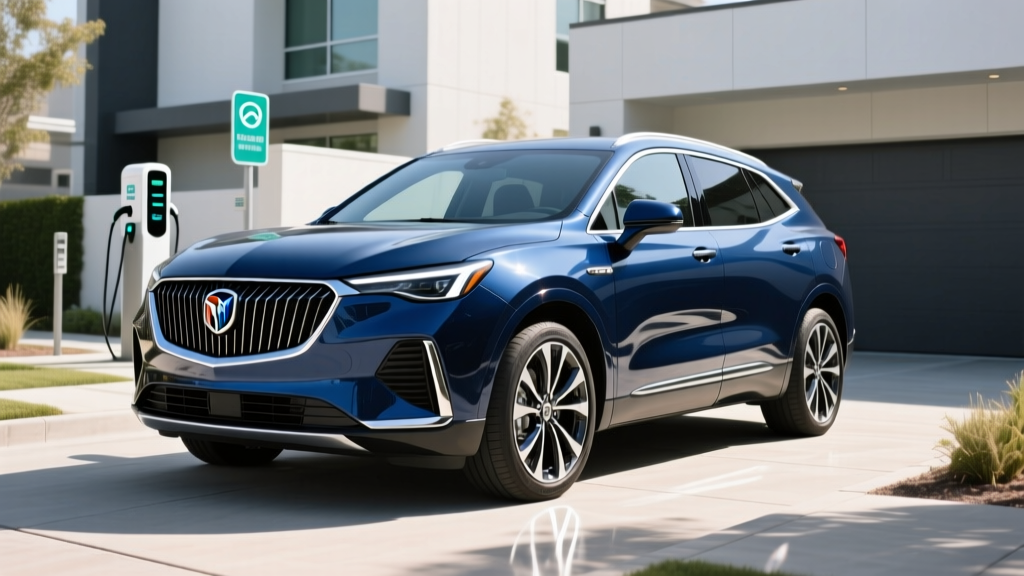
The Envision PHEV is the more technologically ambitious offering, designed for buyers who want EV-like daily commuting without committing to a full battery-electric vehicle. It uses a larger lithium-ion battery pack paired with a turbocharged 1.5-liter four-cylinder engine.
| Specification | 2026 Buick Envision PHEV |
|---|---|
| Powertrain | 1.5L turbo I4 + electric motor |
| Combined Horsepower | ~200 hp |
| EPA Electric-Only Range | ~38 miles |
| Total Combined Range | ~430 miles |
| Battery Capacity (usable) | ~17.5 kWh (NMC chemistry) |
| Level 2 Charging Time (0-100%) | ~3.5 hours at 7.2 kW |
| DC Fast Charging | Not available |
| EPA MPG (gas-only after depletion) | ~33 MPG combined |
| MPGe (charge-sustaining + electric) | ~72 MPGe |
| Starting MSRP | ~$42,000 |
| Federal Tax Credit (§30D) | Up to $3,750 (see eligibility below) |
Electric-Only Range: What to Expect in the Real World
EPA Electric-Only Range: ~38 miles
Real-world expectation: 30-36 miles in moderate weather; 22-28 miles in cold weather (below 35°F) or at sustained highway speeds above 65 mph. Using cabin heating in winter significantly reduces electric-only range because the PHEV battery is small relative to a full EV.
The 38-mile electric range covers the average American's one-way commute (FHWA data shows the average commute is ~16 miles each way). If you can charge at home overnight, most weekday driving happens without burning a drop of gasoline. Weekend road trips use the gasoline engine seamlessly — the transition from electric to hybrid mode is nearly imperceptible.
Charging the Envision PHEV
The Envision PHEV charges via a standard J1772 connector for Level 1 (120V) and Level 2 (240V) charging. There is no DC fast charging capability — this is typical for PHEVs, as the battery is small enough that Level 2 replenishes it fully in a few hours.
| Charging Level | Power | 0-100% Time | Miles of EV Range Added/Hr |
|---|---|---|---|
| Level 1 (120V outlet) | ~1.4 kW | ~12-14 hours | ~3-4 mi/hr |
| Level 2 (240V home charger) | 7.2 kW | ~3.5 hours | ~12 mi/hr |
Federal Tax Credit Eligibility for Buick Hybrids
This is where the HEV vs. PHEV distinction matters financially. Under the IRS §30D Clean Vehicle Credit, only plug-in vehicles with sufficient battery capacity qualify. Conventional hybrids like the Encore GX Hybrid do not qualify for any federal purchase credit.
Envision PHEV §30D Credit Checklist (2026 Rules)
- Maximum credit: Up to $3,750 (battery component portion; critical mineral portion depends on sourcing compliance)
- MSRP cap: SUVs must be under $80,000 — the Envision PHEV qualifies
- Buyer income cap: AGI must not exceed $150,000 (single) / $300,000 (joint) / $225,000 (head of household)
- Battery sourcing: Credit amount depends on percentage of critical minerals and battery components sourced from the U.S. or FTA partners — this changes annually and varies by build date
- Point-of-sale transfer: Eligible buyers can transfer the credit to the dealer at purchase, reducing the out-of-pocket price immediately
- Assembly requirement: Final assembly must occur in North America — verify the VIN at fueleconomy.gov
Always consult a tax professional and verify eligibility at IRS.gov before relying on credit estimates. Rules are subject to legislative change.
The Encore GX Hybrid, as a conventional HEV, does not qualify for the §30D credit. However, some states offer their own incentives for any electrified vehicle — check your state's energy office or DMV for local programs.
Battery Warranty, Reliability, and Replacement Cost
Buick Hybrid Battery Warranty
Encore GX Hybrid: 8 years / 100,000 miles (whichever comes first) on the hybrid battery and powertrain components. This aligns with the industry-standard warranty mandated for emissions-related components in many states.
Envision PHEV: 8 years / 100,000 miles on the high-voltage battery pack, with a capacity retention guarantee of at least 70% of original capacity over the warranty period.
Source: Buick Limited Warranty
How Long Do Hybrid Batteries Actually Last?
Modern hybrid and PHEV batteries rarely fail within the warranty period. Data from long-term fleet studies and owner reports suggest NMC-based PHEV batteries typically lose 8-15% capacity over 100,000 miles, while the smaller HEV batteries in conventional hybrids experience minimal degradation because they operate in a narrow state-of-charge window (typically 40-60% SoC), which minimizes stress on the cells.
Battery Replacement Cost
Should a battery replacement be needed out of warranty:
- Encore GX Hybrid (~1.5 kWh): Estimated $2,000-$3,500 for the battery module pack
- Envision PHEV (~17.5 kWh): Estimated $5,500-$8,000 for the full pack replacement
These are estimates based on current GM hybrid/PHEV parts pricing and may vary by model year and dealer. Independent hybrid battery refurbishers can sometimes offer lower-cost alternatives for out-of-warranty vehicles.
Buick Hybrid SUV Models: Pros and Cons
Encore GX Hybrid — Pros
- No plug-in required — works like a normal gas car
- 36 MPG combined saves ~$400-600/year vs. gas-only model
- Lower starting price (~$29,500)
- Proven GM hybrid powertrain architecture
- 8-year/100,000-mile battery warranty
Encore GX Hybrid — Cons
- No federal tax credit
- No electric-only driving capability
- Modest 155 hp — adequate but not quick
- AWD availability may be limited by trim
Envision PHEV — Pros
- ~38 miles electric-only covers most commutes
- Eligible for partial federal tax credit (up to $3,750)
- 200 hp combined — noticeably more responsive
- 430+ mile total range eliminates range anxiety
- Level 2 home charging fully replenishes overnight
Envision PHEV — Cons
- Higher MSRP (~$42,000 before credit)
- No DC fast charging
- Requires home charging access to maximize value
- Electric range drops significantly in cold weather
- Credit amount depends on battery sourcing rules
Who Should Buy a Buick Hybrid — and Who Should Go Full EV?
Choose the Encore GX Hybrid (HEV) If:
- You cannot install a home charger (apartment, street parking, no garage)
- Your commute is longer than 40 miles round-trip and you don't want to think about charging
- You want fuel savings without changing any habits — just fill up and drive
- Your budget is under $35,000
Choose the Envision PHEV If:
- You have access to Level 2 home charging (garage or driveway with 240V)
- Your daily driving is under 35 miles and you want EV-like commuting
- You take occasional road trips and don't want to plan around charging stops
- You qualify for the §30D credit, bringing the effective price closer to $38,000
Choose a Full EV Instead If:
- You have reliable home charging and your daily driving rarely exceeds 200 miles
- You want zero tailpipe emissions and maximum fuel-cost savings
- You qualify for the full $7,500 federal credit on a qualifying BEV
- You want minimal maintenance (no oil changes, no engine)
Frequently Asked Questions About Buick Hybrid SUVs
How many MPG does the Buick Encore GX Hybrid get?
The EPA rates the 2026 Encore GX Hybrid at 38 city / 34 highway / 36 combined MPG. In real-world mixed driving, expect 34-37 MPG combined. City driving tends to yield higher figures due to regenerative braking; sustained highway speeds above 70 mph will produce the lowest numbers.
How far can the Buick Envision PHEV go on electric only?
The EPA estimates approximately 38 miles of electric-only range. In practice, expect 30-36 miles in mild weather and 22-28 miles in cold conditions or at highway speeds. Once the battery depletes, the gasoline engine takes over and the vehicle operates as a conventional hybrid with ~33 MPG combined.
Does the Buick Encore GX Hybrid qualify for a tax credit?
No. The federal §30D Clean Vehicle Credit applies only to plug-in electric vehicles (PHEVs and BEVs). Conventional hybrids that cannot be plugged in do not qualify. Some states may offer separate incentives for hybrid purchases — check your state's energy department.
Does the Buick Envision PHEV qualify for a tax credit?
It may qualify for a partial credit of up to $3,750 under the §30D program, depending on battery component sourcing, your income level, and the vehicle's MSRP (which is under the $80,000 SUV cap). Eligibility rules are complex and change periodically — verify using your VIN at fueleconomy.gov and consult a tax professional.
How long will the hybrid battery last, and what does replacement cost?
Both Buick hybrid models carry an 8-year/100,000-mile warranty on the high-voltage battery. Modern hybrid batteries are designed to outlast this period with minimal degradation. Out-of-warranty replacement costs are estimated at $2,000-$3,500 for the Encore GX Hybrid and $5,500-$8,000 for the Envision PHEV.
Can I charge the Envision PHEV at a public DC fast charger?
No. The Envision PHEV supports only Level 1 (120V) and Level 2 (240V) AC charging via a J1772 connector. This is standard for PHEVs — the battery is small enough that Level 2 fully charges it in about 3.5 hours. You will not need DC fast charging infrastructure for daily use.
Is a Buick hybrid SUV reliable?
GM's hybrid powertrain architecture has been in production across multiple brands for several years. The simpler the system, the fewer failure points — the Encore GX Hybrid's conventional hybrid system has fewer components than a PHEV. NHTSA and owner forums suggest these powertrains are comparable to Toyota and Honda hybrid reliability when maintained per the service schedule. The 8-year/100,000-mile battery warranty provides additional peace of mind.
What's the difference in annual fuel cost between the gas, hybrid, and PHEV Buick SUVs?
Assuming 15,000 miles/year and $3.50/gallon gasoline:
- Gas-only Encore GX (~29 MPG): ~$1,810/year
- Encore GX Hybrid (~36 MPG): ~$1,458/year (saves ~$352/year)
- Envision PHEV (70% electric commuting): ~$600-900/year in combined electricity + gasoline (saves $900-1,200/year if you charge regularly)
The PHEV's savings depend heavily on how often you charge. Without regular plug-in charging, its fuel economy reverts to ~33 MPG and savings narrow significantly.