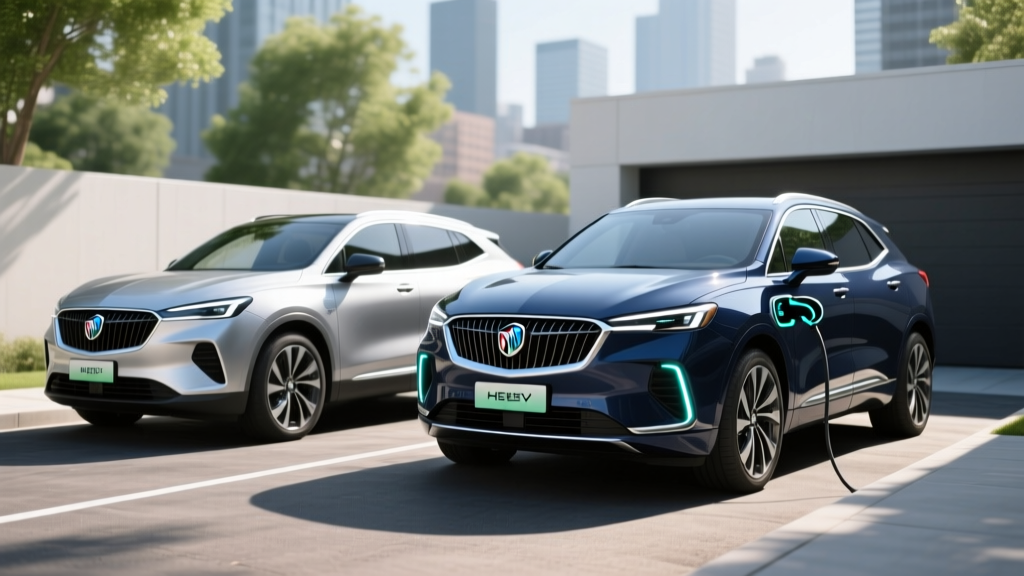
If you've been browsing Buick's showroom and wondering whether the brand offers any electrified options, the short answer is yes — but with important caveats. As of the 2026 model year, Buick offers one hybrid SUV in the U.S. market: the Buick Envision PHEV (plug-in hybrid). The brand does not currently sell a conventional hybrid (HEV) SUV stateside, though its corporate sibling, the GMC Acadia Hybrid, shares the same GM platform.
This guide breaks down exactly what Buick offers, how the Envision PHEV performs in real-world driving, what it costs, and whether a plug-in hybrid is the right bridge between a gas SUV and a full battery-electric vehicle.
Does Buick Make a Hybrid SUV? The 2026 Lineup
Buick's electrification strategy has been slower than some rivals. While GM has pushed hard into full EVs with the Equinox EV and Blazer EV under the Chevrolet brand, Buick's U.S. lineup has remained largely gasoline-powered. The 2026 Buick Envision PHEV is the sole hybrid offering, slotting in as a compact luxury crossover aimed at buyers who want some electric driving without range anxiety.
HEV vs. PHEV — What's the Difference?
Conventional Hybrid (HEV): Uses a small battery (typically 1–2 kWh) charged by regenerative braking and the engine. You never plug it in. Fuel economy improves across all driving, especially city. Example: Toyota RAV4 Hybrid.
Plug-in Hybrid (PHEV): Uses a larger battery (12–25 kWh) that you can charge from a wall outlet or public charger. Offers 20–50 miles of electric-only driving before the gas engine kicks in. Example: Buick Envision PHEV.
Buick does not sell a conventional HEV in the U.S. for 2026. If you want a no-plug hybrid from GM, you'd look at the GMC Acadia Hybrid or the Chevrolet Tahoe Hybrid (fleet-oriented). For a true Buick hybrid experience, the Envision PHEV is your option.
2026 Buick Envision PHEV: Powertrain and Performance
The 2026 Envision PHEV pairs a turbocharged 1.5-liter four-cylinder engine with a front-mounted electric motor and a 17.7 kWh lithium-ion battery pack (NMC chemistry). Here's how the numbers stack up:
| Specification | 2026 Buick Envision PHEV |
|---|---|
| Engine | 1.5L turbocharged I-4 |
| Electric Motor | Front-mounted permanent magnet |
| Combined System Horsepower | 233 hp |
| Combined System Torque | 295 lb-ft |
| Battery Capacity (Usable) | 15.9 kWh usable (17.7 kWh gross) |
| Battery Chemistry | NMC (Nickel Manganese Cobalt) |
| Transmission | CVT (e-CVT hybrid-specific) |
| Drivetrain | FWD standard; AWD available |
| 0–60 mph | ~7.2 seconds (AWD) |
| Towing Capacity | 1,500 lbs |
The combined 233 hp gives the Envision PHEV adequate passing power, and the electric motor's instant torque makes city driving feel responsive. The e-CVT is smooth but not sporty — this is a comfort-oriented powertrain, not a performance setup.
EPA Fuel Economy and Electric-Only Range
Fuel economy is where the PHEV proposition either shines or disappoints, depending on your driving habits. Here are the official EPA figures for the 2026 Envision PHEV:
| Metric | Value |
|---|---|
| Electric-Only Range (EPA) | 35 miles |
| Combined MPGe (Electric + Gas) | 82 MPGe |
| Gas-Only MPG (Combined) | 34 MPG |
| Gas-Only MPG (City) | 36 MPG |
| Gas-Only MPG (Highway) | 32 MPG |
| Total Combined Range (Electric + Gas) | ~440 miles |
| Fuel Tank Capacity | 13.2 gallons |
Real-World MPG vs. EPA Estimates
EPA Electric Range: 35 miles.
Real-World Expectation: Expect 28–33 miles of electric-only range in mixed driving. In cold weather (below 40°F), that can drop to 22–26 miles due to battery efficiency loss and cabin heating demand. Highway-only electric range at 70+ mph may be as low as 25 miles.
EPA Gas-Only MPG: 34 combined.
Real-World Expectation: Once the battery is depleted, 31–35 MPG combined is typical. City driving may edge slightly higher thanks to regenerative braking recapturing energy. Highway cruising at 75+ MPH tends to land around 29–31 MPG.
Source: fueleconomy.gov
The 35-mile electric range is competitive for the compact PHEV crossover segment, though it trails the Toyota RAV4 Prime's 42 miles. If your daily commute is under 30 miles round-trip and you charge at home nightly, you could go weeks without burning gasoline.
Charging the Envision PHEV: Speeds, Times, and Connectors
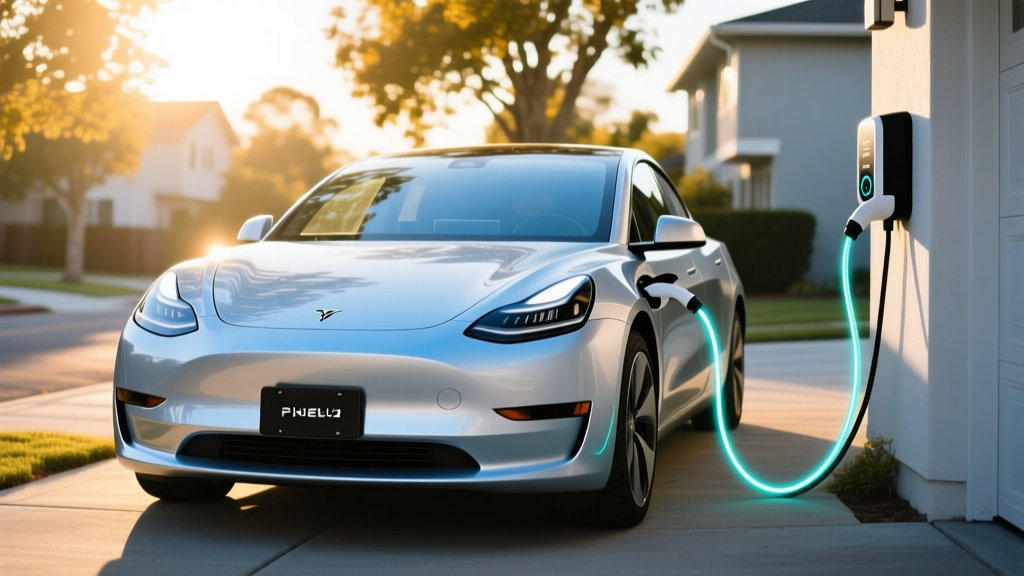
One of the most common questions from first-time PHEV buyers is how charging works. Unlike a full EV, the Envision PHEV's smaller battery means charging is faster and less infrastructure-dependent.
| Charging Level | Power (kW) | 0–100% Time | Notes |
|---|---|---|---|
| Level 1 (120V household outlet) | ~1.4 kW | ~11–12 hours | Adequate for overnight if daily use is low |
| Level 2 (240V home charger) | ~3.3 kW (onboard charger limit) | ~5 hours | Recommended for daily PHEV charging |
| DC Fast Charging | Not supported | N/A | No CCS or NACS DC fast-charge capability |
The Envision PHEV's onboard charger is limited to 3.3 kW, which is standard for compact PHEVs. This means even if you plug into a 7.2 kW or 11.5 kW Level 2 station, the vehicle will only draw 3.3 kW. A full charge from empty takes about five hours on Level 2 — plan to plug in when you get home from work, and it'll be full by morning.
The connector is a standard J1772 for Level 1 and Level 2 AC charging. There is no DC fast-charge port — this is typical for PHEVs, whose batteries are small enough that overnight AC charging suffices. If you need DC fast charging, you'd need to step up to a full EV.
Pricing, Trims, and Tax Credit Eligibility
The 2026 Buick Envision PHEV starts at a base MSRP that positions it against luxury-branded PHEV competitors:
| Trim | MSRP (FWD) | MSRP (AWD) |
|---|---|---|
| Preferred (base) | $42,200 | $44,000 |
| Essence | $45,400 | $47,200 |
| Avenir (top) | $50,100 | $51,900 |
Destination charge adds approximately $1,395. These prices put the Envision PHEV in competition with the Toyota RAV4 Prime (from ~$44,000), Hyundai Tucson PHEV (from ~$38,000), and Lincoln Corsair Grand Touring PHEV (from ~$51,000).
Does the Buick Envision PHEV Qualify for a Federal Tax Credit?
- §30D Federal PHEV Credit: Up to $7,500, but eligibility depends on battery sourcing, critical minerals requirements, MSRP caps ($80,000 for SUVs), and buyer income limits ($300K joint / $150K single).
- Envision PHEV Status (2026): The Envision PHEV qualifies for a partial credit of $3,750, as it meets the battery component requirement but does not fully satisfy the critical minerals sourcing threshold under current IRS rules.
- Point-of-Sale Transfer: Under current IRS guidance, you can transfer the credit to the dealer at purchase, reducing your out-of-pocket cost at the dealership rather than waiting for a tax refund.
- State Incentives: Vary widely. Check your state's energy office or AFDC incentive database for local rebates.
Tax credit rules under IRS §30D change frequently. Always verify current eligibility with a tax professional before purchasing, and confirm the specific VIN's credit status on the IRS clean vehicle report.
Reliability, Battery Warranty, and Replacement Cost
Hybrid battery longevity is consistently a top concern for buyers. Here's what you need to know about the Envision PHEV:
Battery and Powertrain Warranty
Hybrid Battery Warranty: 8 years / 100,000 miles (10 years / 150,000 miles in CARB states including CA, NY, MA, and others).
Powertrain Warranty: 5 years / 60,000 miles.
Bumper-to-Bumper: 3 years / 36,000 miles.
Capacity Retention Threshold: GM warrants the battery against falling below 60% of original capacity during the warranty period.
In practice, PHEV batteries degrade far more slowly than early-generation hybrids. GM's NMC cells in the Envision PHEV are liquid-cooled, which significantly extends lifespan compared to passively cooled packs. Real-world data from GM's earlier PHEV platforms (Volt, Clarity) suggests 10–15% degradation over 10 years is typical — meaning a 35-mile electric range might become 30–31 miles after a decade.
Battery Replacement Cost: If the battery does need replacement out of warranty, expect a cost in the range of $6,000–$9,000 (parts and labor) based on current GM PHEV battery pricing. This is considerably less than full EV battery replacements ($12,000–$20,000+), owing to the PHEV's smaller pack.
General Reliability Outlook
The Envision is built on GM's E2XX platform and manufactured at the Jinqiao plant in China (for U.S.-market vehicles). Buick as a brand has scored average to slightly above average in recent J.D. Power dependability studies. The PHEV powertrain adds complexity (electric motor, power electronics, high-voltage battery) compared to the gas-only Envision, but the components are proven across GM's PHEV lineup.
Envision PHEV vs. Full EV vs. Gas SUV: Which Fits You?
Choose the Buick Envision PHEV If:
- Your daily commute is under 35 miles round-trip and you can charge at home
- You take road trips several times a year and don't want to plan around chargers
- You live in an apartment or area with limited public charging but have home outlet access
- You want a premium-badged crossover without paying Lincoln or Lexus PHEV prices
Choose a Full EV (like the Chevy Equinox EV) If:
- You have reliable home Level 2 charging
- You want zero gasoline costs and minimal maintenance (no oil changes, no engine)
- Your daily driving is predictable and within 200+ miles
- You want the full $7,500 federal tax credit (if eligible)
Choose a Gas-Only SUV If:
- You have no access to any form of charging (no garage, no workplace charger)
- Your budget is strictly under $35,000
- You drive very low annual miles and fuel cost is not a major concern
Pros and Cons at a Glance
Pros
- 35 miles of electric-only range covers most commutes
- Premium interior with Buick's QuietTuning sound insulation
- No range anxiety — gas engine provides 440+ total miles
- Eligible for partial $3,750 federal tax credit
- AWD available for snow-belt buyers
- Comfortable ride quality over rough pavement
Cons
- 3.3 kW onboard charger means slower Level 2 charging than some rivals
- No DC fast-charge capability
- Electric range trails RAV4 Prime (42 mi) and Tucson PHEV (33 mi)
- AWD adds ~$1,800 to every trim
- Only partial federal tax credit due to battery sourcing
- Cargo space reduced vs. gas Envision due to battery placement
Frequently Asked Questions
Does Buick make a conventional hybrid SUV that doesn't need to be plugged in?
No. As of the 2026 model year, Buick does not sell a conventional hybrid (HEV) SUV in the United States. The only electrified Buick SUV is the Envision PHEV, which benefits from plug-in charging for its 35-mile electric range but can also operate as a regular hybrid without ever being plugged in.
How many MPG does the Buick Envision PHEV get?
The EPA rates the 2026 Envision PHEV at 34 MPG combined (36 city / 32 highway) when operating on gasoline after the battery is depleted. In real-world driving, expect 31–35 MPG combined, with city driving sometimes slightly exceeding the EPA estimate thanks to regenerative braking.
How far can the Envision PHEV go on electric only?
The EPA rates it at 35 miles of electric-only range. Real-world results typically fall between 28–33 miles in moderate temperatures, dropping to 22–26 miles in cold weather. Highway driving at sustained speeds above 70 MPH will also reduce electric range.
Is the Buick Envision PHEV reliable? What about the battery?
The Envision PHEV uses proven GM hybrid components with a liquid-cooled battery pack. The hybrid battery is covered by an 8-year/100,000-mile warranty (10 years/150,000 miles in CARB states). Out-of-warranty battery replacement is estimated at $6,000–$9,000. PHEV batteries typically lose 10–15% capacity over a decade of use.
Does the Envision PHEV qualify for the $7,500 federal tax credit?
The 2026 Envision PHEV qualifies for a partial federal tax credit of $3,750 under IRS §30D. It meets the battery component requirement but does not fully satisfy the critical minerals sourcing threshold. Eligibility also depends on buyer income limits and MSRP caps. The credit can be transferred to the dealer at point of sale. Always verify with a tax professional.
Can I charge the Envision PHEV at a public DC fast charger?
No. The Envision PHEV does not support DC fast charging. It charges exclusively via AC — using a standard J1772 connector at Level 1 (120V, ~11–12 hours for a full charge) or Level 2 (240V, ~5 hours at its 3.3 kW onboard charger limit).
What's the difference between the Envision PHEV and the gas-only Envision?
The PHEV adds an electric motor and 17.7 kWh battery pack, boosting combined output to 233 hp (vs. 228 hp for the gas 2.0T) and providing 35 miles of electric driving. The trade-off is a higher starting price (~$6,000 more than the gas base model), slightly reduced cargo volume, and added weight. Fuel savings depend heavily on how often you charge and how much you drive within the electric range.