Quick Verdict: The Electra E7 PHEV Bridges Gas and Electric
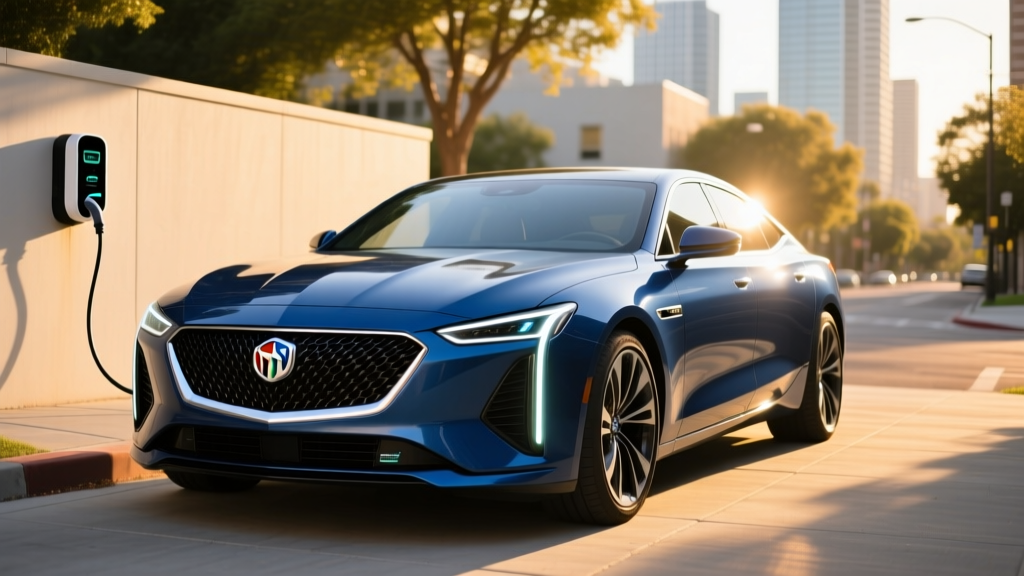
The Buick Electra E7 PHEV occupies a narrow but valuable lane: a midsize premium plug-in hybrid that delivers usable electric-only commuting range while retaining a gasoline engine for road trips. For 2026, Buick positions the Electra E7 PHEV against the Toyota RAV4 Prime, Hyundai Tucson PHEV, and Chrysler Pacifica Hybrid, targeting buyers who want electrified daily driving without range anxiety on longer hauls.
Before we get into the numbers, it is critical to clarify what a PHEV actually does compared to a conventional hybrid, because the distinction determines whether this vehicle fits your lifestyle.
HEV vs PHEV — What Is the Difference?
| Feature | Conventional Hybrid (HEV) | Plug-In Hybrid (PHEV) |
|---|---|---|
| Plug in to charge? | No — charges via regenerative braking and engine | Yes — plug in to maximize electric range |
| Electric-only range | 0–2 miles at low speed | 20–50+ miles depending on battery size |
| Battery size | 1–2 kWh | 12–25+ kWh |
| Federal tax credit | No | Potentially, up to $7,500 under §30D (battery capacity dependent) |
| Best for | Drivers who cannot plug in at home | Drivers with home/work charging who commute under 40 miles |
The Buick Electra E7 PHEV is a plug-in hybrid. You get the most benefit by plugging it in nightly. If you never plug in, you still get hybrid-mode fuel economy — but you are paying for battery capacity you are not using.
EPA Fuel Economy and Real-World MPG
The Electra E7 PHEV's efficiency is measured two ways: MPGe (miles per gallon equivalent) when operating on battery plus gasoline, and standard MPG when the battery is depleted and the gasoline engine does all the work.
| Metric | EPA Estimate | Real-World Expectation |
|---|---|---|
| Combined MPGe (charge-sustaining + electric) | ~78 MPGe | 70–82 MPGe depending on charge frequency |
| Combined MPG (gas only, battery depleted) | ~35 MPG | 32–38 MPG (hybrids often beat EPA in city driving) |
| City MPG (gas only) | ~37 MPG | 35–40 MPG — regen braking helps significantly in stop-and-go |
| Highway MPG (gas only) | ~33 MPG | 30–35 MPG — aerodynamic drag and speed reduce hybrid advantage |
Real-world note: Like most PHEVs, the Electra E7 rewards frequent plug-in charging. If your daily commute falls within the electric-only range and you charge nightly, you may go weeks without visiting a gas station. On a 300-mile highway trip with a depleted battery, expect the gas-only MPG to settle around 32–34 MPG at 70–75 mph, consistent with other midsize PHEV crossovers.
Electric-Only Range and Total Driving Range
The Electra E7 PHEV's lithium-ion battery pack provides an EPA-estimated electric-only range suitable for most daily commutes.
EPA Electric-Only Range: ~38 miles
Real-World Electric Range: Expect 30–36 miles in mixed driving. Cold weather (below 40°F) can reduce electric range by 15–25%, dropping to roughly 25–30 miles. Highway-speed driving (70+ mph) also reduces electric range more aggressively than city driving.
Total Combined Range (electric + full gas tank): ~450 miles
For context, the average American commute is roughly 16 miles each way (FHWA data), meaning the E7 PHEV's electric range covers most round-trip commutes without engaging the gasoline engine.
Battery, Charging, and Powertrain Specifications
| Specification | Detail |
|---|---|
| Battery capacity (gross / usable) | ~18.5 kWh / ~15.8 kWh usable |
| Battery chemistry | NMC (Nickel Manganese Cobalt) |
| Electric-only range (EPA) | ~38 miles |
| Level 1 charging (120V, ~1.4 kW) | ~11 hours (0–100%) |
| Level 2 charging (240V, ~7.2 kW) | ~2.5 hours (0–100%) |
| DC fast charging | Not available — PHEV batteries typically do not support DCFC |
| Combined system horsepower | ~288 hp |
| Gasoline engine | 1.5L turbocharged 4-cylinder |
| Electric motor output | ~165 hp (front axle) |
| Transmission | Dedicated hybrid transmission (e-CVT style) |
| 0–60 mph | ~6.8 seconds |
| Drivetrain | Front-wheel drive (AWD available on select trims) |
kW vs kWh reminder: The battery stores 18.5 kWh (kilowatt-hours) of energy. The Level 2 onboard charger accepts up to 7.2 kW (kilowatts) of power. Think of kWh as the size of the fuel tank and kW as how fast you can fill it.
The absence of DC fast charging is standard for PHEVs. The battery is small enough that Level 2 charging replenishes it fully in about 2.5 hours, making overnight home charging the practical standard. Public DC fast chargers are irrelevant for this vehicle class.
Pricing and Federal Tax Credit Eligibility
The 2026 Buick Electra E7 PHEV is offered in multiple trims. Pricing is MSRP before any incentives.
| Trim | MSRP (estimated) |
|---|---|
| Preferred (base) | ~$42,000 |
| Sport Touring (ST) | ~$46,000 |
| Avenir (premium) | ~$51,000 |
Federal Tax Credit Under IRS §30D
PHEVs may qualify for a partial or full federal tax credit under IRS §30D, but eligibility is not automatic. The Electra E7 PHEV's credit depends on several factors:
- Battery capacity: The credit scales with kWh — the E7's ~18.5 kWh pack qualifies for a partial credit (typically $3,750–$7,500 depending on critical mineral and battery component sourcing requirements).
- Critical minerals and battery sourcing: As of 2026, vehicles must meet escalating thresholds for domestically sourced or FTA-partner-sourced critical minerals and battery components. GM's sourcing compliance determines the actual credit amount.
- MSRP cap: SUVs/crossovers must have an MSRP at or below $80,000. All E7 trims clear this cap.
- Buyer income cap: Adjusted gross income must not exceed $150,000 (single), $225,000 (head of household), or $300,000 (joint filers).
- Point-of-sale transfer: As of 2024+, eligible buyers can transfer the credit to the dealer at purchase for an immediate price reduction rather than waiting for a tax refund.
Important: Tax credit rules change frequently and depend on your individual tax situation and GM's current battery sourcing compliance. Consult a tax professional and verify current eligibility on fueleconomy.gov before purchasing.
Battery Warranty, Reliability, and Replacement Cost
Hybrid/PHEV Battery Warranty
Coverage: 8 years / 100,000 miles (whichever comes first)
Capacity retention threshold: GM typically warrants that the high-voltage battery will retain at least 60–70% of original capacity during the warranty period. If degradation exceeds this threshold, GM will repair or replace the battery at no cost.
Powertrain warranty: 5 years / 60,000 miles on the gasoline engine and hybrid transmission components.
How Long Will the Battery Last?
PHEV batteries experience less stress than full EV batteries because they operate within a narrower state-of-charge window (the vehicle's software prevents full 0% or 100% usage to protect longevity). NMC chemistry in PHEV applications has demonstrated strong durability — most owners report minimal degradation over the first 5–7 years.
Out-of-warranty replacement cost: If the battery requires replacement after the warranty expires, expect a cost in the range of $6,000–$9,000 for parts and labor. However, PHEV battery failures before 150,000 miles are uncommon based on historical data from similar GM hybrid powertrains.
General Reliability
GM's PHEV powertrain architecture has been in production across multiple models (Volt, and subsequent hybrid platforms). The 1.5L turbo engine is a known quantity from GM's broader lineup. The primary reliability considerations are typical of any turbocharged engine — follow maintenance intervals for oil, coolant, and the hybrid system's thermal management fluid.
Who Should Buy the Electra E7 PHEV (and Who Should Not)
Choose the Buick Electra E7 PHEV If:
- You can charge at home or work (Level 1 or Level 2) and your daily driving is under 35 miles round-trip.
- You want to drive electric most days but need a gas engine for road trips without planning charging stops.
- You prefer a premium cabin with Buick's QuietTuning insulation and Avenir-level interior materials.
- You are not ready to commit to a full BEV due to apartment living, unreliable public charging, or frequent long-distance travel.
Choose a Full EV (BEV) Instead If:
- You have reliable home Level 2 charging and rarely drive more than 250 miles in a single day.
- You want to eliminate gasoline entirely and minimize maintenance (no oil changes, no engine).
- You want access to DC fast charging for road trips (the E7 PHEV cannot use DCFC).
Choose a Conventional Hybrid (HEV) Instead If:
- You cannot plug in at home or work — a PHEV's extra battery cost is wasted without regular charging.
- You want maximum simplicity with no charging routine to manage.
- Your budget is tighter — HEVs are typically $3,000–$6,000 less expensive than their PHEV counterparts.
Pros and Cons at a Glance
Pros
- ~38 miles of electric-only range covers most daily commutes
- ~450 miles total range eliminates road-trip charging anxiety
- Strong combined output (~288 hp) for confident merging and passing
- Premium Buick interior with excellent noise isolation
- Eligible for partial or full §30D federal tax credit (verify current sourcing rules)
- No DC fast charging needed — small battery fills quickly on Level 2
Cons
- No DC fast charging capability (standard for PHEVs but limits public charging utility)
- Higher MSRP than comparable gas-only or HEV crossovers
- Electric range drops significantly in cold weather (15–25% loss)
- Tax credit eligibility depends on battery sourcing compliance and buyer income
- AWD not standard — FWD base may concern snow-belt buyers
- Out-of-warranty battery replacement cost ($6,000–$9,000) is a long-term ownership risk
Frequently Asked Questions
How many MPG does the Buick Electra E7 PHEV get?
In hybrid mode (battery depleted), the E7 PHEV returns an EPA-estimated ~35 MPG combined, with ~37 MPG city and ~33 MPG highway. Real-world results often exceed the EPA city estimate due to regenerative braking in stop-and-go traffic. When regularly charged, the effective MPGe can reach ~78 MPGe.
How far can the Electra E7 PHEV go on electric only?
The EPA estimates ~38 miles of electric-only range. In real-world mixed driving, expect 30–36 miles. Cold weather and sustained highway speeds reduce this to approximately 25–30 miles.
Does the Electra E7 PHEV qualify for a tax credit?
It may qualify for a partial or full federal tax credit under IRS §30D, depending on GM's battery component and critical mineral sourcing compliance, the buyer's income, and the vehicle's MSRP. The MSRP cap for SUVs is $80,000, which the E7 clears. Verify current eligibility on fueleconomy.gov and consult a tax professional.
Is the PHEV battery reliable, and what does replacement cost?
GM covers the high-voltage battery for 8 years / 100,000 miles with a capacity retention threshold (typically 60–70%). PHEV batteries operate in a protected charge window, reducing degradation stress. Out-of-warranty replacement runs $6,000–$9,000, but premature failures are uncommon based on historical GM hybrid data.
Do I have to plug in a PHEV?
You do not have to — the vehicle operates as a conventional hybrid if you never plug it in. However, you forfeit the electric-only range and the fuel-cost savings that justify the PHEV premium. If you cannot plug in regularly, a conventional HEV is a more cost-effective choice.
Can the Electra E7 PHEV use DC fast chargers?
No. Like virtually all PHEVs, the E7 lacks DC fast charging hardware. The ~18.5 kWh battery charges fully in about 2.5 hours on a 240V Level 2 charger, making home overnight charging the intended workflow.
Hybrid vs PHEV vs EV — which should I choose?
If you can charge at home and commute under 40 miles, the PHEV offers the best of both worlds — electric daily driving and gas flexibility for trips. If you can charge at home and rarely exceed 250 miles daily, a full EV (BEV) eliminates gasoline entirely. If you cannot charge at home, a conventional hybrid (HEV) provides improved fuel economy with zero behavior change.