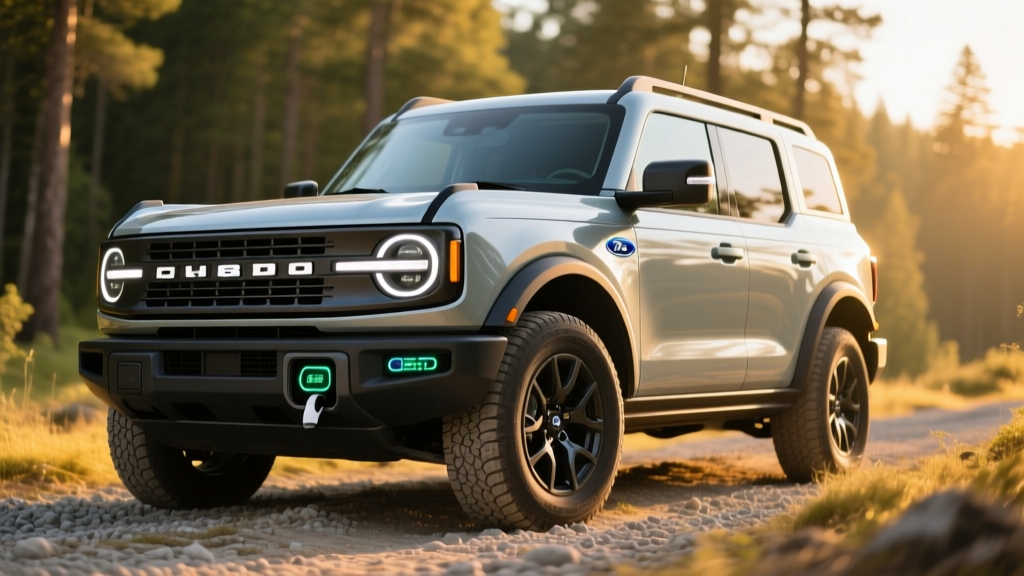
Ford's compact off-roader finally goes electrified. The 2026 Ford Bronco Sport Hybrid pairs the rugged styling and trail capability buyers want with a conventional hybrid (HEV) powertrain aimed squarely at reducing fuel costs — without requiring a plug. If you've been searching for a bronco sport hybrid to understand what it actually delivers in MPG, whether it qualifies for a tax credit, and how it stacks up against a full EV or the gas-only Bronco Sport, this guide covers every number that matters.
What the Bronco Sport Hybrid Actually Is (HEV vs PHEV)
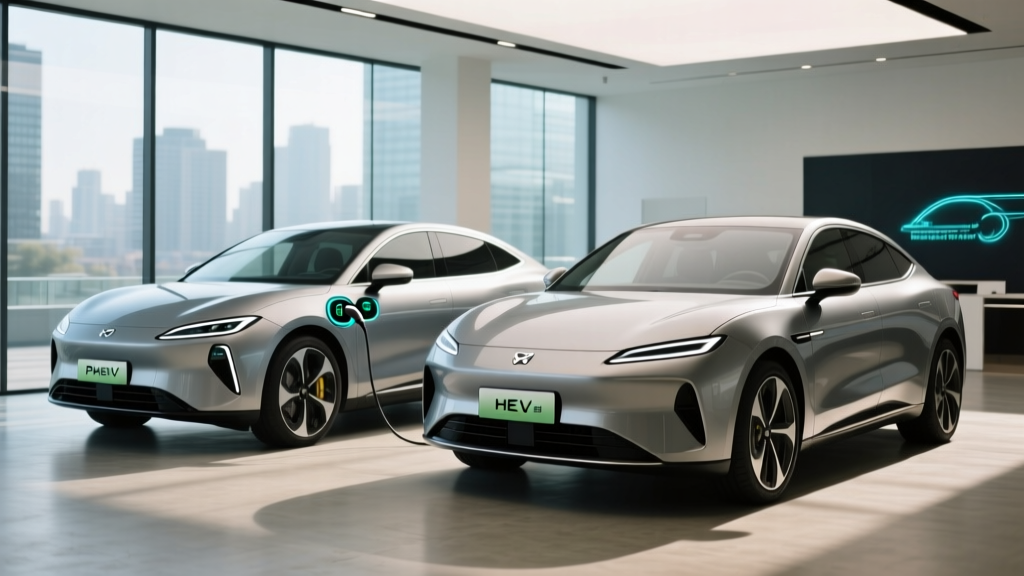
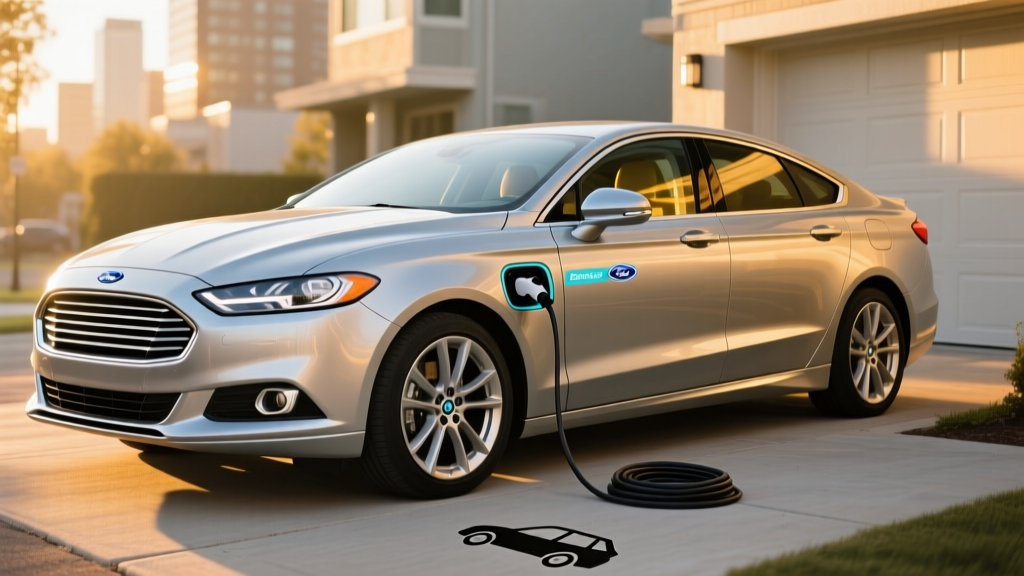
The 2026 Bronco Sport is offered as a conventional hybrid (HEV). That means its battery recharges through regenerative braking and the gasoline engine — you never plug it in. This is a fundamentally different setup from a plug-in hybrid (PHEV) like the Toyota RAV4 Prime or Jeep Wrangler 4xe, which offers a meaningful electric-only driving range and requires a wall or public charger to unlock its full efficiency benefit.
HEV vs PHEV: Quick Reference
| Feature | HEV (Bronco Sport Hybrid) | PHEV (e.g., RAV4 Prime) |
|---|---|---|
| Plug-in required? | No | Yes |
| Electric-only range | ~1 mile at low speed | 35–42 miles typical |
| Battery size | ~1.1 kWh (buffer-limited) | ~18.1 kWh usable |
| Federal tax credit (§30D) | Not eligible | Up to $7,500 (sourcing/income rules apply) |
| Best for | No home charging access; wants MPG gains | Home charging available; short electric commutes |
Ford has not announced a Bronco Sport PHEV variant for the 2026 model year. If plug-in capability is a priority, you'll need to look elsewhere in the compact SUV segment or wait for future model-year announcements.
Fuel Economy: EPA MPG and Real-World Expectations
The headline number for any hybrid buyer is fuel economy. For the 2026 Bronco Sport Hybrid, Ford targets the same efficiency territory as its corporate cousin, the Ford Maverick Hybrid, adapted for a taller, heavier, more aerodynamically challenged SUV body.
| Driving Cycle | EPA Estimate | Real-World Expectation |
|---|---|---|
| City | 38 MPG | 36–40 MPG (hybrids excel in stop-and-go) |
| Highway | 34 MPG | 30–33 MPG (boxy aero hurts at 70+ mph) |
| Combined | 36 MPG | 33–37 MPG depending on terrain and climate |
According to fueleconomy.gov, conventional hybrids routinely exceed their EPA city estimates in real-world stop-and-go driving because the electric motor handles low-speed propulsion where gasoline engines are least efficient. Highway driving is the reverse: the Bronco Sport's upright, SUV-profile creates significant aerodynamic drag above 65 mph, pulling real-world highway MPG below the sticker. Owners in flat, urban-heavy commute patterns should expect to land at or slightly above the combined figure; those who tow or drive mountainous highways will see the lower end.
For comparison, the gas-only 2026 Bronco Sport with the 1.5L EcoBoost returns an EPA-estimated 25 MPG combined — meaning the hybrid delivers roughly a 44% improvement in combined efficiency.
Powertrain Specs: Engine, Motor, and Combined Output
| Specification | 2026 Bronco Sport Hybrid |
|---|---|
| Engine | 2.5L Atkinson-cycle 4-cylinder |
| Engine output | ~163 hp / 155 lb-ft |
| Electric motor | Permanent-magnet synchronous, integrated in transaxle |
| Motor output | ~131 hp / 176 lb-ft |
| Combined system output | 194 hp |
| Transmission | eCVT (planetary gearset, no fixed gears) |
| Drivetrain | AWD standard (eAWD with rear motor assist) |
| 0–60 mph | ~7.8 seconds (est.) |
| Towing capacity | 2,000 lbs (est.) |
Ford's hybrid system uses an electronically controlled continuously variable transmission (eCVT) — not a belt-and-pulley CVT, but a planetary gearset that blends engine and motor torque seamlessly. This is the same architecture proven in the Escape Hybrid and Maverick Hybrid, known for smooth, linear acceleration without the rubber-band feel of traditional CVTs.
The eAWD system can send torque to the rear axle via the electric motor, providing traction benefits on loose surfaces without the mechanical drag of a traditional driveshaft. For light trail use and snow, this is effective. For serious rock crawling, the Bronco Sport Hybrid is not a replacement for the body-on-frame Bronco with its two-speed transfer case.
Battery, Warranty, and Long-Term Reliability
The Bronco Sport Hybrid uses a compact lithium-ion battery pack positioned beneath the rear cargo floor. Because it's a conventional HEV, the battery is small — approximately 1.1 kWh of total capacity, with an even smaller usable buffer. The battery never fully charges or fully depletes; the powertrain management system keeps the state of charge in a narrow middle band to maximize longevity.
Battery Warranty Coverage
- Hybrid battery: 8 years / 100,000 miles (federal emissions mandate; 10 years / 150,000 miles in CARB states including CA, NY, MA, WA, OR, and others)
- Hybrid components (inverter, eCVT): 8 years / 100,000 miles
- Replacement cost if out of warranty: $2,500–$4,000 estimated (based on Escape Hybrid battery pricing)
Ford's hybrid powertrains have accumulated hundreds of millions of real-world miles across the Escape, Fusion (discontinued), and Maverick lineups. The 2.5L Atkinson-cycle engine is inherently lower-stress than a turbocharged motor — it runs cooler, at lower cylinder pressures, and without the heat load of a turbo. This translates to strong long-term reliability data. According to NHTSA recall databases and long-term fleet data, Ford's hybrid battery packs rarely require replacement within the warranty period, and degradation is minimal because the battery is never deeply cycled.
If you're concerned about battery lifespan: conventional hybrid batteries routinely last 150,000–200,000+ miles before capacity loss becomes noticeable, and even then, reduced capacity means slightly lower MPG — not a vehicle-stopping failure.
Pricing, Trims, and Tax Credit Eligibility
| Trim | MSRP (est.) | Hybrid Premium vs Gas |
|---|---|---|
| Big Bend Hybrid | $34,500 | +$2,000 |
| Outer Banks Hybrid | $38,000 | +$2,000 |
| Badlands Hybrid | $41,500 | +$2,500 |
Note: Pricing is estimated based on Ford's published 2026 model-year guidance and may vary by dealer. Destination charge additional.
Does the Bronco Sport Hybrid Qualify for a Federal Tax Credit?
No. Under IRS §30D, the federal clean vehicle credit applies only to plug-in electric vehicles (BEVs and PHEVs) with a battery capacity of at least 7 kWh. The Bronco Sport Hybrid's ~1.1 kWh battery does not meet this threshold. There is currently no federal tax credit for conventional (non-plug-in) hybrids.
Some states offer separate incentives for hybrid purchases — check your state's energy office or department of revenue for current programs. These vary widely and change frequently.
For the full details on federal EV and PHEV credit rules — including MSRP caps, buyer income limits, and battery-sourcing requirements — see the IRS clean vehicle credits page.
Who Should Buy the Bronco Sport Hybrid — and Who Shouldn't
Choose the Bronco Sport Hybrid If:
- You want 35+ MPG without ever plugging in
- You don't have access to home or workplace Level 2 charging
- Your commute is urban/suburban with frequent stop-and-go traffic
- You want AWD capability for snow, rain, and light trails
- You plan to own the vehicle 8+ years (hybrid reliability advantage)
Consider a PHEV or Full EV Instead If:
- You have home Level 2 charging and want electric-only commuting
- You want to claim the up-to-$7,500 federal tax credit (§30D)
- Your daily drive is under 35 miles round-trip (a PHEV covers this on electricity alone)
- You want zero tailpipe emissions for daily driving
- You're open to models like the RAV4 Prime, Tucson PHEV, or a full BEV like the Hyundai Ioniq 5
How the Bronco Sport Hybrid Compares to Rivals
| Model | Type | EPA Combined MPG | AWD? | Base MSRP | Tax Credit |
|---|---|---|---|---|---|
| 2026 Bronco Sport Hybrid | HEV | 36 MPG | Yes | ~$34,500 | No |
| Toyota RAV4 Hybrid | HEV | 39 MPG | Yes | ~$33,500 | No |
| Toyota RAV4 Prime | PHEV | 94 MPGe / 38 MPG gas | Yes | ~$44,500 | Eligibility varies |
| Honda CR-V Hybrid | HEV | 37 MPG | Yes | ~$35,000 | No |
| Hyundai Tucson PHEV | PHEV | 80 MPGe / 35 MPG gas | Yes | ~$39,000 | Eligibility varies |
The Bronco Sport Hybrid trades a few MPG points to the RAV4 Hybrid in exchange for a more rugged design language, stronger off-road-oriented AWD tuning, and Ford's Sync infotainment ecosystem. If maximum fuel economy is your only metric, the RAV4 Hybrid wins by 3 MPG combined. If trail capability and styling carry weight in your decision, the Bronco Sport occupies a distinct niche.
Frequently Asked Questions
How many MPG does the 2026 Bronco Sport Hybrid get?
The EPA-estimated rating is 38 city / 34 highway / 36 combined. Real-world results vary: expect 36–40 MPG in city-heavy driving and 30–33 MPG on sustained highway trips above 65 mph.
Does the Bronco Sport Hybrid need to be plugged in?
No. It's a conventional hybrid (HEV). The battery charges through regenerative braking and the gasoline engine. There is no plug, no charging cable, and no need for home charging infrastructure.
Is there a Bronco Sport PHEV (plug-in hybrid)?
Not for the 2026 model year. Ford has not announced a plug-in variant of the Bronco Sport. If PHEV capability is essential, consider the Toyota RAV4 Prime or Hyundai Tucson PHEV.
Does the Bronco Sport Hybrid qualify for any tax credit?
It does not qualify for the federal §30D clean vehicle credit, which requires plug-in capability and a minimum 7 kWh battery. Some state-level hybrid incentives may apply — check your local jurisdiction.
How long will the hybrid battery last, and what does replacement cost?
Ford warranties the hybrid battery for 8 years/100,000 miles (10 years/150,000 miles in CARB states). Based on Ford's hybrid fleet history, batteries commonly last 150,000–200,000+ miles. Out-of-warranty replacement is estimated at $2,500–$4,000.
Is the Bronco Sport Hybrid good for towing?
Estimated towing capacity is 2,000 lbs — adequate for a small utility trailer or a pair of dirt bikes, but not for a boat or camper. Towing will also reduce fuel economy significantly, likely into the mid-20s MPG range.
Hybrid vs PHEV vs EV — which should I choose?
HEV (Bronco Sport Hybrid): Best if you lack charging access and want better MPG with zero lifestyle change.
PHEV: Best if you can charge at home and want 30–40 miles of electric commuting with a gas backup for road trips.
Full EV (BEV): Best if you want the lowest per-mile fuel cost, zero tailpipe emissions, and have reliable charging access. Consider models like the Ford Mustang Mach-E or Hyundai Ioniq 5 if you're ready to go fully electric.