Quick Verdict: The Three-Row Luxury PHEV Done Right
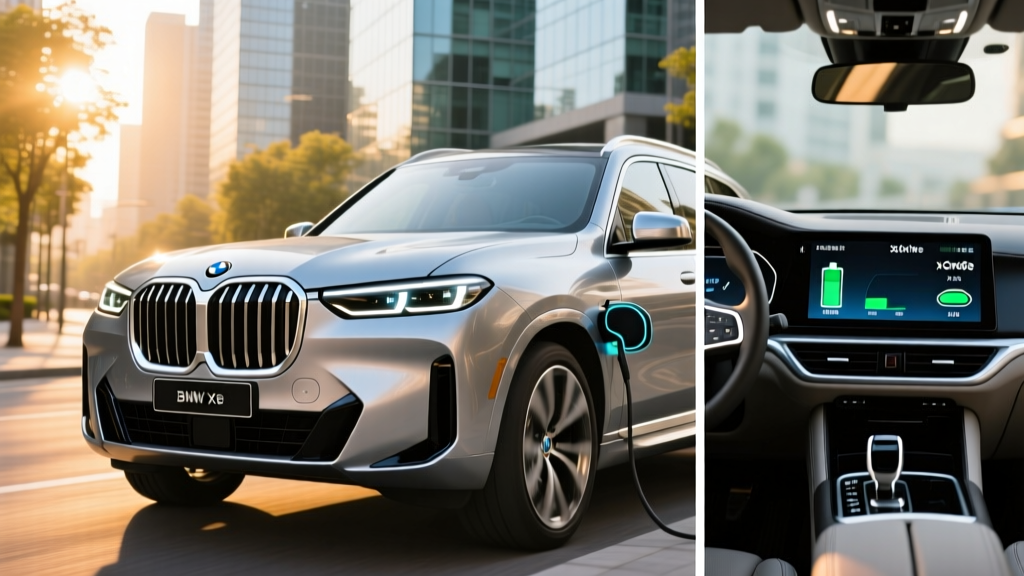
The BMW X7 xDrive60e occupies a specific niche: full-size three-row luxury SUV buyers who want meaningful electric commuting without range anxiety on road trips. With an EPA-estimated 31 miles of electric-only range, 56 MPGe combined, and a combined 483 horsepower from its inline-six plug-in hybrid powertrain, the X7 PHEV bridges the gap between BMW's electrified ambitions and the practical demands of family hauling.
But at a starting MSRP north of $84,000, the X7 xDrive60e needs to justify its premium over both the conventional X7 xDrive40i and fully electric competitors like the Mercedes EQS SUV or Tesla Model X. This guide breaks down every spec that matters — real-world MPG, charging realities, battery longevity, and whether the federal tax credit actually applies.
HEV vs PHEV: What the X7 xDrive60e Actually Is
Conventional Hybrid (HEV): A small battery (typically 1-2 kWh) recharges through regenerative braking and the engine. You never plug it in. Examples: Toyota Highlander Hybrid, Honda CR-V Hybrid. Fuel economy improves 20-40% over gas-only equivalents.
Plug-In Hybrid (PHEV): A larger battery (the X7 xDrive60e uses a 25.7 kWh gross pack) can be charged from a wall outlet or charger, enabling 20-40 miles of pure electric driving before the gas engine kicks in. Once the battery depletes, it operates like a conventional hybrid. The X7 xDrive60e is a PHEV.
This distinction matters because BMW also sells the X7 xDrive40i with a mild-hybrid system — that is not a PHEV. The xDrive40i uses a 48-volt system for marginal efficiency gains and cannot drive on electric power alone. If you want plug-in capability and electric-only commuting, you need the xDrive60e specifically.
Range, MPGe, and Real-World Fuel Economy
The EPA rates the 2026 BMW X7 xDrive60e at 31 miles of electric-only range and 56 MPGe (miles per gallon equivalent) when operating in electric mode. Once the battery is depleted and the vehicle runs as a hybrid, the EPA estimates 22 MPG combined.
| Metric | EPA Estimate | Real-World Expectation |
|---|---|---|
| Electric-Only Range | 31 miles | 24-28 mi (highway/cold); 29-33 mi (city/mild weather) |
| MPGe (charge-sustaining + electric) | 56 MPGe | Varies heavily by charge frequency |
| MPG (gas-only hybrid mode) — Combined | 22 MPG | 20-21 MPG highway; 23-24 MPG city |
| MPG — City | 23 MPG | 23-25 MPG (regen braking helps in traffic) |
| MPG — Highway | 21 MPG | 19-21 MPG (aerodynamic drag at 75+ mph) |
| Total Combined Range | ~440 miles | ~380-420 miles depending on conditions |
Real-world context: Like all PHEVs, the X7 xDrive60e's efficiency story depends entirely on your charging habits. If you charge nightly and commute under 25 miles, you may go weeks without using gasoline. If you never plug in, you're driving a 5,500-pound hybrid SUV that returns 20-22 MPG — better than the xDrive40i's ~20 MPG combined, but not transformative. For authoritative EPA data, see the BMW X7 xDrive60e listing on fueleconomy.gov.
Real-World Range Note: EPA 31 electric miles is achievable in mild city driving. Expect 24-27 miles at sustained highway speeds (70+ mph) or in temperatures below 35°F. Battery preconditioning is not available for range extension — the thermal management system prioritizes battery health and cabin heating in cold conditions.
Powertrain: Inline-Six Meets Electric Motor
| Specification | 2026 BMW X7 xDrive60e |
|---|---|
| Engine | 3.0L turbocharged inline-6 |
| Engine Output | 312 hp / 332 lb-ft |
| Electric Motor | Integrated into 8-speed transmission |
| Motor Output | 194 hp / 207 lb-ft |
| Combined System Output | 483 hp / 516 lb-ft |
| 0-60 mph | 4.7 seconds |
| Drivetrain | xDrive AWD (standard) |
| Transmission | 8-speed automatic (ZF) |
| Battery (Gross / Usable) | 25.7 kWh / ~22.0 kWh usable |
| Battery Chemistry | NMC (nickel manganese cobalt) |
| Towing Capacity | 7,500 lbs (properly equipped) |
The B58-derived inline-six is one of BMW's most refined engines, and pairing it with a transmission-mounted electric motor yields seamless power delivery. The 483 combined horsepower makes the X7 xDrive60e noticeably quicker than the xDrive40i (375 hp) — the 4.7-second 0-60 time feels effortless in a vehicle this size.
In electric-only mode, the motor provides adequate acceleration for city merging and suburban driving, though highway passing requires the engine to engage. The transition between electric and hybrid operation is well-managed — one of the smoothest PHEV handoffs in the luxury segment.
Charging: Level 2 Only, No DC Fast Charging
| Charging Level | Power (kW) | 0-100% Time | Miles of Range Added per Hour |
|---|---|---|---|
| Level 1 (120V household) | ~1.4 kW | ~18 hours | ~3-4 mi/hr |
| Level 2 (240V, 32A) | 7.4 kW | ~3.5 hours | ~15-17 mi/hr |
| DC Fast Charging | Not supported | N/A | N/A |
The X7 xDrive60e uses a J1772 connector for AC charging and accepts up to 7.4 kW on Level 2. This is the critical detail many buyers overlook: this PHEV does not support DC fast charging. This is standard for most PHEVs — the smaller battery and onboard charger architecture make DC fast charging cost-prohibitive for manufacturers.
What this means practically: A dedicated Level 2 home charger (240V, 32-amp circuit) will fully replenish the battery in about 3.5 hours — easily done overnight. Using a standard 120V outlet (Level 1), a full charge takes roughly 18 hours, which works for occasional top-ups but is impractical as a daily strategy.
Home Level 2 installation typically costs $600-$1,500 depending on your electrical panel capacity and the distance from panel to charger location. If your home has a 200-amp panel with spare capacity, expect the lower end. A panel upgrade to 200A can add $1,500-$3,000.
Pricing, Trims, and Federal Tax Credit Eligibility
The 2026 BMW X7 xDrive60e starts at an MSRP of approximately $84,900 (including destination). Options packages — particularly the Executive Package, Bowers & Wilkins audio, and rear-seat entertainment — can push a well-equipped example past $100,000.
| Trim | Base MSRP | Typical As-Tested |
|---|---|---|
| xDrive60e (base PHEV) | ~$84,900 | $89,000-$95,000 |
| xDrive60e w/ Executive Pkg | ~$92,000 | $97,000-$105,000 |
Federal §30D Tax Credit — Does the X7 xDrive60e Qualify?
- MSRP Cap: SUVs must be under $80,000 MSRP. The X7 xDrive60e starts at ~$84,900 — it exceeds the cap and does NOT qualify for the federal §30D credit.
- Battery Sourcing: Even if MSRP qualified, critical mineral and battery component sourcing requirements must be met (see IRS §30D guidelines).
- Buyer Income Cap: AGI limits apply ($300K joint / $225K head of household / $150K individual).
- Point-of-Sale Transfer: Eligible credits can be transferred to the dealer at purchase for an immediate price reduction — but only if the vehicle qualifies.
Bottom line: The BMW X7 xDrive60e does not qualify for the $7,500 federal EV/PHEV tax credit due to its MSRP exceeding the $80,000 SUV cap. Some state-level incentives (California, Colorado, New York, and others) may still apply — check your state's energy office for current programs.
Battery Warranty, Longevity, and Replacement Cost
BMW High-Voltage Battery Warranty: 8 years / 80,000 miles (whichever comes first). BMW warrants the battery against defects and excessive capacity loss — typically defined as dropping below 70% of original capacity during the warranty period.
PHEV battery degradation is generally less severe than full BEV concerns because the usable buffer is smaller and the battery is never deeply cycled to the same extremes. BMW's NMC chemistry in the xDrive60e is managed conservatively — the ~3.7 kWh buffer (difference between gross 25.7 kWh and usable ~22.0 kWh) protects against deep discharge and overcharge damage.
Expected lifespan: Based on data from BMW's earlier PHEV models (X5 xDrive45e/50e, 330e), owners report minimal noticeable degradation at 60,000-80,000 miles. The battery should comfortably outlast the warranty period with 85%+ capacity retention under normal use.
Replacement cost: If the battery requires replacement out of warranty, expect $8,000-$12,000 for the pack plus labor, based on current BMW PHEV battery pricing. This is significantly less than full BEV battery replacements ($15,000-$25,000+) because the pack is smaller. Individual module replacement may be possible for partial failures, reducing cost further.
The conventional 12V auxiliary battery is separate and follows standard automotive replacement intervals (4-6 years, ~$300-$500).
Who Should Buy the X7 PHEV — and Who Shouldn't
Choose the BMW X7 xDrive60e if:
- You need three rows and luxury amenities but want to reduce fuel costs on short commutes
- You have reliable home charging (garage or driveway with 240V access)
- Your daily driving is under 30 miles and you want to minimize gas station visits
- You take regular road trips where a pure EV's charging logistics would be inconvenient
- You value the inline-six's refinement and 7,500-lb towing capacity
Choose a full BEV (like the Mercedes EQS SUV or Tesla Model X) if:
- You have home charging and your trips rarely exceed 250 miles
- You want to eliminate gasoline entirely and minimize maintenance
- You want access to DC fast charging for road trips (150-250 kW capability)
- Lower running costs matter more than the inline-six character
Choose the conventional X7 xDrive40i (mild hybrid) if:
- You cannot install a Level 2 charger at home
- You want a lower purchase price (~$10,000 less than the xDrive60e)
- Your driving is mostly highway/long-distance where PHEV electric range provides minimal benefit
Pros
- 31 miles electric range covers most commutes
- 483 hp provides effortless acceleration
- Smooth engine/motor transitions
- 7,500-lb towing capacity maintained
- Quiet, refined cabin with three usable rows
- No range anxiety on road trips
Cons
- Does not qualify for $7,500 federal tax credit (MSRP cap)
- No DC fast charging capability
- $84,900+ starting price is steep
- 22 MPG hybrid-mode is only marginally better than xDrive40i
- Heavy: 5,500+ lbs affects braking and tire wear
- Third row is tight for adults on long trips
Frequently Asked Questions
How many MPG does the BMW X7 PHEV get?
The EPA rates the X7 xDrive60e at 56 MPGe when combining electric and gas operation. In gas-only hybrid mode (battery depleted), it returns 22 MPG combined (23 city / 21 highway). Real-world highway driving at 75+ mph typically yields 19-21 MPG in hybrid mode.
How far can the BMW X7 PHEV go on electric only?
The EPA estimates 31 miles of electric-only range. In real-world conditions, expect 24-28 miles at highway speeds or in cold weather, and 29-33 miles in mild city driving. This covers most daily commutes without engaging the gasoline engine.
Does the BMW X7 PHEV qualify for a tax credit?
No. The X7 xDrive60e's MSRP of ~$84,900 exceeds the federal §30D SUV cap of $80,000, making it ineligible for the $7,500 federal credit regardless of buyer income or battery sourcing. State incentives may still apply in states like California, Colorado, and New York.
Is the BMW X7 PHEV reliable, and what does a battery replacement cost?
BMW's PHEV powertrain has proven reliable based on data from the X5 xDrive45e and 530e, which share similar architecture. The high-voltage battery carries an 8-year/80,000-mile warranty. Out-of-warranty battery replacement is estimated at $8,000-$12,000 — significantly less than full BEV replacements.
Can the BMW X7 PHEV charge at public DC fast chargers?
No. The X7 xDrive60e supports only AC charging — Level 1 (120V) and Level 2 (240V, up to 7.4 kW). It uses a J1772 connector and cannot use DC fast chargers like Electrify America or Tesla Superchargers. This is typical for PHEVs; the smaller battery makes DC fast charging impractical for manufacturers to implement.
Hybrid vs PHEV vs EV — which fits me?
Choose a conventional hybrid (HEV) if you can't charge at home and want simple fuel savings. Choose a PHEV like the X7 xDrive60e if you have home charging, commute under 30 miles, but still take long road trips. Choose a full EV (BEV) if you want zero tailpipe emissions, minimal maintenance, and have reliable charging access for both daily use and road trips.