The 2026 BMW SUV Hybrid Lineup at a Glance
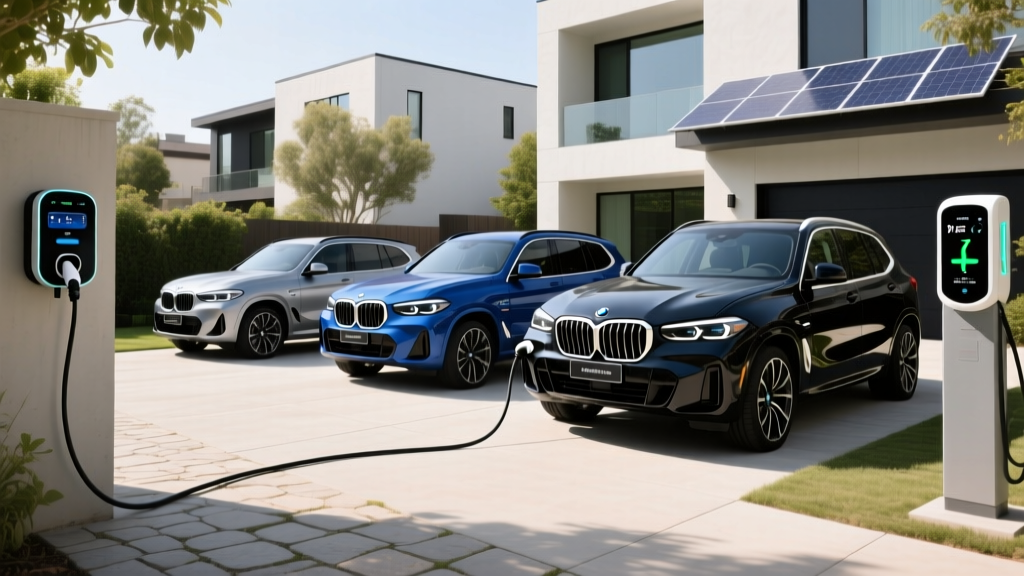
If you're shopping a BMW SUV hybrid in 2026, you have three plug-in hybrid (PHEV) options spanning very different budgets and use cases: the compact X3 xDrive30e, the midsize X5 xDrive50e, and the high-performance XM. All three pair a turbocharged gasoline engine with an electric motor and a battery you can recharge from a wall outlet — delivering a meaningful electric-only commute range before the gas engine ever fires up.
BMW no longer sells a conventional (non-plug-in) hybrid SUV in the U.S. market. Every electrified BMW SUV is a PHEV or a full battery-electric vehicle (BEV like the iX). That matters because PHEVs require charging access to extract their full efficiency and tax-credit value — a nuance many shoppers overlook.
A conventional hybrid (HEV) like the Toyota RAV4 Hybrid uses regenerative braking and its gas engine to keep a small battery charged. You never plug it in, and electric-only driving is limited to brief low-speed bursts. Expect 35–40 MPG combined.
A plug-in hybrid (PHEV) like every BMW SUV hybrid carries a much larger battery (19–29 kWh) that you charge from an outlet or public charger. This gives 30–40 miles of pure electric driving, then the gas engine takes over for long trips. PHEVs qualify for federal tax credits; HEVs generally do not.
Side-by-Side Spec Table: Every BMW PHEV SUV
| Spec | X3 xDrive30e | X5 xDrive50e | XM |
|---|---|---|---|
| Powertrain | 2.0L turbo I4 + e-motor | 3.0L turbo I6 + e-motor | 4.4L twin-turbo V8 + e-motor |
| Combined HP | 292 hp | 483 hp | 644 hp (738 hp Label Red) |
| 0–60 mph | 6.0 sec | 4.6 sec | 4.1 sec (3.8 Label Red) |
| Battery (usable kWh) | 19.7 kWh | 25.7 kWh | 25.7 kWh |
| EPA Electric Range | ~35 mi | ~38 mi | ~31 mi |
| EPA Combined MPG (hybrid mode) | ~30 MPG | ~25 MPG | ~17 MPG |
| Total Combined Range | ~400 mi | ~440 mi | ~350 mi |
| Level 2 Charge Time (0–100%) | ~3.0 hrs @ 7.4 kW | ~4.0 hrs @ 7.4 kW | ~4.25 hrs @ 7.4 kW |
| DC Fast Charge | No | No | No |
| Base MSRP | ~$53,000 | ~$73,000 | ~$160,000 |
Source: BMW USA product pages and fueleconomy.gov EPA estimates for 2025–2026 model years. Real-world results vary with driving style, temperature, and terrain.
Fuel Economy: EPA Numbers vs. Real-World MPG
PHEV fuel economy is uniquely dependent on your habits. If your daily commute falls within the electric-only range and you charge nightly, you may burn almost zero gasoline for months. Drive 300 miles without charging and the gas engine does all the work — returning the "hybrid mode" MPG figure.
| Model | City MPG | Highway MPG | Combined MPG | Combined MPGe (electric) |
|---|---|---|---|---|
| X3 xDrive30e | ~32 | ~28 | ~30 | ~56 MPGe |
| X5 xDrive50e | ~27 | ~23 | ~25 | ~50 MPGe |
| XM | ~18 | ~16 | ~17 | ~42 MPGe |
Electric-Only Range and Charging: What to Expect
Every BMW SUV hybrid uses a lithium-ion battery pack mounted beneath the rear seats and cargo floor. None of BMW's current PHEVs support DC fast charging — they're limited to Level 2 AC charging at up to 7.4 kW via the J1772 connector. This is a deliberate engineering choice: BMW prioritizes packaging and cost over rapid public charging for vehicles whose batteries are designed to replenish overnight at home.
X3 xDrive30e: With 19.7 kWh usable, you'll see roughly 35 EPA-rated electric miles. In real-world mixed driving at moderate temperatures, plan for 28–33 miles before the 2.0L turbo engine kicks in. A full Level 2 charge takes about 3 hours.
X5 xDrive50e: The larger 25.7 kWh pack delivers approximately 38 EPA electric miles (expect 30–35 real-world). Level 2 charging from empty takes roughly 4 hours. This is the sweet spot for commuters with a 30-mile round trip.
XM: Despite sharing the 25.7 kWh battery, the XM's 5,700+ lb curb weight and performance-tuned powertrain trim electric range to about 31 EPA miles (expect 24–28 real-world). If performance is the priority, the trade-off is acceptable; if efficiency is paramount, the XM is the wrong tool.
EPA electric-only range is tested under ideal conditions. In practice, expect:
- Summer, city driving: EPA range or slightly above (regen braking helps)
- Summer, highway (70+ mph): ~15–20% below EPA
- Winter (below freezing): ~20–30% below EPA due to cabin heating and reduced battery efficiency
Powertrain Deep Dive: Engine Meets Electric
BMW's PHEV architecture places an electric motor between the engine and the 8-speed automatic transmission. This means the motor can drive the wheels independently at low speeds, assist the engine under hard acceleration, or act as a generator during regenerative braking.
X3 xDrive30e: The 2.0-liter turbocharged four-cylinder produces 184 hp on its own; combined with the integrated electric motor, the system delivers 292 hp and 332 lb-ft of torque. It's adequate for daily driving and merging but won't feel particularly urgent in a vehicle this heavy.
X5 xDrive50e: BMW's smooth 3.0-liter inline-six (312 hp gas) pairs with a more powerful electric motor for 483 hp and 516 lb-ft combined. This is the most well-rounded powertrain in the lineup — effortless highway passing and refined engine note.
XM: The 4.4-liter twin-turbo V8 (483 hp gas) combined with a 194 hp electric motor yields 644 hp and 590 lb-ft in the base model, or a staggering 738 hp in the Label Red variant. BMW positions this as a performance flagship, and the powertrain delivers — but at a steep efficiency penalty once the battery depletes.
Pricing, Tax Credits, and Total Cost
PHEV pricing has shifted significantly under the current IRS §30D federal tax credit rules. Here's where each BMW SUV hybrid stands for 2026:
- ✅ Vehicle must have ≥7 kWh battery capacity (all BMW PHEVs qualify)
- ✅ Final assembly in North America — check VIN; some BMWs are built in Spartanburg, SC, others in Europe
- ⚠️ Battery component and critical mineral sourcing requirements (phased in annually through 2026)
- ⚠️ Buyer income caps: $150K single / $300K married filing jointly (modified AGI)
- ⚠️ MSRP caps: $80,000 for SUVs/vans/pickups — XM exceeds this cap and does NOT qualify
- ✅ Credit up to $7,500; can be applied as a point-of-sale price reduction at participating dealers
Rules change frequently. Verify eligibility at irs.gov and consult a tax professional before purchase.
| Model | Base MSRP | Est. Fed. Credit | Effective Price |
|---|---|---|---|
| X3 xDrive30e | ~$53,000 | Up to $7,500* | ~$45,500 |
| X5 xDrive50e | ~$73,000 | Up to $7,500* | ~$65,500 |
| XM | ~$160,000 | $0 (exceeds MSRP cap) | ~$160,000 |
*Credit eligibility depends on VIN assembly location, battery sourcing, and buyer income. Verify before purchase.
Battery Warranty, Reliability, and Replacement Cost
BMW covers the high-voltage hybrid battery for 8 years or 80,000 miles (whichever comes first) against defects and capacity loss below a specified threshold (typically 70% of original capacity). The hybrid system components — electric motor, power electronics, and charging hardware — carry the same 8-year coverage.
The conventional 12V battery is covered under the standard 4-year/50,000-mile new-vehicle warranty.
Reliability outlook: BMW's PHEV powertrains have been in production since 2014 (the original i8 and X5 xDrive40e). The inline-six and 8-speed automatic in the X5 are among BMW's most proven components. The added complexity of the hybrid system — power electronics, high-voltage cabling, and the integrated motor — introduces more potential failure points than a conventional gas-only SUV, but IIHS and owner surveys show no systemic battery failure trends in BMW's current-generation PHEVs.
Battery replacement cost: If the high-voltage battery requires full replacement outside warranty, expect a dealer quote between $12,000 and $18,000 including labor, depending on the model. Module-level repair (replacing individual cell groups) can reduce this to $4,000–$7,000 at specialized hybrid shops. In practice, BMW PHEV batteries are designed to last the vehicle's useful life — most owners will never face this cost.
Hybrid vs. PHEV vs. Full EV: Which BMW SUV Fits You?
- You want the lowest entry price into an electrified BMW SUV
- Your commute is under 30 miles round-trip and you can charge at home
- You take occasional long road trips and don't want to plan around chargers
- You need three rows (optional), more cargo space, and stronger towing (up to ~5,000 lbs)
- Your daily driving stays within 35 miles and you value the inline-six refinement
- You want a luxury SUV that can still do cross-country trips without range stress
- Performance is your top priority and budget is flexible
- You understand this is a luxury/halo product, not an efficiency play
- You have home charging and will use electric mode for daily driving
- You have reliable home Level 2 charging and rarely drive more than 250 miles in a day
- You want the lowest per-mile "fuel" cost and minimal maintenance
- You don't need a gas backup for remote road trips
Pros and Cons: BMW SUV Hybrids
- 30–38 miles of electric-only commuting eliminates most daily gasoline use
- No range anxiety — gas engine provides 350–440+ miles of total range
- X3 and X5 likely qualify for up to $7,500 federal tax credit (verify VIN/sourcing)
- BMW driving dynamics and interior quality remain class-leading
- 8-year/80,000-mile hybrid battery warranty provides long-term peace of mind
- Smooth engine-electric transitions; refined highway cruising
- No DC fast charging on any BMW PHEV — public charging is slow (7.4 kW AC only)
- Hybrid-mode MPG is unremarkable, especially in the XM (~17 MPG combined)
- Cargo space reduced vs. gas-only counterparts due to battery placement
- XM exceeds the $80K MSRP cap and gets zero federal tax credit
- Requires home Level 2 charging to realize full efficiency and cost benefits
- Insurance premiums on PHEVs run 10–15% higher than equivalent gas models
Frequently Asked Questions
How many MPG does a BMW SUV hybrid get?
It depends on the model and whether the battery is charged. The X3 xDrive30e returns approximately 30 MPG combined in hybrid mode (gas engine running), the X5 xDrive50e about 25 MPG combined, and the XM about 17 MPG combined. When driving on electricity alone, these figures are expressed as MPGe: roughly 56, 50, and 42 MPGe respectively. If you charge nightly and commute within the electric range, your actual gasoline consumption may be near zero for daily driving.
How far can a BMW PHEV go on electric only?
The EPA rates the X3 xDrive30e at approximately 35 electric miles, the X5 xDrive50e at about 38 miles, and the XM at roughly 31 miles. Real-world results vary: expect 15–20% less on the highway, and 20–30% less in freezing temperatures. For a 25-mile round-trip commute in moderate weather, both the X3 and X5 can handle the trip entirely on electricity.
Hybrid vs. PHEV vs. EV — which should I choose?
A conventional hybrid (HEV) is best if you can't charge at home and want better MPG with zero behavior change — but BMW doesn't currently offer an HEV SUV. A PHEV (all BMW SUV hybrids) is ideal if you have home charging, commute under 40 miles, and want gas-engine backup for road trips. A full EV (BEV) like the BMW iX makes sense if you charge at home, drive under 250 miles daily, and want the lowest operating cost. PHEVs are the bridge solution; BEVs are the destination if your lifestyle supports them.
Is the BMW hybrid battery reliable, and what does replacement cost?
BMW's PHEV batteries have a strong track record since 2014, with no widespread failure patterns reported. The battery is warranted for 8 years/80,000 miles against defects and excessive capacity loss. Full out-of-warranty replacement costs $12,000–$18,000 at a dealer, but module-level repairs can halve that. Most PHEV batteries last the vehicle's lifetime without needing replacement.
Does a BMW SUV hybrid qualify for a tax credit?
The X3 xDrive30e and X5 xDrive50e can qualify for up to $7,500 under the federal §30D credit, provided the vehicle's VIN confirms North American final assembly (many BMW SUVs are built in Spartanburg, SC), battery sourcing requirements are met, and your income falls below the caps ($150K single / $300K married). The XM does not qualify because its MSRP exceeds the $80,000 SUV cap. The credit can be applied as a point-of-sale reduction at participating dealers. Always verify current eligibility on irs.gov before purchasing.
Can I DC fast charge a BMW PHEV?
No. None of BMW's current PHEV SUVs support DC fast charging. The maximum charge rate is 7.4 kW on Level 2 AC (J1772 connector), which fully replenishes the battery in 3–4.25 hours depending on the model. This is by design: BMW engineers the PHEV battery for overnight home charging, not public fast-charging stops. If you need rapid charging capability, you need a full BEV like the BMW iX.
Do I need to plug in a BMW hybrid, or does it charge itself?
Every BMW SUV hybrid is a plug-in hybrid (PHEV), meaning you should plug it in to get the full benefit. The battery does recharge partially through regenerative braking and the gas engine, but this recovers only a fraction of the capacity. Without plugging in, you're essentially driving a heavy, less-efficient gas SUV and wasting the electric range and fuel savings the PHEV was designed to deliver.