The Short Answer: Yes, BMW Builds Five Plug-In Hybrid SUVs
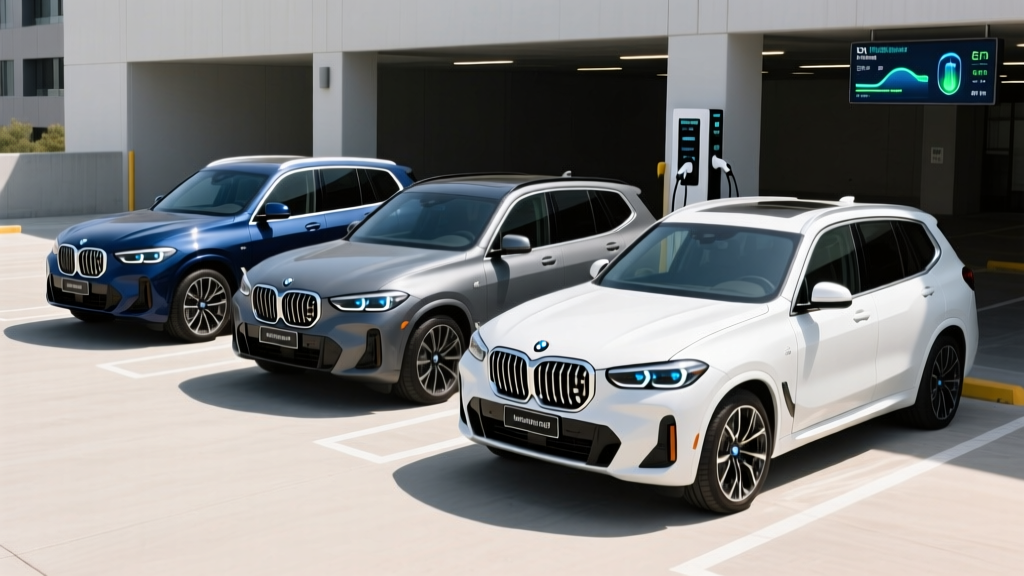
If you've been asking "does BMW have a hybrid SUV?" the answer in 2026 is a definitive yes — and the lineup is broader than most shoppers realize. BMW currently offers five plug-in hybrid (PHEV) SUVs in the U.S. market, spanning from the compact X1 xDrive28e to the flagship X7 xDrive60e. What BMW does not sell in the U.S. is a conventional hybrid (HEV) SUV — the kind that never plugs in and simply sips less gas. Every electrified BMW SUV stateside requires a charging cable to unlock its full efficiency potential.
This matters because PHEVs and HEVs serve different use cases. A PHEV gives you 30–40 miles of electric-only driving for daily commutes, then a gas engine for road trips. An HEV delivers modest MPG gains with zero behavior change. BMW has placed its chips squarely on the PHEV architecture, leveraging its fifth-generation eDrive technology paired with turbocharged four- and six-cylinder engines.
HEV vs PHEV: Why BMW Chose the Plug-In Path
| Feature | Conventional Hybrid (HEV) | Plug-In Hybrid (PHEV) |
|---|---|---|
| Plugs in? | No — charges via regen & engine | Yes — Level 1 or Level 2 |
| Electric-only range | 0–1 mile at low speed | 20–40+ miles |
| Battery size | 1–2 kWh | 15–30 kWh (usable) |
| Federal tax credit | None (expired for most) | Up to $7,500 under §30D (if eligible) |
| Best for | Drivers who can't charge at home | Home chargers with road-trip flexibility |
| BMW offers in U.S.? | No | Yes — 5 SUV models |
BMW's decision to skip HEVs in the U.S. reflects a strategic bet: buyers who want electrification are willing to plug in, and the larger PHEV battery unlocks meaningful electric miles plus access to federal incentives. If you absolutely cannot charge at home or at work, a BMW hybrid SUV may not be the right fit — consider a Toyota RAV4 Hybrid or Honda CR-V Hybrid instead.
The Full 2026 BMW PHEV SUV Lineup: Specs, Range, and Pricing
Here's every plug-in hybrid SUV BMW sells in the U.S. for the 2026 model year, with EPA-rated figures and manufacturer MSRP data.
| Model | Battery (usable kWh) | EV Range (mi) | Combined MPG | Combined HP | 0–60 mph | Base MSRP |
|---|---|---|---|---|---|---|
| X1 xDrive28e | 14.2 kWh | 35 | 35 MPG / 76 MPGe | 241 hp | 6.5 sec | $43,700 |
| X3 xDrive30e | 22.0 kWh | 38 | 32 MPG / 72 MPGe | 292 hp | 5.9 sec | $52,400 |
| X5 xDrive50e | 25.7 kWh | 38 | 27 MPG / 56 MPGe | 483 hp | 4.6 sec | $73,800 |
| XM | 25.7 kWh | 31 | 14 MPG / 46 MPGe | 644 hp (XM) / 738 hp (Label Red) | 4.1 sec | $159,995 |
| X7 xDrive60e (announced) | 25.7 kWh (est.) | 35 (est.) | TBD | 568 hp (est.) | ~5.0 sec (est.) | ~$90,000 (est.) |
Sources: fueleconomy.gov, BMW USA press releases. X7 xDrive60e specs are preliminary — final EPA figures pending closer to on-sale date.
Electric-Only Range: How Far Can You Drive Without Gas?
For PHEV owners who charge nightly, electric-only range determines how often the gas engine ever turns on. BMW's current PHEV SUVs deliver between 31 and 38 miles of EPA-rated electric range, which covers the average American's one-way commute of roughly 16 miles (FHWA data).
Real-world electric range caveat: EPA electric-range figures assume moderate temperatures and mixed driving. Expect 20–30% less range in winter conditions below 40°F due to cabin heating loads and reduced battery efficiency. Highway-speed electric driving at 70+ mph will also trim range by roughly 15%. On a cold January morning, your X3 xDrive30e's 38-mile rating may realistically deliver 26–30 miles before the engine kicks in.
All BMW PHEV SUVs use the brand's fifth-generation eDrive system, which integrates the electric motor directly into the transmission housing. This means seamless transitions between electric and gas power — you won't feel a jarring handoff as the turbo-four or turbo-six wakes up.
Charging: Level 1, Level 2, and the DC Fast-Charging Gap
Every 2026 BMW PHEV SUV comes with a Level 1 charging cord (120V household outlet) and supports Level 2 AC charging via a J1772 connector. Here's what charging looks like in practice:
| Charging Level | Power (kW) | Time: 0–100% (X5 50e, 25.7 kWh) | Practical Use |
|---|---|---|---|
| Level 1 (120V) | ~1.4 kW | ~18 hours | Overnight top-up; slow for depleted battery |
| Level 2 (240V, 32A) | 7.4 kW | ~3.5 hours | Ideal home/work charging; full overnight fill |
| DC Fast Charge | Not supported | N/A | BMW PHEVs do not accept DC fast charging |
Critical detail: No BMW PHEV sold in the U.S. supports DC fast charging. This is common among PHEVs — the battery is small enough that Level 2 fills it in a few hours, and the added cost/weight of a DC port doesn't pencil out. However, it means road-trip fast-charger stops (Electrify America, Tesla Supercharger) are irrelevant for these vehicles. You charge at home, at work, or at Level 2 destination chargers.
A Level 2 home charger installation typically costs $800–$2,000 depending on your electrical panel's proximity to the garage and whether a panel upgrade is needed. For a PHEV with a ~25 kWh battery, a 7.4 kW Level 2 unit is more than sufficient — you'll never need the expensive 11.5 kW or 19.2 kW units designed for full EVs.
Fuel Economy: EPA vs. Real-World MPG
BMW PHEV fuel economy depends entirely on your charging habits. The EPA provides two numbers: MPGe (which blends electric and gas driving assuming regular charging) and MPG (gas-only operation once the battery is depleted).
| Model | Combined MPGe (charged) | Gas-Only MPG (depleted) | City MPG (gas) | Highway MPG (gas) |
|---|---|---|---|---|
| X1 xDrive28e | 76 MPGe | 35 MPG | 33 | 37 |
| X3 xDrive30e | 72 MPGe | 32 MPG | 30 | 34 |
| X5 xDrive50e | 56 MPGe | 27 MPG | 25 | 29 |
| XM | 46 MPGe | 14 MPG | 12 | 17 |
Real-world MPG insight: If you charge nightly and your commute is under 35 miles round-trip, you may go weeks without using gas at all — your effective fuel economy approaches infinity. Conversely, if you never plug in, you're driving a heavy luxury SUV with a gas-only MPG penalty. The XM at 14 MPG gas-only is particularly thirsty; it's a performance halo car, not an efficiency play. The X5 xDrive50e hits a sweet spot: 27 MPG gas-only is respectable for a 5,400-pound luxury SUV, and 56 MPGe when charged regularly is excellent.
Data from fueleconomy.gov confirms these figures, though owners who charge religiously often report beating EPA city MPG numbers in gas mode because regenerative braking recaptures energy in stop-and-go traffic.
Battery Warranty, Reliability, and Replacement Costs
BMW PHEV High-Voltage Battery Warranty: 8 years or 80,000 miles (whichever comes first) against defects and capacity loss below 70% of original capacity. This aligns with federal requirements for hybrid/PHEV battery coverage and matches competitors like Mercedes-Benz, Volvo, and Audi.
BMW's PHEV battery packs use NMC (nickel manganese cobalt) lithium-ion chemistry, optimized for daily shallow cycling rather than the deep discharge cycles a full EV endures. Because PHEV batteries are smaller and the system maintains a buffer (you never truly drain to 0%), degradation is typically slower than in a BEV.
Reliability track record: BMW's PHEV systems have been in production since 2014 (the original X5 xDrive40e), giving the brand over a decade of real-world data. The most common issues reported in earlier generations were related to charging-port electronics and software glitches rather than cell-level battery failures. The current fifth-generation eDrive system has proven more robust.
Out-of-warranty replacement cost: If the high-voltage battery fails after the warranty period, expect a replacement cost between $8,000 and $14,000 depending on the model (the X5/XM pack is larger and pricier). However, individual module replacement — rather than the full pack — may be possible for $2,000–$4,000 if only specific cells degrade. Most PHEV batteries outlast the vehicle's useful life when properly maintained.
Tax Credits: Does a BMW PHEV Qualify?
Federal tax credit eligibility for BMW PHEV SUVs is nuanced and model-dependent under current IRS §30D rules. Here's the framework:
- MSRP cap: SUVs must have an MSRP at or below $80,000. This eliminates the XM ($159,995) and most X7 trims from credit eligibility.
- Income cap: Buyer AGI must not exceed $150,000 (single), $225,000 (head of household), or $300,000 (joint).
- Battery sourcing: The vehicle's battery must meet critical-mineral and battery-component sourcing thresholds that increase annually. As of 2026, these requirements are stringent, and BMW's supply chain partially relies on non-qualifying sources for some models.
- Credit amount: Up to $7,500 if both critical-mineral and battery-component requirements are met; $3,750 if only one is satisfied.
- Point-of-sale transfer: Eligible buyers can transfer the credit to the dealer at purchase, reducing the purchase price directly rather than waiting for a tax refund.
As of early 2026, the X1 xDrive28e and X3 xDrive30e are the most likely BMW PHEV SUVs to qualify for at least a partial credit, given their sub-$80,000 MSRPs. The X5 xDrive50e's base MSRP of $73,800 squeaks under the cap, but option packages can push it above $80,000. Always verify current eligibility on IRS.gov before purchasing — sourcing rules change and manufacturer eligibility lists are updated periodically.
State incentives: Several states offer additional rebates for PHEVs (California's CVRP, Colorado's state credit, New York's Drive Clean Rebate), though amounts and eligibility vary by jurisdiction. Check your state's energy office or DMV for current programs.
Who Should Buy a BMW PHEV SUV — and Who Shouldn't?
Choose a BMW PHEV SUV if:
- You can charge at home (Level 2) or at work and your daily driving is under 35 miles
- You want electric commuting but take road trips where charging infrastructure is sparse
- You value BMW's driving dynamics, interior quality, and dealer network
- You're not ready for a full EV due to apartment living, unreliable charging access, or frequent long-distance towing
Choose a full EV (like the BMW iX) instead if:
- You drive 50+ miles daily and want to maximize electric miles
- You want access to DC fast charging for road trips
- You want to eliminate oil changes, spark plugs, and exhaust-system maintenance entirely
- Your state offers substantial EV-only incentives that PHEVs don't qualify for
Choose a conventional hybrid (Toyota, Honda, Hyundai) instead if:
- You cannot plug in at home or work — PHEVs lose their advantage without regular charging
- You want lower upfront cost and simpler ownership
- You prioritize maximum fuel economy over performance and luxury
Pros
- 31–38 miles of real electric commuting eliminates daily gas use
- Gas engine removes range anxiety on long road trips
- Strong combined horsepower (241–644 hp) with instant electric torque
- Level 2 charging fills the small battery in ~3.5 hours
- 8-year/80,000-mile battery warranty provides peace of mind
- X1 and X3 PHEVs may qualify for partial federal tax credits
Cons
- No DC fast charging — road-trip fast chargers are irrelevant
- XM and most X7 trims exceed the $80,000 MSRP tax-credit cap
- Gas-only MPG is unimpressive if you never plug in (especially XM at 14 MPG)
- Premium pricing vs. mainstream PHEV competitors (Toyota RAV4 Prime, Hyundai Tucson PHEV)
- Electric range drops 20–30% in cold weather
- X7 xDrive60e not yet on sale — specs are preliminary
Frequently Asked Questions
Does BMW make a conventional hybrid SUV that doesn't plug in?
No. BMW does not sell any conventional hybrid (HEV) SUVs in the U.S. market. Every electrified BMW SUV is a plug-in hybrid (PHEV) that must be charged to realize its efficiency benefits. If you want a luxury SUV that doesn't require plugging in, look at the Lexus RX 500h or Mercedes-Benz's mild-hybrid models, though these offer smaller efficiency gains.
How many MPG does the BMW X5 hybrid get?
The 2026 BMW X5 xDrive50e achieves 56 MPGe combined when regularly charged and 27 MPG combined (25 city / 29 highway) when running on gas alone after the battery is depleted. Real-world gas-only mileage may vary with driving style and conditions.
How far can the BMW X3 PHEV go on electric only?
The X3 xDrive30e has an EPA-rated electric-only range of 38 miles. In real-world conditions — especially cold weather or sustained highway speeds — expect 26–33 miles before the gas engine engages. For most commuters, this covers a full round-trip without using gasoline.
Is the BMW PHEV battery reliable, and what does replacement cost?
BMW's PHEV batteries are covered by an 8-year/80,000-mile warranty against defects and capacity loss below 70%. Out-of-warranty full-pack replacement runs $8,000–$14,000 depending on the model, but individual module repairs may cost $2,000–$4,000. PHEV batteries generally experience less degradation than full-EV batteries due to smaller daily cycles and built-in charge buffers.
Does any BMW PHEV SUV qualify for the $7,500 federal tax credit?
Possibly, but it depends on the model, your income, and current battery-sourcing rules. The X1 xDrive28e and X3 xDrive30e (both under $80,000 MSRP) are the strongest candidates. The X5 xDrive50e barely fits under the $80,000 SUV cap at base price. The XM is far above the cap. Always check IRS.gov for the latest eligibility lists before purchasing, as sourcing requirements change annually.
Can I DC fast charge a BMW PHEV SUV?
No. None of BMW's current PHEV SUVs support DC fast charging. They charge exclusively via Level 1 (120V) or Level 2 (240V) AC charging. A Level 2 home charger will fill the battery in approximately 3 to 4 hours, which is adequate for overnight charging but means public DC fast chargers are not useful for these vehicles.
What's the difference between the BMW X5 xDrive50e and the old X5 xDrive45e?
The xDrive50e replaced the xDrive45e for the 2024 model year with a larger battery (25.7 kWh usable vs. 21 kWh), more electric range (38 mi vs. 31 mi), more combined horsepower (483 vs. 389), and faster 0–60 acceleration (4.6 sec vs. 5.3 sec). The 50e also features BMW's updated iDrive 8.5 infotainment system and revised exterior styling.