BMW's Electrified Strategy: Where PHEVs Fit in 2026
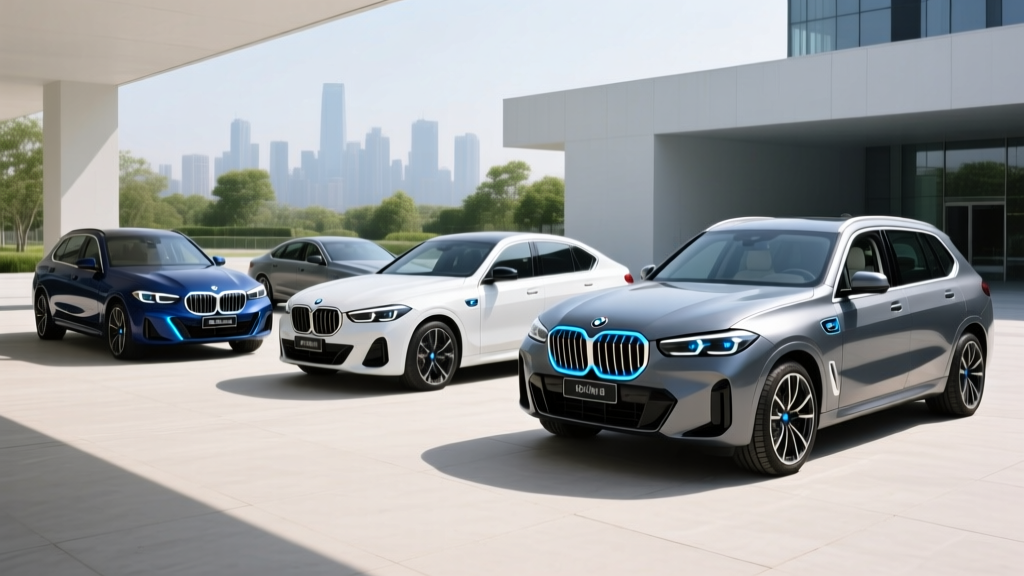
BMW has taken a different path than most luxury automakers. While competitors have pivoted hard toward full battery-electric vehicles, BMW has doubled down on its plug-in hybrid (PHEV) lineup as a bridge technology — and for good reason. The 2026 BMW hybrid cars lineup spans sedans, SUVs, and sports sedans, all pairing turbocharged engines with electric motors and batteries large enough to handle daily commutes on electricity alone.
What makes BMW's PHEV approach distinctive is the commitment to usable electric range. Most 2026 BMW PHEVs offer between 30 and 40 miles of electric-only driving — enough to cover the average American's daily commute (roughly 33 miles round-trip according to FHWA data) without burning a drop of gasoline. When the battery depletes, the gasoline engine picks up seamlessly, eliminating the range anxiety that still deters some buyers from full EVs.
This guide breaks down every current BMW plug-in hybrid model with exact specs, real-world efficiency data, charging requirements, and ownership economics to help you decide which one — if any — fits your driving pattern.
Quick Clarification: BMW Doesn't Sell Conventional Hybrids (HEVs)
Before diving into the lineup, an important distinction: BMW does not currently offer conventional hybrids (HEVs) in the US market — the kind that recharge their small batteries through regenerative braking and never plug in (like a Toyota Prius). Every electrified BMW short of a full EV is a plug-in hybrid (PHEV). This means each model has a larger battery, an electric motor capable of propelling the car on its own, and a charge port for Level 1 or Level 2 AC charging. You do not need to plug in to drive a BMW PHEV — the gasoline engine will operate independently — but plugging in is how you unlock the electric-only range and maximum efficiency.
The 2026 BMW PHEV Lineup at a Glance
| Model | Powertrain | Combined HP | Battery (kWh usable) | EPA Electric Range | EPA MPG (combined) | Starting MSRP |
|---|---|---|---|---|---|---|
| 330e Sedan | 2.0L turbo I4 + e-motor | 288 hp | 19.5 kWh | ~23 mi | ~28 MPG (hybrid mode) | ~$46,900 |
| 550e xDrive | 3.0L turbo I6 + e-motor | 483 hp | ~18.7 kWh usable | ~38 mi | ~28 MPG (hybrid mode) | ~$73,200 |
| 750e xDrive | 3.0L turbo I6 + e-motor | 483 hp | ~18.7 kWh usable | ~34 mi | ~25 MPG (hybrid mode) | ~$107,000 |
| X5 xDrive50e | 3.0L turbo I6 + e-motor | 483 hp | ~25.7 kWh usable | ~38 mi | ~22 MPG (hybrid mode) | ~$73,800 |
| XM | 4.4L twin-turbo V8 + e-motor | 738 hp (Label) | ~19.2 kWh usable | ~31 mi | ~14 MPG (hybrid mode) | ~$160,000 |
Source: BMW USA product pages and fueleconomy.gov. Specs reflect 2025–2026 model year data; confirm with your dealer as mid-cycle updates occur.
Electric-Only Range and Total Range: What the Numbers Mean
The electric-only range figures above come from the EPA's standardized test cycle, which tends to be conservative for PHEVs driven in ideal conditions. In real-world city driving at moderate speeds (under 45 mph, mild weather), many BMW PHEV owners report exceeding the EPA electric range by 10–15%. Highway driving at 70+ mph, however, will reduce electric range by roughly 20–30% due to aerodynamic drag — the electric motor works significantly harder at sustained high speeds.
Real-World Range Expectations
X5 xDrive50e (EPA 38 mi electric): Expect ~30–32 mi on the highway, ~42–45 mi in city driving under 40 mph, and significantly less (~22–25 mi) in freezing temperatures when cabin heating draws from the battery.
550e xDrive (EPA 38 mi electric): Expect ~30–33 mi highway, ~40–44 mi city. The sedan's lower weight and better aero give it a slight real-world edge over the X5.
Cold weather caveat: All PHEVs lose 20–35% of electric range in sub-freezing temperatures. BMW's thermal management system helps mitigate this, but preconditioning while plugged in is essential to preserve range.
Once the battery is depleted, the gasoline engine takes over and the vehicle operates as a hybrid. Total combined range (electric + gasoline) typically exceeds 400 miles for every model in the lineup, with the 550e and 750e approaching 500 miles thanks to larger fuel tanks.
Charging: Speeds, Connectors, and Home Setup
BMW PHEVs charge via a standard J1772 connector (Level 1 and Level 2 AC charging). No BMW PHEV currently supports DC fast charging — the onboard chargers max out at 7.4 kW (Level 2), which is sufficient for overnight replenishment but means you won't find these vehicles at DC fast-charging stations.
| Charging Level | Power (kW) | Time to Full (approx.) | Miles of Electric Range per Hour |
|---|---|---|---|
| Level 1 (120V household outlet) | ~1.4 kW | 14–20 hours | ~3–4 mi/hr |
| Level 2 (240V, home wallbox) | Up to 7.4 kW | 3–5 hours | ~10–14 mi/hr |
| DC Fast Charging | N/A — not supported | — | — |
Practical charging advice: A Level 2 home charger (such as the BMW Wallbox or a ChargePoint Home Flex) is the ideal setup for a BMW PHEV. At 7.4 kW, you'll fully recharge overnight — typically in 3 to 4 hours depending on battery size. Level 1 (standard 120V outlet) works in a pinch but takes too long for daily replenishment of the larger PHEV batteries.
Installation of a Level 2 home charger typically costs $500–$2,000 depending on your electrical panel's proximity to the charging location and whether a panel upgrade (to 200A) is needed. A licensed electrician should assess your setup — many homes with existing 200A panels can add a 240V/40A circuit for under $800.
Fuel Economy: EPA Ratings vs. Real-World MPG
| Model | EPA City (hybrid mode) | EPA Highway (hybrid mode) | EPA Combined | MPGe (electric + gas) |
|---|---|---|---|---|
| 330e Sedan | ~25 | ~32 | ~28 | ~54 MPGe |
| 550e xDrive | ~26 | ~30 | ~28 | ~64 MPGe |
| 750e xDrive | ~24 | ~27 | ~25 | ~58 MPGe |
| X5 xDrive50e | ~21 | ~24 | ~22 | ~50 MPGe |
| XM | ~13 | ~16 | ~14 | ~34 MPGe |
MPGe (miles per gallon equivalent) blends electric-only and hybrid-mode efficiency into a single figure. It's most useful for comparing PHEVs against full EVs and gas cars. Source: fueleconomy.gov.
Real-world MPG insight: BMW PHEVs, like most plug-in hybrids, achieve their best fuel economy when driven primarily on electric power with the gasoline engine used for longer trips. If you charge nightly and drive under 35 miles per day, you may use almost no gasoline for weeks at a time. Conversely, if you never plug in, you'll see fuel economy at or slightly below the "hybrid mode" EPA figures — the extra weight of the battery and motor works against efficiency when the engine does all the work.
Owner-reported data on fueleconomy.gov suggests that conscientious PHEV chargers regularly exceed the combined EPA MPG by 30–50%, while those who never plug in may fall 5–10% below the hybrid-mode rating.
Battery Warranty, Lifespan, and Replacement Costs
BMW PHEV Battery Warranty
BMW provides an 8-year / 80,000-mile high-voltage battery warranty on all PHEV models, covering defects and excessive capacity loss. Under federal law (EPA emissions warranty requirements), hybrid battery components may also carry coverage up to 15 years / 150,000 miles in states that follow California Air Resources Board (CARB) standards — check your state's specific requirements.
Capacity threshold: BMW considers the battery to have "excessive degradation" if it falls below approximately 70% of original capacity within the warranty period. If your electric-only range drops significantly (e.g., from 38 miles to under 25 miles on a full charge), this may qualify for warranty service.
How long do BMW PHEV batteries actually last? Modern lithium-ion PHEV batteries from BMW use NMC (nickel-manganese-cobalt) chemistry with sophisticated thermal management. Based on data from earlier-generation BMW PHEVs (the 2016–2020 X5 xDrive40e and 330e), most batteries retain 85–92% of original capacity after 5–7 years of regular use. Complete battery failure within the warranty period is rare.
Replacement cost: If the battery falls outside warranty coverage, expect a replacement to cost between $8,000 and $15,000 depending on the model, including parts and labor at a BMW dealer. Independent EV battery shops may offer refurbished units for less. This is a meaningful long-term ownership cost to factor in if you plan to keep the vehicle beyond 10 years.
Maximizing battery life: BMW's battery management system prevents full 0% or 100% states of charge internally (even when the dashboard shows full or empty). You can further extend battery health by avoiding frequent deep discharges and using scheduled departure preconditioning while plugged in rather than relying on battery power for cabin heating.
Tax Credits and Incentives: What You Actually Qualify For
Federal tax credit eligibility for BMW PHEVs is complex and model-dependent under current IRS §30D rules. Here's the framework:
- Battery capacity requirement: The vehicle must have at least 7 kWh of battery capacity (all 2026 BMW PHEVs qualify).
- MSRP cap: Vans, SUVs, and pickup trucks are capped at $80,000 MSRP; sedans at $55,000 MSRP. This eliminates the 750e, XM, and some X5 trims from credit eligibility.
- Buyer income cap: Modified adjusted gross income must not exceed $150,000 (single), $225,000 (head of household), or $300,000 (joint filers).
- Critical minerals & battery sourcing: A percentage of the battery's critical minerals must be sourced from the US or free-trade-agreement countries, and battery components must be manufactured or assembled in North America. BMW's supply chain has been shifting to comply, but eligibility varies by model year and production batch.
- Point-of-sale transfer: As of 2024, eligible buyers can transfer the credit to the dealer at purchase, reducing the purchase price directly rather than waiting to claim it on their tax return.
Models most likely to qualify for some portion of the federal credit (up to $7,500): The 330e Sedan (under the $55K sedan cap) and base X5 xDrive50e trims (under the $80K SUV cap) are the strongest candidates, assuming your income qualifies and the specific vehicle meets sourcing requirements. Always verify eligibility for your exact VIN using the IRS's official tool at fueleconomy.gov and consult a tax professional before purchase.
State incentives: Many states offer additional rebates or tax credits for PHEVs — California's CVRP, Colorado's innovative motor vehicle credit, and New York's Drive Clean rebate are among the most generous. Amounts and eligibility vary by jurisdiction; check your state energy office or DMV for current programs.
Who Should Buy a BMW PHEV vs. a Full EV or Gas Car
Choose a BMW PHEV If:
- Your daily commute is under 35–40 miles and you can charge at home overnight
- You take regular road trips (200+ miles) where charging infrastructure is sparse or unreliable
- You want the driving refinement of electric power in daily use without committing to full EV range planning
- Your household has one car and it needs to do everything — school runs, road trips, and daily commuting
Choose a Full EV (like the BMW iX or i4) If:
- You have reliable home Level 2 charging and your daily driving is under 250 miles
- You want zero tailpipe emissions and minimal maintenance (no oil changes, no engine)
- You want access to DC fast charging for road trips (200+ kW capability on BMW's BEV models)
- Local incentives or HOV-lane access favor full EVs in your state
Choose a Gas-Only Vehicle If:
- You cannot install a home charger (apartment, street parking, no garage)
- Your daily driving regularly exceeds 100+ miles in varied conditions
- Upfront cost is the primary concern and you plan to own the vehicle under 5 years
BMW PHEV Advantages
- 30–40 miles of silent, zero-emission electric commuting
- No range anxiety — gasoline engine provides 400+ total miles
- Strong combined powertrains (288–738 hp depending on model)
- Lower maintenance than gas-only (less engine use, regenerative braking saves brake wear)
- Eligible for some federal/state incentives (model-dependent)
- BMW's hallmark driving dynamics preserved — PHEVs handle nearly as well as their gas counterparts
BMW PHEV Limitations
- No DC fast charging — road trips rely entirely on gasoline
- Heavier than gas equivalents (battery + motor weight), slightly reducing handling sharpness
- Electric range drops significantly in cold weather (20–35% loss)
- Higher purchase price than equivalent gas-only BMW models
- Cargo space slightly reduced in some models due to battery placement
- Complex powertrain means more potential service points long-term
Model-by-Model Breakdown: Which BMW PHEV Fits You
BMW 330e Sedan — The Entry Point
The 330e is the most affordable way into a BMW PHEV, starting around $46,900. Its 288 hp combined output (from a 2.0L turbo four-cylinder and electric motor) delivers brisk acceleration — 0–60 mph in approximately 5.6 seconds. The ~23-mile electric range is the shortest in the lineup, making it best suited for short commutes. It's also the model most likely to qualify for the full federal tax credit given its sedan MSRP cap eligibility.
BMW 550e xDrive — The Sweet Spot
The 550e pairs BMW's excellent B58 3.0L inline-six with an integrated electric motor for 483 combined horsepower and ~38 miles of electric range. Starting around $73,200, it's a serious luxury sport sedan that can commute on electricity and then demolish a canyon road on weekends. This is arguably the best-balanced PHEV in BMW's lineup for buyers who want performance and daily usability.
BMW 750e xDrive — Flagship Electrified
The 750e shares the 550e's powertrain but wraps it in BMW's flagship sedan body. At ~$107,000, it exceeds the federal tax credit's sedan MSRP cap, so no federal credit applies. However, it offers exceptional refinement, ~34 miles of electric range, and the kind of silent, torque-rich acceleration that makes a luxury sedan feel effortless.
BMW X5 xDrive50e — The Family Favorite
The X5 PHEV is the best-selling BMW plug-in hybrid for good reason. With the largest usable battery in the lineup (~25.7 kWh), it delivers ~38 miles of electric range while offering the cargo space, all-wheel drive, and towing capability (up to 5,000 lbs when properly equipped) that families need. Starting around $73,800, base trims may qualify for the federal credit. It's the most practical PHEV BMW sells.
BMW XM — Performance Without Compromise (or Efficiency)
The XM is BMW's M-division PHEV halo car: 738 hp from a twin-turbo V8 and electric motor, 0–60 in roughly 4.0 seconds, and a starting price north of $160,000. Its ~31-mile electric range and ~14 MPG in hybrid mode make it the least efficient PHEV in the lineup — but buyers in this segment aren't cross-shopping for fuel economy. No federal tax credit applies due to the MSRP cap.
Frequently Asked Questions
How many MPG does a BMW PHEV get?
In hybrid mode (battery depleted), BMW PHEVs range from ~14 MPG combined (XM) to ~28 MPG combined (330e, 550e). When factoring in electric-only driving, the MPGe figures range from 34 MPGe (XM) to 64 MPGe (550e). Real-world fuel consumption depends heavily on how often you charge — daily chargers with short commutes may use very little gasoline at all.
How far can a BMW PHEV go on electric only?
Depending on the model, EPA-rated electric-only range spans from ~23 miles (330e) to ~38 miles (550e, X5 xDrive50e). Real-world range varies: city driving and mild weather can push these figures 10–15% higher, while highway speeds and freezing temperatures can reduce them by 20–35%.
Do BMW PHEVs need to be plugged in?
No. BMW PHEVs will drive perfectly fine on gasoline alone — the engine recharges the battery slightly through regenerative braking. However, you'll miss the entire benefit of the electric motor's range and efficiency if you never plug in. Think of it this way: not plugging in a PHEV is like buying a smartphone and never connecting to Wi-Fi.
Can BMW PHEVs DC fast charge?
No. Current BMW PHEVs only support AC charging (Level 1 at ~1.4 kW and Level 2 at up to 7.4 kW). This is typical for PHEVs across all brands — the smaller batteries don't require (or physically accommodate) DC fast-charging hardware. A Level 2 home charger replenishes the battery fully in 3–5 hours.
Is the BMW PHEV battery reliable, and what does replacement cost?
BMW's PHEV batteries have proven reliable based on data from earlier-generation models. The 8-year/80,000-mile warranty covers defects and excessive degradation (below ~70% capacity). Out-of-warranty replacement runs $8,000–$15,000 depending on the model. Most owners report 85–92% capacity retention after 5–7 years of regular use.
Does a BMW PHEV qualify for the $7,500 federal tax credit?
Possibly, but it depends on the specific model, trim MSRP, your income, and the vehicle's battery sourcing. The 330e (sedan, under $55K cap) and base X5 xDrive50e (SUV, under $80K cap) are the strongest candidates. The 750e and XM exceed MSRP caps. Always verify using the official fueleconomy.gov tax credit tool and consult a tax professional. Rules are subject to change; confirm current-year IRS §30D guidelines before purchasing.
What's the difference between a BMW PHEV and a BMW full EV (like the i4 or iX)?
A PHEV combines a gasoline engine with an electric motor and a smaller battery (19–26 kWh), giving you 23–38 miles of electric range plus unlimited gasoline range. A full EV (like the i4 or iX) runs solely on electricity with a much larger battery (80–100+ kWh), offering 250–320+ miles of range, DC fast charging, zero tailpipe emissions, and no gasoline engine. PHEVs suit drivers who need long-trip flexibility; EVs suit those with reliable charging access who want maximum efficiency and lowest running costs.
How long does it take to charge a BMW PHEV at home?
On a Level 2 (240V) home charger at 7.4 kW, expect a full charge in approximately 3–5 hours depending on battery size. On a standard Level 1 (120V) household outlet, a full charge takes 14–20 hours — usable only for occasional top-ups, not daily replenishment.
Always verify the latest specifications, pricing, and incentive eligibility directly with BMW USA and official government sources before making a purchase decision. Model-year specs, tax credit rules, and state incentives are subject to change.