BMW ActiveHybrid 7: The Original Luxury Hybrid Sedan Reassessed
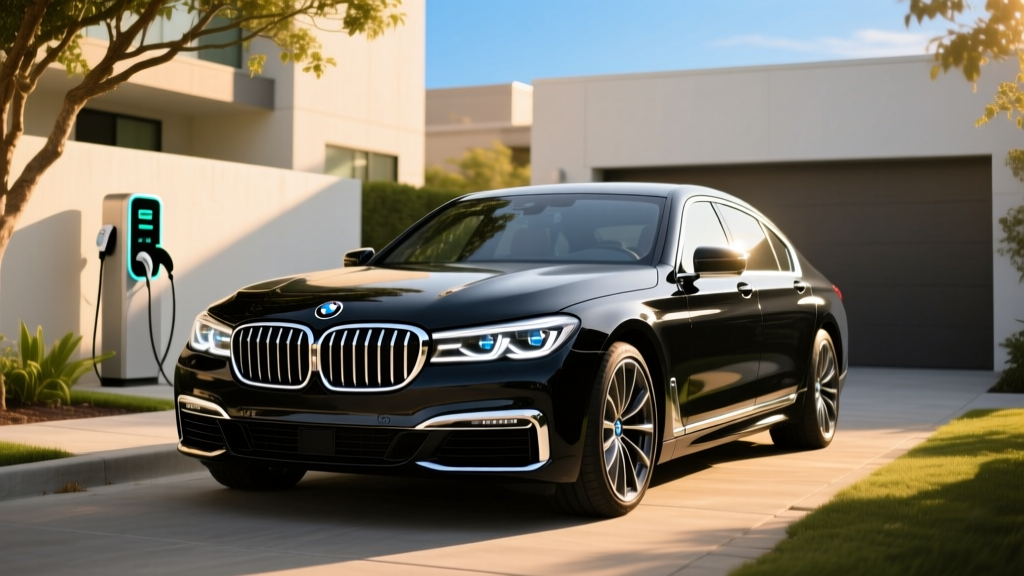
The BMW ActiveHybrid 7 arrived during the first wave of premium electrified sedans, slotting between the conventional 7 Series and the fully electric i7 that would follow years later. As a conventional hybrid (HEV) — not a plug-in — it paired BMW's twin-turbo V8 with an electric motor to squeeze extra efficiency from a flagship luxury sedan without requiring any change in driver habits. No plugging in, no range anxiety, just better fuel economy and seamless electric assist.
For 2026 buyers evaluating a pre-owned ActiveHybrid 7, the calculus has shifted. The used luxury hybrid market offers compelling value, but battery age, replacement cost, and the arrival of far more efficient PHEV and BEV alternatives demand an honest look at what this car actually delivers. This guide covers every number that matters.
HEV vs PHEV vs EV: Where the ActiveHybrid 7 Fits
The ActiveHybrid 7 is a conventional hybrid (HEV). It cannot be plugged in. Its small battery recharges exclusively through regenerative braking and engine power. This is fundamentally different from a plug-in hybrid (PHEV) like the current BMW 750e xDrive or a full battery-electric vehicle (BEV) like the BMW i7.
| Feature | HEV (ActiveHybrid 7) | PHEV (e.g., BMW 750e xDrive) | BEV (e.g., BMW i7) |
|---|---|---|---|
| Plug-in charging | No | Yes | Yes |
| Electric-only range | ~1 mile at low speed | ~30-35 miles (EPA) | 300+ miles (EPA) |
| Battery size | ~0.8 kWh (NiMH) | ~18.7 kWh (NMC lithium-ion) | ~101.7 kWh (NMC) |
| DC fast charging | N/A | Yes (up to 7.4 kW AC) | Yes (up to 195 kW DC) |
| Federal tax credit (new) | None | Up to $7,500 (§30D, if eligible) | Up to $7,500 (§30D, if eligible) |
| Used EV credit (§25E) | Not eligible | Up to $4,000 (if eligible) | Up to $4,000 (if eligible) |
The ActiveHybrid 7's hybrid system was designed for efficiency augmentation, not electric driving. The motor provides torque fill during acceleration and enables engine stop-start at traffic lights, but you will never complete a meaningful trip on electricity alone. If electric-only commuting is a priority, this is the wrong powertrain.
Fuel Economy: EPA Ratings and Real-World MPG
The ActiveHybrid 7 was produced across multiple model years with evolving powertrains. The most common variants on the used market are the F04-generation (2010-2012) and the later F01/F02 facelift models. Here is how the EPA numbers break down:
| Model Year / Variant | City MPG | Highway MPG | Combined MPG |
|---|---|---|---|
| 2010-2012 ActiveHybrid 7 (4.4L V8 + electric motor) | 17 | 24 | 19 |
| 2013-2015 ActiveHybrid 7 (3.0L I6 turbo + electric motor) | 22 | 30 | 25 |
| 2013-2015 740i (non-hybrid baseline) | 19 | 28 | 22 |
Source: fueleconomy.gov
Real-World MPG vs EPA Sticker
Conventional hybrids tend to outperform their EPA city ratings in stop-and-go traffic because regenerative braking recaptures energy that a gas-only car wastes as heat. ActiveHybrid 7 owners on the later I6 powertrain frequently report 26-28 MPG in mixed suburban driving. However, highway-heavy commutes at 75+ mph will drop efficiency closer to 22-24 MPG — aerodynamic drag on a 4,700-pound sedan is unforgiving.
Cold weather reduces hybrid efficiency by roughly 8-12% due to increased engine warm-up time and reduced battery charge acceptance. In freezing conditions, expect the I6 ActiveHybrid 7 to return approximately 20-22 MPG combined.
Powertrain Specifications: Engine, Motor, and Combined Output
| Specification | 2010-2012 (V8) | 2013-2015 (I6) |
|---|---|---|
| Engine | 4.4L Twin-Turbo V8 | 3.0L TwinPower Turbo I6 |
| Engine HP | 400 hp | 300 hp |
| Electric motor output | 20 hp (15 kW) | 55 hp (40 kW) |
| Combined system HP | 455 hp | 340 hp |
| Combined torque | 515 lb-ft | 360 lb-ft |
| Transmission | 8-speed automatic (ZF) | 8-speed automatic (ZF) |
| 0-60 mph | ~4.7 seconds | ~5.5 seconds |
| Drivetrain | RWD | RWD |
| Curb weight | ~4,850 lbs | ~4,610 lbs |
The V8 variant was a performance flagship with hybrid efficiency as a bonus. BMW's later pivot to the turbocharged inline-six was the smarter engineering call: lighter front axle, better weight distribution, and a meaningful MPG jump. The 55 hp electric motor integrated into the transmission housing on the I6 model provides noticeably smoother torque fill and more aggressive regenerative braking than the V8's smaller 20 hp unit.
Hybrid Battery: Chemistry, Lifespan, and Replacement Cost
The ActiveHybrid 7 uses a nickel-metal hydride (NiMH) battery pack — not the lithium-ion chemistry found in modern PHEVs and BEVs. NiMH is robust and thermally stable but carries lower energy density and a more pronounced self-discharge rate.
| Battery Detail | Specification |
|---|---|
| Chemistry | Nickel-Metal Hydride (NiMH) |
| Capacity | ~0.8 kWh (usable) |
| Location | Trunk-mounted |
| Original warranty | 8 years / 100,000 miles (hybrid components, CARB states); 8 years / 80,000 miles (federal) |
| Expected lifespan | 10-15 years / 120,000-180,000 miles before notable degradation |
| OEM replacement cost | $3,500 - $5,500 (battery pack + labor at BMW dealer) |
| Aftermarket/remanufactured | $2,000 - $3,500 (independent hybrid specialists) |
Battery Degradation in Practice
NiMH packs in BMW's first-generation hybrids have proven reasonably durable. Most owner reports indicate 10-15% capacity loss by 100,000 miles — noticeable as slightly reduced regenerative braking strength and marginally lower city MPG, but rarely a failure requiring full replacement. Total pack failure is uncommon; individual cell degradation is more typical and can sometimes be addressed with module-level repair rather than a full pack swap.
The critical risk for 2026 buyers is age, not mileage. A 2011 ActiveHybrid 7 with 80,000 miles has a 14-year-old battery. Calendar degradation in NiMH chemistry accelerates after year 10, particularly in hot climates. Budget $3,000-$5,000 for a potential battery replacement within your first two years of ownership unless the seller provides documentation of a recent swap.
Is the ActiveHybrid 7 Reliable?
The hybrid system itself is one of the more reliable components in the 7 Series lineup. The ZF 8-speed transmission, electric motor, and power electronics have strong track records. The concern is the surrounding vehicle: air suspension, iDrive electronics, cooling system components, and the N63 V8 engine (in 2010-2012 models, which has well-documented timing chain and oil consumption issues). The later N55-based I6 (2013-2015) is substantially more reliable.
For a pre-purchase inspection, prioritize: hybrid battery state-of-health readout via BMW diagnostic tool, air suspension compressor function, coolant system integrity (the hybrid system has its own cooling circuit), and a compression/leakdown test on the V8 if considering the earlier model.
Pricing, Tax Credits, and Total Cost of Ownership
The ActiveHybrid 7 originally carried an MSRP between $90,000 and $105,000 depending on model year and options. Depreciation in the luxury hybrid segment is steep. As of early 2026, expect to find:
- 2010-2012 V8 models: $10,000 - $18,000 (depending on mileage and condition)
- 2013-2015 I6 models: $16,000 - $28,000 (lower mileage, well-maintained examples command the top end)
Tax Credit Eligibility
As a conventional hybrid (HEV), the ActiveHybrid 7 does not qualify for the federal §30D new clean vehicle credit or the §25E used clean vehicle credit. Those credits apply exclusively to plug-in vehicles (PHEVs and BEVs) meeting battery sourcing and income requirements per IRS guidelines.
Some states offer modest hybrid incentives, but most have phased these out in favor of plug-in vehicle rebates. Check your state's energy office for any remaining programs, but do not budget around a tax credit for this purchase.
Five-Year Ownership Cost Estimate (2013-2015 I6 Model)
| Category | Estimated 5-Year Cost |
|---|---|
| Purchase price (avg) | $22,000 |
| Fuel (12,000 mi/yr at 25 MPG, $3.50/gal) | $8,400 |
| Insurance (luxury sedan avg) | $12,000 |
| Maintenance & repairs (incl. hybrid battery reserve) | $6,500 |
| Depreciation (5-year) | -$8,000 |
| Total 5-year cost | ~$40,900 |
Compare this to a used 2018-2020 Tesla Model 3 Long Range at a similar purchase price: lower fuel cost (~$3,200 over 5 years at residential electricity rates), but potentially higher insurance. The crossover point depends heavily on your mileage and local electricity pricing.
Who Should Buy the ActiveHybrid 7 — and Who Shouldn't
Choose the ActiveHybrid 7 If:
- You want a flagship luxury sedan with better fuel economy than a conventional 7 Series but don't have reliable home or workplace charging for a PHEV/BEV
- You drive primarily in city/suburban traffic where hybrid regenerative braking delivers its biggest MPG advantage
- You prefer the proven simplicity of a conventional hybrid with no plug-in infrastructure requirement
- You value the I6 model's 25 MPG combined — a meaningful improvement over the non-hybrid 740i's 22 MPG
- You accept that luxury German sedan maintenance costs will be higher than a Lexus or Toyota hybrid alternative
Look Elsewhere If:
- You want meaningful electric-only driving range (consider the BMW 750e xDrive PHEV or 530e)
- You want federal or state tax credits — these require a plug-in vehicle
- You prioritize lowest total cost of ownership — a Lexus LS 600h or ES 300h will cost substantially less to maintain
- You drive mostly highway miles where the hybrid system's advantage narrows to 1-2 MPG
- You cannot budget $3,000-$5,000 for a potential hybrid battery replacement on an aging vehicle
ActiveHybrid 7 vs Modern Alternatives: A 2026 Reality Check
The automotive landscape has shifted dramatically since the ActiveHybrid 7 was new. Here is how it compares to what you can buy today at similar used or new price points:
| Vehicle | Type | Combined MPG / MPGe | Electric Range | Approx. Price |
|---|---|---|---|---|
| BMW ActiveHybrid 7 (2013-2015) | HEV | 25 MPG | N/A | $16K-$28K (used) |
| BMW 530e (2022-2024) | PHEV | 64 MPGe / 28 MPG (gas) | ~21 miles | $35K-$48K (used) |
| BMW i7 xDrive60 (2024+) | BEV | 82 MPGe | 318 miles (EPA) | $105K+ (new) |
| Lexus LS 500h (2020-2023) | HEV | 25 MPG | N/A | $45K-$65K (used) |
| Toyota Camry Hybrid (2025) | HEV | 52 MPG | N/A | $30K-$36K (new) |
The ActiveHybrid 7 occupies a narrow niche: it is the most affordable entry into a hybrid 7 Series, but the efficiency gap versus a modern Camry Hybrid (52 MPG combined) is enormous, and the luxury competition from Lexus offers better long-term reliability. Its value proposition rests entirely on the BMW badge, driving dynamics, and interior quality at a steep depreciation discount.
Frequently Asked Questions
How many MPG does the BMW ActiveHybrid 7 get?
The 2013-2015 I6 ActiveHybrid 7 is EPA-rated at 22 city / 30 highway / 25 combined MPG. The earlier 2010-2012 V8 model is rated at 17 city / 24 highway / 19 combined. Real-world mixed driving in the I6 model typically yields 24-28 MPG, with city-heavy routes pushing toward 28 and sustained highway driving dropping to 22-24 MPG.
Can the ActiveHybrid 7 drive on electric power only?
Only at very low speeds for approximately one mile or less. The 0.8 kWh NiMH battery and 55 hp motor (I6 model) were designed for torque assist and engine stop-start, not electric-only commuting. This is a conventional hybrid — it cannot be plugged in and has no meaningful EV mode.
How much does it cost to replace the ActiveHybrid 7 hybrid battery?
An OEM BMW replacement battery pack costs $3,500-$5,500 installed at a dealership. Remanufactured aftermarket packs from hybrid specialists run $2,000-$3,500. Individual module repair is sometimes possible for $800-$1,500 if only a few cells have degraded. Most NiMH packs last 10-15 years, but calendar age is the primary degradation factor on 2026 purchases.
Does the BMW ActiveHybrid 7 qualify for any tax credit?
No. As a conventional hybrid (HEV) with no plug-in capability, the ActiveHybrid 7 is ineligible for the federal §30D new vehicle credit or the §25E used clean vehicle credit. These credits require a plug-in vehicle (PHEV or BEV) meeting battery component and critical mineral sourcing requirements. Check IRS.gov for current eligibility rules.
Is the ActiveHybrid 7 more reliable than a standard 7 Series?
The hybrid system itself is reliable — the electric motor, power electronics, and NiMH battery have proven durable. However, the ActiveHybrid 7 shares the standard 7 Series' air suspension, cooling system, and electronics complexity. The 2010-2012 V8 (N63 engine) has known reliability concerns including timing chain wear and excessive oil consumption. The 2013-2015 I6 (N55-based) is the more dependable choice. Overall maintenance costs will exceed a Lexus LS hybrid competitor.
Hybrid vs PHEV vs EV — which should I choose?
Choose a conventional hybrid like the ActiveHybrid 7 if you lack reliable charging access and want improved MPG with zero behavior change. Choose a PHEV like the BMW 750e or 530e if you have home Level 2 charging and want 20-35 miles of electric-only commuting with a gas engine for longer trips. Choose a full BEV like the BMW i7 if you have home charging, drive under 300 miles daily, want the lowest per-mile fuel cost, and want access to federal tax credits. The ActiveHybrid 7 makes sense only for buyers specifically seeking a depreciated luxury HEV without plug-in requirements.