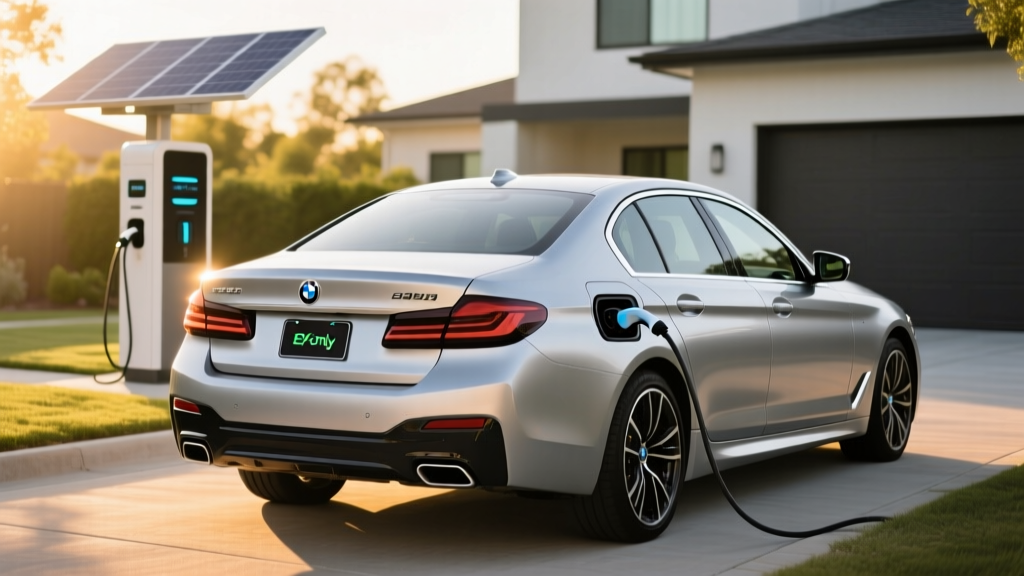
The 2026 BMW 5 Series plug-in hybrid — sold in the U.S. as the 550e xDrive — threads a needle that full EVs and conventional hybrids can't: it offers genuine electric-only commuting range, luxury-sedan refinement, and the ability to road-trip without route-planning anxiety. If you've been searching for a BMW 5 Series plug-in hybrid that balances daily zero-emission driving with cross-country capability, this guide breaks down every number that matters.
2026 BMW 550e xDrive at a Glance
| Spec | Value |
|---|---|
| Powertrain | 3.0L turbocharged I-6 + electric motor (PHEV) |
| Combined Horsepower | 483 hp / 516 lb-ft torque |
| Battery (usable) | 18.7 kWh (NMC lithium-ion) |
| EPA Electric-Only Range | 40 miles |
| Total Combined Range | ~430 miles |
| EPA MPGe (electric+gas) | 64 MPGe combined |
| EPA MPG (gas-only, charge-depleted) | 29 city / 34 hwy / 31 combined |
| AC Charging (Level 2) | 7.4 kW max — 0-100% in ~2.75 hours |
| DC Fast Charging | Not available |
| 0-60 mph | 4.2 seconds |
| Drivetrain | xDrive AWD |
| Base MSRP | $72,575 (incl. destination) |
| Federal Tax Credit (§30D) | $3,750 (partial — battery sourcing limits) |
| Hybrid Battery Warranty | 8 years / 80,000 miles |
HEV vs PHEV: What the 550e Actually Is
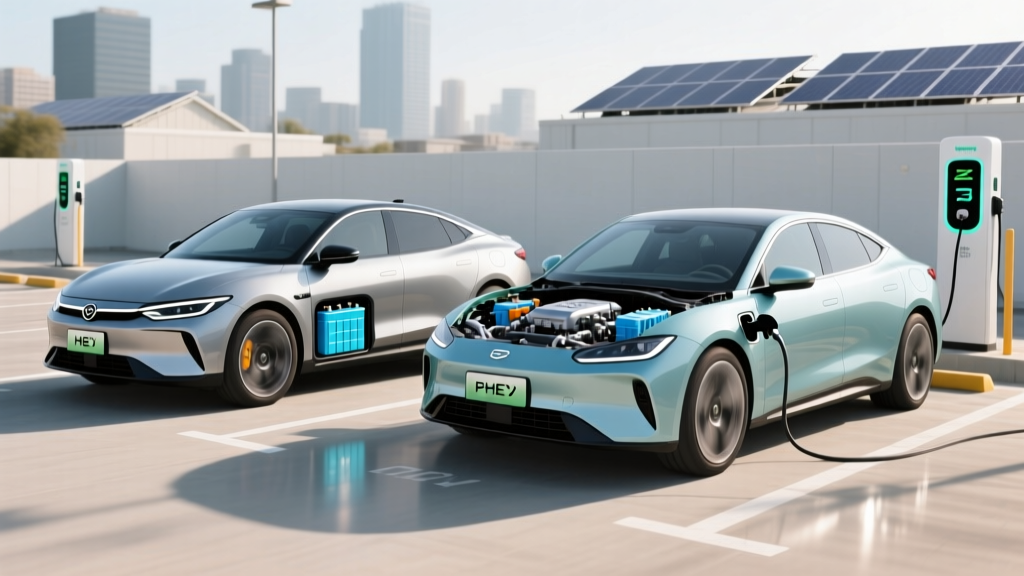
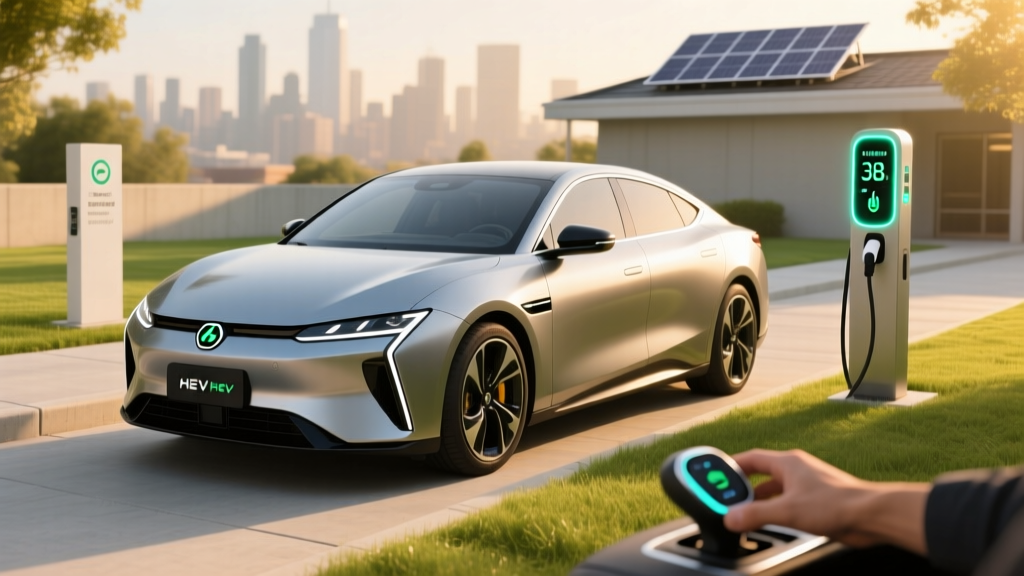
Before diving deeper, it's worth distinguishing the 550e from a conventional hybrid (HEV) and a full battery-electric vehicle (BEV). The BMW 5 Series lineup in 2026 does not offer a conventional hybrid in the U.S. — the 530i uses a 48-volt mild-hybrid system that assists the gas engine but cannot propel the car on electricity alone. The 550e xDrive is a true plug-in hybrid (PHEV): it has a substantially larger battery, a more powerful electric motor integrated into the transmission, and a charge port that lets you plug in at home or at public Level 2 stations.
| Feature | Conventional Hybrid (HEV) | Plug-in Hybrid (PHEV) — 550e xDrive | Full EV (BEV) |
|---|---|---|---|
| Plug-in charging | No — charges via regen + engine | Yes — plug in for EV range | Yes — only power source |
| Electric-only range | 0–1 mile at low speed | 40 miles EPA | 250–400+ miles |
| Gas engine | Yes — always available | Yes — kicks in when battery depletes | No |
| Tailpipe emissions (EV mode) | Low, never zero | Zero in EV mode | Zero |
| Road-trip flexibility | Excellent | Excellent | Requires DC fast-charging planning |
| Tax credit eligibility | Rarely qualifies | May qualify (partial) | Often up to $7,500 |
The 550e is the right pick for buyers who want daily electric commuting without sacrificing the ability to drive 400+ miles on a weekend trip without stopping to charge. If you can charge at home every night, most weekday driving happens entirely on electricity.
Electric-Only Range: 40 EPA Miles in the Real World
The EPA rates the 2026 BMW 550e xDrive at 40 miles of electric-only range. That number assumes moderate temperatures, mixed city/highway driving, and a full charge. In practice, your experience will vary:
- City commuting (55°F–75°F): Expect 35–42 miles. Regenerative braking in stop-and-go traffic actually helps extend range.
- Highway driving (70 mph+): Expect 28–33 miles. Aerodynamic drag at speed drains the battery faster.
- Cold weather (below 32°F): Expect 22–30 miles. Battery chemistry slows and cabin heating draws significant energy, even with the 550e's heat pump system.
- Preconditioning while plugged in: If you precondition the cabin using grid power before departure, you preserve battery capacity and can recover 3–5 miles of range in cold conditions.
For context, the average American commute is roughly 16 miles each way (FHWA data). That means most 550e owners can cover their daily round-trip commute entirely on electricity — provided they plug in at home overnight.
Fuel Economy: EPA MPG and Real-World Numbers
2026 BMW 550e xDrive Fuel Economy (EPA)
| Mode | City | Highway | Combined |
|---|---|---|---|
| Charge-sustaining (gas only) | 29 MPG | 34 MPG | 31 MPG |
| Charge-depleting (electric+gas) | 64 MPGe combined | ||
MPGe explained: MPGe (miles per gallon equivalent) converts the energy in electricity to a gasoline-gallon equivalent so you can compare efficiency across powertrain types. The 64 MPGe figure applies when you're driving in blended mode with a charged battery. Once the battery is depleted, the car operates as a conventional hybrid at 31 MPG combined.
Real-world MPG tends to beat EPA in city driving for PHEVs, because regenerative braking recovers energy that would otherwise be lost. Owners who charge nightly and mostly drive under 40 miles report using very little gasoline during the work week. On long highway trips where the battery depletes within the first 30 miles, expect sustained fuel economy around 28–32 MPG — slightly below the EPA highway estimate due to the car's 4,700+ lb curb weight.
Powertrain Deep Dive: 483 hp from Inline-Six + Electric Motor
The 2026 550e xDrive pairs BMW's B58 3.0-liter turbocharged inline-six with an electric motor embedded in the 8-speed ZF automatic transmission. The result is seamless power delivery with no turbo lag off the line — the electric motor fills the torque gap before the turbo spools.
- Gas engine: 312 hp / 332 lb-ft
- Electric motor: 184 hp / 207 lb-ft (integrated into transmission)
- Combined system output: 483 hp / 516 lb-ft
- 0-60 mph: 4.2 seconds
- Top speed: 130 mph (electronically limited; 155 mph with M Sport package)
BMW's xDrive all-wheel-drive system is standard, distributing torque between front and rear axles. The driving modes — Electric, Hybrid, and Sport — let you choose whether to prioritize battery-only driving, blended efficiency, or maximum performance. In Sport mode, both power sources deliver maximum output simultaneously, and the inline-six sounds genuinely good under hard acceleration — a rarity in an era of turbocharged four-cylinders.
Charging: Level 2 Only, No DC Fast Charging
The 550e xDrive accepts AC charging only. There is no DC fast-charging port, which is typical for most PHEVs in this class (the Porsche Panamera E-Hybrid and Mercedes E 350e also lack DC fast charging).
| Charging Level | Power (kW) | Time (0–100%) | Availability |
|---|---|---|---|
| Level 1 (120V household outlet) | ~1.4 kW | ~14 hours | Any standard outlet |
| Level 2 (240V home/public) | 7.4 kW max | ~2.75 hours | Home wallbox, public L2 stations |
| DC Fast Charging | N/A | N/A | Not supported |
With an 18.7 kWh usable battery, a Level 2 home charger rated at 7.4 kW will replenish the battery from empty to full in under three hours. That means you can easily recharge during the workday if you have access to a Level 2 outlet at work, or fully top off overnight at home.
Home charging setup: A 240V Level 2 home charger (such as a BMW Wallbox or a universal ChargePoint Home Flex) typically costs $500–$800 for the unit, plus $400–$1,500 for professional installation depending on your electrical panel's capacity and the distance from panel to garage. Most PHEV owners find a 32-amp or 40-amp circuit more than sufficient. Consult a licensed electrician for a site-specific quote.
Pricing, Trims, and Federal Tax Credit Eligibility
The 2026 BMW 550e xDrive starts at $72,575 including destination. That places it between the 530i ($59,875) and the fully electric i5 eDrive40 ($71,475). Key standard equipment includes BMW's Curved Display with iDrive 8.5, a panoramic roof, heated front seats, Driving Assistant Professional (Level 2 ADAS), and wireless Apple CarPlay/Android Auto.
Federal tax credit (§30D): As of 2026, the BMW 550e xDrive qualifies for a $3,750 partial credit under IRS §30D rules. It does not receive the full $7,500 because its battery cells do not meet the full critical-minerals and battery-component sourcing thresholds required for the second $3,750 half. Key eligibility requirements:
- Buyer AGI must not exceed $150,000 (single) / $300,000 (joint) / $225,000 (head of household)
- Vehicle MSRP must not exceed $55,000 for sedans — the 550e at $72,575 exceeds this cap, making it ineligible for the new-vehicle credit
- Point-of-sale transfer is available if eligibility criteria are met
Important correction: The §30D new-vehicle credit has an MSRP cap of $55,000 for sedans. At $72,575, the 550e xDrive does not qualify for the federal new-vehicle EV/PHEV credit. Some buyers may find state-level incentives (check AFDC's state incentive database) or employer-based programs that reduce the effective cost. Always consult a tax professional for your specific situation.
Battery Longevity, Warranty, and Replacement Cost
BMW warranties the 550e's high-voltage battery for 8 years or 80,000 miles, whichever comes first. The warranty guarantees the battery will retain at least 70% of its original capacity during that period. If capacity drops below that threshold, BMW will repair or replace the battery at no cost.
Degradation expectations: Based on data from BMW's previous-generation PHEV systems (the G30-era 530e), NMC batteries in plug-in hybrids typically lose 8–12% of capacity over the first 5 years under normal use. Because PHEV batteries are smaller and the car's thermal management system actively conditions the pack, degradation tends to be moderate. The 550e's battery buffer (unusable capacity reserved by the BMS to protect cell health) further extends longevity.
Out-of-warranty replacement cost: If the high-voltage battery requires replacement after the warranty period, expect a cost between $8,000 and $14,000 including parts and labor at a BMW dealership. Third-party hybrid-battery specialists may offer refurbished packs at lower cost. For most owners, the battery will last well beyond the warranty period — PHEV battery failures are statistically rare compared to the broader concerns of turbocharged engine maintenance.
Who Should Buy the BMW 550e — and Who Shouldn't
Pros
- 40 miles EV range covers most daily commutes gas-free
- 483 hp inline-six is one of the smoothest luxury PHEV powertrains
- No range anxiety on road trips — 430+ miles total range
- Quiet, refined cabin with BMW's latest iDrive 8.5 tech
- xDrive AWD standard for all-weather confidence
Cons
- $72,575 MSRP exceeds the §30D federal credit sedan cap
- No DC fast charging — long road trips rely on gasoline
- Real-world highway MPG dips below EPA when battery is depleted
- Trunk space slightly reduced vs. 530i due to battery placement
- Level 2 ADAS (Driving Assistant Professional) is not self-driving
Choose the BMW 550e xDrive if:
- You have home Level 2 charging and a commute under 40 miles
- You want luxury-sedan performance with weekday electric driving
- You regularly take long road trips and don't want to plan around DC chargers
- You value BMW's inline-six refinement over four-cylinder competitors
Look elsewhere if:
- You can't charge at home — a PHEV without plugging in is just a heavy hybrid at 31 MPG
- You want full zero-emission driving — consider the BMW i5 eDrive40 (295-mile EPA range)
- Budget is a priority — the Toyota Prius Prime PHEV offers 44 miles EV range from ~$34,000
Frequently Asked Questions
How many MPG does the BMW 550e plug-in hybrid get?
The EPA rates the 2026 550e xDrive at 29 city / 34 highway / 31 combined MPG when operating on gasoline alone (battery depleted). In blended electric+gas mode, it achieves 64 MPGe combined. Real-world city MPG often exceeds the EPA estimate due to regenerative braking; highway MPG may fall 2–4 MPG below the sticker when driving at sustained 75+ mph speeds.
How far can the BMW 550e go on electric only?
The EPA rates the 550e at 40 miles of electric-only range. Real-world range varies from roughly 22 miles in extreme cold to 42 miles in mild city driving. Preconditioning while plugged in helps maximize usable range in all conditions.
Hybrid vs PHEV vs EV — which fits me?
A conventional hybrid (HEV) is best if you can't plug in at home and want simple fuel savings. A plug-in hybrid (PHEV) like the 550e is ideal if you can charge at home, commute under 40 miles, and still want gas-engine flexibility for road trips. A full EV (BEV) like the BMW i5 is the right choice if you want zero tailpipe emissions, lower per-mile fueling costs, and have reliable home and public charging access.
Is the BMW 550e reliable, and what does battery replacement cost?
BMW's B58 inline-six is widely regarded as one of the most reliable modern turbocharged engines. The PHEV system adds complexity (electric motor, power electronics, high-voltage battery), but BMW's hybrid components have a solid track record since the 2018-era 530e. The high-voltage battery is warranted for 8 years / 80,000 miles. Out-of-warranty replacement runs $8,000–$14,000, though most packs last well beyond the warranty period.
Does the BMW 550e qualify for any tax credit?
The 2026 550e xDrive does not qualify for the federal §30D new-vehicle credit because its $72,575 MSRP exceeds the $55,000 sedan cap. Some state incentives may still apply — check your state's clean-vehicle rebate program and the AFDC incentive database. Consult a tax professional for personalized guidance.
Can the BMW 550e DC fast charge?
No. The 550e supports AC charging only — up to 7.4 kW on Level 2. A full charge from empty takes approximately 2.75 hours on a 240V home charger. DC fast charging is not available on this model, which is typical for PHEVs in this segment.