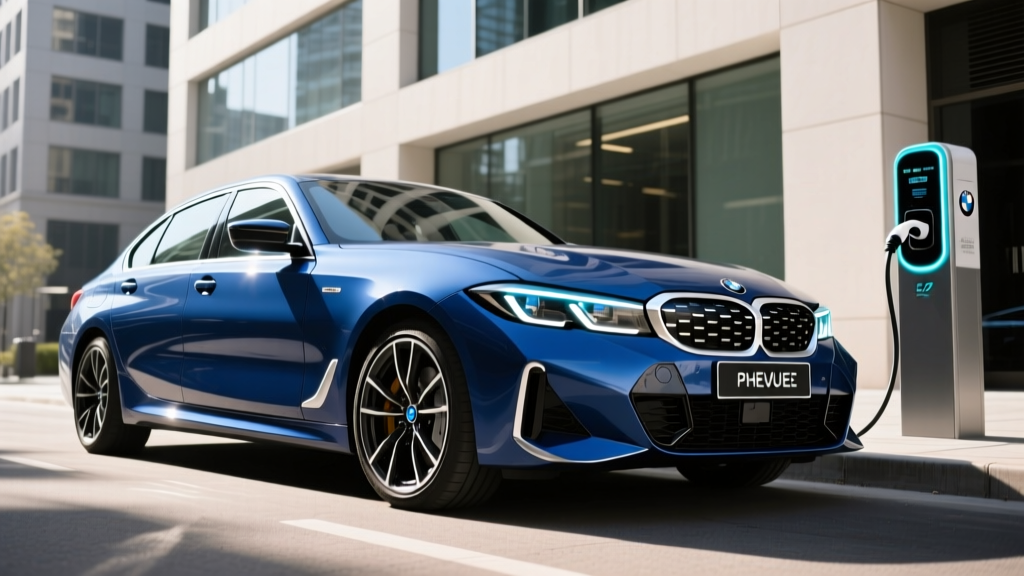
If you've been searching for a BMW 330i hybrid, you've likely hit a wall of conflicting information. Here's the straight answer: BMW does not sell a hybrid version of the 330i trim. The 330i is a conventional gasoline-powered 3 Series with a 2.0-liter turbocharged inline-four. However, BMW does offer a plug-in hybrid variant of the 3 Series — the BMW 330e — which pairs that same turbocharged engine with an electric motor and a battery you can plug in to charge.
This guide untangles the naming confusion, breaks down exactly what the 2026 BMW 330e delivers in electric-only range, fuel economy, and performance, and helps you decide whether a PHEV 3 Series, a conventional 330i, or a full battery-electric vehicle (like the BMW i4) is the right call for your daily driving.
BMW 3 Series Powertrain Lineup: 330i vs. 330e vs. i4
Before diving into specs, it's critical to understand the distinction between the three electrified (or partially electrified) options in BMW's 3 Series and adjacent lineup. Confusion between conventional hybrids (HEVs) and plug-in hybrids (PHEVs) is one of the most common buyer mistakes we see.
| Attribute | BMW 330i (Gas) | BMW 330e (PHEV) | BMW i4 (BEV) |
|---|---|---|---|
| Powertrain Type | Gasoline-only (ICE) | Plug-in Hybrid (PHEV) | Battery Electric (BEV) |
| Requires Plug-In Charging? | No | Yes (optional but recommended) | Yes (required) |
| Electric-Only Range | 0 miles | EPA est. 22 miles | EPA est. up to 307 miles |
| Needs Gas? | Yes | Yes (for trips beyond electric range) | No |
| Regenerative Braking | No | Yes | Yes |
| Federal Tax Credit (§30D) | Not eligible | Up to $7,500 (eligibility varies) | Up to $7,500 (eligibility varies) |
A conventional hybrid (HEV), like a Toyota Prius, generates all its electricity internally through regenerative braking and the gasoline engine — you never plug it in. A plug-in hybrid (PHEV), like the 330e, has a larger battery that you can plug in to charge, giving it a meaningful electric-only driving range before the gas engine kicks in. BMW does not currently offer a conventional (non-plug-in) hybrid version of the 3 Series in the U.S. market.
2026 BMW 330e PHEV: Full Powertrain and Battery Specs
The 2026 BMW 330e combines a 2.0-liter turbocharged inline-four gasoline engine with an electric motor integrated into the eight-speed automatic transmission. Here's the complete spec breakdown:
| Specification | 2026 BMW 330e (RWD Sedan) |
|---|---|
| Gas Engine | 2.0L turbocharged inline-4 (184 hp) |
| Electric Motor | Integrated e-motor (113 hp) |
| Combined System Output | 288 hp / 310 lb-ft torque |
| 0–60 mph | 5.6 seconds (BMW est.) |
| Battery Chemistry | Lithium-ion (NMC) |
| Battery Capacity (Total / Usable) | 19.5 kWh / ~17.0 kWh usable |
| EPA Electric-Only Range | 22 miles |
| Total Combined Range (Electric + Gas) | ~370 miles |
| Level 1 Charging (120V) | ~1.4 kW — approx. 12 hours (0–100%) |
| Level 2 Charging (240V) | 3.7 kW — approx. 4.5 hours (0–100%) |
| DC Fast Charging | Not supported |
| Transmission | 8-speed automatic (Steptronic) |
| Drivetrain | Rear-wheel drive (xDrive AWD available) |
| Base MSRP | $46,895 (330e RWD) / $48,895 (330e xDrive) |
Key takeaway on charging: The 330e does not support DC fast charging. Its onboard charger maxes out at 3.7 kW on Level 2 (240V). This is typical for PHEVs — the smaller battery doesn't require rapid charging, but it does mean you'll want a home Level 2 charger to wake up to a full battery every morning. On a standard 120V household outlet (Level 1), a full charge takes roughly 12 hours, which works for overnight top-ups if your daily electric-only needs are modest.
Fuel Economy: EPA MPG and Real-World Expectations
How many MPG does the BMW 330e hybrid get? The answer depends on whether you're driving on electricity alone, gasoline alone, or a mix of both — which is exactly how PHEV fuel economy works.
| Driving Mode | City | Highway | Combined |
|---|---|---|---|
| Charge-Depleting (Electric + Gas blended) | — | — | 75 MPGe |
| Charge-Sustaining (Gas-only, battery depleted) | 27 MPG | 36 MPG | 30 MPG |
| BMW 330i (Gas-only baseline) | 26 MPG | 36 MPG | 30 MPG |
Source: EPA Fuel Economy Guide
The 75 MPGe figure only applies when you start with a full battery and drive within the electric+blended window. Once the battery is depleted, the 330e operates as a slightly heavier conventional car. This is why PHEV fuel economy is entirely dependent on your charging discipline and trip patterns.
Driving Modes: How the 330e Manages Electric and Gas Power
The 330e gives drivers several modes to manage the interplay between electric and gasoline power:
- Hybrid (default): The car automatically blends electric and gas power for optimal efficiency. It prioritizes electric at low speeds and light loads, engaging the gas engine under harder acceleration or at highway speeds.
- Electric: Forces pure electric driving up to approximately 87 mph, as long as battery charge remains. Ideal for city driving and short commutes.
- Battery Control: Allows you to set a target state of charge (SoC) to preserve battery for later — useful if you're driving on the highway and want to save electric range for an urban destination.
- Sport: Combines full engine and motor output for maximum performance (288 hp), with aggressive throttle mapping and firmer shift points.
The XtraBoost feature deserves a mention: under hard acceleration in Sport mode, the electric motor delivers a temporary power surge beyond the standard combined output, sharpening the car's responsiveness for overtaking or merging.
Federal Tax Credit and Incentive Eligibility for the BMW 330e
Does the BMW 330e qualify for a federal tax credit? Under the current IRS §30D Clean Vehicle Credit rules, the 330e may qualify for up to $7,500, but eligibility depends on several moving targets:
- MSRP cap: The 330e sedan must be at or below the $55,000 MSRP cap for sedans (SUVs/trucks have a higher $80,000 cap). The base 330e at $46,895 clears this, but heavily optioned examples may exceed it.
- Buyer income limits: Modified adjusted gross income (MAGI) must not exceed $150,000 (single), $225,000 (head of household), or $300,000 (joint filers).
- Battery sourcing requirements: The credit is split into two halves — $3,750 for critical minerals sourcing and $3,750 for battery component manufacturing. Sourcing requirements tighten annually, and BMW's supply chain eligibility must be verified at the time of purchase via the IRS's official clean vehicle list.
- Point-of-sale transfer: As of 2024, eligible buyers can transfer the credit to the dealer at purchase, receiving the benefit as an immediate price reduction rather than waiting to claim it on their tax return.
Important: Tax credit rules change frequently. Always verify current eligibility on IRS.gov or consult a tax professional before relying on the credit in your purchase decision. Some states also offer additional PHEV rebates — check your state energy office for current programs.
Battery Warranty, Reliability, and Replacement Costs
Is the BMW 330e hybrid reliable? BMW's PHEV powertrain has been in the 3 Series lineup since the 2016 model year (F30 generation), giving it a meaningful track record. The current G20-generation 330e (introduced for 2021) uses a more refined system with improved battery management.
Battery replacement cost: If the battery falls outside warranty coverage, a full high-voltage battery replacement for the 330e typically ranges from $8,000 to $12,000 including parts and labor, based on BMW dealer estimates. However, catastrophic battery failure outside warranty is uncommon — lithium-ion PHEV batteries are engineered for cycle durability, and BMW's thermal management system actively conditions the pack to minimize degradation.
For long-term reliability context: the 330e's gasoline engine (B48 2.0L turbo) is widely regarded as one of BMW's most dependable modern powerplants. The e-motor and transmission integration have shown minimal failure patterns in owner surveys. Check IIHS safety ratings and owner forums for the latest model-year data.
Who Should Buy the BMW 330e — And Who Shouldn't
Choose the BMW 330e PHEV if:
- Your daily commute is under 20 miles and you can charge at home every night
- You want electric commuting but need gas-engine flexibility for road trips without route-planning around chargers
- You're not ready to commit to a full EV but want to reduce fuel consumption and emissions
- You value the 3 Series driving dynamics and want a premium sport sedan with partial electrification
Choose the gas-only BMW 330i if:
- You cannot install a home charger and have no reliable access to Level 2 charging
- Your daily driving consistently exceeds 30+ miles, negating most PHEV benefits
- You want the lowest purchase price and minimal powertrain complexity
Choose a full EV like the BMW i4 if:
- You want zero gasoline use, zero oil changes, and the lowest per-mile energy cost
- You have home charging and your daily driving is within the i4's 250–307 mile range
- You want to maximize federal tax credit eligibility and long-term TCO savings
- 22-mile electric range covers most daily commutes gas-free
- 288 hp combined output makes it the quickest base 3 Series variant
- No range anxiety — gas engine provides ~370-mile total range
- Premium interior, sport handling, and BMW build quality
- Potential $7,500 federal tax credit (eligibility varies)
- 8-year/80,000-mile hybrid battery warranty
- 22-mile electric range is modest — rivals like the Toyota RAV4 Prime offer 42 miles
- No DC fast charging — long road-trip recharge stops aren't practical
- 3.7 kW Level 2 charging is slow (4.5 hours for a full charge)
- Trunk space reduced by battery placement (13.2 cu ft vs. 17.0 cu ft in 330i)
- Premium fuel required for the gasoline engine
- Base price ~$6,000+ higher than the gas 330i before incentives
BMW 330e vs. Rival PHEVs: How It Stacks Up
The luxury PHEV sedan segment is relatively thin, but cross-shoppers often consider these alternatives:
| Model | Electric Range | Combined MPG (gas) | Combined HP | Base MSRP |
|---|---|---|---|---|
| BMW 330e | 22 mi | 30 MPG | 288 hp | $46,895 |
| Mercedes-Benz C 300e (if available in U.S.) | ~35 mi (WLTP) | ~28 MPG | 312 hp | ~$55,000 (est.) |
| Lexus ES 300h (HEV, not PHEV) | 0 mi (no plug-in) | 44 MPG combined | 215 hp | $44,690 |
| Toyota Prius Prime (PHEV) | 44 mi | 48 MPG (gas) | 220 hp | $33,445 |
The 330e's 22-mile electric range is its weakest competitive metric. The Prius Prime delivers double the electric range at a far lower price — though it sacrifices the premium interior, performance, and driving dynamics BMW buyers expect. The Lexus ES 300h is a conventional hybrid (no plug-in) that achieves exceptional combined MPG but lacks electric-only driving. If electric range is your top PHEV priority, the 330e trails mainstream competitors; if you want a sport-premium sedan with some electric capability, it occupies a niche few rivals fill.
Frequently Asked Questions
Is there a BMW 330i hybrid model?
No. The BMW 330i is a gasoline-only vehicle. BMW's hybrid 3 Series is the 330e, which is a plug-in hybrid (PHEV). There is no conventional (non-plug-in) hybrid variant of the 3 Series currently sold in the U.S.
How far can the BMW 330e drive on electric power alone?
The EPA rates the 2026 BMW 330e at 22 miles of electric-only range. In real-world conditions — especially in cold weather or at sustained highway speeds — expect 16 to 20 miles before the gasoline engine engages.
Do I have to plug in the BMW 330e?
You don't have to — the car will operate as a conventional hybrid using the gas engine and regenerative braking if you never plug it in. However, you'll miss the entire benefit of the PHEV: the 22-mile electric range, reduced fuel consumption, and lower operating costs. Without plugging in, a 330e is simply a heavier, more expensive 330i.
Does the BMW 330e qualify for the $7,500 federal tax credit?
It may, depending on your income, the vehicle's MSRP (must be ≤$55,000 for sedans), and BMW's battery sourcing compliance at the time of purchase. Always check the current eligibility list on IRS.gov before finalizing your purchase.
What does it cost to replace the BMW 330e hybrid battery?
Out-of-warranty replacement runs approximately $8,000 to $12,000. However, BMW's 8-year/80,000-mile hybrid battery warranty covers defects and capacity loss below 70%, and premature battery failure in PHEVs is statistically rare.
Can the BMW 330e charge at a DC fast charger?
No. The 330e only supports Level 1 (120V) and Level 2 (240V) AC charging, with a maximum onboard charge rate of 3.7 kW. DC fast charging is not available on this or most PHEVs due to the smaller battery size.
How does the 330e compare to the BMW i4 electric sedan?
The i4 is a fully electric vehicle with up to 307 miles of EPA range, no gasoline engine, and lower per-mile energy costs. If you have reliable home charging and don't regularly drive beyond 250+ miles in a day, the i4 offers a more decisive electrification commitment with lower running costs. The 330e suits drivers who want partial electrification without any range limitations.