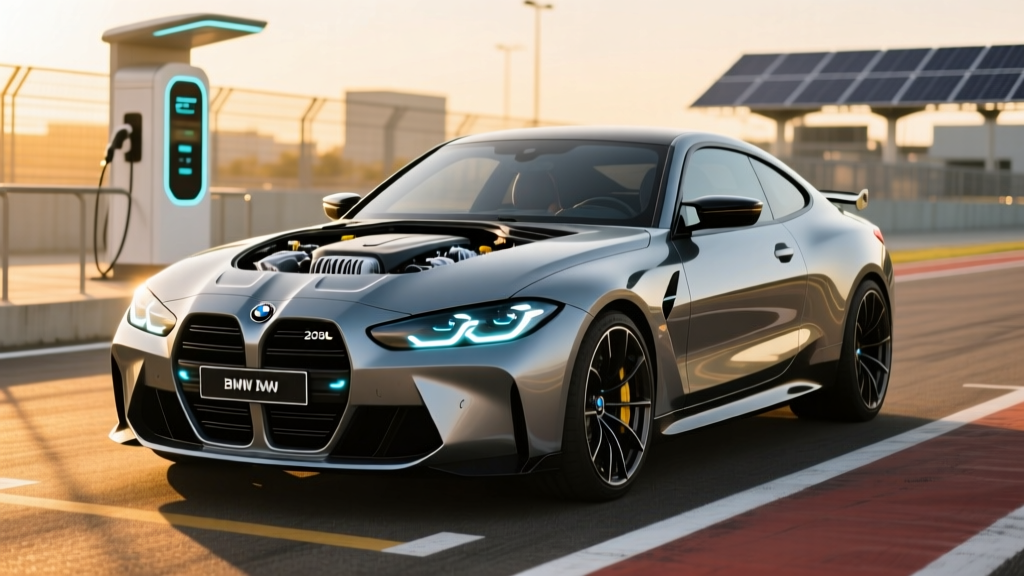
The next-generation BMW M3 is shaping up to be one of the most debated performance sedans of the decade. Confirmed reports indicate that BMW's 2028 M3 will feature a new design and mild-hybrid engine, marking the first time the M3 badge incorporates electrification of any kind. For enthusiasts and buyers tracking this model, understanding what "mild-hybrid" actually means — and how it differs from the plug-in hybrids and full EVs reshaping BMW's lineup — is essential before the car arrives in showrooms.
This guide breaks down every confirmed and reasonably projected detail about the 2028 M3's powertrain, explains mild-hybrid technology in practical terms, and positions it against the PHEV and BEV alternatives BMW already offers. Because this vehicle is not yet on sale, all specifications are preliminary and based on BMW's official statements, supply-chain reporting, and the architecture of current-generation BMW mild-hybrid systems.
What "Mild-Hybrid" Actually Means for the 2028 M3
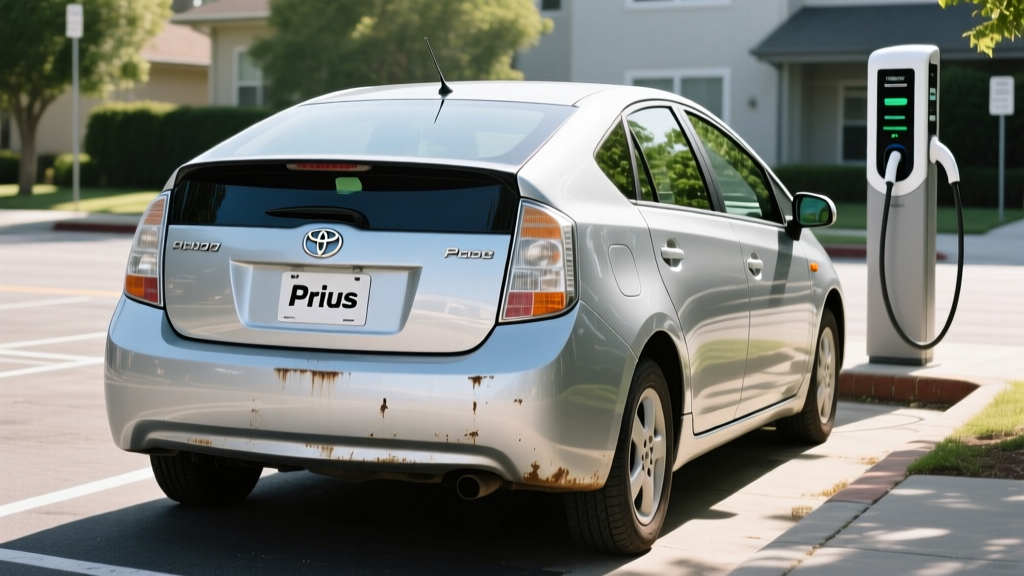
A mild-hybrid electric vehicle (MHEV) is fundamentally different from both a conventional hybrid (HEV) like the Toyota Prius and a plug-in hybrid (PHEV) like the BMW XM. The distinction matters because it determines everything from fuel economy to whether you'll ever plug the car in.
HEV vs PHEV vs MHEV: The Three Hybrid Types
| Attribute | Mild-Hybrid (MHEV) | Conventional Hybrid (HEV) | Plug-In Hybrid (PHEV) |
|---|---|---|---|
| Battery size | 0.4–1.0 kWh (48V) | 1.0–2.0 kWh | 10–30+ kWh |
| Electric-only driving | No (assist only) | Brief, low-speed only | 20–50+ miles |
| Plug-in charging | No | No | Yes (Level 1/2) |
| DC fast charging | No | No | Varies by model |
| Regenerative braking | Yes (modest) | Yes | Yes (stronger) |
| Federal tax credit (§30D) | No | No | Up to $7,500 if eligible |
| Primary benefit | Smoothness, slight MPG bump, turbo fill | City MPG gains | Electric commuting + gas flexibility |
The 2028 M3's mild-hybrid system will use a 48-volt architecture with a small lithium-ion battery (likely in the 0.5–0.9 kWh range) and an integrated starter-generator (ISG) mounted between the engine and transmission. This system cannot propel the car on electric power alone. Instead, it provides three functions:
- Torque fill: The electric motor adds a brief burst of torque (typically 15–30 lb-ft) during acceleration, smoothing out turbo lag from the inline-six.
- Regenerative braking: Captures energy during deceleration to recharge the 48V battery, replacing energy that would otherwise be lost as heat.
- Start-stop refinement: Enables near-silent engine restarts and allows the engine to shut off during coasting (sailing mode), reducing fuel consumption at highway speeds.
Projected 2028 M3 Powertrain Specifications
BMW has confirmed the next M3 will retain an inline-six cylinder engine paired with the 48V mild-hybrid system. Based on the current S58 engine family and BMW's stated engineering direction, here are the projected specifications for the base M3 and M3 Competition:
| Specification | 2028 M3 (Projected) | 2028 M3 Competition (Projected) |
|---|---|---|
| Engine | 3.0L turbocharged inline-6 + 48V ISG | 3.0L turbocharged inline-6 + 48V ISG |
| Combined horsepower | ~480–500 hp | ~530–550 hp |
| Combined torque | ~430–450 lb-ft | ~480–500 lb-ft |
| Electric assist (ISG) | ~15–20 hp / ~15–25 lb-ft | ~15–20 hp / ~15–25 lb-ft |
| 48V battery capacity | ~0.5–0.9 kWh | ~0.5–0.9 kWh |
| Transmission | 8-speed automatic (ZF) | 8-speed automatic (ZF) |
| Drivetrain | RWD / xDrive AWD optional | xDrive AWD standard (RWD likely optional) |
| 0–60 mph (est.) | ~3.6–3.8 sec | ~3.0–3.2 sec |
| Plug-in charging | No | No |
| Electric-only range | None | None |
All figures are preliminary projections based on current BMW powertrain data and industry reporting. Final specifications will be confirmed closer to the vehicle's launch.
The ISG's contribution is modest in raw output but significant in driving feel. Turbo lag — the hesitation between pressing the throttle and the turbo building boost — is effectively masked by instant electric torque. This is the same principle BMW already uses in its current B58 and S58 mild-hybrid implementations found in the 2025–2026 M340i and M440i models.
Fuel Economy: What MPG Can You Expect?
Mild-hybrid systems deliver real but incremental fuel-economy improvements — typically 1–3 MPG combined compared to a non-hybrid version of the same powertrain. For context, the current-generation (G80) BMW M3 Competition xDrive is EPA-rated at approximately 16 city / 22 highway / 18 combined MPG.
Projected EPA Fuel Economy: 2028 M3 vs Current M3
| Model | City MPG | Highway MPG | Combined MPG |
|---|---|---|---|
| 2025 BMW M3 Competition xDrive (current) | 16 | 22 | 18 |
| 2028 BMW M3 (projected, RWD) | 17–18 | 24–26 | 19–21 |
| 2028 BMW M3 Competition xDrive (projected) | 17–18 | 23–25 | 19–20 |
Source: Current EPA data via fueleconomy.gov for 2025 M3. 2028 figures are projections based on mild-hybrid efficiency gains observed in BMW's existing 48V models.
The efficiency gains come primarily from three sources: the engine shutting off during coasting (sailing function), more aggressive regenerative braking that recovers kinetic energy, and smoother start-stop operation that eliminates idle fuel burn in traffic. On the highway, expect the sailing function to contribute the most — BMW's own testing has shown 48V coasting can reduce fuel consumption by up to 5% in steady-speed cruising.
Real-world MPG note: Performance sedans like the M3 are highly sensitive to driving style. Aggressive driving can drop observed fuel economy to 12–14 MPG combined regardless of hybridization. The mild-hybrid system's benefits are most noticeable in mixed city/highway driving with moderate throttle inputs. In our experience with current BMW 48V models, real-world combined MPG typically tracks within 1 MPG of the EPA estimate under normal driving conditions.
New Design: What's Changing for the 2028 M3
The 2028 M3 will ride on BMW's next-generation CLAR platform (sometimes referenced in industry reporting as the updated "Cluster Architecture"). This platform is designed to accommodate internal combustion, mild-hybrid, plug-in hybrid, and full-electric powertrains on the same basic structure — which is why BMW can offer the M3 as a mild-hybrid while the iM3 (the fully electric M3 variant) shares the same fundamental chassis.
Design details remain limited, but confirmed and strongly reported elements include:
- Exterior: A redesigned kidney grille (expected to be narrower than the current G80's polarizing design), flush door handles, and active aerodynamic elements including an adaptive rear diffuser.
- Interior: BMW's next-generation iDrive system with a curved panoramic display, reduced physical button count, and a redesigned center console to accommodate the 48V battery packaging without sacrificing cabin space.
- Weight: The 48V system adds approximately 40–60 lbs over a non-hybrid inline-six. BMW is expected to offset some of this through increased use of aluminum and carbon-fiber-reinforced plastic (CFRP) in the body structure, targeting a curb weight near 3,850–3,950 lbs for the base M3.
- Chassis: Revised adaptive M suspension with wider track and updated rear-axle kinematics. The M3 Competition xDrive is expected to feature an active rear differential with torque vectoring.
Tax Credits, Pricing, and Ownership Costs
Because the 2028 M3 uses a mild-hybrid system rather than a plug-in hybrid or full-electric powertrain, it does not qualify for the federal §30D clean vehicle tax credit. That credit, which offers up to $7,500 for qualifying new EVs and up to $3,750 for qualifying PHEVs, requires a minimum battery capacity of 7 kWh for PHEVs and 16 kWh for full EVs under current IRS rules. The M3's sub-1 kWh 48V battery falls far short of this threshold.
Federal Tax Credit Eligibility: 2028 M3
- ❌ Minimum battery capacity (7 kWh for PHEV, 16 kWh for BEV): M3 has ~0.5–0.9 kWh
- ❌ Plug-in charging capability: M3 cannot be plugged in
- ❌ §30D new clean vehicle credit: Not eligible
- ❌ Point-of-sale transfer option: Not applicable
- ⚠️ Some state-level incentives may apply to mild-hybrids — check your state's energy office for current programs
Projected pricing, based on current M3 pricing trajectories and the added cost of the 48V system:
| Trim | Current MSRP (2025) | Projected MSRP (2028) |
|---|---|---|
| M3 (base, RWD) | $76,000 | $80,000–$84,000 |
| M3 Competition | $82,000 | $87,000–$92,000 |
| M3 Competition xDrive | $87,000 | $92,000–$98,000 |
5-year ownership cost estimate: At 15,000 miles/year and $3.50/gallon premium fuel, the 2028 M3 Competition xDrive (projected 19 MPG combined) would cost approximately $13,800 in fuel over five years. That's roughly $1,100 less than the current M3 Competition xDrive over the same period — a modest savings that reflects the incremental nature of mild-hybrid efficiency gains.
Reliability and Battery Warranty
The 48V mild-hybrid system is one of the lowest-risk electrification technologies available. Unlike PHEV and BEV traction batteries, which are large, expensive, and subject to degradation over time, the 48V battery in the M3 is small, lightly stressed, and operates within a narrow state-of-charge window that minimizes wear.
48V Battery: Longevity and Replacement
Expected lifespan: 150,000–200,000+ miles under normal use. The 48V lithium-ion battery is not subject to the deep charge/discharge cycles that cause degradation in PHEV and BEV batteries.
Warranty: BMW is expected to cover the 48V battery under its standard powertrain warranty — 4 years/50,000 miles basic, with the hybrid-specific components covered for 8 years/80,000 miles (consistent with BMW's current hybrid component warranty for models like the M340i with 48V).
Replacement cost (out of warranty): Estimated $800–$1,500 for the 48V battery module, plus $200–$400 in labor. This is an order of magnitude cheaper than PHEV or BEV battery replacement, which can range from $5,000 to $20,000+.
Reliability track record: BMW's B58 inline-six with 48V mild-hybrid (used in the current M340i, 330i, and X3 M40i) has demonstrated strong reliability in early model years. The ISG adds few failure-prone components — it replaces the traditional alternator and starter motor, both of which are common failure points in non-hybrid vehicles.
2028 M3 Mild-Hybrid vs BMW's Electrified Alternatives
BMW offers — or will soon offer — several electrified performance vehicles that compete with or complement the M3. Here's how the mild-hybrid M3 stacks up against the PHEV XM and the upcoming all-electric iM3:
| Attribute | 2028 M3 (MHEV) | 2026 BMW XM (PHEV) | 2028 BMW iM3 (BEV, projected) |
|---|---|---|---|
| Powertrain | I-6 turbo + 48V | V8 twin-turbo + electric motor | Dual/tri electric motors |
| Combined HP | ~480–550 | 644 (XM) / 738 (XM Label) | ~600–700 (est.) |
| Electric-only range | None | ~30 miles (EPA est.) | N/A (full EV, ~300+ mi range est.) |
| Plug-in charging | No | Yes (Level 2, ~7.4 kW) | Yes (Level 2 + DC fast charge) |
| Combined MPG / MPGe | ~19–21 MPG | ~14 MPG (gas) / ~40 MPGe (combined) | ~90–100 MPGe (est.) |
| Federal tax credit | None | Up to $7,500 (if eligible) | Up to $7,500 (if eligible) |
| Starting MSRP | ~$80,000–$84,000 | $159,995 | TBD (est. $90,000–$110,000) |
| Weight | ~3,850–3,950 lbs | 5,960 lbs | ~4,500–4,800 lbs (est.) |
The XM is a completely different vehicle — a heavy, luxury-oriented SUV with a V8 PHEV powertrain. It's relevant only to buyers cross-shopping electrified M performance. The iM3, expected to debut alongside or shortly after the mild-hybrid M3, will offer substantially more power and lower running costs but at the expense of the inline-six sound, lighter weight, and refueling convenience that define the M3 experience.
Who Should Choose the Mild-Hybrid M3?
Decision Framework: Is the 2028 M3 Mild-Hybrid Right for You?
Choose the 2028 M3 mild-hybrid if:
- You want a performance sedan with an inline-six and minimal electrification complexity
- You don't have access to home or workplace charging (no plug needed)
- You prioritize driving dynamics and weight over maximum efficiency
- You want the M3's traditional character — exhaust note, RWD bias, mechanical feel — with a modest tech upgrade
- You plan to keep the car 8+ years and want lower long-term battery replacement risk
Choose a PHEV (like the XM or a future M3 PHEV variant) if:
- You have a short commute (<30 miles) and home Level 2 charging
- You want electric-only daily driving with gas-engine flexibility for road trips
- Federal tax credit eligibility matters to your purchase decision
Choose a full EV (like the upcoming iM3) if:
- You want maximum performance per dollar (electric motors deliver instant torque at lower cost than high-output ICE)
- You have reliable home charging and your daily driving is under 250 miles
- You want the lowest per-mile energy cost (~$0.04–$0.06/mile on home electricity vs ~$0.20/mile on premium gas)
- You're comfortable with current charging infrastructure for road trips
Frequently Asked Questions
How many MPG does the 2028 BMW M3 mild-hybrid get?
Based on projections from current M3 EPA data and the efficiency gains observed in BMW's existing 48V models, the 2028 M3 is expected to achieve approximately 17–18 city / 24–26 highway / 19–21 combined MPG. Final EPA ratings will be published closer to launch. Real-world fuel economy will vary significantly with driving style — aggressive driving can drop observed MPG into the 12–14 range.
Can the 2028 M3 drive on electric power alone?
No. The mild-hybrid system's 48V battery and integrated starter-generator cannot propel the vehicle independently. The electric motor only assists the gasoline engine during acceleration and enables coasting with the engine off. This is fundamentally different from a PHEV, which can drive 20–50 miles on electricity alone.
Does the 2028 M3 qualify for any federal tax credit?
No. The federal §30D clean vehicle tax credit requires a minimum battery capacity (7 kWh for PHEVs, 16 kWh for BEVs) and plug-in charging capability. The M3's ~0.5–0.9 kWh 48V battery does not meet these thresholds. Check your state's energy office for any state-level incentives that may apply to mild-hybrid vehicles, though these are uncommon.
Is the mild-hybrid system reliable, and what does battery replacement cost?
Yes, 48V mild-hybrid systems are among the most reliable electrification technologies. The battery is small, lightly cycled, and expected to last 150,000–200,000+ miles. BMW's hybrid component warranty is expected to cover it for 8 years/80,000 miles. Out-of-warranty replacement is estimated at $1,000–$1,900 (parts + labor) — far less than PHEV or BEV battery replacement. The ISG also eliminates the traditional starter motor and alternator, removing two common failure points.
Will the 2028 M3 be available with a manual transmission?
BMW has not confirmed manual transmission availability for the next-generation M3. The current G80 M3 is one of the last performance sedans offered with a 6-speed manual, and industry reporting suggests the manual may be discontinued for the 2028 model year as BMW focuses on the ZF 8-speed automatic paired with the ISG. If the manual is important to you, the current-generation M3 (available through 2027) may be the last opportunity.
How does the mild-hybrid M3 compare to the fully electric iM3?
The iM3 (expected 2028–2029) will offer substantially more power (~600–700 hp), instant torque delivery, and lower per-mile energy costs, but at a higher curb weight (~4,500–4,800 lbs vs ~3,900 lbs for the MHEV M3). The mild-hybrid M3 retains the inline-six character, lighter weight, and refueling convenience that enthusiasts value. BMW has indicated both models will be sold concurrently, giving buyers a choice between traditional and electric M performance.
When will the 2028 BMW M3 be available to order?
BMW has not announced an exact on-sale date. Based on typical BMW M product cycles and industry reporting, expect an official reveal in late 2027 with customer deliveries beginning in early-to-mid 2028 as a 2028 model-year vehicle. Pricing and final specifications will be confirmed at or before the reveal. Follow BMW's official M page for updates.
This article covers a vehicle that has been announced but is not yet on sale. All specifications, pricing, and efficiency figures are projections based on currently available information and are subject to change. Final EPA ratings, MSRP, and feature availability will be confirmed by BMW prior to launch. For current federal tax credit rules, consult the IRS clean vehicle credit page and a qualified tax professional.