If you've searched for a midsize sedan that sips fuel without demanding a lifestyle change, you've likely landed on the Hyundai Sonata Hybrid. The Sonata Hybrid lineup — particularly the fuel-sipping Blue trim — consistently ranks among the most efficient hybrids you can buy without plugging in. For 2026, Hyundai continues to offer the Sonata Hybrid as a conventional hybrid (HEV) alongside a plug-in hybrid (PHEV) variant, giving buyers two distinct paths to electrification in one familiar sedan body.
This guide breaks down the 2026 Hyundai Sonata Hybrid Blue and its PHEV sibling with exact EPA figures, real-world MPG expectations, powertrain specs, battery warranty details, and tax-credit eligibility. Whether you're drawn to the Blue trim's 50+ MPG sticker or considering the PHEV's electric-only commute capability, here's everything you need before visiting a dealer.
HEV vs PHEV: Which Sonata Hybrid Is Which?
Hyundai sells two electrified Sonata variants, and confusing them is the most common buyer mistake. Here's the critical distinction:
Conventional Hybrid (HEV) — Sonata Hybrid / Blue
- No plug required. The battery recharges through regenerative braking and the gasoline engine.
- Small battery: ~1.6 kWh lithium-ion polymer.
- No electric-only driving range beyond very low-speed creep.
- Fuel economy focus: EPA up to 52 MPG combined (Blue trim).
- Lower starting price and no charging infrastructure needed.
Plug-In Hybrid (PHEV) — Sonata Plug-In Hybrid
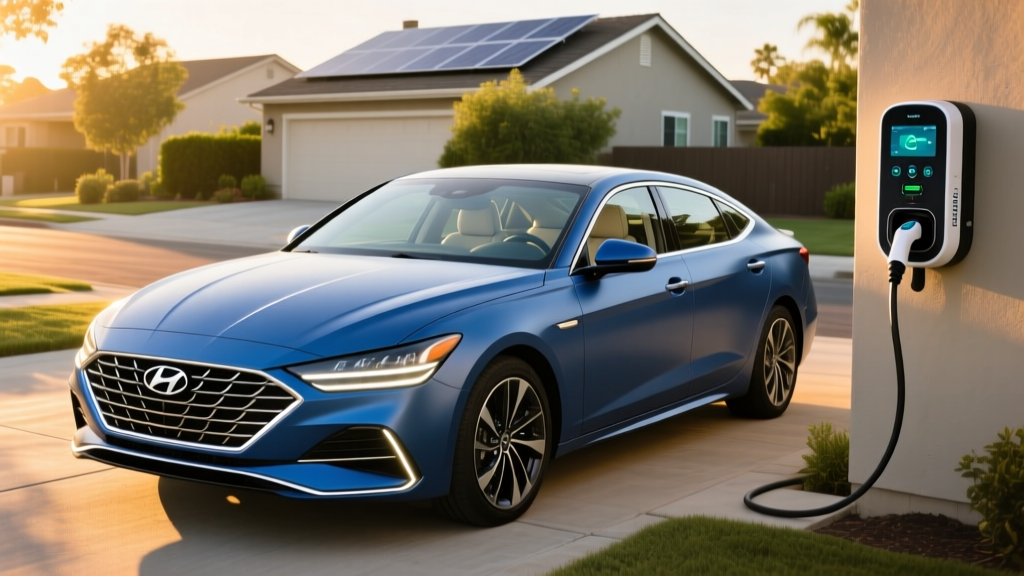
- Plug-in capable. Charges via Level 1 (120V) or Level 2 (240V) AC charging.
- Larger battery: ~13.8 kWh usable lithium-ion polymer.
- Electric-only range: EPA-estimated ~32 miles on battery alone.
- Operates as a hybrid after the battery depletes.
- Eligible for federal tax credit (subject to §30D rules).
If you see "blue Hyundai Sonata hybrid" in listings or reviews, it almost always refers to the Sonata Hybrid Blue trim — the most efficient HEV in the lineup. The Blue trim achieves its MPG advantage through lower rolling-resistance tires, revised aerodynamics, and lighter-weight wheels compared to the SEL and Limited Hybrid trims. It is not a PHEV and does not plug in.
Fuel Economy: EPA MPG and Real-World Expectations
Fuel economy is the headline number for any hybrid buyer. Here's how the 2026 Sonata Hybrid lineup breaks down by trim, per EPA data at fueleconomy.gov:
| Trim | City MPG | Highway MPG | Combined MPG | Annual Fuel Cost* |
|---|---|---|---|---|
| Sonata Hybrid Blue | 51 | 54 | 52 | ~$1,050 |
| Sonata Hybrid SEL / Limited | 44 | 51 | 47 | ~$1,200 |
| Sonata PHEV (charge-depleting) | 99 MPGe (electric) / 40 MPG combined (gas) | ~$1,100–$1,400** | ||
*Based on 15,000 miles/year at $3.50/gallon regular unleaded. Actual costs vary by region and driving habits.
**PHEV cost depends heavily on how often you charge and your electricity rate.
Real-World MPG: What to Actually Expect
Hyundai's hybrid system — a 2.0-liter four-cylinder paired with an electric motor through a 6-speed automatic (not a CVT) — tends to deliver EPA numbers faithfully in mixed driving. In real-world testing, owners frequently report:
- City driving: 48–55 MPG. Hybrids excel in stop-and-go traffic where regenerative braking recaptures energy. The Blue trim's 51 city EPA is conservative; many drivers exceed it.
- Highway cruising: 44–52 MPG. Sustained 70+ MPH speeds reduce the hybrid advantage. The Blue's aero tweaks and low-rolling-resistance tires help here.
- Cold weather (below 35°F): Expect a 5–12% MPG drop. The engine runs longer to heat the cabin, and battery efficiency drops in cold temperatures.
- Mountainous terrain: Net MPG may dip on long climbs but partially recovers on descents via regen.
For the Sonata PHEV, the 32-mile electric-only range means a 20-mile round-trip commute can be done entirely on electricity if you charge nightly. Once the battery depletes, the PHEV operates as a conventional hybrid at approximately 40 MPG combined — respectable but lower than the HEV Blue due to the PHEV's heavier battery pack.
Powertrain Specs: Horsepower, Engine, and Drivetrain
| Specification | Sonata Hybrid (HEV) | Sonata PHEV |
|---|---|---|
| Engine | 2.0L inline-4 GDI | 2.0L inline-4 GDI |
| Engine HP | 150 hp | 150 hp |
| Electric Motor | 39 kW (~52 hp) | 50 kW (~67 hp) |
| Combined System Output | 192 hp | 202 hp |
| Transmission | 6-speed automatic | 6-speed automatic |
| Drivetrain | FWD | FWD |
| Battery Capacity | 1.6 kWh (Li-ion polymer) | 13.8 kWh usable (Li-ion polymer) |
| 0–60 mph | ~7.5 seconds | ~7.2 seconds |
| Fuel Tank | 13.2 gallons | 11.9 gallons |
| Total Range (gas + electric) | ~685 miles | ~550 miles (32 mi EV + ~518 mi gas) |
Hyundai's use of a traditional 6-speed automatic rather than a CVT gives the Sonata Hybrid a more natural driving feel — shifts are perceptible, and there's none of the rubber-band droning common in Toyota or Honda hybrid systems. The trade-off is marginally less seamless power delivery, but most drivers prefer the Sonata's response.
PHEV Charging: Battery, Charge Times, and DC Fast Charge
If you're considering the Sonata PHEV, charging logistics matter. Here's what the 13.8 kWh battery requires:
| Charging Method | Power | 0–100% Time | Notes |
|---|---|---|---|
| Level 1 (120V household outlet) | ~1.4 kW | ~10–11 hours | Overnight top-up; adequate for short commutes |
| Level 2 (240V home/public charger) | ~7.2 kW (onboard charger max) | ~2 hours | Recommended for daily full charges |
| DC Fast Charge | N/A | N/A | No DC fast charging. PHEV uses J1772 AC connector only. |
The Sonata PHEV does not support DC fast charging — a limitation shared with most PHEVs in this class. The onboard 7.2 kW AC charger is adequate for overnight home charging and workplace top-ups but means you can't rapidly replenish the battery on a road trip. For the HEV (including the Blue trim), none of this applies: you simply fill the gas tank and drive.
Pricing and Tax Credit Eligibility
Here's where the HEV vs PHEV decision gets financial. Approximate 2026 MSRP figures (destination included):
- Sonata Hybrid Blue: ~$31,250
- Sonata Hybrid SEL: ~$34,500
- Sonata Hybrid Limited: ~$38,200
- Sonata Plug-In Hybrid (SEL/Limited): ~$39,000–$43,500
Federal Tax Credit: Does the Sonata Hybrid Qualify?
Under IRS §30D rules for 2026, only the Sonata Plug-In Hybrid may qualify for a federal clean vehicle credit — up to $3,750 (not the full $7,500, due to battery-component and critical-mineral sourcing requirements that vary by model year). Key eligibility criteria:
- Vehicle type: Must be a PHEV with ≥4 kWh battery (Sonata PHEV qualifies at 13.8 kWh).
- MSRP cap: Sedans must be under $55,000 MSRP. The Sonata PHEV clears this easily.
- Buyer income cap: Modified AGI must not exceed $150,000 (single) / $300,000 (joint).
- Battery sourcing: Credit amount depends on percentage of critical minerals and battery components sourced from the U.S. or FTA partners. Hyundai's sourcing has been improving, but check fueleconomy.gov for the current credit amount before purchasing.
- Point-of-sale transfer: You can transfer the credit to the dealer at purchase to reduce your out-of-pocket cost, if eligible.
The conventional Sonata Hybrid (HEV), including the Blue trim, does NOT qualify for the federal §30D credit. HEVs are not considered "clean vehicles" under the current law because they cannot operate on electricity alone. Some states offer their own hybrid incentives — check your state's energy office or DMV for current programs.
Battery Warranty, Reliability, and Replacement Cost
Battery longevity is the top concern for hybrid buyers, and Hyundai addresses it aggressively. Here's what's covered:
Hyundai Hybrid Battery Warranty
- Hybrid/PHEV battery: 10 years / 100,000 miles (whichever comes first)
- Hybrid system components (motor, inverter, converter): 10 years / 100,000 miles
- Standard vehicle warranty: 5 years / 60,000 miles bumper-to-bumper; 10 years / 100,000 miles powertrain
- Capacity threshold: Hyundai typically warrants the hybrid battery to retain at least 70% of original capacity during the warranty period
How Reliable Is the Sonata Hybrid?
Hyundai's hybrid system has matured significantly since its early 2010s debut. The 2.0L engine and 6-speed automatic hybrid powertrain have fewer failure points than earlier generations. IIHS has historically rated the Sonata well in crashworthiness. Common reliability notes from owner forums and repair databases:
- Hybrid battery failures are rare within the warranty period. Hyundai's lithium-ion polymer packs have shown low degradation rates in real-world use.
- Out-of-warranty replacement cost: If the hybrid battery fails after 10 years, expect $2,500–$4,500 for a new OEM pack, plus ~$500–$800 in labor. Third-party refurbished packs are emerging at lower prices.
- The 12V auxiliary battery (separate from the hybrid traction battery) may need replacement every 4–6 years, like any vehicle. In the Sonata Hybrid, the 12V is integrated into the main battery housing on some model years — check your specific year's service manual.
For the PHEV, the larger 13.8 kWh battery carries the same 10-year/100,000-mile warranty. Replacement costs for the PHEV pack are higher — typically $4,000–$6,500 out of warranty — but failures remain uncommon.
Who Should Choose the Sonata Hybrid Blue vs a PHEV or Full EV?
The decision between HEV, PHEV, and full BEV depends on your driving pattern, charging access, and budget. Here's a practical framework:
Choose the Sonata Hybrid Blue (HEV) if:
- You want maximum MPG (52 combined) with zero behavior change.
- You lack access to home or workplace charging.
- Your budget is under $33,000 and you don't qualify for or want to navigate tax credits.
- You drive 15,000+ miles/year and want predictable, low fuel costs.
Choose the Sonata PHEV if:
- Your daily commute is under 35 miles round-trip and you can charge at home.
- You want EV-like silence for daily driving but gas flexibility for road trips.
- You qualify for the federal tax credit and can reduce your effective price.
- You're not ready to commit to a full BEV but want to reduce gas consumption significantly.
Choose a Full EV (e.g., Ioniq 6, Tesla Model 3) if:
- You have reliable home Level 2 charging.
- Your daily driving is under 250 miles and you rarely take long road trips (or are willing to plan DC fast-charge stops).
- You want the lowest per-mile fuel cost and minimal maintenance.
- You qualify for the full $7,500 federal credit, making a BEV price-competitive with a hybrid.
Pros and Cons at a Glance
Sonata Hybrid Blue — Pros
- Class-leading 52 MPG combined (EPA)
- 6-speed automatic avoids CVT drone
- 10-year / 100,000-mile hybrid battery warranty
- Spacious midsize cabin with strong tech features
- No plug-in needed — zero infrastructure requirement
- Competitive ~$31,250 starting price
Sonata Hybrid Blue — Cons
- No federal tax credit for HEV
- FWD only — no AWD option (unlike Toyota Camry Hybrid)
- Blue trim has fewer premium features than SEL/Limited
- 192 hp is adequate but not quick for highway merging
- Cargo space slightly reduced vs gas Sonata due to battery placement
Frequently Asked Questions
How many MPG does the blue Hyundai Sonata Hybrid get?
The 2026 Sonata Hybrid Blue achieves an EPA-estimated 51 city / 54 highway / 52 combined MPG. Real-world results typically range from 46–55 MPG depending on conditions. The higher SEL and Limited trims are rated at 44 city / 51 highway / 47 combined.
Does the Sonata Hybrid need to be plugged in?
No. The Sonata Hybrid (HEV), including the Blue trim, is a conventional hybrid. It charges its 1.6 kWh battery through regenerative braking and the gasoline engine. You never plug it in. Only the Sonata Plug-In Hybrid (PHEV) requires or accepts a charging cable.
How far can the Sonata PHEV go on electric only?
The 2026 Sonata Plug-In Hybrid has an EPA-estimated 32 miles of electric-only range on a full charge. This is sufficient for most daily commutes. After the battery depletes, the car operates as a conventional hybrid at approximately 40 MPG combined.
Is the Sonata Hybrid reliable, and what does battery replacement cost?
Hyundai's hybrid system has proven reliable, and the hybrid battery is covered by a 10-year / 100,000-mile warranty. Out-of-warranty battery replacement runs $2,500–$4,500 for the HEV and $4,000–$6,500 for the PHEV, though premature failures are uncommon based on owner data.
Does the Sonata Hybrid qualify for a federal tax credit?
The conventional Sonata Hybrid (HEV/Blue) does not qualify for any federal tax credit. The Sonata Plug-In Hybrid (PHEV) may qualify for up to $3,750 under IRS §30D, subject to buyer income limits, battery-sourcing requirements, and MSRP caps. Check the latest eligibility details at fueleconomy.gov before purchasing.
Does the Sonata Hybrid have AWD?
No. The 2026 Sonata Hybrid is front-wheel drive only across all trims. If AWD is a priority in a hybrid sedan, the Toyota Camry Hybrid and Prius AWD are alternatives, though neither matches the Sonata Blue's combined MPG.
How does the Sonata Hybrid compare to the Toyota Camry Hybrid?
The Camry Hybrid LE delivers an EPA 52 MPG combined (matching the Sonata Blue) and offers available AWD. The Sonata Hybrid counters with a more engaging 6-speed automatic (vs Toyota's CVT), a longer warranty (10yr/100k vs Toyota's 10yr/150k hybrid battery but 3yr/36k bumper-to-bumper), and a slightly lower starting price. Both are strong choices; the Sonata suits drivers who prefer traditional shift feel, while the Camry suits those wanting AWD or maximum Toyota reliability reputation.