The Real-World Benefits of a Hybrid Vehicle: What Buyers Actually Gain
For drivers who want lower fuel bills without the lifestyle adjustments a full battery-electric vehicle (BEV) demands, hybrid technology delivers measurable, day-one benefits. In 2026, the hybrid market has matured to the point where conventional hybrids (HEVs) routinely achieve 50+ MPG in city driving, and plug-in hybrids (PHEVs) offer 30–50 miles of electric-only commuting before the gas engine ever starts. No range anxiety. No charging-app gymnastics. Just better efficiency with the infrastructure that already exists.
But not all hybrids are the same. The benefits you unlock depend entirely on whether you choose a conventional hybrid (HEV) or a plug-in hybrid (PHEV) — and whether your driving profile matches what each powertrain does best. This guide breaks down exact MPG figures, battery specs, tax credit eligibility, and long-term reliability so you can decide which hybrid type earns its place in your driveway.
HEV vs PHEV: Two Different Paths to Better Fuel Economy
The single most important distinction in the hybrid market is the difference between a conventional hybrid and a plug-in hybrid. Conflating them leads to bad purchase decisions, so let's be precise:
| Feature | Conventional Hybrid (HEV) | Plug-In Hybrid (PHEV) |
|---|---|---|
| Plug-in charging required? | No — charges via regenerative braking and engine | Yes — plug in to access full electric-only range |
| Battery size | 0.6–1.6 kWh (small, nickel-metal hydride or lithium-ion) | 13–25 kWh (lithium-ion, much larger) |
| Electric-only driving | Very limited (under 1 mile at low speed, if at all) | 25–50 miles EPA electric-only range |
| Primary benefit | Higher MPG with zero behavior change | EV-like commuting + gas engine for road trips |
| Federal tax credit (§30D) | Not eligible | Eligible (up to $7,500 if sourcing/income/MSRP rules met) |
| Price premium over gas model | Typically $1,000–$2,500 | Typically $4,000–$8,000 |
Neither is universally "better." An HEV is the lowest-friction upgrade from a gas car. A PHEV is the bridge for drivers who can charge at home but aren't ready to commit to a full BEV. The benefits of a hybrid vehicle scale with how well you match the powertrain to your routine.
Fuel Economy Breakdown: EPA MPG and Real-World Results
Fuel economy is the headline benefit of any hybrid, but the numbers tell a more nuanced story than the sticker suggests. Here's how popular 2026 hybrid models stack up, with real-world context from owner reports and fueleconomy.gov data:
| 2026 Model | Type | City MPG | Highway MPG | Combined MPG | Real-World Note |
|---|---|---|---|---|---|
| Toyota Prius LE | HEV | 57 | 56 | 57 | Many owners report 55–60 MPG in mixed city driving |
| Honda Accord Hybrid | HEV | 51 | 44 | 48 | City-heavy routes can push above 52 MPG |
| Hyundai Tucson Hybrid | HEV | 38 | 38 | 38 | SUV aerodynamics limit highway gains; expect 35–38 real-world |
| Toyota RAV4 Prime | PHEV | 42 (hybrid mode) | 39 (hybrid mode) | 94 MPGe (EV mode) | 42 mi electric-only; owners report 38–44 mi depending on climate |
| Chrysler Pacifica Hybrid | PHEV | 30 (hybrid mode) | 30 (hybrid mode) | 82 MPGe (EV mode) | 32 mi electric-only; minivan weight cuts into EV range when loaded |
| Ford Escape PHEV | PHEV | 40 (hybrid mode) | 37 (hybrid mode) | 105 MPGe (EV mode) | 37 mi electric-only; strong city regen boosts real-world EV range |
Why Hybrids Often Beat EPA Estimates in the City
One of the less-discussed benefits of a hybrid vehicle is that real-world city MPG frequently exceeds the EPA sticker. This is the opposite of BEVs and gas cars, which tend to lose efficiency in stop-and-go traffic. Here's why: every braking event in a hybrid generates regenerative energy that recharges the battery, and every stoplight start can be handled by the electric motor alone at low speeds. City driving is essentially a continuous charge-and-discharge cycle that keeps the hybrid system operating at peak efficiency.
On the highway, the advantage narrows. At 70+ MPH, aerodynamic drag dominates, and the gas engine does most of the work. Expect highway MPG to land at or slightly below the EPA estimate for most hybrids — particularly boxier SUVs and crossovers.
PHEV Electric-Only Range: The Commuter's Advantage
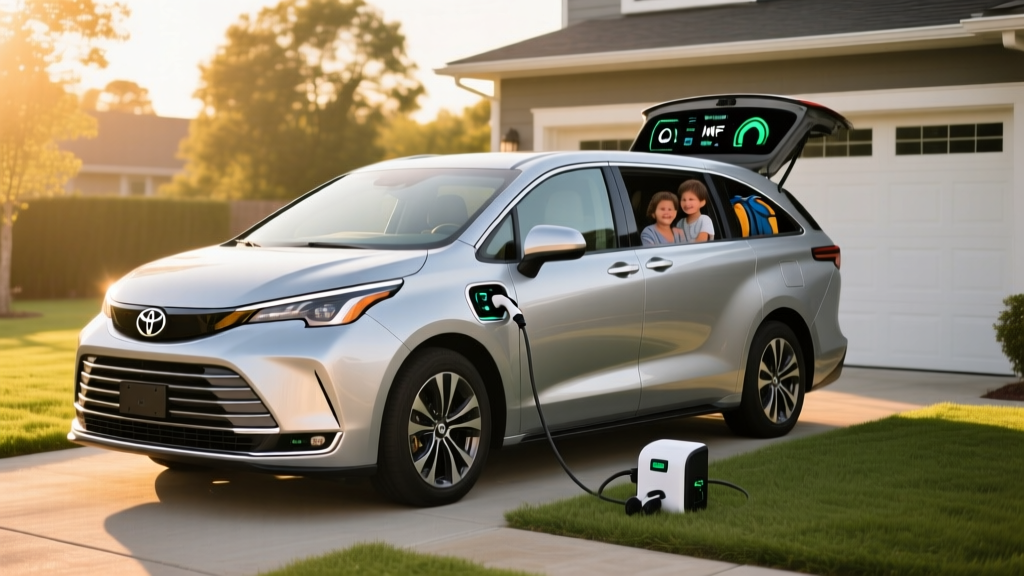
For PHEV owners with home charging, the electric-only range is where the real cost savings materialize. Most 2026 PHEVs offer 25–50 miles of electric-only driving, which covers the average American's one-way commute (roughly 26 miles according to Census data). Drive a PHEV like an EV during the week, and the gas engine becomes a road-trip backup.
| 2026 PHEV Model | Battery (kWh usable) | EPA Electric-Only Range | Total Combined Range | Level 2 Charge Time (0–100%) | DC Fast Charge? |
|---|---|---|---|---|---|
| Toyota RAV4 Prime | 14.9 kWh | 42 miles | ~600 miles | ~2.5 hours (6.6 kW onboard) | No |
| Ford Escape PHEV | 14.4 kWh | 37 miles | ~520 miles | ~3.5 hours (3.3 kW onboard) | No |
| Chrysler Pacifica Hybrid | 16.0 kWh | 32 miles | ~520 miles | ~2.0 hours (7.2 kW onboard) | No |
| Jeep Grand Cherokee 4xe | 17.3 kWh | 26 miles | ~470 miles | ~2.5 hours (7.4 kW onboard) | No |
| Toyota Prius Prime | 13.6 kWh | 44 miles | ~600+ miles | ~4.0 hours (3.5 kW onboard) | No |
A critical note on PHEV charging: Virtually no 2026 PHEVs support DC fast charging. The onboard chargers range from 3.3 kW to 7.4 kW, meaning a full Level 2 charge takes 2–4 hours. This isn't a limitation — it's a design choice. PHEV batteries are small enough that overnight Level 2 (or even Level 1 on a standard 120V outlet) is more than sufficient. If you need rapid charging, you're in BEV territory.
Powertrain and Performance: More Than Just Efficiency
An underappreciated benefit of a hybrid vehicle is the performance boost the electric motor provides. Because electric motors deliver peak torque instantly from zero RPM, hybrids often accelerate more briskly than their gas-only counterparts, particularly from a stop.
Take the 2026 Toyota Prius: the HEV produces a combined 194 horsepower from its 2.0L four-cylinder engine and two motor-generators, reaching 0–60 MPH in approximately 7.2 seconds — a dramatic improvement from the previous generation. The Prius Prime PHEV bumps that to 220 combined HP with a 0–60 time around 6.6 seconds.
The RAV4 Prime is even more dramatic: 302 combined horsepower from its 2.5L engine and dual electric motors, with a 0–60 MPH time of 5.7 seconds. That makes it one of the quickest vehicles in Toyota's lineup — a performance benefit that comes alongside the efficiency gains, not instead of them.
Hybrid powertrains also reduce brake wear. Regenerative braking handles much of the deceleration, meaning conventional brake pads last significantly longer. Many hybrid owners report original brake pads lasting 80,000–100,000 miles.
Tax Credits and Pricing: What You'll Actually Pay
The financial benefits of a hybrid vehicle depend heavily on whether you choose an HEV or a PHEV — and whether you qualify for incentives.
Federal Tax Credit (§30D) for PHEVs
Conventional HEVs do not qualify for the federal §30D tax credit. PHEVs, however, may qualify for up to $7,500 — but eligibility depends on a matrix of requirements that change periodically. As of 2026, the IRS §30D rules require:
- Battery capacity: At least 7 kWh (most PHEVs meet this)
- MSRP cap: Vans/SUVs/pickups ≤ $80,000; sedans ≤ $55,000
- Buyer income cap: Modified AGI ≤ $300,000 (joint), $225,000 (head of household), $150,000 (single)
- Battery component sourcing: Phase-in percentages for North American assembly and critical mineral sourcing increase annually — some PHEVs may qualify for only $3,750 (half credit) if sourcing requirements are only partially met
- Point-of-sale transfer: You can apply the credit as a down-payment reduction at the dealer rather than waiting for tax filing
Always verify current eligibility for a specific VIN on fueleconomy.gov before purchasing. Credit rules have tightened annually, and some PHEVs that qualified in prior years may no longer meet sourcing thresholds.
State Incentives
Several states offer additional rebates or HOV lane access for PHEVs (and in some cases HEVs), but these vary widely by jurisdiction. Check your state's energy office or DMV for current programs. These are separate from federal credits and can stack in some cases.
Typical Pricing
HEV trims typically add $1,000–$2,500 over their gas-only equivalents. The fuel savings usually recoup that premium within 2–4 years depending on mileage and local gas prices. PHEVs carry a larger premium ($4,000–$8,000), but the federal tax credit — if you qualify — can offset a substantial portion of it immediately at point of sale.
Battery Reliability, Warranty, and Replacement Costs
Hybrid Battery Warranty Standard: Federal law mandates that hybrid battery packs carry a minimum warranty of 8 years/100,000 miles (10 years/150,000 miles in CARB states including California, New York, Massachusetts, and others). Most manufacturers match or exceed this baseline.
Hybrid battery reliability is one of the most-researched topics in the ownership community, and the data is reassuring. Toyota's hybrid synergy drive system has been in continuous production since 1997, and real-world failure data shows that most HEV battery packs last well beyond 150,000 miles. The Prius, in particular, has a documented track record of original batteries reaching 200,000+ miles in moderate climates.
PHEV batteries face slightly more stress due to deeper daily discharge cycles (draining from 100% to near 0% on electric-only mode), but the larger battery size means each individual cell works less hard. Thermal management systems in 2026 PHEVs are significantly more sophisticated than early-generation packs.
What Does Replacement Cost?
If a hybrid battery does fail outside warranty, replacement costs in 2026 typically range from:
- HEV battery replacement: $2,000–$4,000 (parts and labor) — many independent hybrid specialists offer refurbished packs for $1,500–$2,500
- PHEV battery replacement: $5,000–$9,000 — larger packs cost more, but warranty coverage is identical
For context, that's roughly equivalent to a major transmission repair on a conventional gas car — a risk that exists with any vehicle past 150,000 miles. The difference is that hybrid battery failure rates are substantially lower than automatic transmission failure rates at equivalent mileage.
Hybrid vs PHEV vs Full EV: Which Powertrain Fits You?
Choose a Conventional Hybrid (HEV) If:
- You cannot charge at home (apartment, street parking, no garage)
- You want zero behavior change — just drive and refuel normally
- Your budget is tighter and you want a modest premium over a gas car
- You drive mostly in the city where hybrid efficiency shines
- You plan to keep the vehicle 10+ years and want proven, simple tech
Choose a Plug-In Hybrid (PHEV) If:
- You can install a Level 2 charger at home or have workplace charging
- Your daily commute is under 40 miles round-trip (coverable on electric-only)
- You want EV-like daily driving but take road trips where charging infrastructure is sparse
- You qualify for the §30D federal tax credit, reducing the price premium
- You want to "test drive" the EV lifestyle without full commitment
Choose a Full EV (BEV) If:
- You have reliable home charging and your daily driving is under 250 miles
- You want to eliminate gasoline entirely and minimize maintenance
- You qualify for the full $7,500 federal credit plus state incentives
- You're comfortable planning road trips around DC fast-charging stops
- You want the lowest per-mile fuel cost (electricity at ~$0.04–$0.06/mile vs gas at ~$0.12–$0.18/mile)
The 80/20 Rule for Hybrid Buyers: If 80% of your driving is a predictable commute under 40 miles and 20% is longer road trips, a PHEV is the mathematically optimal choice. If your driving is unpredictable, you lack home charging, or your budget is firm, an HEV delivers 90% of the fuel savings with none of the charging logistics.
Total Cost of Ownership: Hybrid vs Gas vs EV Over 5 Years
The benefits of a hybrid vehicle become clearest when you look beyond the sticker price. Here's a simplified 5-year/75,000-mile ownership comparison using a midsize sedan at 2026 average fuel and electricity prices ($3.40/gallon gas, $0.16/kWh electricity):
| Cost Factor | Gas Sedan (30 MPG) | HEV (50 MPG) | PHEV (40 mi EV + 45 MPG hybrid) | Full EV (250 mi range) |
|---|---|---|---|---|
| Fuel/Energy Cost (5 yr) | $8,500 | $5,100 | $2,800* | $2,400 |
| Maintenance (5 yr) | $3,500 | $2,800 | $2,500 | $1,500 |
| Typical Price Premium | Baseline | +$1,500 | +$5,000 (−$7,500 credit) | +$8,000 (−$7,500 credit) |
| Estimated 5-Yr Total | $12,000 | $9,400 | $7,800 | $11,400** |
*PHEV fuel cost assumes 70% of miles driven on electricity (home-charged daily). **BEV total includes higher insurance premiums common with electric vehicles.
The hybrid sweet spot is clear: lower fuel and maintenance costs than gas, with a smaller upfront premium and less charging dependency than a full EV.
Frequently Asked Questions
How many MPG does a hybrid get compared to a gas car?
A typical 2026 hybrid sedan achieves 45–57 MPG combined, compared to 28–33 MPG for an equivalent gas-only model. Hybrid SUVs generally land in the 35–42 MPG range. City driving is where hybrids shine — expect to meet or exceed EPA city estimates, while highway MPG may run 1–3 MPG below the sticker due to reduced regenerative braking at sustained speeds.
How far can a PHEV go on electric only?
Current PHEVs offer 25–50 miles of EPA-rated electric-only range. The Toyota Prius Prime leads at 44 miles; the RAV4 Prime delivers 42 miles. Real-world electric range varies with temperature (expect 15–25% reduction below freezing), driving style, and HVAC use. In moderate climates with conservative driving, many owners slightly exceed the EPA electric-only estimate.
Do conventional hybrids need to be plugged in?
No. A conventional hybrid (HEV) charges its small battery entirely through regenerative braking and the gasoline engine. You never plug it in. You simply drive and refuel as you would with any gas car. Only plug-in hybrids (PHEVs) require (and benefit from) external charging.
Is a hybrid reliable long-term, and what does battery replacement cost?
Hybrid systems from Toyota, Honda, and Hyundai have demonstrated strong long-term reliability. Hybrid battery packs are federally warranted for 8 years/100,000 miles (10 years/150,000 miles in CARB states). Most packs last 150,000–200,000+ miles. Out-of-warranty HEV battery replacement costs $2,000–$4,000; PHEV replacement runs $5,000–$9,000. Independent shops offering refurbished packs can reduce costs by 30–50%.
Does a hybrid qualify for any tax credit?
Conventional hybrids (HEVs) do not qualify for the federal §30D clean vehicle credit. Plug-in hybrids (PHEVs) with battery packs of at least 7 kWh may qualify for up to $7,500, subject to MSRP caps, buyer income limits, and battery component/critical mineral sourcing requirements that tighten annually. The credit can now be transferred to the dealer at point of sale as a price reduction. Always check the specific VIN on fueleconomy.gov for current eligibility before purchasing.
Hybrid vs PHEV vs EV — which should I buy?
Choose an HEV if you can't charge at home and want maximum simplicity. Choose a PHEV if you can charge at home, commute under 40 miles daily, and want EV-like commuting with gas-engine flexibility for road trips. Choose a full EV if you have reliable home charging, want zero gasoline use, and are comfortable with DC fast-charging road trips. The "best" option is the one that matches your charging access and driving pattern — not the one with the biggest battery.