Audi's Hybrid SUV Lineup in 2026: What Buyers Need to Know
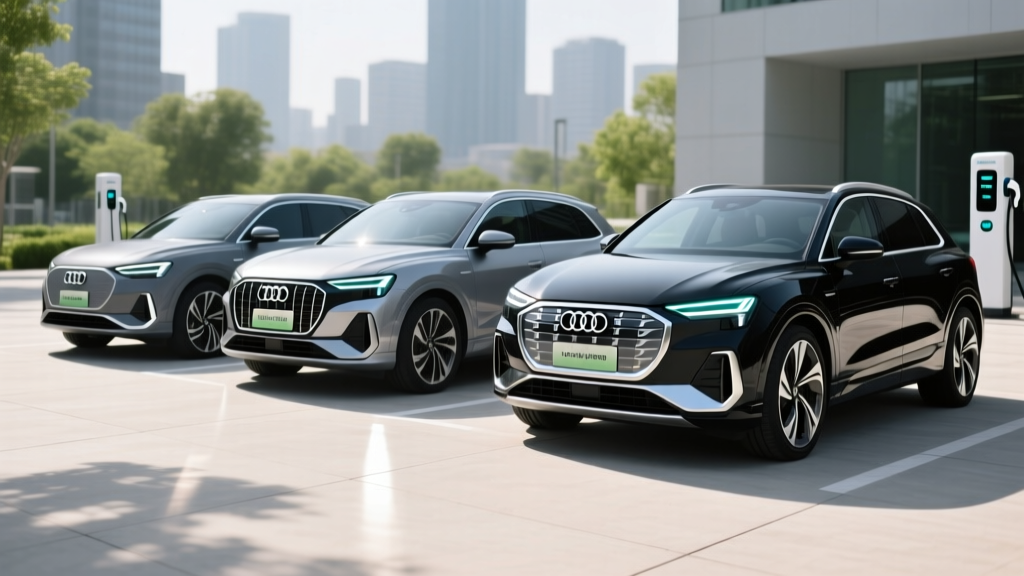
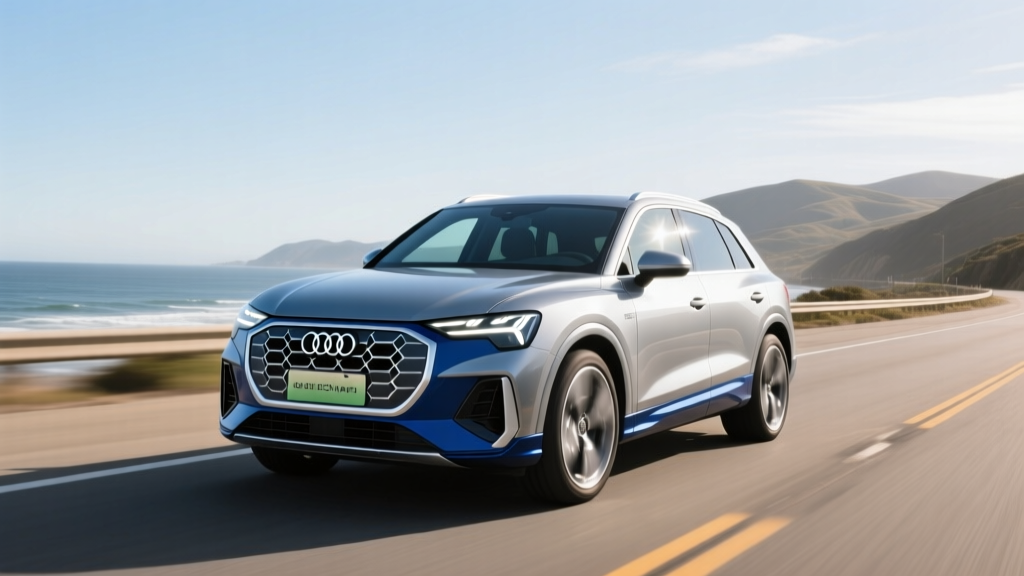
If you're researching an Audi hybrid SUV, the conversation narrows quickly. For the 2026 model year, Audi's sole electrified SUV offering in the United States is the Q5 55 TFSI e quattro — a plug-in hybrid (PHEV) that pairs a turbocharged 2.0-liter four-cylinder with an electric motor and a 17.9 kWh battery pack. There is no conventional hybrid (HEV) Audi SUV currently sold in the U.S. market, and the larger Q7 and Q8 remain mild-hybrid only (a 48-volt system that assists the engine but cannot drive the wheels on electricity alone).
This guide breaks down the Q5 TFSI e's real-world electric range, EPA fuel economy, charging logistics, powertrain specs, pricing, and federal tax credit eligibility — so you can decide whether this PHEV fits your garage or whether a full BEV or a conventional hybrid from another brand makes more sense.
HEV vs. PHEV: Why It Matters for Audi Shoppers
Conventional Hybrid (HEV): A small battery (typically 1–2 kWh) recharges through regenerative braking and the engine. No plug required. Electric-only driving is limited to very low speeds for short distances. Think Toyota RAV4 Hybrid (39 MPG combined).
Plug-in Hybrid (PHEV): A larger battery (17.9 kWh usable in the Q5 TFSI e) that you charge via a plug. Delivers meaningful electric-only range (EPA-estimated 23 miles) before the gas engine engages. After battery depletion, it operates like a conventional hybrid.
Audi's position: The Q5 55 TFSI e is a PHEV. If you want plug-free hybrid efficiency in a luxury compact SUV, you'll need to look at competitors like the Lexus NX 350h or Volvo XC60 Recharge (also a PHEV). Audi does not sell a non-plug HEV SUV in the U.S.
2026 Audi Q5 55 TFSI e: Full Spec Sheet
| Specification | 2026 Audi Q5 55 TFSI e quattro |
|---|---|
| Powertrain | 2.0L turbo I4 + electric motor (PHEV) |
| Combined Horsepower | 362 HP / 369 lb-ft torque |
| Engine Output | 261 HP (gas) + 141 HP (electric motor) |
| Transmission | 7-speed S tronic dual-clutch automatic |
| Drivetrain | quattro AWD |
| Battery Capacity (Gross / Usable) | 17.9 kWh gross / ~14.4 kWh usable |
| Battery Chemistry | NMC (Nickel Manganese Cobalt) |
| EPA Electric-Only Range | 23 miles |
| Total Combined Range (Electric + Gas) | ~420 miles |
| EPA MPGe (Electric + Gas Combined) | 61 MPGe |
| EPA MPG (Charge-Sustaining / Gas Only) | 27 MPG combined (25 city / 29 highway) |
| 0–60 MPH | 5.0 seconds |
| Level 2 AC Charging (Max kW) | 7.2 kW |
| DC Fast Charging | Not supported |
| Charge Time (Level 2, 0–100%) | ~2.5 hours |
| Charge Time (Level 1, 120V, 0–100%) | ~8 hours |
| Cargo Volume (Behind 2nd Row) | 23.8 cu ft |
| Towing Capacity | 4,400 lbs |
| Battery / Powertrain Warranty | 8 years / 100,000 miles |
| Base MSRP (Premium trim) | $57,495 (incl. destination) |
Fuel Economy Breakdown: EPA vs. Real-World MPG
| Driving Scenario | EPA Estimate | Real-World Expectation |
|---|---|---|
| City (charge-sustaining, battery depleted) | 25 MPG | 26–28 MPG (regen favors stop-and-go) |
| Highway (charge-sustaining, battery depleted) | 29 MPG | 26–28 MPG (aero drag hurts at 70+ MPH) |
| Combined (charge-sustaining) | 27 MPG | 26–29 MPG depending on conditions |
| Combined (with regular charging, MPGe) | 61 MPGe | Varies widely — 80+ MPGe possible with daily short commutes under 23 miles |
| Electric-only range | 23 miles | 18–22 miles (highway/cold); 23–25 miles (city/mild weather) |
The EPA's MPGe figure of 61 assumes you're starting with a full battery and blending electric and gas driving over the first portion of your trip. In practice, your MPGe depends entirely on how often you plug in. Owners who charge nightly and commute under 20 miles may use gasoline only on weekend road trips. Those who never plug in will see 27 MPG combined — respectable for a 4,700-lb luxury SUV with 362 HP, but not dramatically better than the gas-only Q5 45 TFSI (25 MPG combined per fueleconomy.gov).
Cold weather reduces the Q5 TFSI e's electric-only range by roughly 20–30%. In freezing temperatures, expect 16–19 miles of electric driving before the engine fires up. The cabin heater draws from the high-voltage battery, which accelerates depletion. Preconditioning while plugged in mitigates this.
Charging the Q5 TFSI e: What You Need at Home
The Q5 55 TFSI e uses a J1772 connector for Level 1 and Level 2 AC charging. It does not support DC fast charging — a notable limitation shared with most PHEVs in this class. The onboard charger maxes out at 7.2 kW, meaning:
| Charging Level | Power | Time (0–100%) | Practical Notes |
|---|---|---|---|
| Level 1 (120V household outlet) | ~1.4 kW | ~8 hours | Overnight top-up works if daily EV miles are low |
| Level 2 (240V, home wallbox) | 7.2 kW (max) | ~2.5 hours | Ideal — full charge while you sleep or work |
| DC Fast Charging | N/A | N/A | Not available on Q5 TFSI e |
A Level 2 home charger (such as a ChargePoint Home Flex or Wallbox Pulsar Plus) is strongly recommended. A 240V / 40-amp circuit delivers the full 7.2 kW and fills the battery in roughly 2.5 hours — fast enough to recharge midday if needed. Expect a Level 2 installation to cost $500–$1,500 depending on your electrical panel's proximity to the garage and whether a panel upgrade is required.
Public Level 2 chargers (ChargePoint, EVgo, Blink) work fine for topping up, but the lack of DC fast charging means the Q5 TFSI e is not designed for rapid en-route recharging. On road trips, you'll drive it as a conventional hybrid after the initial 23 miles of electric range are used.
Powertrain Deep Dive: How the 362 HP System Works
The Q5 TFSI e's powertrain integrates a 261-HP turbocharged 2.0-liter inline-four with a 141-HP electric motor sandwiched between the engine and the 7-speed S tronic transmission. Combined system output is 362 HP and 369 lb-ft of torque — substantially more than the gas-only Q5 45 TFSI (261 HP).
Three driving modes govern the powertrain:
- EV mode: Electric-only up to 84 MPH, drawing solely from the battery. The engine stays off unless you floor the accelerator.
- Hybrid mode: The system blends gas and electric automatically for optimal efficiency. Navigation-based predictive energy management can reserve battery for city driving if a route is entered.
- Battery Hold / Charge mode: Preserves remaining battery or uses the engine to recharge it — useful on highways before entering an urban zone.
The quattro all-wheel-drive system is fully mechanical (a driveshaft connects the front and rear axles), unlike some PHEV competitors that use a rear electric motor for AWD. This gives the Q5 TFSI e predictable, consistent traction but adds weight.
Pricing, Trims, and Federal Tax Credit Eligibility
The 2026 Audi Q5 55 TFSI e is offered in three trims:
- Premium: $57,495
- Premium Plus: $61,495
- Prestige: $65,995
All prices include the $1,195 destination charge.
Federal §30D Tax Credit Eligibility (2026 rules per IRS.gov):
- Maximum credit: Up to $3,750 (partial credit — dependent on critical mineral and battery component sourcing requirements)
- MSRP cap: Vehicle must have an MSRP at or below $80,000 (SUVs) — the Q5 TFSI e qualifies on all trims
- Buyer income cap: Modified AGI must not exceed $150,000 (single) / $300,000 (joint)
- Battery sourcing: Critical minerals and battery components must meet phased-in domestic/FNA-sourcing thresholds — verify current-year compliance on the IRS qualified vehicles list
- Point-of-sale transfer: Eligible buyers can transfer the credit to the dealer at purchase for an immediate price reduction
Important: PHEV tax credit amounts vary based on battery capacity and sourcing compliance. The Q5 TFSI e's 17.9 kWh battery meets the minimum 7 kWh threshold, but the exact credit amount ($3,750 or less) depends on 2026 critical-mineral sourcing percentages. Consult a tax professional and check the IRS qualified vehicle list before purchasing.
Battery Longevity, Warranty, and Replacement Cost
Audi High-Voltage Battery Warranty: 8 years or 100,000 miles (whichever comes first), covering defects and capacity loss below 70% of original capacity.
Powertrain Warranty: 4 years / 50,000 miles (Audi's standard new-vehicle limited warranty).
The Q5 TFSI e's NMC battery pack is liquid-cooled, which helps manage thermal degradation. PHEV batteries generally experience less stress than full BEV batteries because they operate in a narrower state-of-charge window (the system maintains a buffer and rarely allows a true 0% or 100% state). Based on industry data from similar VW Group PHEV systems, owners can expect 85–92% state of health (SoH) after 5 years of normal use.
If the battery does require out-of-warranty replacement, expect a cost in the range of $8,000–$12,000 including parts and labor, based on current VW Group PHEV battery pricing. This is significantly less than a full BEV battery replacement but still a meaningful expense. In practice, very few PHEV batteries require full replacement within the first decade — most degradation is gradual and remains within warranty thresholds.
To maximize battery lifespan:
- Avoid leaving the vehicle at 100% SoC for extended periods in hot weather
- Use Level 2 charging rather than relying exclusively on Level 1 (the slower charge rate isn't harmful, but Level 2's thermal management during charging is more effective)
- Enable preconditioning when plugged in to warm or cool the cabin using grid power rather than battery power
Who Should Buy the Audi Q5 TFSI e — And Who Shouldn't
Choose the Q5 TFSI e if:
- Your daily commute is under 25 miles and you can charge at home
- You want a luxury compact SUV with genuine performance (362 HP, 5.0-sec 0–60)
- You take regular road trips where BEV charging infrastructure is sparse
- You want to reduce gasoline consumption without committing to full electric
- You value Audi's interior quality, virtual cockpit, and quattro AWD
Look elsewhere if:
- Your commute exceeds 30 miles one-way — the 23-mile EV range won't cover it, and you'll burn gas daily
- You want DC fast charging for apartment/condo living without home charging access
- You want a conventional (non-plug) hybrid — consider the Lexus NX 350h (39 MPG combined, no plug needed)
- You want full electric — the Audi Q4 e-tron (242 miles EPA, DC fast charging) or Q8 e-tron (285 miles EPA) are Audi's BEV SUVs
- Cargo space is paramount — the battery reduces under-floor storage vs. the gas Q5
How It Compares: Q5 TFSI e vs. Key PHEV Rivals
The Q5 TFSI e competes in a tight segment of luxury compact PHEV SUVs. Here's how it stacks up against two key rivals:
| Spec | 2026 Audi Q5 55 TFSI e | 2026 Volvo XC60 Recharge | 2026 BMW X3 xDrive30e |
|---|---|---|---|
| Combined HP | 362 HP | 455 HP | 288 HP |
| Battery (kWh usable) | ~14.4 kWh | ~14.9 kWh | ~14.2 kWh |
| EPA EV Range | 23 miles | 35 miles | 22 miles |
| MPG (charge-sustaining) | 27 combined | 27 combined | 28 combined |
| DC Fast Charge | No | No | No |
| 0–60 MPH | 5.0 sec | 4.5 sec | 6.0 sec |
| Base MSRP | $57,495 | $60,050 | $54,900 |
| Battery Warranty | 8 yr / 100k mi | 8 yr / 100k mi | 8 yr / 80k mi |
The Volvo XC60 Recharge leads on electric-only range (35 miles) and horsepower (455 HP), but starts at a higher price. The BMW X3 xDrive30e is the most affordable and efficient in gas-only mode but trails on performance. The Audi sits in the middle: strong acceleration, a refined interior, and competitive pricing — but its 23-mile EV range is the weakest of the three.
Frequently Asked Questions
How many MPG does the Audi Q5 hybrid get?
The 2026 Audi Q5 55 TFSI e achieves an EPA-estimated 27 MPG combined (25 city / 29 highway) when operating in charge-sustaining mode (battery depleted). The combined MPGe rating is 61 MPGe when factoring in electric driving from a full charge. In real-world city driving with regenerative braking, some owners report 28–30 MPG in gas-only mode.
How far can the Audi Q5 TFSI e go on electric only?
The EPA-estimated electric-only range is 23 miles. Real-world results vary: expect 18–22 miles on the highway or in cold weather, and up to 24–25 miles in mild-weather city driving where regenerative braking is frequent and speeds are lower.
Does the Audi Q5 hybrid qualify for a tax credit?
The Q5 55 TFSI e may qualify for a partial federal tax credit of up to $3,750 under IRS §30D rules, subject to buyer income limits ($150K single / $300K joint), the $80K SUV MSRP cap, and battery-sourcing compliance. The credit can be transferred to the dealer at point of sale for an immediate price reduction. Always verify current-year eligibility on the IRS qualified vehicles list and consult a tax professional.
Is the Audi Q5 TFSI e reliable? What about battery replacement cost?
Audi's PHEV powertrain shares components with the broader VW Group, which has accumulated significant PHEV reliability data. The high-voltage battery is warrantied for 8 years / 100,000 miles against defects and capacity loss below 70%. Out-of-warranty battery replacement is estimated at $8,000–$12,000. Most PHEV batteries retain 85–92% capacity after five years. The Q5's overall reliability ratings from IIHS and owner surveys are competitive for the luxury compact SUV segment.
Should I buy the Q5 PHEV, a full EV, or a conventional hybrid?
If you can charge at home and your daily driving is under 25 miles, the Q5 TFSI e lets you commute mostly on electricity while keeping gas flexibility for road trips. If you drive more than 40 miles daily and have reliable charging access, a full BEV like the Audi Q4 e-tron or Tesla Model Y offers lower operating costs and zero tailpipe emissions. If you cannot plug in at all, a conventional hybrid like the Lexus NX 350h (39 MPG, no plug needed) is a better fit — the Q5 TFSI e's advantage disappears if you never charge it.
Does the Audi Q5 TFSI e support DC fast charging?
No. Like virtually all PHEVs in its class, the Q5 TFSI e supports only Level 1 (120V) and Level 2 (240V) AC charging, with a maximum charge rate of 7.2 kW. A full charge on Level 2 takes approximately 2.5 hours. DC fast charging is not available.
What's the difference between the Q5 55 TFSI e and the regular Q5?
The 55 TFSI e adds a 17.9 kWh battery pack, an integrated electric motor, 362 combined HP (vs. 261 HP for the gas-only Q5 45 TFSI), 23 miles of electric-only range, and a J1772 charge port. It costs approximately $7,000–$8,000 more than a comparably trimmed gas Q5 and loses some under-floor cargo space to the battery. The tradeoff is significantly more power, the ability to drive short distances on electricity, and better city fuel economy when charged regularly.
Sources: EPA fuel economy data via fueleconomy.gov; Audi USA official specifications; IRS §30D clean vehicle credit rules via irs.gov. Specifications and pricing reflect 2026 model year information available at time of publication. Tax credit eligibility is subject to change — verify current rules before purchase.