Audi's 2026 Plug-In Hybrid Lineup: What Buyers Need to Know
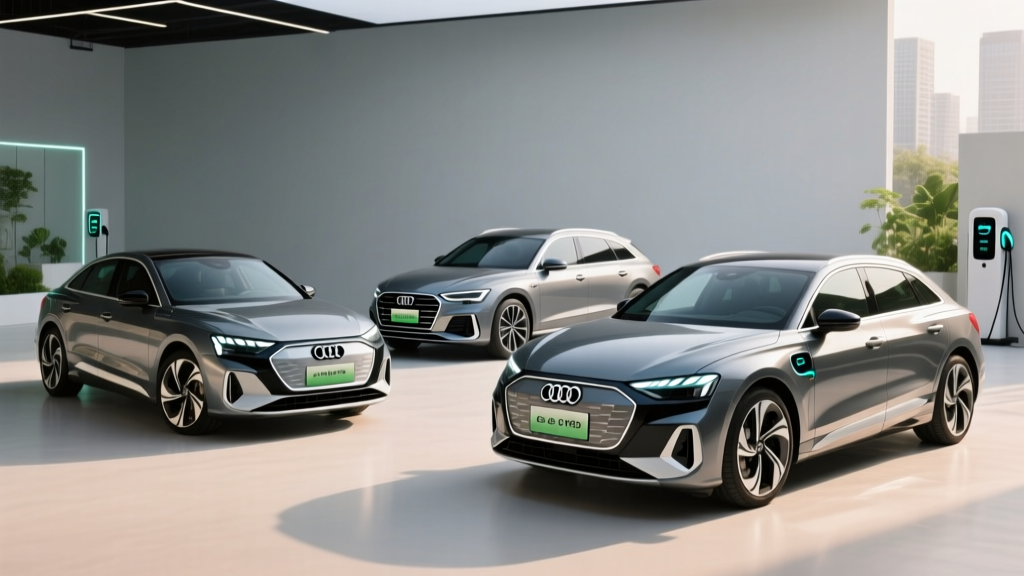
Audi's electrification strategy in 2026 leans heavily on its TFSI e plug-in hybrid (PHEV) models, which bridge the gap between conventional gasoline Audis and the brand's growing e-tron full-EV lineup. If you're researching Audi plug-in hybrids, you'll find PHEV variants across the sedan, SUV, and crossover range — each pairing a turbocharged gasoline engine with an electric motor and a battery pack large enough for meaningful electric-only commuting.
This guide covers every current Audi PHEV sold in the U.S. for the 2026 model year, with exact EPA figures, battery specs, charging times, pricing, and tax-credit eligibility. We'll also clarify where conventional hybrids (HEVs) fit in Audi's lineup, since the distinction matters for your daily driving and fuel budget.
HEV vs. PHEV — The Audi Distinction
Conventional Hybrid (HEV): Uses a small battery (typically under 2 kWh) recharged only by regenerative braking and the engine. No plug. Electric-only driving is limited to low-speed, short-distance creep. Think of the Audi Q5 Hybrid (mild-hybrid variants with 48-volt systems) — these assist the engine but cannot drive on electricity alone at highway speeds.
Plug-In Hybrid (PHEV): Carries a larger battery (14–26 kWh usable) that you charge via a plug — either at home on a Level 2 charger or at a public station. Provides 20–40+ miles of true electric-only driving before the gasoline engine takes over. Audi's "TFSI e" badge designates PHEV models.
Complete 2026 Audi PHEV Spec Table
| Model | Battery (kWh usable) | EV Range (mi) | Combined MPG | Combined HP | 0-60 (s) | MSRP |
|---|---|---|---|---|---|---|
| A3 Sportback e | 19.7 | ~33 | 78 MPGe / 36 MPG | 245 | 6.6 | $42,400 |
| Q5 TFSI e | 19.7 | ~23 | 61 MPGe / 28 MPG | 295 | 5.8 | $58,200 |
| Q7 TFSI e | 25.9 | ~30 | 50 MPGe / 22 MPG | 375 | 5.7 | $72,900 |
| Q8 TFSI e | 25.9 | ~28 | 46 MPGe / 21 MPG | 375 | 5.6 | $82,500 |
Sources: fueleconomy.gov (EPA estimates), Audi USA spec sheets. MPGe applies when operating on combined battery + engine; MPG applies after battery depletion. Real-world EV range varies with temperature, terrain, and driving style — expect 15–25% less in cold weather or sustained highway driving.
Electric-Only Range and Total Combined Range
For PHEV buyers, the electric-only range determines whether your daily commute can be completed without burning a drop of gasoline. Here's how Audi's 2026 PHEV lineup stacks up:
Real-World EV Range Expectations
A3 Sportback e (EPA ~33 mi): Expect 26–30 miles in mixed driving, dropping to ~20–22 miles in sub-40°F weather with cabin heating. Total range with a full tank and full battery: approximately 420 miles.
Q5 TFSI e (EPA ~23 mi): Expect 18–21 miles real-world. This is the shortest electric range in the lineup — adequate for short commutes but tight for round-trip suburban errands. Total range: ~440 miles.
Q7 TFSI e (EPA ~30 mi): Expect 24–27 miles real-world. The larger battery gives this three-row SUV a practical electric commute window. Total range: ~460 miles.
Q8 TFSI e (EPA ~28 mi): Expect 22–25 miles real-world. Total range: ~430 miles.
If your daily driving stays under 25 miles and you can charge at home overnight, the Q7 and A3 PHEVs effectively operate as EVs for most weekday trips, with the gasoline engine available for road trips and longer drives.
Fuel Economy: EPA MPG Breakdown and Real-World Results
| Model | City MPG | Hwy MPG | Combined MPG | MPGe (combined) |
|---|---|---|---|---|
| A3 Sportback e | 38 | 34 | 36 | 78 |
| Q5 TFSI e | 28 | 28 | 28 | 61 |
| Q7 TFSI e | 22 | 22 | 22 | 50 |
| Q8 TFSI e | 21 | 21 | 21 | 46 |
Real-world MPG note: Once the battery is depleted, PHEVs operate as conventional hybrids. In city driving with frequent regenerative braking, real-world MPG often exceeds the EPA estimate by 2–4 MPG. On sustained highway trips at 75+ mph, expect 2–3 MPG below the EPA figure. The A3 Sportback e benefits most from city regen, where owners report 39–42 MPG in stop-and-go traffic after battery depletion.
For comparison, the conventional gas-only Audi Q5 45 TFSI earns an EPA 25 MPG combined — the Q5 TFSI e's 28 MPG combined (after battery depletion) represents a modest but meaningful gain, in addition to the electric-only miles.
Charging: Battery Size, Times, and DC Fast-Charge Capability
A critical consideration for Audi PHEV buyers is charging logistics. Unlike full EVs with 70–100+ kWh batteries, Audi's plug-in hybrids carry smaller packs designed for overnight Level 2 replenishment.
| Model | Battery (kWh usable) | Level 1 (120V) Time | Level 2 (240V/7.2 kW) Time | DC Fast Charge? |
|---|---|---|---|---|
| A3 Sportback e | 19.7 | ~8 hours | ~2.75 hours | No |
| Q5 TFSI e | 19.7 | ~8 hours | ~2.75 hours | No |
| Q7 TFSI e | 25.9 | ~10 hours | ~3.5 hours | No |
| Q8 TFSI e | 25.9 | ~10 hours | ~3.5 hours | No |
Key charging facts:
- No DC fast charging on any 2026 Audi PHEV. The battery packs are small enough that Level 2 fully replenishes them in under 4 hours, and Audi has not equipped these models with CCS or NACS DC inlets.
- Level 2 is strongly recommended. A standard 120V household outlet (Level 1) technically works but requires 8–10 hours — adequate only if you park overnight and drive short distances.
- Home installation cost: A Level 2 home charger (240V, 32–48 amp) typically costs $500–$800 for the unit plus $800–$2,000 for professional electrician installation, depending on panel proximity and local permit requirements. Total: $1,300–$2,800 in most cases. Consult a licensed electrician for your specific setup.
- Connector: All Audi PHEVs use the J1772 connector for Level 2 AC charging — the standard across non-Tesla electrified vehicles in North America.
Powertrain Details: Engine, Motor, and Combined Output
Audi's TFSI e powertrain architecture pairs a turbocharged gasoline engine with an electric motor integrated into the transmission housing. The motor can drive the vehicle independently (EV mode), assist the engine under acceleration (hybrid mode), or regenerate energy during braking.
A3 Sportback e
1.5L turbocharged inline-4 (150 hp) + electric motor (107 hp) = 245 combined hp. Front-wheel drive via a 7-speed S tronic dual-clutch transmission. The lightest PHEV in the lineup, which helps its EV range and efficiency.
Q5 TFSI e
2.0L turbocharged inline-4 (261 hp) + electric motor (141 hp) = 295 combined hp. Quattro all-wheel drive. The electric motor sits between the engine and the 7-speed S tronic, enabling seamless transitions between EV and hybrid modes.
Q7 and Q8 TFSI e
3.0L turbocharged V6 (335 hp) + electric motor (134 hp) = 375 combined hp. Quattro all-wheel drive with an 8-speed tiptronic automatic. The V6 provides effortless highway passing; the electric motor fills in low-rpm torque for responsive around-town acceleration.
All models feature Audi's selectable drive modes, including an EV-only mode that prioritizes electric driving up to approximately 84 mph (A3) or 75–84 mph (SUV models), and a Battery Hold mode that preserves charge for later use — useful when entering a city zone after a highway segment.
Pricing, Tax Credits, and Ownership Costs
| Model | Base MSRP | §30D Federal Credit | Est. After Credit |
|---|---|---|---|
| A3 Sportback e | $42,400 | Up to $3,750* | ~$38,650 |
| Q5 TFSI e | $58,200 | Up to $3,750* | ~$54,450 |
| Q7 TFSI e | $72,900 | Up to $3,750* | ~$69,150 |
| Q8 TFSI e | $82,500 | Up to $3,750* | ~$78,750 |
*Federal tax credit amounts for PHEVs depend on battery capacity and critical-mineral/battery-component sourcing requirements under IRS §30D rules. PHEVs with batteries ≥16 kWh qualify for a base credit, but the full $7,500 requires meeting both critical-mineral and battery-component sourcing thresholds. Most Audi PHEVs currently qualify for a partial credit ($3,750) due to battery-component sourcing limitations. Credit eligibility also requires:
- Buyer income caps: AGI ≤ $150,000 (single), ≤ $225,000 (head of household), ≤ $300,000 (joint)
- MSRP caps: ≤ $80,000 for SUVs (Q5, Q7, Q8); ≤ $55,000 for sedans/wagons (A3)
- Point-of-sale transfer: Eligible buyers can apply the credit as an immediate dealer discount rather than waiting for tax filing
- New vehicle, final assembly in North America: Verify VIN eligibility at fueleconomy.gov
Consult a tax professional to confirm your personal eligibility. State and local incentives (HOV lane access, utility rebates, state tax credits) vary by jurisdiction — check your state's energy office or DMV for current programs.
Battery Warranty and Replacement Cost
All 2026 Audi PHEVs carry a high-voltage battery warranty of 8 years / 100,000 miles (whichever comes first), covering defects and capacity loss below 70% of original capacity. This aligns with federal minimum requirements for hybrid/PHEV battery coverage.
Replacement cost (out of warranty): Based on current parts pricing and dealer labor rates, an Audi PHEV high-voltage battery replacement runs approximately $8,000–$14,000 depending on the model (Q7/Q8 packs are larger and more expensive). However, PHEV battery degradation is typically slower than full-EV degradation because the battery operates in a narrower state-of-charge window (the car's software prevents full 0% or 100% use to prolong cell life).
Conventional hybrid components: The 48-volt mild-hybrid systems in non-PHEV Audis (like the Q5 45 TFSI with MHEV) carry separate warranty coverage and use smaller, less expensive battery modules — typically $1,500–$3,000 to replace.
Reliability and Long-Term Ownership
Audi's PHEV powertrains have been in production since 2019 (TFSI e second generation), and real-world reliability data from IIHS and owner surveys indicates the hybrid system itself — motor, power electronics, and battery — has been largely trouble-free. The primary reliability concerns mirror those of conventional Audis: complex infotainment systems, occasional sensor calibration issues, and premium maintenance costs.
Maintenance advantages: PHEVs experience reduced brake wear thanks to regenerative braking, which handles most deceleration without the friction brakes. Oil change intervals remain the same as gas-only Audis (typically 10,000 miles), but engine wear is reduced because the electric motor handles low-speed, high-load driving (the most stressful conditions for an engine).
Insurance costs: Expect PHEV insurance premiums to run 10–20% higher than equivalent gas-only Audi models, reflecting the higher replacement cost of the high-voltage system in a collision. Get quotes before purchasing.
Who Should Buy an Audi PHEV vs. a Full EV or Gas Car?
Choose an Audi PHEV If:
- You can install a Level 2 charger at home and your daily commute is under 30 miles
- You regularly take road trips of 300+ miles where public charging infrastructure is sparse or unreliable
- You want Audi's luxury interior and Quattro AWD without committing to full EV range limitations
- You live in an apartment or condo where charging access is limited but you occasionally have access to a plug
Choose a Full EV (e.g., Audi Q8 e-tron) If:
- You have reliable home charging and your daily driving stays under 250 miles
- You want to eliminate gasoline purchases entirely and minimize maintenance (no oil changes, fewer moving parts)
- You want access to the full $7,500 federal credit (available on qualifying full EVs)
Choose a Gas-Only Audi If:
- You have no access to home or workplace charging
- Your driving is primarily long highway trips where the PHEV battery adds weight without meaningful efficiency gain
- Upfront purchase price is a primary concern (gas models start $5,000–$10,000 lower)
Audi PHEV Pros
- 20–33 miles of zero-gas commuting
- No range anxiety — gas engine covers long trips
- Strong combined horsepower with smooth electric low-speed driving
- Reduced brake wear from regenerative braking
- Partial federal tax credit eligibility
- Audi luxury, fit-and-finish, and Quattro AWD
Audi PHEV Cons
- No DC fast charging — limited to Level 2
- Shorter EV range than rivals (Toyota RAV4 Prime: 42 mi)
- Heavy: battery + engine adds 300–500 lbs vs. gas-only models
- Premium fuel recommended for best performance
- Higher insurance premiums than gas equivalents
- Partial (not full) §30D tax credit on most trims
Frequently Asked Questions
How many MPG does an Audi plug-in hybrid get?
It depends on the model and whether the battery is charged. On a full charge, the A3 Sportback e achieves 78 MPGe combined; after the battery depletes, it returns 36 MPG combined. The Q5 TFSI e delivers 61 MPGe / 28 MPG combined. The Q7 and Q8 TFSI e models return 50 and 46 MPGe respectively, with 22 and 21 MPG combined after battery depletion. In real-world city driving, expect 2–4 MPG above EPA estimates thanks to regenerative braking.
How far can an Audi PHEV go on electric power only?
The A3 Sportback e leads the lineup with an EPA-estimated 33 miles of electric-only range. The Q7 TFSI e manages approximately 30 miles, the Q8 TFSI e about 28 miles, and the Q5 TFSI e around 23 miles. Real-world range drops 15–25% in cold weather (below 40°F) or during sustained highway driving above 70 mph.
Do Audi plug-in hybrids qualify for a federal tax credit?
Yes, but the amount varies. Under current IRS §30D rules, qualifying Audi PHEVs are eligible for up to $3,750 in federal tax credit (partial credit due to battery-component sourcing requirements). Eligibility requires the buyer to meet income caps, the vehicle to stay under MSRP limits, and final assembly in North America. The credit can be applied as a point-of-sale discount at the dealer. Always verify your specific eligibility with a tax professional and check current-year rules, as requirements change.
Are Audi PHEVs reliable, and what does battery replacement cost?
The TFSI e hybrid system has proven reliable since its 2019 introduction, with few reported powertrain-specific issues. The high-voltage battery is warrantied for 8 years / 100,000 miles against defects and capacity loss below 70%. Out-of-warranty replacement costs approximately $8,000–$14,000 depending on the model. Because PHEV batteries operate in a narrow charge window, long-term degradation is typically slower than in full EVs.
Can I charge an Audi PHEV at a public DC fast charger?
No. None of Audi's 2026 PHEV models support DC fast charging. They are limited to AC charging via a J1772 connector — Level 1 (120V household outlet) or Level 2 (240V home or public charger). A full Level 2 charge takes approximately 2.75–3.5 hours depending on the model. This is by design: the batteries are small enough that overnight Level 2 charging fully replenishes them.
Hybrid vs. PHEV vs. EV — which Audi is right for me?
If you have home charging and a commute under 30 miles, a PHEV like the A3 Sportback e or Q7 TFSI e lets you drive electric most days while keeping the gas engine for road trips. If you never want to buy gas again and have reliable charging, consider a full EV like the Q8 e-tron (285-mile range). If you have no charging access, a conventional Audi with the 48-volt mild-hybrid system (standard on most gas models) provides modest efficiency gains without any plug-in requirement.