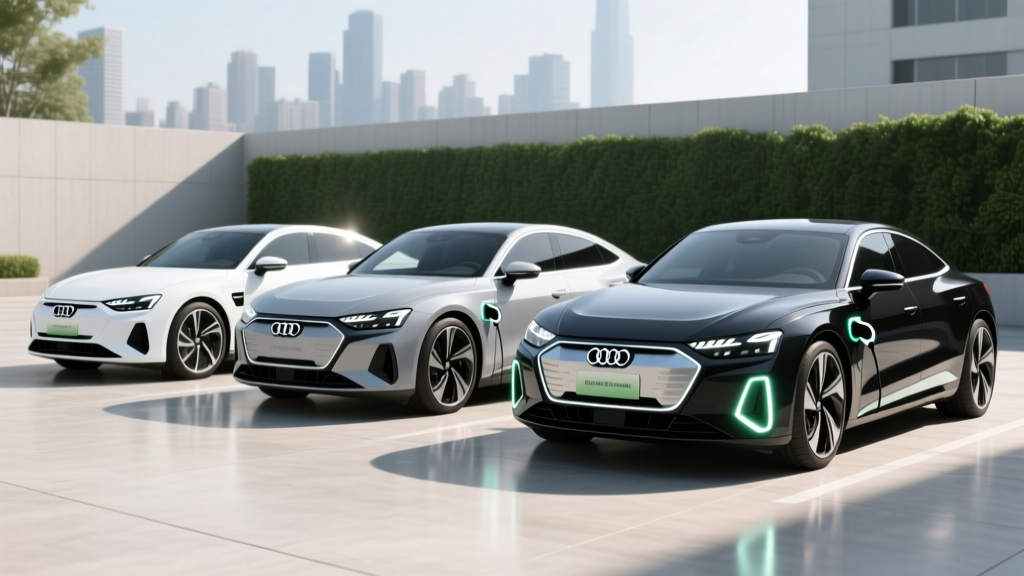
Audi's electrified lineup in 2026 spans mild-hybrids, full battery-electric vehicles (the e-tron family), and a focused selection of plug-in hybrid electric vehicles (PHEVs) branded as TFSI e. For buyers who want electric commuting without range anxiety on longer trips, Audi's PHEVs offer a compelling middle ground — but the lineup has narrowed compared to previous years, and understanding exactly what each model delivers is critical before you buy.
This guide covers every current Audi plug-in hybrid model available for the 2026 model year, with exact EPA figures, battery specs, real-world efficiency expectations, pricing, and federal tax credit eligibility under current IRS §30D rules.
HEV vs. PHEV: What Audi Actually Offers in 2026
Before diving into specific models, it's essential to understand the distinction between hybrid types — because Audi sells both, and they serve different needs.
| Feature | Conventional Hybrid (HEV) | Plug-In Hybrid (PHEV / TFSI e) |
|---|---|---|
| Battery Size | ~0.5–1.5 kWh (small) | 14.1–25.9 kWh (large) |
| Electric-Only Range | 0 miles (motor assists only) | 23–38 miles EPA |
| Plug In to Charge? | No — regenerates via braking/engine | Yes — Level 1 or Level 2 |
| Gas Engine | Yes — primary power source | Yes — kicks in after battery depletes |
| Federal Tax Credit | No | Up to $3,750–$7,500 (varies) |
| Best For | No home charging access | Home chargers with short commutes |
Audi's conventional hybrids (like the mild-hybrid system in the A4 and Q7) use a small 48-volt system for stop-start smoothing and minor efficiency gains — typically 1–2 MPG improvement. They do not plug in and offer no electric-only driving. The TFSI e badge is how Audi identifies its true plug-in hybrids, which have a larger battery, a charging port, and meaningful electric-only range.
2026 Audi Plug-In Hybrid Models: The Full Lineup
For the 2026 model year, Audi's U.S. PHEV lineup centers on three core models. Availability and trims can shift mid-year, so always verify with your local dealer. Here's the current TFSI e roster:
| Model | Powertrain | Combined HP | Battery (kWh) | EV Range (EPA) | Combined MPG | Base MSRP |
|---|---|---|---|---|---|---|
| Audi Q5 55 TFSI e | 2.0L turbo I4 + electric motor | 362 hp | 17.9 kWh usable | 23 mi | 26 MPG (hybrid mode) | $59,295 |
| Audi A7 55 TFSI e | 2.0L turbo I4 + electric motor | 362 hp | 14.1 kWh usable | 24 mi | 27 MPG (hybrid mode) | $76,695 |
| Audi Q8 55 TFSI e | 3.0L turbo V6 + electric motor | 455 hp | 17.9 kWh usable | 28 mi | 22 MPG (hybrid mode) | $82,595 |
Sources: fueleconomy.gov, Audi USA official specifications. MSRP excludes destination charges. EPA figures are estimates; real-world results will vary.
Electric-Only Range: Real-World Expectations vs. EPA Sticker
The EPA electric-only range figures above are measured under controlled conditions. In daily driving, expect variation based on temperature, terrain, and how aggressively you use climate control.
Real-World Electric Range Reality Check:
- Q5 55 TFSI e: EPA rates 23 miles electric. Expect 18–21 miles in cold weather (below 40°F) or at sustained highway speeds above 65 mph. In mild city driving, some owners report 25+ miles.
- A7 55 TFSI e: EPA rates 24 miles electric. The sedan's lower weight and better aero help it match or slightly exceed EPA in moderate conditions — but highway driving at 75+ mph will drop this to ~18–20 miles.
- Q8 55 TFSI e: EPA rates 28 miles electric. Heavier SUV mass means more energy draw under acceleration, but the larger battery helps. Expect 22–26 miles real-world in mixed driving.
Preconditioning the cabin while still plugged in (using the myAudi app) can recover 2–4 miles of range in cold weather by warming the battery and interior before you unplug.
Once the battery is depleted, all three models seamlessly switch to hybrid mode, using the gas engine as the primary power source with electric motor assist. Total combined range (electric + gas) exceeds 400 miles for all three models — eliminating range anxiety entirely on road trips.
Charging Specs: How Fast Do Audi PHEVs Charge?
Audi PHEVs charge exclusively via AC power — none of Audi's current U.S. PHEVs support DC fast charging. This is typical for the PHEV segment; the smaller batteries simply don't need 150 kW charging infrastructure.
| Charging Level | Power (kW) | Time to Full (0–100%) | Where You'll Use It |
|---|---|---|---|
| Level 1 (120V household) | ~1.4 kW | 10–14 hours | Overnight top-up, no install needed |
| Level 2 (240V home/public) | 7.2–7.7 kW | 2.5–3 hours | Home garage, workplace, shopping centers |
| DC Fast Charge | Not supported | N/A | N/A |
Key takeaway: A Level 2 home charger is practically essential for Audi PHEV ownership. Without one, you're limited to Level 1 charging at ~1.4 kW, which means a full charge takes overnight or longer. A Level 2 installation (typically $800–$2,000 including equipment and electrician) lets you fully recharge in under 3 hours — perfect for topping up between evening commute and morning departure.
All 2026 Audi PHEVs use the J1772 connector for AC charging (the North American standard). No NACS or CCS adapter is needed for home/public Level 2 charging.
Fuel Economy: EPA MPG and Real-World Results
Once the battery is depleted, these PHEVs operate as conventional hybrids. Here's how they stack up on EPA fuel economy ratings in hybrid (charge-sustaining) mode:
| Model | City MPG | Highway MPG | Combined MPG | MPGe (Electric Mode) |
|---|---|---|---|---|
| Q5 55 TFSI e | 25 | 27 | 26 | 61 MPGe |
| A7 55 TFSI e | 26 | 29 | 27 | 63 MPGe |
| Q8 55 TFSI e | 20 | 24 | 22 | 54 MPGe |
Real-world MPG notes: Plug-in hybrids often exceed their EPA city ratings when drivers use electric mode for stop-and-go commuting. If your daily round-trip commute is under 25 miles and you charge nightly, you may use almost no gasoline during the work week. On highway road trips (battery depleted), expect the Q5 to deliver 25–27 MPG and the Q8 closer to 20–22 MPG at 70–75 mph cruise — roughly matching EPA figures.
For comparison, the gas-only 2026 Audi Q5 45 TFSI (mild hybrid) achieves 23 MPG combined. The PHEV's advantage is most pronounced in city driving where electric mode dominates.
Pricing, Trims, and Federal Tax Credit Eligibility
Audi PHEVs carry a price premium over their gas-only siblings — typically $5,000–$10,000 more — but the federal tax credit can offset a meaningful portion of that gap.
Federal §30D Tax Credit: What Applies to Audi PHEVs
Under current IRS §30D rules, plug-in hybrids with sufficient battery capacity can qualify for a federal tax credit. However, eligibility is far from guaranteed and depends on multiple factors:
- MSRP Cap: SUVs (Q5, Q8) must have an MSRP at or below $80,000; sedans (A7) must be at or below $55,000. The Q8 55 TFSI e at $82,595 base may exceed the SUV cap depending on trim and options — verify the specific VIN.
- Buyer Income Limits: Modified adjusted gross income must not exceed $300,000 (joint filers), $225,000 (head of household), or $150,000 (individual).
- Battery Sourcing Requirements: A percentage of critical minerals and battery components must be sourced from the U.S. or free-trade-agreement countries. These thresholds tighten annually. As of 2026, some Audi PHEV battery supply chains may not meet the full requirements, reducing the credit from $7,500 to $3,750 — or eliminating it entirely for some build dates.
- Point-of-Sale Transfer: If eligible, the credit can be transferred to the dealer at purchase, reducing your out-of-pocket cost immediately rather than waiting for tax filing.
Bottom line: The Q5 55 TFSI e is the most likely candidate for a partial or full credit due to its sub-$80K MSRP. Always check the specific VIN on fueleconomy.gov and consult a tax professional before relying on credit eligibility.
Battery Warranty, Longevity, and Replacement Costs
Hybrid battery longevity is consistently the top concern among PHEV shoppers. Here's what Audi provides:
Audi PHEV Battery Warranty (2026 Models):
- Duration: 8 years / 100,000 miles (whichever comes first)
- Coverage: Battery capacity below 70% of original, or defect/failure
- Transferable: Yes, to subsequent owners
This aligns with the federal mandate for PHEV/EV battery warranties. In practice, Audi's lithium-ion PHEV batteries have shown low degradation rates — most owners report minimal capacity loss within the warranty period because the battery management system (BMS) maintains a conservative charge buffer (never truly hitting 0% or 100% at the cell level).
Replacement cost: Out-of-warranty PHEV battery replacement for Audi models typically runs $8,000–$14,000 including parts and labor, depending on the model. This is significantly less than a full EV battery replacement because the PHEV battery is much smaller (14–18 kWh vs. 75–100+ kWh in a BEV). That said, widespread battery failures within the first 10–12 years have been rare based on current fleet data.
Who Should Buy an Audi PHEV — And Who Shouldn't
Choose an Audi PHEV If:
- Your daily commute is under 30 miles round-trip and you can charge at home
- You take regular road trips where EV charging infrastructure is sparse
- You want premium interior quality and Audi's Quattro AWD with electric torque
- You're not ready for a full EV but want to reduce fuel consumption 40–60%
- You want to test electric driving before committing to a BEV
Choose a Full EV (or Gas) Instead If:
- You have no access to home or workplace charging (a PHEV you never plug in is just a heavy, less-efficient gas car)
- Your commute is under 10 miles and you'd save more with a conventional HEV at lower cost
- You want zero tailpipe emissions and maximum environmental benefit — go full BEV (Audi Q8 e-tron, Q6 e-tron)
- You want DC fast charging for road trips — no Audi PHEV offers this
Audi PHEV vs. Full EV vs. Gas: Decision Framework
Buy the Audi Q5 55 TFSI e (PHEV) if: You want a luxury compact SUV, have Level 2 home charging, drive 20–35 miles daily, and regularly take 200+ mile trips where charging stops would be inconvenient.
Buy the Audi Q8 e-tron (full EV) if: You have reliable home and workplace charging, rarely drive more than 250 miles in a day, and want the lowest per-mile energy cost with zero emissions.
Buy the Audi Q5 45 TFSI (gas/mild hybrid) if: You cannot charge at home, your budget is tighter (starting ~$47,000), and you want lower upfront cost without charging logistics.
Frequently Asked Questions
How many MPG does an Audi plug-in hybrid get?
In hybrid mode (battery depleted), the 2026 Q5 55 TFSI e achieves 26 MPG combined, the A7 55 TFSI e gets 27 MPG combined, and the Q8 55 TFSI e returns 22 MPG combined. When operating in electric mode, efficiency is measured in MPGe: 54–63 MPGe depending on model.
How far can an Audi PHEV go on electric only?
EPA-rated electric-only ranges are 23 miles (Q5), 24 miles (A7), and 28 miles (Q8). Real-world range typically falls to 18–26 miles depending on temperature, speed, and climate control use. Total combined range (electric + gas) exceeds 400 miles for all models.
Does an Audi PHEV qualify for a federal tax credit?
Some Audi PHEVs may qualify for up to $3,750–$7,500 under IRS §30D, but eligibility depends on MSRP caps ($80K SUV / $55K sedan), buyer income limits, and battery mineral/component sourcing requirements that tighten annually. The Q5 55 TFSI e is the strongest candidate. Always verify the specific VIN on fueleconomy.gov and consult a tax professional.
Is the Audi PHEV battery reliable, and what does replacement cost?
Audi covers the PHEV battery for 8 years/100,000 miles against capacity loss below 70% or defects. Real-world degradation has been minimal for most owners. Out-of-warranty replacement costs $8,000–$14,000 depending on model — significantly less than full EV battery replacement.
Do I need a home charger for an Audi plug-in hybrid?
While not strictly required (you can drive in hybrid mode without ever plugging in), a Level 2 home charger is strongly recommended. Without regular charging, you're carrying extra battery weight without using it, and fuel economy drops to conventional hybrid levels. Level 2 installation typically costs $800–$2,000 and delivers a full charge in 2.5–3 hours.
Can an Audi PHEV use DC fast chargers?
No. Current Audi TFSI e models support only AC charging (Level 1 at 120V and Level 2 at 240V) via the J1772 connector. DC fast charging is not available on any 2026 Audi PHEV — this is standard across most PHEVs due to their smaller battery sizes.