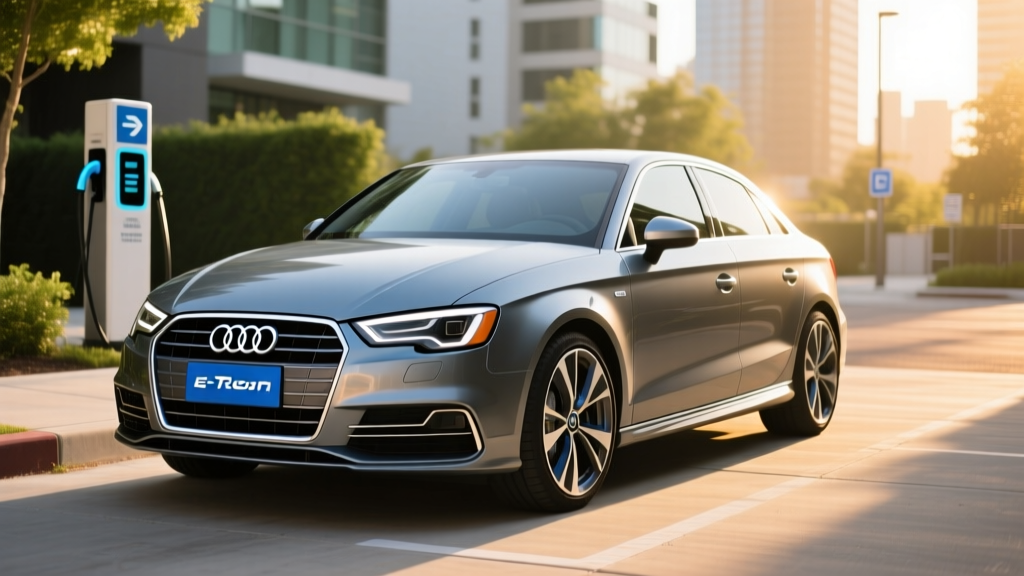
If you've been searching for the Audi A3 2016 hybrid, you're actually looking at the Audi A3 Sportback e-tron — a plug-in hybrid (PHEV) that debuted in the U.S. for the 2016 model year. It was Audi's first plug-in vehicle sold stateside, and it remains a compelling used luxury compact for buyers who want electric commuting with a gasoline safety net. But nearly a decade on, how does it stack up in 2026?
This guide breaks down the real-world MPG, electric-only range, powertrain specs, battery longevity, and what you need to know before buying one today — including whether any tax credits still apply.
HEV vs. PHEV: What the 2016 Audi A3 e-tron Actually Is
The 2016 Audi A3 e-tron is a plug-in hybrid electric vehicle (PHEV), not a conventional hybrid (HEV). The distinction matters enormously for ownership:
| Feature | Conventional Hybrid (HEV) | Plug-in Hybrid (PHEV) — A3 e-tron |
|---|---|---|
| Plug in to charge? | No — charges via regen & engine | Yes — plug in for electric-only miles |
| Electric-only range | 0–2 miles at low speed | 16 miles (EPA) |
| Battery size | ~1–2 kWh | 8.8 kWh (gross) |
| Fuel economy advantage | Best in stop-and-go city driving | Best when daily trips fall within electric range |
| Federal tax credit (when new) | None | Up to $4,168 (§30D) |
If you don't have access to a home or workplace charger, the A3 e-tron still functions as a conventional hybrid once the battery is depleted — but you'll forfeit the feature that makes it special.
Powertrain Specs: Engine, Motor, and Combined Output
| Specification | 2016 Audi A3 Sportback e-tron |
|---|---|
| Engine | 1.4L turbocharged 4-cylinder (148 HP / 184 lb-ft) |
| Electric motor | 75 kW (101 HP / 243 lb-ft) |
| Combined system output | 204 HP / 258 lb-ft torque |
| Transmission | 6-speed S tronic dual-clutch automatic |
| Drivetrain | Front-wheel drive |
| 0–60 mph | 7.6 seconds (manufacturer) |
| Battery (gross / usable) | 8.8 kWh / ~6.5 kWh usable |
| Battery chemistry | Lithium-ion (NMC) |
| Onboard charger | 3.6 kW (Level 2 AC only) |
| DC fast charging | Not supported |
| Curb weight | ~3,625 lbs |
The 1.4L TFSI engine and electric motor are integrated through a 6-speed dual-clutch gearbox — not a CVT like most Toyota or Honda hybrids. That means shifts feel mechanical and engaging, closer to a conventional Audi driving experience. The combined 204 HP is generous for a compact luxury hatchback, and the instant electric torque fills in the low-end gap that small turbo engines typically exhibit.
Fuel Economy: EPA Ratings vs. Real-World MPG
| Driving Mode | City | Highway | Combined |
|---|---|---|---|
| Charge-sustaining (hybrid mode, battery depleted) | 33 MPG | 36 MPG | 34 MPG |
| Charge-depleting (full battery, blended) | — | 83 MPGe | |
| Electric-only energy consumption | 35 kWh/100 mi | ||
According to fueleconomy.gov, the 2016 A3 e-tron achieves 83 MPGe combined when operating in blended electric-gasoline mode with a full charge, and 34 MPG combined once the battery is depleted and the car runs as a conventional hybrid.
Real-World MPG: What Owners Actually See
EPA numbers assume a mix of conditions. In practice:
- City commuting with nightly charging: Many owners report burning almost no gasoline for weeks, effectively achieving 100+ MPGe equivalent on short commutes under 16 miles.
- Highway road trips (battery depleted): Expect 32–35 MPG at 70–75 mph. The dual-clutch transmission and aerodynamic hatchback body help, but the added ~350 lbs of battery mass hurts versus a gas-only A3.
- Cold weather (below 30°F): Electric-only range drops to roughly 10–12 miles as the battery loses efficiency and cabin heating draws energy. Hybrid-mode MPG can dip to 28–31 MPG in short-trip winter driving.
- Aggressive driving / mountain terrain: The turbo engine works harder at altitude and under load; expect 27–30 MPG in these conditions.
Electric-Only Range and Charging Times
The EPA rates the A3 e-tron at 16 miles of electric-only range. That figure was modest even in 2016 — the Chevrolet Volt managed 53 miles the same year — but it covers a meaningful share of daily commutes.
Real-world expectation: 12–16 miles in mild weather; 9–12 miles in cold weather or at sustained highway speeds above 60 mph. Total combined range (electric + 10.6-gallon tank): approximately 380–420 miles.
Charging Speed Breakdown
| Charging Level | Power | Time (0–100%) | Notes |
|---|---|---|---|
| Level 1 (120V household) | ~1.4 kW | ~8 hours | Standard outlet; adequate for overnight |
| Level 2 (240V) | 3.6 kW | ~2 hours 15 min | Requires J1772 connector; home or public Level 2 |
| DC Fast Charge | N/A | N/A | Not supported on this vehicle |
The 3.6 kW onboard charger is the limiting factor. Even if you plug into a 7.2 kW or 11.5 kW Level 2 station, the A3 e-tron will only accept 3.6 kW. For an 8.8 kWh battery, this isn't a major problem — a full charge still takes just over two hours — but it means you can't top up quickly during a midday stop.
Battery Longevity, Warranty, and Replacement Cost
2026 Status: The original 8-year warranty has expired for all 2016 model-year vehicles. Some may still fall under the 100,000-mile limit if driven sparingly, but most 2016 A3 e-trons are now outside factory battery coverage.
Battery Degradation: What to Expect
The A3 e-tron's 8.8 kWh NMC (nickel-manganese-cobalt) lithium-ion pack is relatively small, which means it cycles more frequently than a larger PHEV or BEV battery. Frequent deep cycling accelerates degradation slightly. Based on owner reports and general NMC aging data for this generation:
- At 8–10 years / 80,000–120,000 miles: Expect 15–25% capacity loss, translating to roughly 12–14 miles of electric range instead of the original 16.
- Failure mode: Complete battery failure is rare. More common is gradual range erosion. Individual cell module replacement is possible at some independent EV shops.
- Full battery replacement cost: A new OEM high-voltage battery from Audi typically costs $8,000–$12,000 including labor. Aftermarket or refurbished packs may be available for $4,000–$7,000 through independent hybrid specialists.
Before purchasing a used 2016 A3 e-tron, request a battery state-of-health (SoH) readout from an Audi dealer or a shop with VAG-compatible diagnostic tools (such as VCDS or OBDeleven). This will show remaining capacity percentage and flag any cell imbalances.
Pricing, Tax Credits, and Used-Buying Economics
Original MSRP (2016)
| Trim | MSRP (2016) | Federal Tax Credit (when new) |
|---|---|---|
| Premium | $37,900 | $4,168 |
| Premium Plus | $41,200 | $4,168 |
| Prestige | $44,700 | $4,168 |
Current Tax Credit Eligibility (2026)
The federal §30D new-vehicle tax credit does not apply — the A3 e-tron is discontinued, and you cannot purchase one new. However, if you buy from a dealer as a used vehicle, you may qualify for the Used Clean Vehicle Credit under §25E:
- Credit amount: 30% of the sale price, up to a maximum of $4,000
- Sale price cap: Vehicle must sell for $25,000 or less
- Income limits (2026): $75,000 single / $112,500 head of household / $150,000 married filing jointly (modified AGI)
- Dealer requirement: Must be purchased from a licensed dealer (private-party sales excluded)
- Vehicle age: Must be at least 2 model years old (2016 qualifies)
Given that used 2016 A3 e-trons typically sell for $12,000–$19,000 depending on mileage and condition (as of early 2026), most will fall under the $25,000 cap. At a $16,000 purchase price, the 30% credit would yield $4,000 — the maximum. Always verify current rules at IRS.gov and confirm eligibility with a tax professional before purchase.
Who Should Buy the 2016 Audi A3 e-tron — and Who Shouldn't
- Your daily round-trip commute is under 16 miles and you can charge at home
- You want a premium interior and hatchback practicality without going full EV
- You take occasional road trips where charging infrastructure is sparse
- You want to reduce gasoline consumption significantly without range anxiety
- Your commute exceeds 20 miles one-way — the electric range won't cover it, and you'll run mostly on gas
- You lack home or workplace charging — without plugging in, you're just driving a heavier, less efficient hybrid
- You want a full EV — consider a used Chevrolet Bolt EV (238–259 mi range) or Nissan Leaf (150+ mi) in a similar price bracket
- You need AWD — the A3 e-tron is FWD only; the gas A3 quattro is a separate model
- Premium cabin materials and quiet ride
- Engaging dual-clutch powertrain, 204 HP combined
- Hatchback cargo versatility (fold-flat rear seats)
- True zero-emission commuting on short trips
- Used prices now very accessible ($12K–$19K)
- Only 16 miles electric range — short by modern PHEV standards
- 3.6 kW onboard charger limits Level 2 speed
- No DC fast charging capability
- Out-of-warranty battery replacement risk ($8K–$12K)
- FWD only — no quattro option on the e-tron
- Discontinued after 2018 — limited dealer support for e-tron-specific parts
Hybrid vs. PHEV vs. Full EV: Which Fits You?
If you're cross-shopping the 2016 A3 e-tron, you're likely weighing it against conventional hybrids and used full EVs. Here's a practical framework:
| Factor | Conventional Hybrid (e.g., Toyota Prius) | PHEV (e.g., A3 e-tron) | Full EV (e.g., Chevy Bolt EV) |
|---|---|---|---|
| Plug in required? | No | Yes, for EV miles | Yes, always |
| Electric-only range | ~0 mi | 16 mi | 238–259 mi |
| Gasoline use on long trips | Yes (52 MPG) | Yes (34 MPG) | None — DC fast charge instead |
| Maintenance | Low (engine + regen braking) | Moderate (engine + motor + battery) | Lowest (no engine, minimal fluids) |
| Used price range (2026) | $10K–$18K | $12K–$19K | $10K–$18K |
| Best for | No charging access; want simplicity | Short commute + charging; road-trip flexibility | Home charging; mostly under 200 mi/day |
The A3 e-tron occupies a narrow niche: luxury-badge PHEV with hatchback utility at a now-affordable used price. If you don't need the Audi badge, a used Toyota Prius Prime (25 mi electric range) or Chevrolet Volt (53 mi electric range) from the same era offers more electric miles per charge.
Reliability and Ownership Costs
The 2016 A3 e-tron shares its MLB platform and many components with the conventional A3, which has a generally solid reliability record. The PHEV-specific components — high-voltage battery, electric motor, power electronics — add complexity but have not shown widespread failure patterns in Audi's e-tron lineup.
Key ownership considerations for 2026:
- Routine maintenance: Oil changes, brake fluid, cabin air filter, DSG service (every 40,000 miles). Regenerative braking extends pad life significantly.
- Insurance: Typically 10–20% higher than a gas-only A3 due to high-voltage system repair costs. Shop quotes before buying.
- Tires: The added weight and instant electric torque accelerate tire wear. Budget for replacement every 25,000–35,000 miles.
- 12V battery: Like all modern Audis, a 12V auxiliary battery powers electronics. If it dies, the car won't start even with a full high-voltage pack. Replace proactively every 4–5 years.
Frequently Asked Questions
How many MPG does the 2016 Audi A3 hybrid get?
The EPA rates the 2016 A3 Sportback e-tron at 83 MPGe combined when blending electric and gasoline power from a full charge, and 34 MPG combined (33 city / 36 highway) once the battery is depleted and it operates as a conventional hybrid. Real-world results vary from 28 MPG in cold short-trip driving to effectively infinite MPGe on sub-16-mile commutes with nightly charging.
How far can the 2016 Audi A3 e-tron go on electric only?
The EPA-rated electric-only range is 16 miles. In real-world driving, expect 12–16 miles in mild weather and 9–12 miles in cold conditions or at sustained highway speeds. This covers many daily commutes but falls well short of modern PHEVs like the Toyota RAV4 Prime (42 mi) or the current-generation Jeep Wrangler 4xe (21 mi).
Is the 2016 Audi A3 e-tron reliable, and what does battery replacement cost?
Overall reliability is acceptable for a German luxury PHEV of this age, with no widespread battery or motor failure patterns. The primary risk is high-voltage battery degradation now that the 8-year/100,000-mile warranty has expired. A full OEM battery replacement costs $8,000–$12,000; refurbished or aftermarket options may be $4,000–$7,000. Always get a state-of-health diagnostic before purchase.
Does the 2016 Audi A3 e-tron qualify for any tax credit in 2026?
Not as a new vehicle — it's discontinued. However, if you purchase one from a licensed dealer for $25,000 or less, you may qualify for the federal Used Clean Vehicle Credit (§25E): 30% of the sale price, up to $4,000, subject to income limits ($75K single / $150K married). Verify current rules at IRS.gov and consult a tax professional.
Can the 2016 Audi A3 e-tron DC fast charge?
No. The A3 e-tron supports only AC charging: Level 1 (120V, ~1.4 kW) and Level 2 (240V, up to 3.6 kW). There is no DC fast-charge port. A full Level 2 charge takes approximately 2 hours and 15 minutes.
Should I buy the A3 e-tron or a full EV like a used Chevy Bolt?
If you can charge at home and your daily driving is under 200 miles, a used Chevy Bolt EV (238+ mi range, no gasoline, lower maintenance) is the more economical and forward-looking choice. The A3 e-tron makes sense if you regularly take road trips beyond charging infrastructure, want the Audi interior and build quality, or have a commute short enough to cover entirely on its 16-mile electric range.
Sources: EPA fueleconomy.gov, IRS Used Clean Vehicle Credit, Audi USA press archives.