Plug-in hybrids (PHEVs) occupy the middle ground between conventional hybrids and full battery-electric vehicles. They promise short commutes on electricity alone and gas-engine backup for road trips. But with EV ranges now routinely exceeding 300 miles and DC fast-charging networks expanding, a fair question emerges: are plug-in hybrids worth it, or are they a bridge technology whose time has passed?
The honest answer depends on three variables: your daily mileage, your access to home charging, and how often you drive long distances. This guide breaks down the math, the mechanics, and the ownership economics so you can decide.
HEV vs PHEV vs BEV: What's Actually Different?
Before evaluating whether a PHEV earns its price premium, you need to understand how it differs from its siblings.
| Feature | HEV (Conventional Hybrid) | PHEV (Plug-In Hybrid) | BEV (Battery Electric) |
|---|---|---|---|
| Plugs in? | No — regenerative braking + engine charges battery | Yes — Level 1/Level 2; some support DC fast charging | Yes — Level 1/2 and DC fast charging |
| Battery size | 1–2 kWh | 13–25 kWh (usable) | 60–100+ kWh |
| Electric-only range | 0–1 mile at low speed | 25–50 miles (EPA) | 250–400+ miles (EPA) |
| Gas engine? | Yes — primary propulsion + charging | Yes — kicks in after battery depletes or under heavy load | No |
| Fuel when battery empty | Gasoline (40–55 MPG combined typical) | Gasoline (30–45 MPG combined typical) | N/A — electricity only |
| Tailpipe emissions | Yes | Yes (when engine runs) | None |
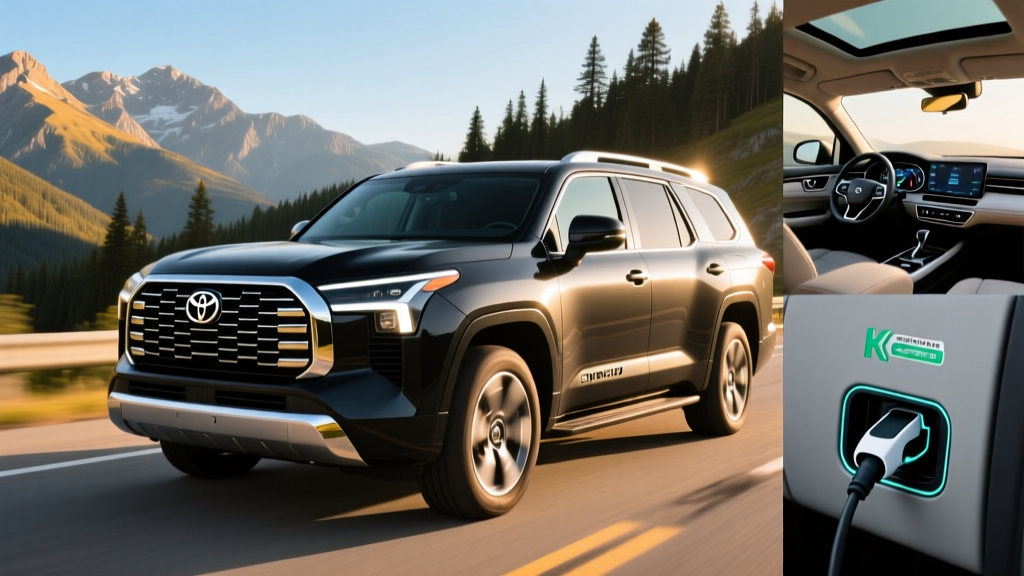
A conventional hybrid like the Toyota Prius never plugs in. Its small battery charges through regenerative braking and the gas engine. A PHEV like the Toyota RAV4 Prime has a much larger battery that you charge by plugging in, enabling 25–50 miles of electric-only driving before the gas engine takes over. A full BEV like the Tesla Model Y has no engine at all.
How Many MPG Does a PHEV Get?
PHEV fuel economy is expressed two ways on the EPA sticker: MPGe (miles per gallon equivalent) when running on electricity, and MPG when the gas engine is doing the work after the battery depletes. Both numbers matter.
| 2026 PHEV Model | EPA Electric Range | MPGe (Electric) | MPG (Gas Only) | Total Range |
|---|---|---|---|---|
| Toyota RAV4 Prime | 42 mi | 94 MPGe | 38 MPG combined | ~600 mi |
| Toyota Prius Prime | 44 mi (SE trim) | 127 MPGe | 48 MPG combined | ~510 mi |
| Hyundai Tucson PHEV | 33 mi | 80 MPGe | 35 MPG combined | ~440 mi |
| Jeep Wrangler 4xe | 22 mi | 49 MPGe | 20 MPG combined | ~370 mi |
| Chrysler Pacifica PHEV | 32 mi | 82 MPGe | 30 MPG combined | ~460 mi |
Real-world vs. EPA: PHEVs often beat their EPA MPG in city driving because regenerative braking recaptures more energy at low speeds. On the highway, expect gas-only MPG to drop 10–15% below the sticker — the added weight of the battery and motor works against you once electric range is depleted. If you regularly drive 60+ miles between charges, a PHEV's gas-only MPG matters more than its electric range.
Electric-Only Range: How Far Can a PHEV Go Without Gas?
Most 2026 PHEVs deliver 25 to 50 miles of electric-only range, per fueleconomy.gov. That covers the average American commute — the U.S. Census Bureau reports a one-way average of about 16 miles — meaning many PHEV owners can complete daily driving without burning a drop of gasoline.
However, real-world electric range varies significantly:
- Cold weather (below 32°F): Expect 20–30% range reduction. Cabin heating draws from the battery, and lithium-ion chemistry delivers less energy in cold temperatures.
- Highway speeds (70+ mph): Electric range drops 15–25% compared to city driving. Aerodynamic drag rises with the square of speed.
- Hilly terrain: Net range decreases on mountain routes, though downhill regeneration partially offsets uphill consumption.
If your round-trip commute is 40 miles and you live in Minnesota, a PHEV rated for 42 miles of electric range will likely fall short in January. You'll use some gasoline on most winter trips. In contrast, a Southern California driver with a 30-mile commute may go weeks between fill-ups.
PHEV Charging: Battery Size, Speeds, and Home Setup
PHEV batteries are small compared to full EVs — typically 13 to 25 kWh of usable capacity. That's a blessing and a limitation.
| Charging Level | Power (kW) | Typical PHEV Charge Time (0–100%) | Notes |
|---|---|---|---|
| Level 1 (120V household outlet) | 1.2–1.4 kW | 10–18 hours | Works for overnight if daily use is low |
| Level 2 (240V home/public) | 3.3–7.2 kW | 2–5 hours | Ideal for PHEVs; most have 3.3–6.6 kW onboard chargers |
| DC Fast Charge | 50+ kW | ~30 min (10–80%) | Only a few PHEVs support DCFC (e.g., Mitsubishi Outlander PHEV) |
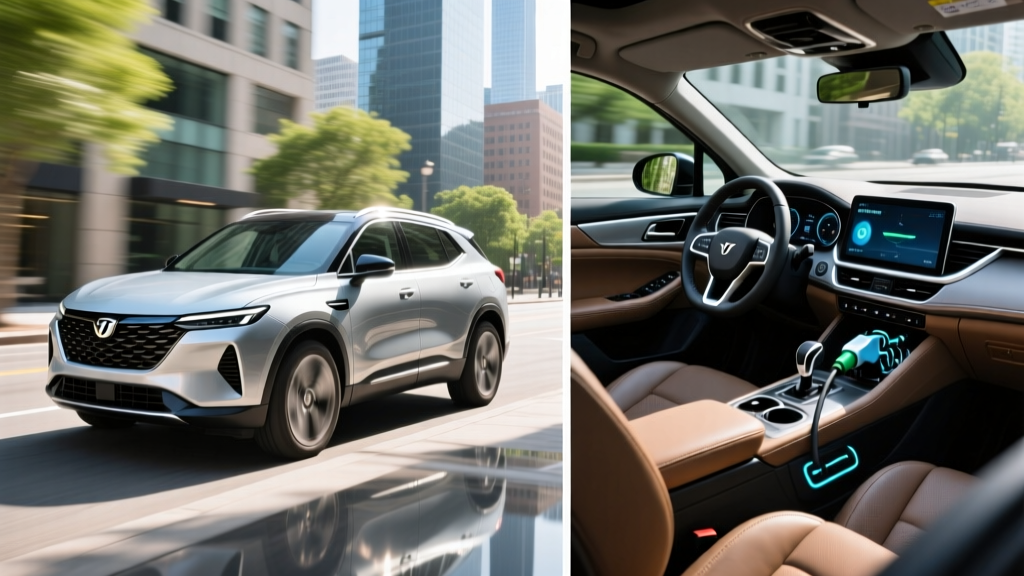
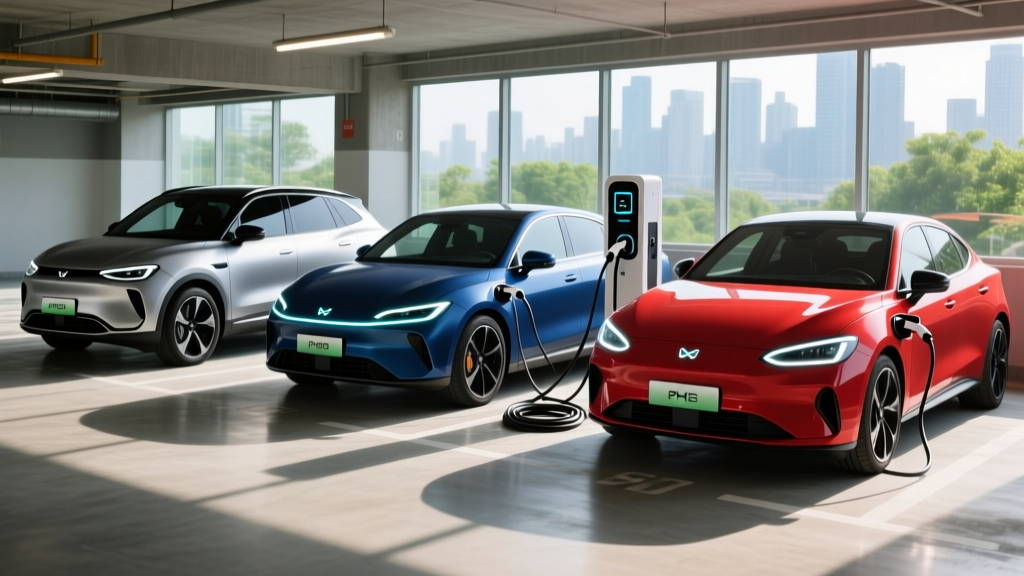
Most PHEVs do not support DC fast charging. Their onboard chargers cap at 3.3 kW or 6.6 kW, meaning even at a public Level 2 station, a full charge takes 2–4 hours. This isn't a problem if you charge at home overnight, but it makes public charging impractical for quick top-ups.
Home charging cost: At the U.S. average electricity rate of ~$0.16/kWh (per EIA data), fully charging an 18 kWh PHEV battery costs roughly $2.88. For a 40-mile electric commute, that's about $0.07 per mile — compared to $0.14–$0.18 per mile for a 30 MPG gas car at $3.50/gallon. The savings add up, but they're smaller than with a full EV because the battery is smaller.
Do PHEVs Qualify for Federal Tax Credits?
Under IRS §30D rules, some PHEVs qualify for up to $7,500 in federal tax credits — but eligibility is stricter than most buyers assume. Per irs.gov, the vehicle must meet:
- Battery capacity: At least 7 kWh (most PHEVs qualify)
- MSRP cap: Vans/SUVs/pickups ≤ $80,000; sedans ≤ $55,000
- Buyer income cap: AGI ≤ $150K single / $225K head of household / $300K joint
- Critical minerals & battery sourcing: Increasingly strict percentages must be sourced from the U.S. or FTA partners — this disqualifies several PHEVs in 2026
- Final assembly: Must occur in North America
- Point-of-sale transfer: Eligible buyers can transfer the credit to the dealer for an upfront price reduction
As of 2026, qualifying PHEVs include the Toyota RAV4 Prime, Jeep Wrangler 4xe (select trims), and Chrysler Pacifica Hybrid — but battery-sourcing rules change annually. Always verify eligibility on fueleconomy.gov before purchasing, and consult a tax professional for your specific situation.
Reliability, Battery Lifespan, and Replacement Costs
Federal mandate: PHEV and hybrid battery packs must carry a warranty of at least 8 years / 100,000 miles (10 years / 150,000 miles in CARB states like California, New York, and others). Many automakers match or exceed this baseline.
Hybrid and PHEV batteries have proven remarkably durable. Toyota's hybrid synergy drive system, in production since 1997, has demonstrated battery packs lasting 200,000+ miles with gradual capacity loss rather than sudden failure. PHEV batteries, being larger and less deeply cycled (you rarely drain them to zero thanks to a software buffer), often age even more gracefully.
Replacement cost if out of warranty:
- Toyota Prius/Prius Prime: $2,500–$4,000 (battery pack)
- RAV4 Prime / larger PHEVs: $5,000–$9,000
- Chrysler Pacifica Hybrid: $6,000–$8,500
For context, a conventional gas car's transmission replacement often costs $3,000–$7,000. The PHEV battery is an additional component that can fail, but the data from millions of Toyota hybrids on the road suggests the risk is low within normal ownership periods. PHEVs also eliminate starter motors, alternators, and — thanks to regenerative braking — extend brake pad life significantly.
PHEV vs Hybrid vs EV: Which Fits Your Life?
Choose a PHEV if:
- Your daily round-trip is under 40 miles and you can charge at home (Level 1 or 2)
- You take road trips of 200+ miles several times per year and don't want to plan around charging stations
- You live in an area with limited public DC fast-charging infrastructure
- You want to reduce fuel consumption 50–80% without full EV commitment
Choose a conventional HEV if:
- You cannot install any home charging (apartment, street parking, no garage)
- Your budget is tighter — HEVs carry only a $1,000–$3,000 premium over gas-only models
- You want maximum simplicity with no plug-in routine
- You prioritize proven, long-term reliability with the lowest maintenance burden
Choose a full BEV if:
- You have reliable home Level 2 charging and your daily driving is under 200 miles
- You want the lowest per-mile fuel cost and minimal maintenance (no oil changes, no gas engine)
- You're eligible for the full $7,500 federal credit, narrowing the price gap
- You're comfortable planning longer road trips around DC fast-charging stops
PHEV Advantages
- Gas-free commuting on most weekdays
- No range anxiety — gas engine provides 350–600+ mile total range
- Smaller battery = lower resource extraction vs. a full EV
- Qualifies for some federal/state incentives (check current rules)
- Regenerative braking extends brake pad life
PHEV Trade-Offs
- Two powertrains to maintain (engine + electric motor + battery)
- Heavier than HEV or gas equivalents, reducing gas-only MPG
- Most cannot DC fast charge — public charging is slow
- Electric range drops significantly in cold weather
- If you never plug in, you're just hauling a heavy, expensive battery for nothing
The Bottom Line: When a PHEV Pays Off
Plug-in hybrids are worth it for a specific buyer profile: someone with home charging access, a commute under 40 miles, and regular long-distance trips that make a full EV impractical. For that driver, a PHEV like the Prius Prime or RAV4 Prime can cut fuel consumption by 60–80% while eliminating range anxiety entirely.
They're not worth it if you can't charge at home. A PHEV that never plugs in operates as an overweight, overpriced conventional hybrid — you'd save money buying a standard HEV instead. They're also a harder sell as full EVs like the Chevrolet Equinox EV and Hyundai Ioniq 5 push past 300 miles of range at prices that overlap with PHEVs after tax credits.
Run your own numbers: multiply your daily electric miles by $0.07/mile (electric cost) and your gas miles by your expected MPG at local fuel prices. If the PHEV's price premium (typically $4,000–$8,000 over a gas model, $2,000–$5,000 over an HEV) pays back within 5–7 years of ownership, it's a sound financial choice. If not, a conventional hybrid or a full EV may serve you better.
Frequently Asked Questions
Do plug-in hybrids save money compared to gas cars?
Yes, if you charge regularly. A PHEV driven 30 miles daily on electricity and 200 miles weekly on gas can save $800–$1,500 per year in fuel costs versus a 25 MPG gas-only vehicle. Without home charging, savings shrink dramatically — a conventional hybrid may be the smarter buy.
How long do PHEV batteries last?
Federal law requires at least 8 years/100,000 miles of battery warranty coverage. Real-world data from Toyota and Hyundai hybrids shows most packs retain 85–90%+ capacity at 150,000 miles. Complete failures before 200,000 miles are uncommon. Budget $4,000–$9,000 for out-of-warranty replacement as a worst case.
Can I charge a PHEV on a regular household outlet?
Yes. PHEV batteries are small enough (13–25 kWh) that a standard 120V Level 1 outlet can fully recharge them overnight in 10–18 hours. If your daily electric use is 10–15 kWh, a regular outlet is sufficient. A 240V Level 2 charger cuts this to 2–5 hours and is recommended for daily full recharges.
Are PHEVs more reliable than full EVs?
PHEVs have more moving parts than EVs (gas engine, exhaust system, oil changes), but the technology is mature — Toyota's hybrid system has two decades of proven reliability. Full EVs have fewer mechanical components but face newer software and charging-infrastructure dependencies. Both are generally reliable; PHEVs carry less "new technology" risk.
What happens if a PHEV battery dies while driving?
Nothing dramatic. The battery never truly reaches zero — a software buffer preserves 10–15% capacity. When the usable electric range depletes, the gas engine seamlessly takes over and the car operates as a conventional hybrid. You can continue driving normally on gasoline until you refuel.