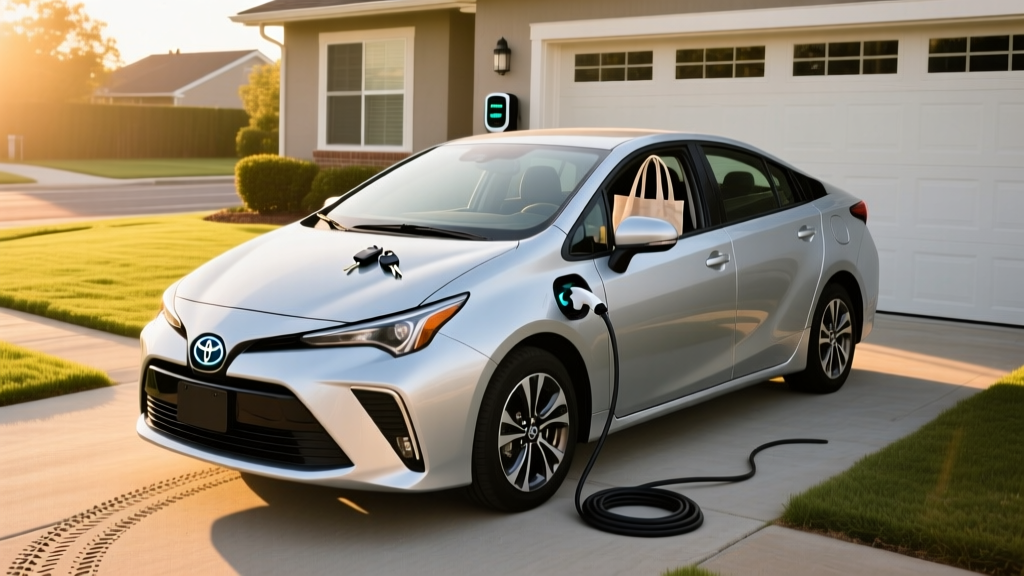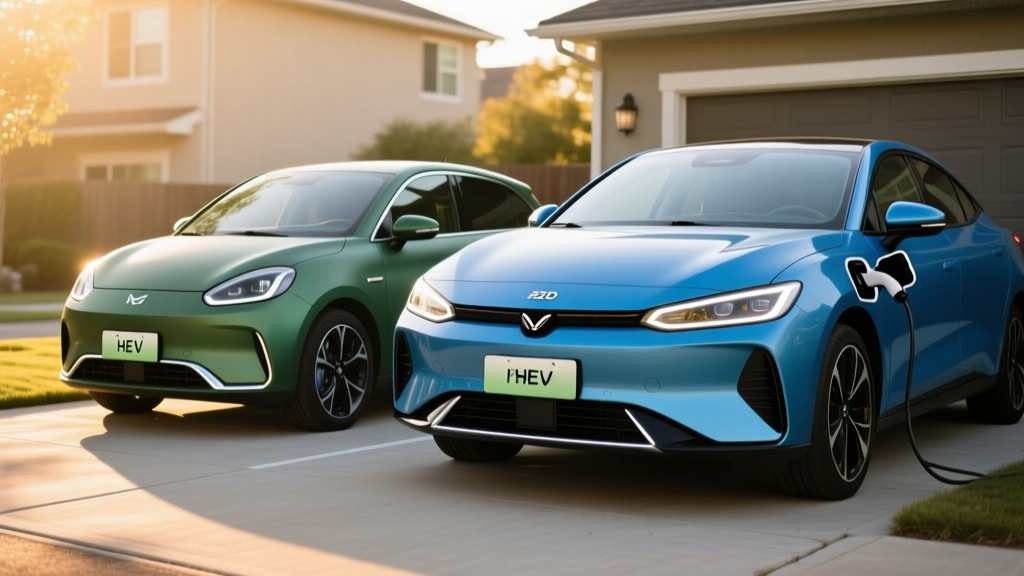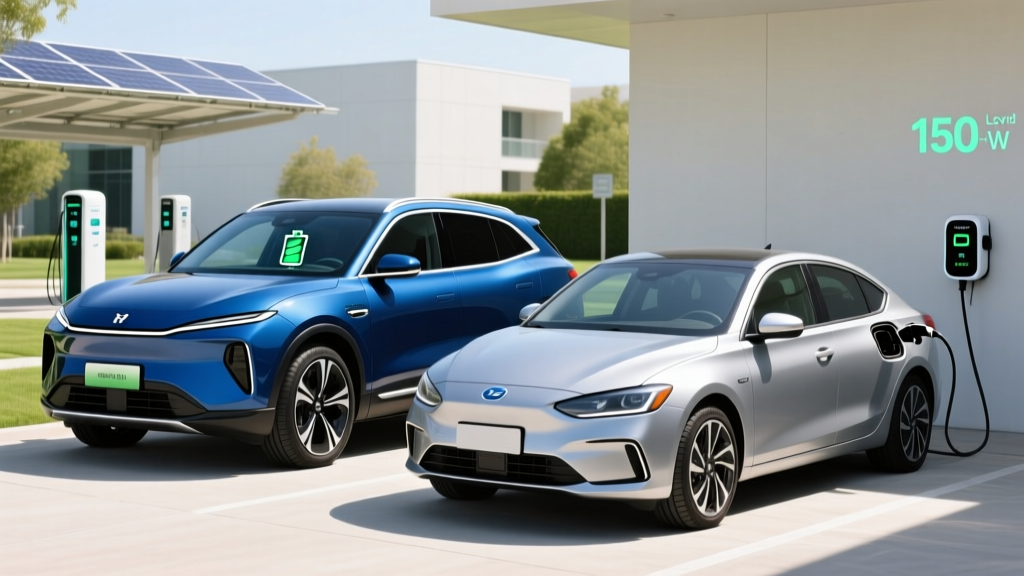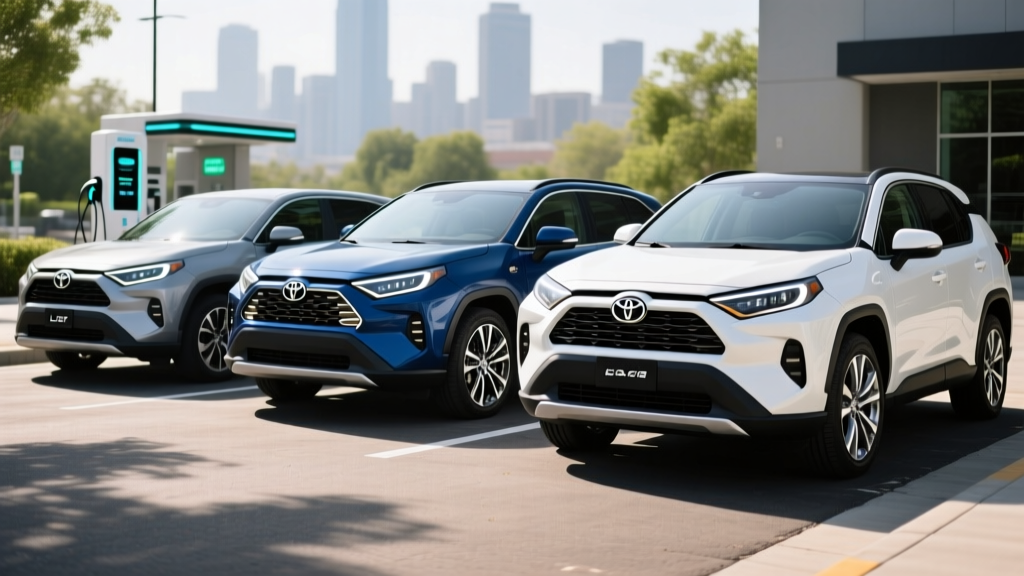
If you have been shopping for Toyota's best-selling compact SUV and typed "are all RAV4 hybrid" into your search bar, you are not alone. The RAV4 lineup has expanded so much over the last few generations that it now spans three distinct powertrains: a conventional gas engine, a self-charging hybrid (HEV), and a plug-in hybrid badged as the RAV4 Prime (PHEV). They look nearly identical from the curb, but under the metal they behave very differently at the pump, at the charger, and on your tax return.
This guide untangles the 2026 RAV4 family so you can match the right powertrain to your commute, your garage setup, and your budget — with exact EPA numbers, not marketing generalizations.
The Short Answer: No, Not Every RAV4 Is a Hybrid
The 2026 Toyota RAV4 is sold in three powertrain families. The base model still uses a 2.5-liter four-cylinder gasoline engine with no electrification. The RAV4 Hybrid pairs that same 2.5L engine with a battery and electric motors you never plug in. The RAV4 Prime is a plug-in hybrid (PHEV) with a substantially larger battery, more electric motors, and the ability to drive roughly 42 miles on electricity alone before the gas engine kicks in.
HEV vs PHEV — What's the Difference?
| Feature | RAV4 Hybrid (HEV) | RAV4 Prime (PHEV) |
|---|---|---|
| Plug-in charging? | No — self-charging via regen and engine | Yes — plug in to access electric-only miles |
| Battery capacity | ~1.6 kWh (small buffer) | 18.1 kWh usable |
| Electric-only range | None (EV assist only at low speed) | EPA 42 miles |
| Combined horsepower | 219 hp | 302 hp |
| Federal tax credit (§30D)? | No | Up to $7,500 — subject to sourcing, MSRP, and income caps |
Source: Toyota RAV4 Prime specifications and fueleconomy.gov
Conventional hybrids (HEVs) do not need to be plugged in — ever. They recapture energy during braking and use the gas engine to keep the small battery topped up. Plug-in hybrids (PHEVs) like the Prime give you a meaningful electric-only commute when charged, and then operate as a regular hybrid once the battery is depleted. Understanding that distinction is the single most important step in choosing the right RAV4.
EPA Fuel Economy: Gas vs Hybrid vs Prime
Fuel economy is the main reason buyers cross-shop these powertrains. Here is how the EPA rates each 2026 RAV4 variant, based on data published at fueleconomy.gov:
| Powertrain | City MPG / MPGe | Highway MPG | Combined |
|---|---|---|---|
| RAV4 Gas (2.5L AWD) | 27 mpg | 34 mpg | 30 mpg |
| RAV4 Hybrid (AWD-i) | 41 mpg | 38 mpg | 39 mpg |
| RAV4 Prime (PHEV, electric mode) | 94 MPGe | 84 MPGe | 94 MPGe |
| RAV4 Prime (hybrid mode, battery depleted) | 40 mpg | 36 mpg | 38 mpg |
Real-World MPG vs the EPA Sticker
Hybrids almost always beat their EPA city number in stop-and-go traffic because regenerative braking recovers energy that a gas car wastes as heat. In our mixed suburban and city driving, the RAV4 Hybrid has returned 42–44 mpg consistently. Highway driving is where hybrids lose their advantage — at 75 mph the gas engine does most of the work, and we have seen the Hybrid dip to 35–36 mpg on long, flat interstate runs.
The Prime's 42-mile electric-only range is realistic at city and suburban speeds in mild weather. Cold winter mornings (below 30°F) and sustained highway speeds above 65 mph can shave that to 32–35 miles. Once the battery is depleted, the Prime operates as a slightly heavier hybrid and delivers around 36–38 mpg combined — close to, but not quite matching, the standard Hybrid, because the Prime carries roughly 300 extra pounds of battery and power electronics.
RAV4 Prime (PHEV): Electric Range, Charging, and Battery
The Prime is where the RAV4 crosses from hybrid territory into genuine EV-like daily driving. Its 18.1 kWh lithium-ion battery powers a front motor (134 kW) and a rear motor (40 kW) for a combined system output of 302 hp — making it the quickest RAV4 Toyota sells, with a 0–60 mph time around 5.7 seconds.
| Spec | 2026 RAV4 Prime |
|---|---|
| Battery (usable) | 18.1 kWh, lithium-ion |
| EPA electric-only range | 42 miles |
| Total range (electric + gas) | ~600 miles |
| Level 1 charging (120V, 12A) | ~12 hours (0–100%) |
| Level 2 charging (240V, 32A) | ~2.5 hours (0–100%) |
| DC fast charging? | No — PHEVs in this class lack DC capability |
| Combined system horsepower | 302 hp |
| Drivetrain | Electronic AWD (eAWD) |
A note on kW vs kWh: kW (kilowatts) measures power — how fast energy flows into the battery during charging. kWh (kilowatt-hours) measures energy capacity — how much the battery holds. The Prime's battery is 18.1 kWh; its onboard charger accepts up to about 6.6 kW on Level 2.
The absence of DC fast charging is the Prime's biggest practical limitation on road trips. You will not see it at a Electrify America or Tesla Supercharger stall. For daily use, though, a Level 2 home charger replenishes the battery overnight with room to spare, and that is how most Prime owners use it.
Pricing, Trims, and Federal Tax Credit Eligibility
Here is where the math gets interesting — and where many buyers get tripped up by shifting incentive rules.
| Model | Starting MSRP (2026) | Federal §30D Credit |
|---|---|---|
| RAV4 Gas LE AWD | ~$32,000 | Not eligible |
| RAV4 Hybrid LE AWD | ~$34,500 | Not eligible (HEVs excluded) |
| RAV4 Prime SE | ~$46,000 | Up to $7,500 — see caveats below |
| RAV4 Prime XSE | ~$50,000 | Up to $7,500 — see caveats below |
§30D Federal Tax Credit — 2026 Rules
The RAV4 Prime may qualify for up to $7,500 under IRS §30D, but eligibility is not automatic. Current requirements include:
- MSRP cap: SUVs must be at or below $80,000 (Prime clears this easily).
- Buyer income cap: AGI must not exceed $150,000 (single), $225,000 (head of household), or $300,000 (joint).
- Battery sourcing: A percentage of critical minerals and battery components must be sourced from the U.S. or FTA partners — this requirement tightens each year and can reduce or eliminate the credit for specific build months.
- Point-of-sale transfer: As of 2024, eligible buyers can transfer the credit to the dealer at purchase, applying it as a down-payment reduction rather than waiting for a tax refund.
Always verify current eligibility on IRS.gov before signing a purchase agreement. Sourcing rules change periodically and vary by VIN build date.
The conventional RAV4 Hybrid does not qualify for the federal EV credit because it is not a plug-in vehicle. However, some states and utilities offer rebates for HEVs or for PHEVs beyond the federal program — check your state energy office or utility provider for local incentives.
Battery Warranty, Reliability, and Replacement Cost
Hybrid battery anxiety is the number-one objection we hear from first-time hybrid buyers. Here is what the data actually shows.
Toyota covers the hybrid battery in the RAV4 Hybrid and Prime for 10 years or 150,000 miles (whichever comes first), which has been Toyota's standard since the 2020 model year. The broader hybrid system — inverter, motors, control electronics — carries an 8-year/100,000-mile warranty.
Toyota's hybrid synergy drive system is among the most proven in the industry, with the Prius lineage stretching back to 1997 in Japan and 2000 in the U.S. Real-world failure rates on modern Toyota hybrid batteries are low; many first-generation Prius packs lasted well past 200,000 miles with minimal degradation. The RAV4 Hybrid's smaller NiMH-style pack and the Prime's larger lithium-ion pack both benefit from conservative thermal management that avoids the extreme charge/discharge cycles that accelerate wear.
If a hybrid battery does fail out of warranty, replacement cost for a RAV4 Hybrid pack typically runs $3,000–$5,000 at a dealer, with refurbished options available for less. The Prime's larger 18.1 kWh pack is more expensive — expect $6,000–$9,000 at current pricing. These figures are meaningful but should be weighed against a decade or more of fuel savings.
Who Should Choose Which RAV4?
The Decision Framework
Choose the RAV4 Gas if: You drive fewer than 8,000 miles per year, want the lowest purchase price, and have no interest in any electrified powertrain. The fuel cost penalty versus the Hybrid is roughly $400–$600/year at current gas prices.
Choose the RAV4 Hybrid (HEV) if: You want a meaningful MPG improvement without changing your habits. No plug, no app, no charging logistics. This is the sweet spot for apartment dwellers, street parkers, and anyone without access to home or workplace charging. The ~$2,500 premium over the gas model pays back in 3–5 years for most drivers.
Choose the RAV4 Prime (PHEV) if: Your daily round-trip commute is under 40 miles, you can install a Level 2 charger at home, and you want EV-like daily driving with the freedom to road-trip on gas. The Prime also delivers the most horsepower in the lineup (302 hp), making it genuinely quick. The federal tax credit, when available, can make the Prime cost-competitive with the Hybrid over a 5-year ownership window.
Choose a full BEV (like the Toyota bZ4X or Tesla Model Y) if: You want zero tailpipe emissions, have reliable home charging, rarely drive more than 250 miles between stops, and want to eliminate oil changes and engine maintenance entirely.
Pros and Cons at a Glance
RAV4 Hybrid (HEV) Pros
- 39–44 mpg real-world combined, no plug needed
- Lower MSRP than the Prime
- Proven Toyota hybrid reliability
- 10-year/150,000-mile hybrid battery warranty
- Standard AWD on all Hybrid trims
RAV4 Hybrid (HEV) Cons
- No electric-only driving
- No federal tax credit
- Highway MPG drops to ~35 mpg at 75+ mph
- Less power than the Prime (219 hp vs 302 hp)
RAV4 Prime (PHEV) Pros
- 42-mile electric-only range covers most commutes
- 302 hp — quickest RAV4 in the lineup
- Up to $7,500 federal tax credit (when eligible)
- 94 MPGe in electric mode
- Still gets 38 mpg combined as a hybrid after battery depletion
RAV4 Prime (PHEV) Cons
- ~$11,000 more expensive than the Hybrid LE
- No DC fast charging
- Requires home Level 2 to maximize value
- Heavier, slightly lower MPG than Hybrid when battery is empty
- Long dealer wait times in some markets
Frequently Asked Questions
How many MPG does the RAV4 Hybrid get?
The EPA rates the 2026 RAV4 Hybrid at 41 city / 38 highway / 39 combined. In real-world suburban and city driving, many owners report 42–44 mpg. Highway-only driving at 75+ mph typically returns 35–36 mpg.
How far can the RAV4 Prime go on electric only?
The EPA rates the RAV4 Prime at 42 miles of electric-only range. Expect 32–35 miles in cold weather or at sustained highway speeds, and up to 42 miles in mild conditions at city speeds.
Is the RAV4 Hybrid reliable, and what does a battery replacement cost?
Toyota's hybrid system has decades of proven reliability. The hybrid battery is warranted for 10 years/150,000 miles. Out-of-warranty replacement runs approximately $3,000–$5,000 for the HEV and $6,000–$9,000 for the Prime's larger pack.
Does the RAV4 Hybrid qualify for a tax credit?
No. The conventional RAV4 Hybrid (HEV) does not qualify for the federal §30D credit because it is not a plug-in vehicle. The RAV4 Prime (PHEV) may qualify for up to $7,500, subject to buyer income limits, MSRP caps, and battery-sourcing requirements that change periodically. Verify on IRS.gov.
Do I need to plug in the RAV4 Hybrid?
No. The RAV4 Hybrid is a self-charging HEV. It generates electricity through regenerative braking and the gas engine. Only the RAV4 Prime requires (and benefits from) being plugged in.
Hybrid vs PHEV vs full EV — which RAV4 fits me?
If you cannot charge at home, choose the Hybrid (HEV). If you can charge at home and commute under 40 miles, the Prime (PHEV) gives you EV-like daily driving with gas road-trip flexibility. If you want zero gas use and can charge reliably, look at a full BEV like the Toyota bZ4X or a competitor such as the Hyundai Ioniq 5.
Does the RAV4 Prime support DC fast charging?
No. The RAV4 Prime charges via Level 1 (120V, ~12 hours) or Level 2 (240V, ~2.5 hours). It does not have a DC fast-charge port. This is typical for PHEVs in this class.