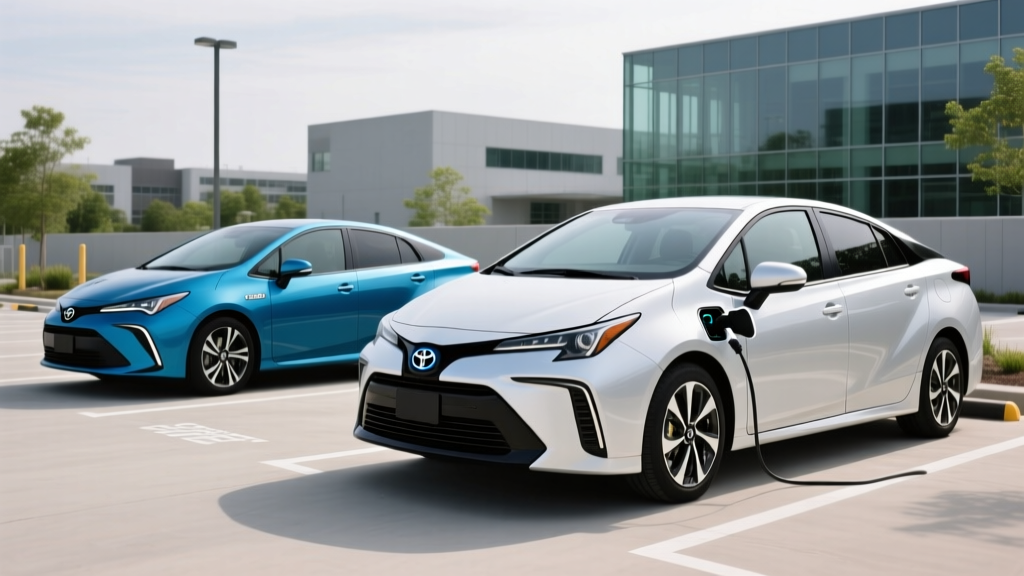
If you've ever found yourself asking are all Prius hybrid, you're not alone. The Toyota Prius nameplate has been synonymous with hybrid technology for over two decades, but the current lineup is more nuanced than a single answer. For 2026, Toyota offers the Prius as a conventional hybrid (HEV) and the Prius Prime as a plug-in hybrid (PHEV) — and understanding the difference is the single most important factor in choosing the right one for your driving pattern, budget, and charging access.
This guide breaks down every 2026 Prius variant with exact EPA figures, real-world expectations, powertrain specs, battery warranty details, and federal tax credit eligibility so you can make a data-driven decision.
The Short Answer: Yes, Every Prius Is a Hybrid — But Not All Hybrids Are Equal
Every 2026 Toyota Prius sold in the United States uses a hybrid powertrain. There is no gas-only Prius, and there is no fully electric Prius (BEV). However, Toyota splits the lineup into two distinct categories:
- Prius (HEV): A conventional self-charging hybrid. It pairs a gasoline engine with an electric motor and a small battery that recharges through regenerative braking and the engine. You never plug it in.
- Prius Prime (PHEV): A plug-in hybrid with a larger battery that you can charge from a wall outlet or public charger. It offers a meaningful electric-only driving range before the gasoline engine engages.
Both use Toyota's fifth-generation hybrid system, but their batteries, electric motors, and intended use cases differ substantially.
HEV vs PHEV: What's Actually Different Under the Hood?
| Attribute | 2026 Prius (HEV) | 2026 Prius Prime (PHEV) |
|---|---|---|
| Powertrain type | Conventional hybrid (HEV) | Plug-in hybrid (PHEV) |
| Engine | 2.0L 4-cylinder + electric motor | 2.0L 4-cylinder + electric motor |
| Combined horsepower | 196 hp (FWD) / 196 hp (AWD) | 220 hp |
| Battery capacity | ~1.0 kWh (lithium-ion) | 13.6 kWh (lithium-ion) |
| Plug-in charging | No — self-charging only | Yes — Level 1 and Level 2 |
| DC fast charging | N/A | No |
| Electric-only range | N/A (EV mode limited to ~1 mi at low speed) | EPA 44 miles (SE trim) / 40 miles (XSE) |
| 0–60 mph | ~7.2 sec (FWD) | ~6.6 sec |
| Drivetrain options | FWD or AWD | FWD only |
The HEV's tiny ~1.0 kWh battery exists to buffer energy between the engine and motor — it recovers braking energy and assists during acceleration. The Prime's 13.6 kWh pack is roughly 13 times larger, enabling genuine electric-only commuting. Neither vehicle offers DC fast charging; the Prime charges via a J1772 connector at Level 1 (120V) or Level 2 (240V).
2026 Prius Fuel Economy: EPA MPG and Real-World Numbers
| Model / Trim | City MPG | Highway MPG | Combined MPG | MPGe (PHEV EV mode) |
|---|---|---|---|---|
| Prius LE (FWD) | 57 | 56 | 57 | N/A |
| Prius XLE (FWD) | 52 | 52 | 52 | N/A |
| Prius AWD (LE/XLE) | 49 | 50 | 49 | N/A |
| Prius Prime SE | 53 (hybrid mode) | 51 (hybrid mode) | 52 (hybrid mode) | 127 MPGe |
| Prius Prime XSE | 50 (hybrid mode) | 47 (hybrid mode) | 48 (hybrid mode) | 114 MPGe |
Source: fueleconomy.gov
Real-World MPG vs. EPA Stickers
Toyota's hybrid system excels in stop-and-go city driving, where the electric motor handles low-speed propulsion and regenerative braking recaptures energy. In real-world testing, many Prius HEV owners report matching or slightly exceeding the EPA city figure — 58–60 MPG is achievable on the LE trim in warm-weather urban driving. Highway MPG tends to run closer to or slightly below the sticker, especially at sustained 75+ mph speeds where aerodynamic drag dominates and the engine carries more of the load.
For the Prius Prime, the picture is more complex. If your daily commute is under 44 miles round-trip and you charge nightly, you may burn almost no gasoline for months. Once the battery depletes, the Prime operates as a conventional hybrid — expect roughly 48–52 MPG combined depending on trim, which is still exceptional but slightly less than the Prius LE due to the heavier battery pack (the Prime carries roughly 250 lbs more).
Prius Prime Electric-Only Range and Charging Details
The 2026 Prius Prime SE delivers an EPA-rated 44 miles of electric-only range, while the XSE trim drops to 40 miles due to its larger wheels and additional equipment weight. Both figures are sufficient to cover the average American one-way commute (approximately 16 miles, per Census Bureau data) with room to spare.
| Charging Method | Power | 0–100% Time | Connector |
|---|---|---|---|
| Level 1 (120V household outlet) | ~1.4 kW | ~11 hours | J1772 (standard 120V cord included) |
| Level 2 (240V home/public) | ~3.3 kW (onboard charger limit) | ~4 hours | J1772 |
| DC Fast Charge | Not supported | N/A | N/A |
The Prime's onboard charger is limited to 3.3 kW, meaning even if you plug into a 7.2 kW or 11.5 kW Level 2 station, the car will only accept 3.3 kW. This is adequate for overnight charging but means you won't find meaningful benefit from public Level 2 chargers during midday stops. The lack of DC fast charging is a deliberate engineering trade-off — it keeps cost and weight down for a vehicle designed to charge slowly at home or work.
Practical tip: Most Prime owners find Level 1 charging from a standard 120V outlet sufficient if the car is parked 10+ hours overnight. At 1.4 kW, 11 hours yields roughly 40 miles of range — enough for a full daily recharge without any electrical upgrades.
2026 Prius Pricing and Federal Tax Credit Eligibility
Here's where the HEV vs PHEV decision gets financial:
| Trim | MSRP (approx.) | Federal Tax Credit (§30D) | Effective Price After Credit |
|---|---|---|---|
| Prius LE | $29,445 | Not eligible (HEV) | $29,445 |
| Prius XLE | $32,995 | Not eligible (HEV) | $32,995 |
| Prius Limited | $36,495 | Not eligible (HEV) | $36,495 |
| Prius Prime SE | $34,595 | Up to $3,750* | ~$30,845* |
| Prius Prime XSE | $37,995 | Up to $3,750* | ~$34,245* |
| Prius Prime XSE Premium | $40,595 | Up to $3,750* | ~$36,845* |
*Credit amount depends on battery sourcing compliance and buyer income limits under IRS §30D rules. The Prius Prime's partial credit reflects current critical-mineral and battery-component sourcing thresholds. Verify eligibility with a tax professional before purchase. The conventional Prius HEV does not qualify for any federal EV tax credit.
Some states offer additional rebates for PHEVs (for example, certain utility companies and state programs provide $500–$1,500 for plug-in hybrids). Check your state energy office or utility provider for local programs. These vary by jurisdiction and change frequently.
Hybrid Battery Longevity, Warranty, and Replacement Cost
Toyota Hybrid Battery Warranty
Every 2026 Prius and Prius Prime comes with Toyota's hybrid battery warranty: 10 years or 150,000 miles (whichever comes first) in all 50 states. This covers defects and capacity loss below a defined threshold.
Toyota's hybrid battery track record is among the best in the industry. The original first-generation Prius batteries routinely exceeded 150,000 miles, and the current lithium-ion packs are more durable still. Independent fleet data and owner surveys suggest that Prius hybrid batteries commonly last 200,000+ miles before significant degradation — and even then, "significant" often means a 15–20% capacity reduction, not a total failure.
If a replacement is eventually needed out of warranty, here are the approximate costs:
- Prius HEV battery replacement: $2,000–$3,500 (smaller pack, lower parts cost)
- Prius Prime battery replacement: $4,500–$7,000 (larger 13.6 kWh pack)
- Refurbished/aftermarket options: $1,200–$2,500 for the HEV from independent hybrid specialists
For context, the average Prius owner will spend far less on hybrid battery replacement over 200,000 miles than a conventional car owner spends on transmission rebuilds, timing chain replacements, or repeated starter/alternator failures — all components the Prius eliminates or reduces through its hybrid architecture.
Who Should Choose the Prius HEV, the Prime, or a Full EV?
Choose the Prius HEV if:
- You have no access to home or workplace charging (apartment, street parking)
- You want maximum MPG simplicity with zero behavior change
- Your budget is under $33,000 and you don't qualify for PHEV credits
- You want AWD availability (the HEV offers it; the Prime does not)
- You drive predominantly long highway trips where PHEV electric range adds little value
Choose the Prius Prime (PHEV) if:
- You can charge at home (even a standard 120V outlet works overnight)
- Your daily round-trip commute is under 44 miles
- You want to drive mostly on electricity but need gas flexibility for road trips
- You want the performance bump (220 hp vs 196 hp) and qualify for the partial tax credit
- You want to reduce fuel consumption to near zero for daily driving without range anxiety
What About a Full EV Instead?
If you have reliable Level 2 home charging, drive under 250 miles daily, and want zero tailpipe emissions with minimal maintenance, a battery-electric vehicle like the Hyundai Ioniq 6, Tesla Model 3, or Chevrolet Equinox EV may save you more long-term. Full EVs eliminate oil changes, have fewer moving parts, and qualify for up to $7,500 under §30D (income and sourcing permitting). The trade-off: higher upfront cost, dependence on charging infrastructure for road trips, and faster range loss in extreme cold (typically 20–30% vs. the Prius Prime's minimal electric-range loss since the gas engine provides heat).
The Prius Prime occupies a unique middle ground — it's the optimal choice for drivers who want electric daily driving but can't commit to full electrification due to charging access limitations, frequent long road trips, or cold-climate concerns.
Reliability Ratings and Ownership Costs
Toyota's hybrid powertrain is one of the most thoroughly validated systems in automotive history. The 2026 Prius benefits from Toyota's decades of hybrid refinement, and the model consistently earns top marks from IIHS and reliability surveys. Key ownership advantages include:
- No traditional transmission: The Prius uses a planetary gearset (e-CVT), which has no clutch packs, bands, or torque converter to wear out.
- Regenerative braking extends pad life: Many Prius owners report original brake pads lasting 80,000–100,000+ miles because regen handles most deceleration.
- Engine runs less: The gas engine shuts off frequently in city driving, reducing wear on pistons, rings, and bearings compared to a conventional car.
- No starter motor or alternator: The hybrid motor/generator units handle both functions, eliminating two common failure points.
Insurance costs for the Prius tend to run 5–10% below the segment average, reflecting its strong safety record and modest repair costs. Depreciation has historically been favorable — the Prius holds its value well, particularly in markets with high fuel prices or strong environmental awareness.
Frequently Asked Questions
How many MPG does the 2026 Prius get?
The 2026 Prius LE (FWD) achieves an EPA-estimated 57 city / 56 highway / 57 combined MPG. Real-world city driving in warm weather can push this to 58–60 MPG. The AWD variant drops to 49 combined. The Prius Prime returns 52 combined MPG in hybrid mode (after battery depletion) on the SE trim.
How far can the Prius Prime go on electric only?
The 2026 Prius Prime SE delivers 44 miles of EPA-rated electric-only range; the XSE delivers 40 miles. This covers most daily commutes entirely on electricity. For longer trips, the gasoline engine engages seamlessly, giving the Prime a total combined range exceeding 600 miles.
Do I need to plug in a regular Prius?
No. The conventional Prius (HEV) charges its battery entirely through regenerative braking and the gasoline engine. There is no plug, no charging cord, and no need for any electrical infrastructure. You simply fill it with gas and drive.
Is the Prius hybrid battery reliable and what does replacement cost?
Toyota's hybrid batteries carry a 10-year / 150,000-mile warranty and commonly last 200,000+ miles based on fleet and owner data. Out-of-warranty replacement runs $2,000–$3,500 for the HEV and $4,500–$7,000 for the Prime, with refurbished options available for less.
Does the 2026 Prius qualify for a federal tax credit?
The conventional Prius HEV does not qualify for any federal tax credit. The Prius Prime (PHEV) may qualify for up to $3,750 under IRS §30D, depending on battery-sourcing compliance and buyer income limits. Eligibility rules change periodically — consult IRS guidance and a tax professional before purchasing.
Is the Prius Prime better than a full electric vehicle?
It depends on your situation. If you can charge at home and rarely drive over 250 miles in a day, a full EV offers lower running costs and less maintenance. The Prius Prime is better if you lack reliable charging access, take frequent road trips over 300 miles, or live in extreme cold where EV range drops significantly. The Prime gives you electric commuting with gas-engine insurance for everything else.
Does the 2026 Prius offer all-wheel drive?
Yes, but only on the conventional Prius HEV (LE and XLE trims). The Prius Prime is front-wheel drive only. The AWD system uses a separate rear electric motor and slightly reduces fuel economy to 49 MPG combined.