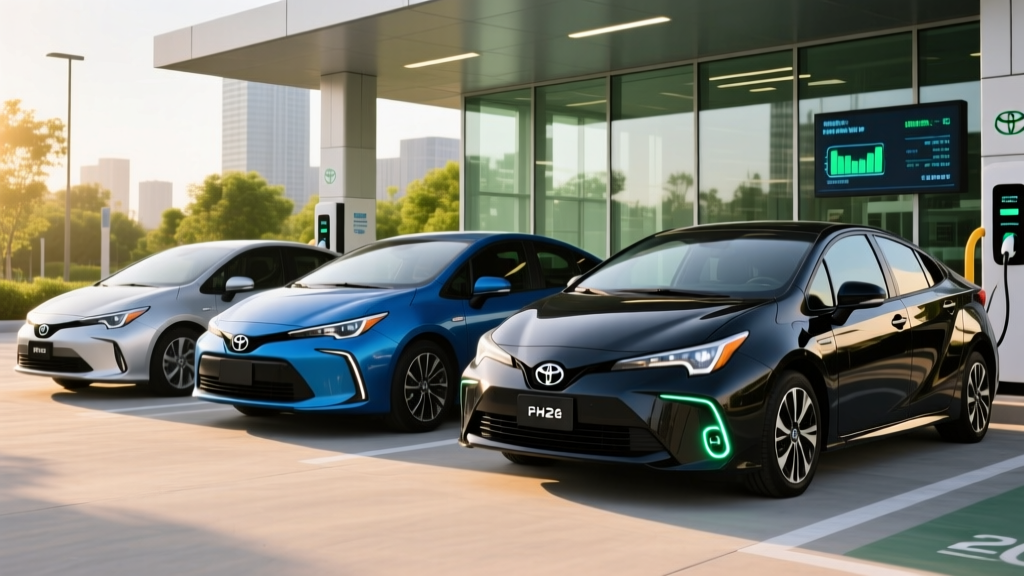
If you have ever stood on a Toyota dealer lot wondering whether every Prius plugs in, you are not alone. The nameplate that launched the hybrid movement in the U.S. back in 2000 now spans two very different powertrains, and the distinction matters for your wallet, your commute, and your tax return. So, are all Prius hybrid cars the same? The short answer: every Prius is a hybrid, but not every Prius is a plug-in hybrid. For 2026, Toyota sells the conventional Prius HEV (no plug, gas-and-go) and the Prius Prime PHEV (plugs in for roughly 44 miles of pure electric driving before the gas engine kicks in). Let's sort out exactly what each one delivers, who each one serves, and where the real-world numbers diverge from the EPA sticker.
The Prius Lineup: HEV vs PHEV at a Glance
Toyota restructured the Prius around its fifth-generation platform starting with the 2023 model year, and by 2026 the lineup has settled into a clear two-track approach. The conventional Prius HEV pairs a 2.0-liter four-cylinder engine with two motor-generators and a small lithium-ion traction battery. You never plug it in; regenerative braking and the engine keep the battery topped up. The Prius Prime PHEV uses the same 2.0-liter engine but adds a much larger battery pack and a more powerful electric drive motor, giving it a meaningful all-electric range before the hybrid system takes over.
| Attribute | Prius HEV | Prius Prime PHEV |
|---|---|---|
| Powertrain type | Conventional hybrid (HEV) | Plug-in hybrid (PHEV) |
| Engine | 2.0L inline-4 + 2 motor-generators | 2.0L inline-4 + high-output motor |
| Combined system horsepower | 194 hp (FWD) / 196 hp (AWD-e) | 220 hp |
| Traction battery (usable) | ~0.9 kWh lithium-ion | ~10.9 kWh lithium-ion |
| EPA electric-only range | N/A (not a plug-in) | 44 miles |
| EPA combined MPG (hybrid mode) | 57 MPG (LE FWD) | 52 MPG (charge-sustaining) |
| EPA MPGe (electric + gas combined) | N/A | 127 MPGe |
| 0–60 mph | 7.2 sec (FWD) | 6.6 sec |
| DC fast charging | No | No (Level 2 AC only) |
| Level 2 charge time (0–100%) | N/A | ~4 hours (240V, 16A) |
| Starting MSRP (2026) | ~$29,445 (LE) | ~$34,445 (SE) |
Fuel Economy: EPA Numbers and Real-World MPG
Hybrids tend to shine in stop-and-go driving where regenerative braking recaptures energy that a gas car wastes as heat. That means real-world city MPG for the Prius HEV often exceeds the EPA city estimate — something almost no gas-only car can claim. On the highway, where regen opportunities are sparse and aerodynamic drag dominates, expect numbers closer to or slightly below the EPA highway figure.
| Model / Trim | City MPG | Highway MPG | Combined MPG |
|---|---|---|---|
| Prius LE (FWD) | 57 | 56 | 57 |
| Prius XLE / Limited (FWD) | 52 | 52 | 52 |
| Prius AWD-e | 53 | 54 | 54 |
| Prius Prime SE (PHEV) | 53 (hybrid) | 51 (hybrid) | 52 (hybrid) / 127 MPGe |
| Prius Prime XSE (PHEV) | 50 (hybrid) | 48 (hybrid) | 50 (hybrid) / 119 MPGe |
Real-world check: In mixed suburban driving with moderate A/C use, the Prius LE FWD routinely delivers 54–60 MPG combined, with city-heavy routes pushing toward the low 60s. Highway-only trips at 75 mph tend to land around 48–51 MPG. The Prius Prime, driven within its 44-mile electric envelope on a daily commute and charged nightly, may burn no gasoline at all for weeks. According to fueleconomy.gov, owners who plug in regularly report average fuel costs well below even the HEV variant.
Prius Prime Electric-Only Range and Total Range
The 2026 Prius Prime's 10.9 kWh (usable) lithium-ion battery delivers an EPA-rated 44 miles of all-electric driving on the SE trim with its lighter wheels and lower rolling resistance. The XSE trim, with 19-inch alloy wheels, drops to roughly 39–40 electric miles. Once the battery depletes to its charge-sustaining floor, the Prime operates as a conventional hybrid and delivers the 52 MPG combined noted above.
Total range reality: With a full charge and a full 11.4-gallon fuel tank, the Prius Prime SE can cover approximately 44 electric miles + ~540 hybrid miles = ~580+ miles total. In cold weather (below 30°F), expect electric-only range to drop 15–25% due to battery chemistry limitations and cabin heating demands — plan for roughly 33–37 electric miles in winter.
Charging is straightforward but limited. The Prime accepts Level 1 (120V household outlet) at roughly 1.4 kW for an overnight charge in about 9–10 hours, or Level 2 (240V) at approximately 3.3 kW for a full charge in around 4 hours. The Prius Prime does not support DC fast charging. This is a deliberate engineering trade-off: adding DCFC hardware means weight, cost, and thermal management complexity that Toyota determined was unnecessary for a battery this small. For a 10.9 kWh pack, a 4-hour Level 2 top-up is practical for overnight or workplace charging.
Powertrain Deep Dive: What Makes Each Prius Tick
Both 2026 Prius models share Toyota's fifth-generation hybrid architecture, but the execution differs meaningfully.
Prius HEV: The 2.0-liter Dynamic Force engine produces approximately 150 hp on its own, supplemented by two motor-generators (MG1 for starting and generating, MG2 for drive) through a planetary gearset e-CVT. Combined system output is 194 hp for FWD models and 196 hp with the AWD-e variant, which adds a rear-axle electric motor for traction in slippery conditions. The small ~0.9 kWh battery serves as a buffer for regen capture and electric assist — it is never the sole propulsion source for more than about a mile at low speed.
Prius Prime PHEV: Toyota retuned the system for higher electric output. The drive motor is more powerful, and combined system output rises to 220 hp, making the Prime the quickest Prius ever at 6.6 seconds to 60 mph. The larger 10.9 kWh battery enables sustained electric-only driving at highway speeds (up to about 84 mph in EV mode). When you floor it or deplete the battery, the engine seamlessly engages and the car behaves like a conventional Prius HEV — just with a bit more weight from the larger pack.
Pricing, Trims, and Tax Credit Eligibility
| Model / Trim | MSRP (est.) | Federal Tax Credit | Effective Price (if eligible) |
|---|---|---|---|
| Prius LE (HEV) | $29,445 | $0 | $29,445 |
| Prius XLE (HEV) | $32,445 | $0 | $32,445 |
| Prius Limited (HEV) | $36,445 | $0 | $36,445 |
| Prius Prime SE (PHEV) | $34,445 | Up to $3,750* | ~$30,695 |
| Prius Prime XSE (PHEV) | $37,445 | Up to $3,750* | ~$33,695 |
*Federal tax credit note: Under current IRS §30D rules, the Prius Prime PHEV may qualify for a partial federal tax credit (historically up to $3,750) depending on battery component and critical mineral sourcing requirements. The conventional Prius HEV does not qualify for any federal purchase credit because it lacks sufficient battery capacity and plug-in capability. Credit eligibility also depends on your modified adjusted gross income (AGI caps: $150,000 single / $300,000 joint) and the vehicle's MSRP falling under the $55,000 sedan cap. Always verify current-year rules with a tax professional or the IRS directly before purchasing. Point-of-sale transfer may be available, allowing the dealer to apply the credit as a down-payment reduction at purchase.
Reliability, Battery Lifespan, and Replacement Cost
Hybrid battery warranty: Toyota covers the hybrid battery pack and related components for 10 years or 150,000 miles (whichever comes first) on all 2026 Prius models, in states that follow California emissions standards. In states following federal emissions rules, coverage is 8 years or 100,000 miles. The broader hybrid system (inverter, control module, motor-generators) carries the same coverage period.
The Prius is one of the most data-rich vehicles on the planet for long-term hybrid battery reliability. Taxi fleets and high-mileage owners have routinely pushed original Prius battery packs past 200,000 miles with minimal degradation, thanks to Toyota's conservative battery management strategy — the system never allows the pack to charge to 100% or discharge to 0%, keeping the cells in a longevity-friendly middle window.
Battery replacement cost if out of warranty: For the conventional Prius HEV, a replacement hybrid battery from Toyota runs approximately $2,000–$3,000 installed (the pack is small and relatively simple). For the Prius Prime PHEV, the larger 10.9 kWh pack is costlier — expect $4,000–$6,500 installed at a dealership. Independent hybrid specialists and refurbished packs can reduce these figures by 30–50%. Given the 10-year/150,000-mile warranty, most original owners will never face this expense.
Toyota's hybrid powertrain has consistently earned top reliability marks. The 2026 Prius carries strong predicted reliability ratings from major evaluators, and the model's IIHS safety performance typically includes Top Safety Pick designation with standard Toyota Safety Sense 3.0 (pre-collision, lane tracing, adaptive cruise, and road sign assist).
Hybrid vs PHEV vs Full EV: Which Prius Fits You?
Choose the Prius HEV if:
- You have no access to home or workplace charging (apartment, street parking, no garage outlet)
- You want maximum simplicity — fill up with gas, drive 500+ miles, repeat
- Your budget is tighter and you want to stay under $33,000
- You drive mostly city and suburban routes where the HEV's regenerative braking maximizes MPG
Choose the Prius Prime PHEV if:
- You can install a Level 2 charger at home or have reliable workplace charging
- Your daily round-trip commute is under 44 miles (most U.S. commutes are under 40 miles)
- You want the option of gas-free daily driving with zero range anxiety for road trips
- You want the quickest Prius (220 hp, 6.6 sec 0–60) and can absorb the ~$5,000 price premium
Consider a full EV (like a Tesla Model 3 or Hyundai Ioniq 6) instead if:
- Your commute is under 40 miles and you can charge at home reliably
- You want to eliminate oil changes, spark plugs, and emissions system maintenance entirely
- You drive in a region with cheap electricity and expensive gasoline
- You qualify for the full $7,500 federal EV credit, which can make a BEV price-competitive with the Prime
Prius HEV — Pros
- 57 MPG combined (LE) — among the highest of any car sold in the U.S.
- No plug-in infrastructure needed
- Lower starting price (~$29,445)
- Proven 25-year hybrid reliability track record
- AWD-e option for snow-belt buyers
Prius HEV — Cons
- No electric-only driving mode for daily commutes
- No federal tax credit eligibility
- Rear cargo space slightly reduced vs. some crossovers
Prius Prime PHEV — Pros
- 44 miles electric-only — covers most daily commutes gas-free
- 220 hp combined — genuinely quick for the class
- Partial federal tax credit eligibility (~$3,750)
- 580+ mile total range eliminates range anxiety
- Operates as a 52 MPG hybrid once battery depletes
Prius Prime PHEV — Cons
- ~$5,000 more expensive than the HEV LE
- No DC fast charging — Level 2 only (~4 hours)
- Heavier, which slightly reduces hybrid-mode MPG vs. the HEV
- No AWD option
Ownership Costs: 5-Year Snapshot
| Cost Category | Prius HEV LE | Prius Prime SE | Comparable Gas Sedan (30 MPG) |
|---|---|---|---|
| Purchase price (after credits) | $29,445 | ~$30,695 | ~$26,000 |
| Fuel / electricity (75k mi) | ~$4,600 | ~$2,200* | ~$9,400 |
| Maintenance (est.) | ~$2,500 | ~$2,300 | ~$3,800 |
| Insurance (avg.) | ~$6,500 | ~$7,000 | ~$6,000 |
| Estimated 5-yr total | ~$43,045 | ~$42,195 | ~$45,200 |
*Prime fuel/electricity cost assumes nightly home charging at $0.14/kWh for electric miles and occasional gas use. Actual costs vary dramatically based on commute length and charging habits.
Frequently Asked Questions
Are all Toyota Prius cars hybrids?
Yes. Every Toyota Prius ever sold in the United States uses a hybrid powertrain — there has never been a gas-only or fully electric Prius. However, the Prius comes in two hybrid flavors: the conventional HEV (no plug) and the Prius Prime PHEV (plugs in for electric-only driving). Both use a gasoline engine combined with electric motors, but the Prime's larger battery gives it a meaningful all-electric mode.
How many MPG does the 2026 Prius get?
The 2026 Prius LE FWD achieves an EPA-rated 57 city / 56 highway / 57 combined MPG. The XLE and Limited trims drop to 52 combined due to added weight and larger wheels. The AWD-e variant earns 54 combined. Real-world results frequently match or exceed EPA estimates in city driving, while sustained highway driving at 75+ mph may yield 48–51 MPG.
How far can the Prius Prime go on electric only?
The 2026 Prius Prime SE delivers an EPA-rated 44 miles of all-electric range. The XSE trim, with larger wheels, drops to approximately 39–40 miles. In cold weather, expect a 15–25% reduction. Once the battery depletes, the Prime continues as a conventional hybrid at 52 MPG combined — so you are never stranded.
Does the Prius qualify for a federal tax credit?
The conventional Prius HEV does not qualify for any federal purchase tax credit. The Prius Prime PHEV may qualify for a partial credit (up to approximately $3,750 under current IRS §30D rules), subject to battery sourcing requirements, buyer income caps ($150,000 single / $300,000 joint), and the $55,000 MSRP cap for sedans. Always confirm eligibility with the IRS or a tax professional before purchasing.
Is the Prius hybrid battery reliable and what does replacement cost?
Toyota's hybrid battery packs are among the most proven in the industry, with many original packs lasting 200,000+ miles. The hybrid battery warranty covers 10 years/150,000 miles in CARB states (8 years/100,000 miles in federal-emissions states). Out-of-warranty replacement costs approximately $2,000–$3,000 for the HEV and $4,000–$6,500 for the Prime PHEV, with refurbished options available at lower cost.
Can I plug in a regular Prius to charge it?
No. The conventional Prius HEV has no charging port and no plug. Its small battery is charged exclusively by the gasoline engine and regenerative braking. Only the Prius Prime PHEV has a charging port (J1772 connector for Level 1 and Level 2 AC charging).
Hybrid vs PHEV vs EV — which should I choose?
If you cannot charge at home or work, the Prius HEV is your best option — it requires zero infrastructure and delivers exceptional MPG. If you can charge nightly and your commute is under 44 miles, the Prius Prime PHEV lets you drive gas-free on weekdays while keeping the flexibility for gas-powered road trips. If your commute is short, you charge at home, and you want to eliminate all gasoline use and engine maintenance, a full battery-electric vehicle (BEV) may be the better long-term choice — but it demands reliable charging access.