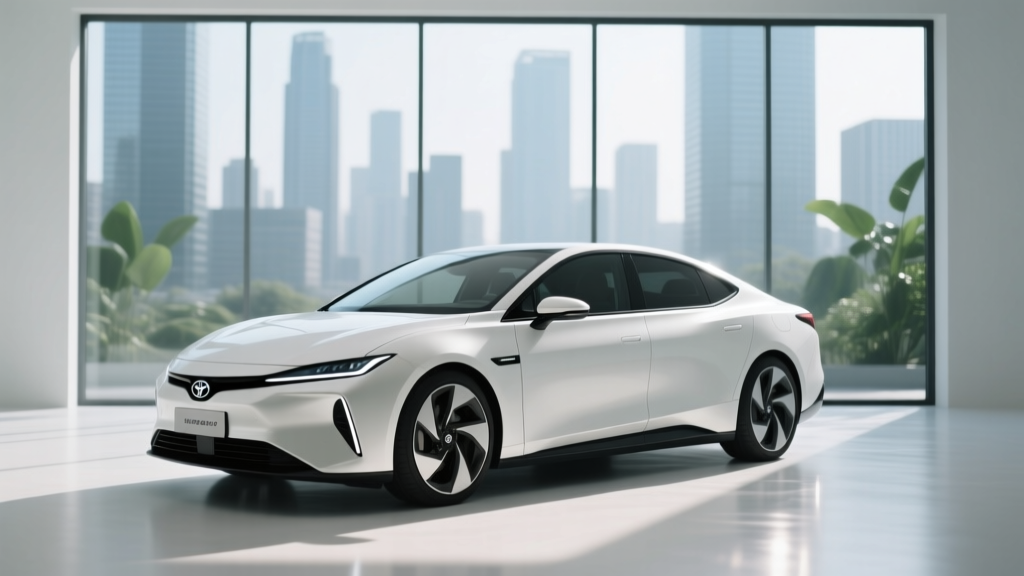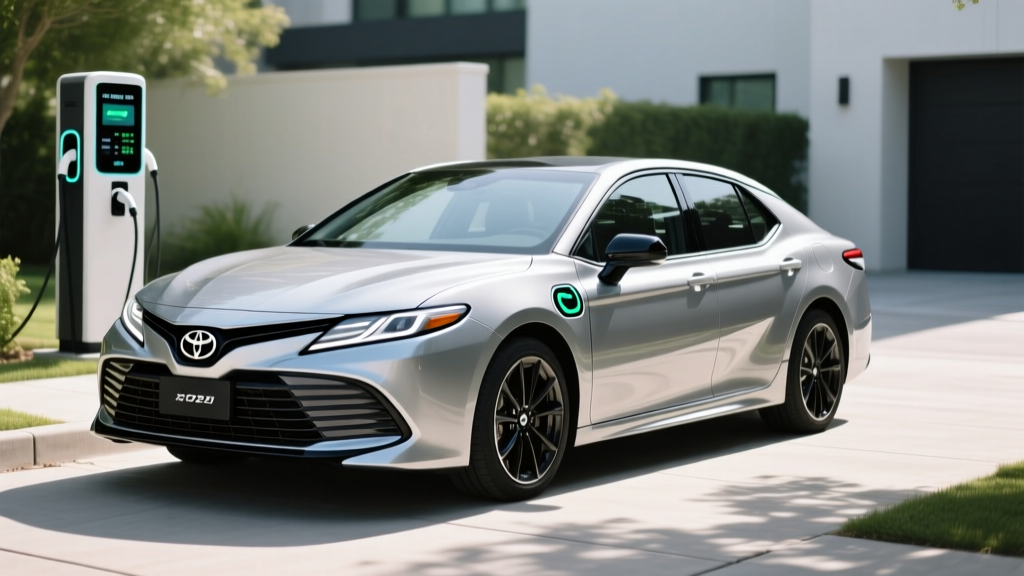
If you've walked into a Toyota dealership lately and asked for a gas-only Camry, you may have been met with a polite correction: the current-generation Toyota Camry is offered exclusively as a hybrid. Starting with the fully redesigned 2025 model year and continuing into 2026, Toyota eliminated the traditional four-cylinder and V6 gasoline powertrains from the Camry lineup entirely. Every new Camry rolling off the assembly line is now a conventional hybrid electric vehicle (HEV).
For a sedan that has been one of America's best-selling cars for over two decades, this is a significant shift. Below, we break down exactly what that means for fuel economy, performance, pricing, and whether the hybrid-only Camry is the right call for your next vehicle — or whether a plug-in hybrid (PHEV) or full battery-electric vehicle (BEV) might serve you better.
The Short Answer: Yes, Every New Camry Is a Hybrid
Beginning with the 2025 model year, Toyota transitioned the Camry to its fifth-generation Toyota Hybrid System (THS). This means:
- No pure gasoline Camry exists in the 2025 or 2026 model years.
- Every trim — LE, SE, XLE, XSE — comes with a 2.5-liter four-cylinder engine paired with electric motor-generators and a lithium-ion battery pack.
- The Camry is a conventional hybrid (HEV), not a plug-in hybrid (PHEV). You never plug it in. It charges its own small battery through regenerative braking and the gasoline engine.
Toyota previously offered a Camry Hybrid alongside gas models. Now, the hybrid powertrain is the Camry. This mirrors a broader strategy Toyota has pursued across its lineup, with models like the Sienna minivan and Venza SUV also going hybrid-only.
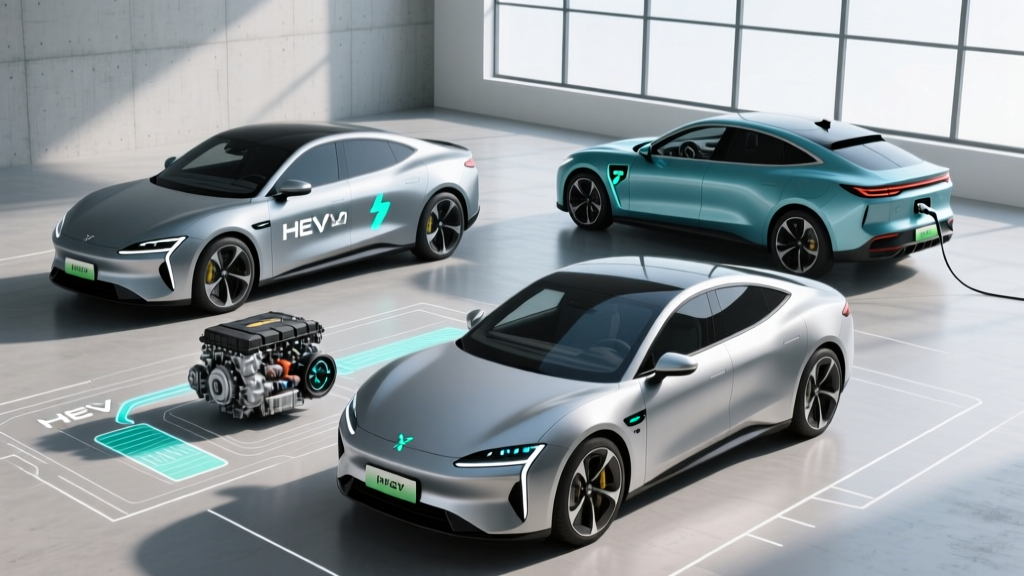
HEV vs. PHEV: What Camry Buyers Need to Know
| Feature | HEV (Camry Hybrid) | PHEV (e.g., Toyota RAV4 Prime) | BEV (e.g., Tesla Model 3) |
|---|---|---|---|
| Plugs in? | No | Yes | Yes |
| Electric-only range | ~1 mile at low speed | 25–42 miles typical | 250–360+ miles |
| Gas engine? | Yes | Yes | No |
| Fuel type needed | Gasoline (regular 87 octane) | Gasoline + electricity | Electricity only |
| Home charging required? | No | Recommended (Level 2) | Essential |
| Federal tax credit (§30D) | No | Up to $7,500 (if eligible) | Up to $7,500 (if eligible) |
The Camry Hybrid is an HEV — it uses its gasoline engine and regenerative braking to keep a small traction battery charged. That battery assists the engine during acceleration and enables brief electric-only motoring at low speeds, but it is not designed to be plugged in and does not offer meaningful electric-only driving range.
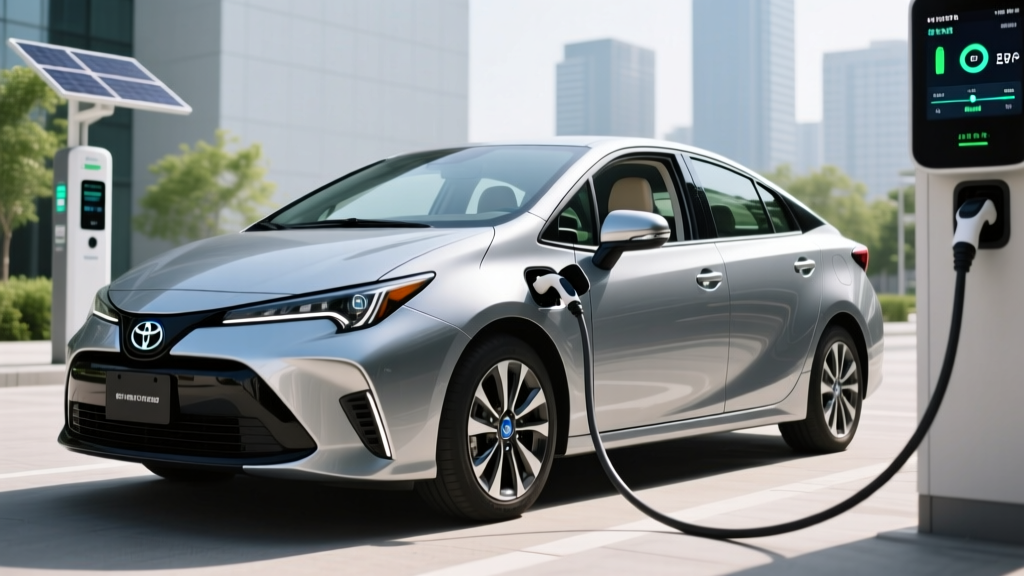
If you want plug-in capability from Toyota, you'll need to look at PHEV models like the RAV4 Prime or the Prius Prime. Toyota does not currently offer a Camry PHEV in the U.S. market.
Fuel Economy: How Many MPG Does the Camry Hybrid Get?
This is where the hybrid-only strategy pays dividends. According to fueleconomy.gov, the EPA estimates for the 2025–2026 Camry Hybrid are:
| Trim / Drivetrain | City MPG | Highway MPG | Combined MPG |
|---|---|---|---|
| LE (FWD) | 53 | 50 | 51 |
| SE / XLE (FWD) | 48 | 47 | 47 |
| LE / SE / XLE (AWD) | 49–51 | 47–49 | 48–50 |
The LE trim with front-wheel drive achieves an outstanding 51 MPG combined — making it one of the most fuel-efficient midsize sedans on the market, regardless of powertrain type.
Real-World MPG vs. EPA Estimates
Hybrids tend to exceed their EPA ratings in city driving because stop-and-go traffic maximizes regenerative braking and electric-motor assist. In our experience and in owner reports aggregated by fuel-tracking platforms:
- City driving: Many owners report 52–56 MPG in the LE FWD — slightly above the 53 MPG EPA city figure.
- Highway driving: Expect 44–48 MPG at sustained 70–80 mph speeds. Hybrids are less efficient at constant high speed because the gas engine does most of the work without regen assist.
- Cold weather: In temperatures below freezing, expect a 5–10% reduction (roughly 45–48 MPG combined for the LE) as the engine runs more frequently to provide cabin heat and maintain battery temperature.
For a driver covering 15,000 miles per year at 51 MPG combined and $3.40/gallon regular unleaded, annual fuel cost comes to approximately $1,000. A comparable gas-only midsize sedan averaging 30 MPG combined would cost roughly $1,700 — a savings of about $700 per year with the Camry Hybrid.
Powertrain Specs: What's Under the Hood
| Engine | 2.5L Dynamic Force 4-cylinder (A25A-FXS) |
| Hybrid system | 5th-gen Toyota Hybrid System (THS) |
| Combined net horsepower | 225 hp (FWD) / 232 hp (AWD) |
| Electric motors | 2 motor-generators (FWD); 3 (AWD, with rear motor) |
| Transmission | eCVT (electronically controlled continuously variable) |
| Hybrid battery | Lithium-ion, ~1.6 kWh (not plug-in capable) |
| 0–60 mph | ~7.1 seconds (FWD), ~6.9 seconds (AWD) |
| Drivetrain options | FWD or electronic AWD |
| Fuel requirement | Regular unleaded (87 octane) |
The AWD system is worth noting: it uses a separate rear-axle electric motor (40 hp) rather than a mechanical driveshaft. This "eAWD" system engages automatically when slip is detected and does not significantly impact fuel economy — the AWD LE still achieves 50 MPG combined.
The 225–232 hp output represents a meaningful step up from the previous-generation four-cylinder Camry (203 hp) and provides confident highway merging and passing performance. The eCVT is smooth, though drivers accustomed to stepped automatics may notice the characteristic drone under hard acceleration.
Pricing and Tax Credit Eligibility
Here's what the 2025–2026 Camry Hybrid costs at each trim level (MSRP, before destination):
- LE: ~$28,700
- SE: ~$30,500
- XLE: ~$33,500
- XSE: ~$35,000
AWD adds approximately $1,525 to any trim. Destination charges add roughly $1,100–$1,200.
Does the Camry Hybrid Qualify for a Federal Tax Credit?
No. The Camry Hybrid is a conventional HEV, and the IRS §30D Clean Vehicle Credit applies only to plug-in electric vehicles — battery-electric (BEV) and plug-in hybrid (PHEV) models that meet battery capacity, critical-mineral sourcing, MSRP cap, and buyer income requirements. Conventional hybrids like the Camry do not qualify for the federal $7,500 credit or the $4,000 used-EV credit.
Some states may offer minor incentives for hybrids (reduced registration fees, HOV lane access in certain jurisdictions), but these vary widely. Check your state's DMV or energy office for specifics.
Battery Warranty, Reliability, and Replacement Cost
Toyota Camry Hybrid Battery Coverage
- Hybrid battery warranty: 10 years / 150,000 miles (whichever comes first)
- Hybrid system components warranty: 8 years / 100,000 miles
- Powertrain warranty: 5 years / 60,000 miles
Toyota's hybrid battery warranty is among the best in the industry. The 10-year/150,000-mile coverage applies nationwide (California-emissions states previously had extended coverage, but Toyota standardized the 10/150k term for all 50 states starting with 2020+ models).
Is the Camry Hybrid Reliable?
Toyota's hybrid systems have an exceptional reliability track record. The Prius, now in its fifth generation, has demonstrated hybrid battery lifespans exceeding 200,000 miles with minimal degradation. The Camry Hybrid uses a similar architecture with a smaller, less stressed lithium-ion pack.
Key reliability factors:
- The hybrid battery in a Camry HEV is small (~1.6 kWh) and operates within a narrow state-of-charge window (roughly 40–80%), which dramatically reduces wear compared to a full EV battery cycling from 10–90%.
- The eCVT has no traditional transmission clutches or bands to wear out — it's a planetary gearset that is mechanically simple and durable.
- Regenerative braking reduces wear on the friction brake pads and rotors; many Camry Hybrid owners report original brake pads lasting 80,000+ miles.
Hybrid Battery Replacement Cost
If the hybrid battery does fail outside of warranty — which is uncommon before 200,000 miles based on historical Toyota hybrid data — replacement costs have come down significantly:
- OEM replacement (dealer): $2,500–$4,000 including labor
- Refurbished/remanufactured pack: $1,500–$2,500
- Individual module replacement: Some independent hybrid specialists can replace only the degraded modules within the pack for $800–$1,500
Given the 10-year warranty and the demonstrated longevity of Toyota's hybrid systems, battery replacement should be a low-probability concern for most buyers planning to own the vehicle for a typical 5–8 year cycle.
Camry Hybrid vs. PHEV vs. EV: Which Should You Choose?
Choose the Camry Hybrid (HEV) If:
- You don't have access to home or workplace charging
- You want maximum simplicity — no plugs, no charging apps, no range planning
- You drive a mix of city and highway and want 47–51 MPG without behavior changes
- Your budget is $28,000–$37,000
- You take frequent long road trips and don't want to plan around charging stops
Choose a PHEV (e.g., Prius Prime) If:
- You can charge at home (even a standard 120V outlet works for overnight PHEV charging)
- Your daily commute is under 40 miles round-trip — you could drive mostly on electricity
- You want to reduce gas consumption dramatically while keeping a gas engine for road trips
- You may qualify for the $7,500 federal tax credit (check IRS §30D eligibility)
Choose a Full EV (e.g., Tesla Model 3, Hyundai Ioniq 6) If:
- You have reliable Level 2 home charging (240V)
- You want zero tailpipe emissions and the lowest per-mile "fuel" cost (~$0.04–$0.06/mile on home electricity vs. ~$0.07/mile in the Camry Hybrid)
- You want the $7,500 federal tax credit (or point-of-sale rebate) and your income/vehicle qualifies
- You rarely drive more than 250 miles in a single day, or you're willing to plan DC fast-charging stops on road trips
The Camry Hybrid occupies a compelling middle ground: it delivers hybrid fuel economy with zero lifestyle changes. No charging infrastructure, no range anxiety, no plug-in routine. You simply drive it like a conventional car and it returns 50+ MPG in daily use.
Frequently Asked Questions
Can I still buy a non-hybrid Toyota Camry?
Not new. The 2025 and 2026 Camry is exclusively hybrid. If you want a gas-only Camry, you'll need to look at 2024 or earlier model years on the used market. The outgoing 2024 Camry offered a 2.5L four-cylinder (203 hp, ~28/39 MPG) and a 3.5L V6 (301 hp, ~22/32 MPG).
Does the Camry Hybrid need to be plugged in?
No. The Camry Hybrid is a conventional hybrid (HEV). It charges its own battery through regenerative braking and the gasoline engine. You will never need to plug it in, and it does not have a charging port.
How long will the Camry Hybrid battery last?
Toyota warrants the hybrid battery for 10 years or 150,000 miles. Based on the long track record of Toyota hybrid systems (Prius, Camry, RAV4 Hybrid), many hybrid batteries last well beyond 200,000 miles without needing replacement. The small battery size and conservative charge-window management contribute to this longevity.
Is the Camry Hybrid slower than the old gas model?
No — it's actually quicker. The current Camry Hybrid produces 225 hp (FWD) or 232 hp (AWD), compared to 203 hp for the outgoing base four-cylinder. The 0–60 mph time of roughly 7.1 seconds (FWD) is competitive for the midsize sedan segment, and the electric motor provides instant torque for responsive city driving.
Does the Camry Hybrid qualify for any tax credits?
The Camry Hybrid does not qualify for the federal §30D Clean Vehicle Credit, which is limited to plug-in vehicles (BEVs and PHEVs). Some states may offer minor hybrid incentives, but these vary. Check IRS.gov and your state energy office for current programs.
What about the Toyota Prius — is it a better hybrid?
The current Toyota Prius (redesigned for 2023) achieves up to 57 MPG combined in its LE trim — slightly better than the Camry Hybrid's 51 MPG. However, the Prius is a compact liftback with less rear-seat room and a lower starting price (~$27,950). The Camry offers a larger trunk (15.1 cu ft vs. the Prius's hatchback cargo area), a more refined ride, and available AWD. If maximum fuel economy is the priority, the Prius wins. If you need midsize sedan space and comfort, the Camry Hybrid is the stronger pick.
Bottom Line
The question "are all new Camrys hybrid?" has a definitive answer: yes, every 2025 and 2026 Toyota Camry is a hybrid. Toyota's decision to go hybrid-only has resulted in a sedan that delivers 47–51 MPG combined across the lineup, more horsepower than the outgoing gas model, standard available AWD, and the same proven reliability that made the Camry a default choice for millions of buyers.
The trade-off is straightforward: no plug-in capability means no electric-only commuting and no federal tax credit. If those matter to you, Toyota's own Prius Prime (PHEV, ~40 miles electric-only, up to $7,500 credit) or a BEV like the Tesla Model 3 may be worth considering. But if you want a no-compromise, no-plug, high-MPG midsize sedan, the hybrid-only Camry is one of the most practical vehicles on the market.