The Hybrid Landscape in 2026: Why the Decision Is Harder Than Ever
Shoppers searching for the advantage and disadvantage of hybrid car ownership are facing a more complex decision in 2026 than at any point in the technology's history. Conventional hybrids (HEVs) have matured into some of the most reliable, efficient vehicles on the road, while plug-in hybrids (PHEVs) have grown their electric-only ranges past 40 miles and qualified for the full $7,500 federal tax credit under IRS §30D rules. Meanwhile, battery electric vehicles (BEVs) continue to push past 300 miles of EPA range with faster charging architectures.
The right choice depends on your driving pattern, home charging access, and budget. This guide breaks down every concrete advantage and disadvantage of hybrid cars — both HEV and PHEV — with exact EPA data, real-world testing notes, and ownership economics so you can match a powertrain to your actual life, not a marketing brochure.
HEV vs PHEV: The Fundamental Difference
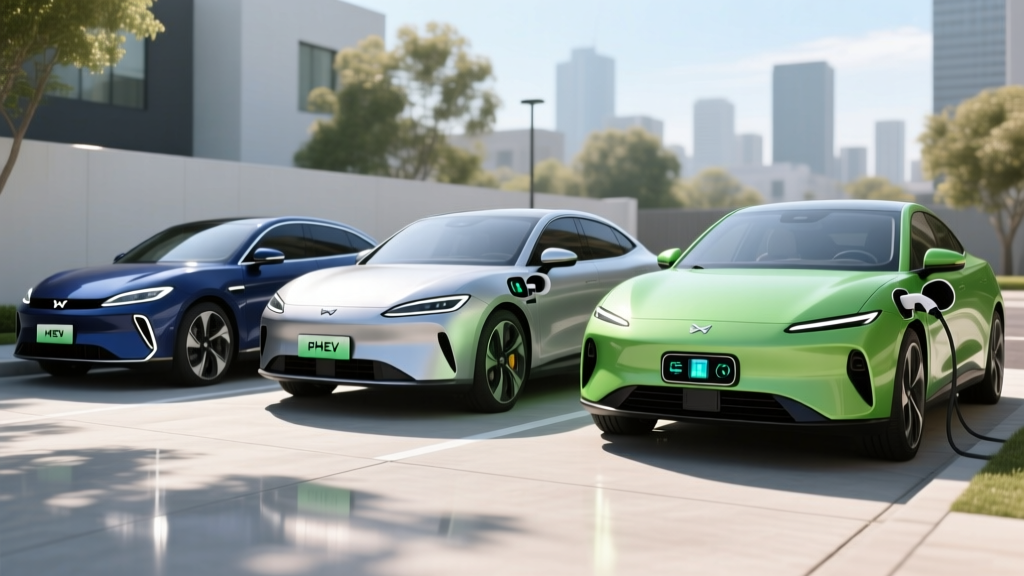
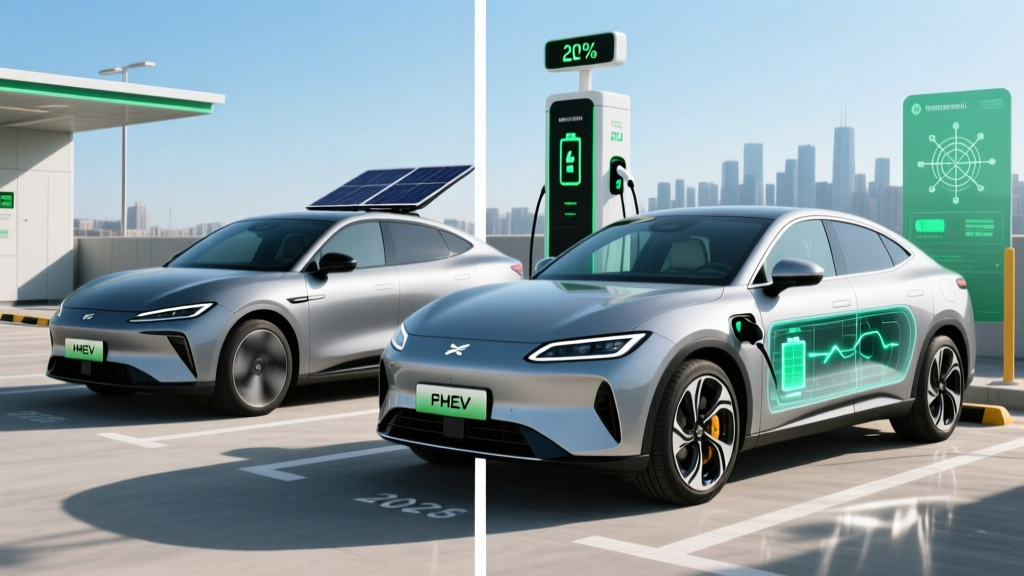
Before weighing pros and cons, the distinction between conventional hybrid and plug-in hybrid must be crystal clear. Confusing these two is the single most common buyer mistake in the hybrid space.
| Feature | Conventional Hybrid (HEV) | Plug-in Hybrid (PHEV) |
|---|---|---|
| Plugs in to charge? | No — charges via regenerative braking and engine | Yes — Level 1 (120V) or Level 2 (240V) |
| Battery size | 0.6–1.6 kWh (small buffer) | 11–20 kWh usable |
| Electric-only range | None (EV assist only, ~1 mi at low speed) | 25–48 miles EPA electric-only |
| Fuel when battery depleted | Runs on gasoline always | Runs on gasoline like a conventional hybrid |
| Federal tax credit (§30D) | Not eligible | Up to $7,500 (if MSRP, income, sourcing rules met) |
| Upfront cost premium over gas model | ~$1,500–$3,000 | ~$4,000–$8,000 (before credit) |
| Home charger required? | No | Highly recommended for daily EV-mode use |
A conventional hybrid like the 2026 Toyota RAV4 Hybrid never plugs in. Its 1.6 kWh nickel-metal-hydride battery captures energy from regenerative braking and the engine to assist acceleration and enable brief low-speed EV driving. You simply fill it with gas and drive — it just uses less gas.
A plug-in hybrid like the 2026 Toyota RAV4 Prime (PHEV) carries an 18.1 kWh lithium-ion battery that provides 42 miles of EPA-rated electric-only range. You plug it in overnight on a standard 120V outlet or a 240V Level 2 charger, drive your commute on electricity, and the gasoline engine is there for road trips — zero range anxiety.
Advantage: Fuel Economy That Beats the EPA Sticker in the City
The headline advantage of hybrid cars is fuel efficiency, and real-world data shows hybrids often exceed their EPA combined rating in stop-and-go urban driving — the opposite of what happens with most gasoline cars.
| Model | Type | City MPG | Highway MPG | Combined MPG | Real-World Note |
|---|---|---|---|---|---|
| Toyota Prius LE | HEV | 57 | 56 | 57 | City drivers often see 58–62 MPG |
| Toyota RAV4 Hybrid | HEV | 41 | 38 | 40 | Highway towing drops to ~30 MPG |
| Honda Accord Hybrid | HEV | 51 | 44 | 48 | Strong city regen; highway slightly under EPA |
| Toyota RAV4 Prime | PHEV | 94 MPGe (EV) | 38 (gas) | 94 MPGe / 38 MPG | 42 mi electric; 38 MPG after depletion |
| Chrysler Pacifica Hybrid | PHEV | 82 MPGe (EV) | 30 (gas) | 82 MPGe / 30 MPG | 32 mi electric; heavier minivan hurts gas MPG |
| Hyundai Tucson PHEV | PHEV | 80 MPGe (EV) | 35 (gas) | 80 MPGe / 35 MPG | 33 mi electric; AWD standard |
Why do hybrids overperform in the city? Regenerative braking converts deceleration into battery charge, and the electric motor handles low-speed driving where gasoline engines are least efficient. On the highway, the advantage narrows because sustained high-speed cruising relies more on the gasoline engine, and aerodynamic drag dominates.
Advantage: Zero Range Anxiety and No Charging Infrastructure Dependency
For HEV buyers, the most underrated advantage of a hybrid car is that it requires absolutely no change to your fueling habits. You visit the same gas stations, fill up in three minutes, and the car handles the efficiency optimization internally. There is no charging cable, no home electrical upgrade, no public charging app, and no 20-minute DC fast-charge stop on road trips.
For PHEV buyers, range anxiety is mitigated in a different way. The 25–48 miles of electric range covers most daily commutes (the U.S. average one-way commute is approximately 16 miles, per Census Bureau data), while the gasoline engine provides 300+ additional miles of total range for road trips. A RAV4 Prime owner charging nightly has a total system range exceeding 600 miles.
Disadvantage: Higher Upfront Purchase Price
The most immediate disadvantage of hybrid cars is the purchase premium. Hybrid powertrains add cost — an electric motor, power electronics, a larger battery, and more complex thermal management.
| Model | Gas MSRP | Hybrid MSRP | Premium | Break-Even (at $3.40/gal, 15k mi/yr) |
|---|---|---|---|---|
| Toyota RAV4 LE vs Hybrid LE | $30,245 | $33,445 | $3,200 | ~4.5 years |
| Honda CR-V LX vs Hybrid Sport | $31,450 | $35,395 | $3,945 | ~5 years |
| Toyota RAV4 Prime (PHEV) | — | $45,440 | ~$12,000 over gas RAV4 | ~3 years with $7,500 credit; ~8 years without |
The break-even calculation is sensitive to gas prices, annual mileage, and — for PHEVs — whether you actually charge daily. A PHEV that is never plugged in is just a heavier, more expensive hybrid, and its fuel economy will be worse than a dedicated HEV due to the weight of the unused battery.
Disadvantage: Battery Degradation and Replacement Cost
Every hybrid buyer's unspoken concern: what happens when the hybrid battery fails? The honest answer is that hybrid battery replacement is expensive but rare within typical ownership periods.
Hybrid Battery Warranty Standards (2026 Model Year)
- Federal mandate: All hybrid and PHEV batteries carry a minimum 8-year/100,000-mile warranty (10 years/150,000 miles in CARB states including CA, NY, MA, WA, OR, and others)
- Toyota: 10 years / 150,000 miles on all hybrid batteries nationwide (exceeds federal minimum)
- Honda: 8 years / 100,000 miles (10/150k in CARB states)
- Hyundai/Kia: 10 years / 100,000 miles on hybrid and PHEV batteries
- Capacity retention threshold: Warranty typically triggers if battery falls below 60–70% of original capacity
Replacement costs if out of warranty: A Toyota Prius hybrid battery replacement runs approximately $2,500–$4,000 at a dealership, with aftermarket and refurbished options available for $1,500–$2,500. PHEV batteries, being larger (11–20 kWh), cost more: $5,000–$9,000 for a RAV4 Prime or Pacifica Hybrid battery. In practice, data from fleet operators and Consumer Reports indicates that most modern hybrid batteries last 150,000–200,000+ miles before significant degradation, and gradual capacity loss is far more common than sudden failure.
For comparison, a conventional gasoline vehicle's transmission replacement averages $3,000–$7,000 — a cost that rarely generates the same anxiety despite being equally plausible.
Advantage: Proven Reliability and Lower Maintenance
Hybrid powertrains, particularly Toyota's Hybrid Synergy Drive, have accumulated over two decades of real-world reliability data. Consumer Reports consistently ranks the Prius and RAV4 Hybrid among the most reliable vehicles in their segments. The reasons are mechanical:
- No traditional starter motor — the electric motor starts the engine, eliminating a common failure point
- Regenerative braking reduces brake wear — brake pads on hybrids routinely last 80,000–100,000 miles because regen handles much of the deceleration
- CVT or e-CVT transmissions — Toyota's planetary-gear e-CVT has no belts, clutches, or bands to wear out, and is widely considered one of the most durable transmission designs in production
- Engine runs less often — reduced engine runtime means less oil contamination and longer intervals between engine-related maintenance
PHEVs share these advantages but add complexity with a larger battery management system and onboard charger. So far, PHEV reliability data from Hyundai/Kia and Toyota shows no systemic failure patterns at the fleet level.
Disadvantage: Performance and Driving Dynamics Trade-Offs
Not every disadvantage of hybrid cars is financial. Some are experiential:
- CVT drone: Many hybrids use continuously variable transmissions that hold the engine at a fixed RPM during hard acceleration, producing a monotonous drone. Toyota's 2023+ Prius and the 2026 RAV4 Hybrid have improved this with simulated shift points, but the characteristic remains.
- Weight penalty: Hybrid components add 150–300 lbs (HEV) or 400–600 lbs (PHEV). This mass is noticeable in cornering and braking feel, particularly in PHEVs.
- Cargo space reduction: PHEV batteries are often mounted under the rear seat or cargo floor, reducing space. The RAV4 Prime loses approximately 3 cubic feet of cargo volume compared to the RAV4 Hybrid. The Pacifica Hybrid loses its Stow 'n Go second-row seating — a significant practical trade-off for a minivan.
- Reduced model availability: High-demand hybrids like the RAV4 Prime and Prius Prime continue to face dealer markups and limited inventory in many markets, making it difficult to purchase at MSRP.
PHEV Tax Credit Eligibility: The $7,500 Question
Conventional hybrids (HEVs) do not qualify for any federal purchase tax credit. PHEVs may qualify for the IRS §30D Clean Vehicle Credit of up to $7,500, but eligibility is governed by a strict set of rules that change based on battery sourcing and income. As of 2026, the following requirements apply:
- MSRP cap: SUVs, pickups, and vans must be under $80,000; sedans and other vehicles under $55,000
- Buyer income cap: Modified AGI must not exceed $300,000 (joint), $225,000 (head of household), or $150,000 (single)
- Battery component sourcing: A percentage of battery components must be manufactured or assembled in North America (threshold increases annually)
- Critical minerals: A percentage of critical minerals must be sourced from the U.S. or free-trade-agreement partners
- Point-of-sale transfer: The credit can be transferred to the dealer at purchase, reducing the sale price directly (effective since Jan 1, 2024)
- FEOC exclusion: Vehicles with battery components from a "foreign entity of concern" (primarily Chinese suppliers) are disqualified
For exact current eligibility, always verify against the IRS Clean Vehicle Credit page and the DOE's qualified vehicle list before purchasing, as sourcing rules have disqualified several previously eligible models.
Advantages of Hybrid Cars (Summary)
- 40–57 MPG combined (HEV); 25–48 mi electric + 30–38 MPG gas (PHEV)
- Zero range anxiety — gas station refueling in 3 minutes
- Lower brake wear, proven long-term reliability
- No home charging required (HEV); optional (PHEV)
- PHEVs eligible for up to $7,500 federal tax credit
- Lower lifetime maintenance cost vs. gas-only vehicles
- Strong resale value, especially Toyota and Honda hybrids
Disadvantages of Hybrid Cars (Summary)
- $1,500–$12,000 purchase premium over gas-only models
- Battery replacement cost: $2,500–$9,000 out of warranty
- CVT drone and less engaging driving dynamics
- PHEV weight reduces cargo space and handling agility
- HEVs not eligible for federal purchase tax credit
- PHEVs lose efficiency advantage if never plugged in
- Limited inventory and dealer markups on popular models
Hybrid vs PHEV vs EV: Which Powertrain Fits Your Life?
The decision between a conventional hybrid, plug-in hybrid, and full battery electric vehicle comes down to three variables: your daily mileage, your charging access, and your road-trip frequency.
| Your Situation | Best Fit | Why |
|---|---|---|
| No home charging, apartment/condo living | HEV | No plug needed; gas station infrastructure only |
| Daily commute under 40 miles, home charging available | PHEV | Drive on electricity daily; gas engine for weekend trips |
| Daily commute under 40 miles, want zero gas use | BEV | Lowest operating cost; no engine maintenance; 250–350 mi range covers most trips |
| Frequent 400+ mile road trips, rural area | HEV or PHEV | Gas infrastructure everywhere; no charging-desert risk |
| Two-car household: one for commute, one for trips | BEV + HEV | BEV for daily driver; HEV for long-trip/backup vehicle |
| Budget-conscious, maximizing MPG per dollar | HEV (Prius, Accord Hybrid) | Lowest upfront cost; 50+ MPG; no charging equipment needed |
Frequently Asked Questions
How many MPG does a hybrid car actually get in real-world driving?
EPA combined ratings for 2026 hybrids range from 35 MPG (larger SUVs like the Highlander Hybrid) to 57 MPG (Prius LE). In real-world city driving, hybrids frequently exceed their EPA rating by 2–5 MPG because regenerative braking is most effective in stop-and-go traffic. On sustained highway driving above 75 mph, expect 2–4 MPG below the EPA highway figure due to aerodynamic drag. Cold weather (below 30°F) reduces MPG by 5–10% as the engine runs more frequently for cabin heat.
For PHEVs, how far can they go on electric only?
Current 2026 PHEVs offer 25–48 miles of EPA-rated electric-only range. The Toyota RAV4 Prime leads at 42 miles, the Prius Prime reaches 44 miles, and the Hyundai Tucson PHEV provides 33 miles. This covers the majority of American daily driving. After the battery depletes, the vehicle operates as a conventional hybrid on gasoline — you are never stranded.
Is a hybrid car reliable, and what does battery replacement cost?
Hybrids from Toyota, Honda, and Hyundai/Kia rank among the most reliable vehicles in long-term Consumer Reports and J.D. Power data. Hybrid batteries carry 8–10 year / 100,000–150,000 mile warranties. Out-of-warranty replacement costs $2,500–$4,000 for HEV batteries and $5,000–$9,000 for PHEV batteries. Most batteries last 150,000+ miles with gradual capacity loss rather than sudden failure.
Does a hybrid qualify for any tax credit?
Conventional hybrids (HEVs) do not qualify for any federal purchase tax credit. Plug-in hybrids (PHEVs) may qualify for up to $7,500 under IRS §30D, subject to MSRP caps ($80,000 for SUVs/trucks, $55,000 for cars), buyer income limits ($150,000–$300,000 depending on filing status), battery sourcing requirements, and FEOC exclusions. The credit can be applied as a point-of-sale discount at the dealer. Always verify current eligibility on irs.gov before purchasing.
What happens if I buy a PHEV but never plug it in?
A PHEV that is never charged operates as a heavier conventional hybrid. You will get the vehicle's "charge-sustaining" MPG rating — for example, the RAV4 Prime returns 38 MPG combined after battery depletion, which is slightly less than the RAV4 Hybrid's 40 MPG due to the Prime's additional 400+ lbs of battery weight. You are paying a significant premium for electric range you are not using. If you cannot charge at home or work, a conventional HEV is the more economical choice.
Hybrid vs EV: which saves more money over 5 years?
It depends on your electricity cost, gas price, and mileage. At 15,000 miles/year and $3.40/gallon gas, a Prius (57 MPG) costs approximately $895/year in fuel. A Tesla Model 3 (4.0 miles/kWh) at $0.14/kWh costs approximately $525/year in electricity — a $370/year savings. However, the Model 3's higher purchase price, potentially higher insurance premiums, and home charger installation cost ($500–$2,000) can offset that savings for the first several years. A PHEV driven mostly on electricity with occasional gas use can split the difference. Run the numbers for your specific utility rate and commute before deciding.