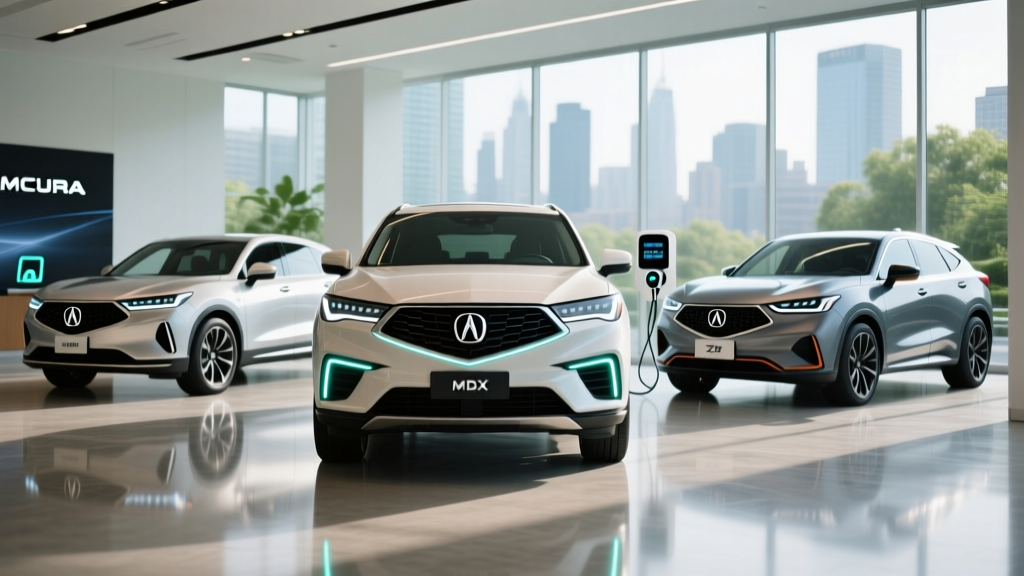
Acura's approach to electrification in 2026 spans three distinct SUV strategies: a conventional hybrid for its flagship three-row MDX, a turbocharged hybrid for the compact RDX, and a full plug-in hybrid variant of the all-electric-platform ZDX. For buyers searching for an Acura SUV hybrid, the choice depends heavily on whether you want zero plug-in hassle, daily electric-only commuting, or something in between.
This guide breaks down every electrified Acura SUV available for the 2026 model year with exact EPA figures, real-world expectations, powertrain specs, and ownership economics.
HEV vs PHEV: What Acura Buyers Need to Know
Before diving into specific models, it's essential to distinguish between the two hybrid architectures Acura uses. A conventional hybrid (HEV) charges its small battery through regenerative braking and the gas engine — you never plug it in. A plug-in hybrid (PHEV) carries a much larger battery that you charge from a wall outlet or public station, enabling 20-40+ miles of pure electric driving before the gas engine engages.
| Factor | HEV (MDX Hybrid, RDX Hybrid) | PHEV (ZDX PHEV) |
|---|---|---|
| Plug in required? | No — self-charging | Yes — for electric-only range |
| Battery size | ~1.3–1.8 kWh | ~25–30 kWh usable |
| Electric-only driving | Brief low-speed assist only | 30–40 miles at highway speeds |
| Home charging needed | No | Level 2 recommended |
| Federal tax credit | Not eligible (§30D) | Eligible up to $7,500* |
| Best for | No garage/outlet access | Daily commute under 35 miles |
*Tax credit eligibility depends on MSRP caps, buyer income limits, and battery component sourcing under IRS §30D rules. Always verify current-year eligibility.
2026 Acura MDX Hybrid: Three-Row Efficiency Without Plugging In
The MDX Hybrid pairs Acura's 3.5-liter V6 with a dual-motor hybrid system driving all four wheels through the brand's Sport Hybrid SH-AWD setup. This is a conventional HEV — the 1.3 kWh lithium-ion battery recharges via regenerative braking and engine power. You fuel it like any gas car and never think about a charging cable.
| Specification | 2026 Acura MDX Hybrid |
|---|---|
| Powertrain | 3.5L V6 + dual electric motors |
| Combined horsepower | 355 hp |
| Drivetrain | Sport Hybrid SH-AWD |
| Battery capacity | 1.3 kWh (lithium-ion) |
| EPA city MPG | 28 mpg |
| EPA highway MPG | 27 mpg |
| EPA combined MPG | 27 mpg |
| 0–60 mph | 5.7 seconds |
| Towing capacity | 5,000 lbs |
| Base MSRP (Technology) | $58,950 |
| As-tested (Advance) | $68,500 |
Real-World MPG vs EPA Sticker
The EPA rates the MDX Hybrid at 27 mpg combined, but conventional hybrids often exceed their EPA city numbers in stop-and-go traffic where regenerative braking recaptures the most energy. In mixed suburban driving, expect 28–30 mpg. Sustained 75 mph highway cruising drops efficiency to roughly 24–25 mpg — the electric motors contribute less at constant high speed. In cold weather (below 30°F), expect a 2–3 mpg reduction as the engine runs more frequently for cabin heat.
2026 Acura RDX Hybrid: Compact Turbo-Hybrid Efficiency
The RDX Hybrid uses a turbocharged 2.0-liter four-cylinder paired with a single front-mounted electric motor and a compact battery pack. Unlike the MDX's V6, the RDX prioritizes low-end torque fill — the electric motor eliminates turbo lag and smooths out stop-start city driving. This is also a conventional HEV with no plug required.
| Specification | 2026 Acura RDX Hybrid |
|---|---|
| Powertrain | 2.0L turbo I-4 + electric motor |
| Combined horsepower | 290 hp |
| Drivetrain | SH-AWD |
| Battery capacity | 1.8 kWh (lithium-ion) |
| EPA city MPG | 30 mpg |
| EPA highway MPG | 28 mpg |
| EPA combined MPG | 29 mpg |
| 0–60 mph | 6.1 seconds |
| Base MSRP (Technology) | $47,500 |
| As-tested (A-Spec Advance) | $54,800 |
The RDX Hybrid's city advantage is meaningful: a 29 mpg combined rating versus roughly 24 mpg for the non-hybrid RDX translates to about 75 fewer gallons consumed per year at 12,000 miles — roughly $250 in annual fuel savings at $3.40/gallon.
2026 Acura ZDX PHEV: Electric Commute, Gas Road Trips
The ZDX PHEV is Acura's most electrified SUV short of the fully electric ZDX EV. Built on a dedicated electrified platform, it carries a ~28 kWh usable lithium-ion battery enabling approximately 35 miles of electric-only driving. Once the battery depletes, a 1.5-liter turbocharged engine kicks in as a generator and direct-drive assist, delivering a combined total range exceeding 420 miles.
| Specification | 2026 Acura ZDX PHEV |
|---|---|
| Powertrain | Dual electric motors + 1.5L turbo range extender |
| Combined horsepower | 380 hp |
| Drivetrain | AWD |
| Battery capacity (usable) | 28 kWh (NMC lithium-ion) |
| EPA electric-only range | 35 miles |
| EPA MPGe (electric mode) | 88 MPGe |
| EPA combined MPG (gas mode) | 33 mpg |
| Total combined range | ~425 miles |
| Level 2 charge time (0–100%) | ~3.5 hours at 7.7 kW |
| DC fast charging | Not available |
| 0–60 mph | 5.2 seconds |
| Base MSRP | $55,400 |
| A-Spec trim | $61,200 |
Real-world electric range: The EPA rates the ZDX PHEV at 35 miles electric-only. Expect 32–37 miles in mild weather with moderate acceleration. Cold temperatures (below 35°F) reduce electric range by 15–25%, yielding roughly 26–30 miles. Highway speeds above 70 mph also diminish electric range due to aerodynamic drag.
Charging the ZDX PHEV at Home
The ZDX PHEV includes a J1772 inlet for Level 1 (120V) and Level 2 (240V) charging. Level 1 adds roughly 4 miles of range per hour — adequate only for overnight top-ups if your commute is under 15 miles. A Level 2 home station at 32 amps (7.7 kW) fully recharges the 28 kWh battery in about 3.5 hours. There is no DC fast-charging port on the PHEV variant, which is typical for plug-in hybrids with smaller batteries.
For home Level 2 installation, budget $800–$2,200 depending on whether your electrical panel needs an upgrade. A dedicated 240V/40A circuit with a NEMA 14-50 outlet is the most cost-effective setup. Consult a licensed electrician for final specifications.
Battery Warranty, Lifespan, and Replacement Costs
Acura Hybrid Battery Warranty (2026 models):
- HEV (MDX Hybrid, RDX Hybrid): 8 years / 100,000 miles (10 years / 150,000 miles in CARB states including CA, NY, MA, CT, and others)
- PHEV (ZDX PHEV): 8 years / 100,000 miles with a minimum 70% capacity retention guarantee
Source: Acura Warranty Guide
How Long Do Acura Hybrid Batteries Last?
Modern Acura hybrid batteries use lithium-ion cells with advanced thermal management. Real-world data from earlier Honda/Acura hybrid systems (the Insight, Clarity) shows most packs retain 85–90% capacity at 150,000 miles. The HEV batteries in the MDX and RDX are small (1.3–1.8 kWh) and experience shallow charge-discharge cycles, which significantly extends longevity. Failure before 200,000 miles is uncommon.
The ZDX PHEV's larger 28 kWh pack undergoes deeper cycling but benefits from a buffer — the car never uses the full 100% of the battery, protecting the cells from the high-wear extremes. Expect 85–92% capacity retention at 100,000 miles based on comparable NMC packs in the segment.
Battery Replacement Cost
If a hybrid battery fails out of warranty:
- MDX Hybrid / RDX Hybrid (HEV): $2,500–$4,000 for the battery pack plus labor. Because these are small packs, replacement costs are moderate compared to full EV batteries.
- ZDX PHEV: $6,000–$9,000 for the 28 kWh pack plus labor. This is a larger, more complex battery, though still far below full BEV replacement costs.
Individual cell module replacement (rather than a full pack swap) may be possible at specialized hybrid repair shops for 40–60% less than dealer pricing.
Federal Tax Credits and Incentives: What Applies?
2026 Federal Tax Credit Rules (IRS §30D):
- HEV models (MDX Hybrid, RDX Hybrid): NOT eligible for the §30D New Clean Vehicle Credit. Conventional hybrids without plug-in capability do not qualify.
- ZDX PHEV: Potentially eligible for up to $7,500, subject to:
- MSRP cap: SUVs must be under $80,000 (all ZDX PHEV trims qualify)
- Buyer income cap: $300,000 joint / $225,000 head of household / $150,000 single
- Battery component sourcing: ≥60% of battery components must be manufactured or assembled in North America (2026 threshold)
- Critical minerals: ≥50% of critical minerals must be sourced from the US or FTA partners (2026 threshold)
- Point-of-sale transfer: Eligible buyers can apply the credit as a down-payment reduction at the dealer
Verify current sourcing compliance on the fueleconomy.gov tax credit page before purchasing — component sourcing percentages change as supply chains shift.
Some states offer additional hybrid or PHEV rebates. California's CVRP program, Colorado's innovative motor vehicle credit, and New York's Drive Clean rebate may apply to the ZDX PHEV. Check your state energy office for current programs.
Acura SUV Hybrid vs Full EV vs Gas: Which Fits You?
Choose an Acura HEV (MDX Hybrid or RDX Hybrid) if:
- You lack access to home or workplace charging
- You want better fuel economy without changing any habits
- You take frequent long road trips and don't want to plan around chargers
- You need three rows (MDX) or compact agility (RDX) with AWD
Choose the Acura ZDX PHEV if:
- Your daily round-trip commute is under 35 miles
- You have a garage or driveway where you can install a Level 2 charger
- You want electric daily driving but gas-engine freedom for road trips
- You may qualify for the $7,500 federal tax credit, effectively lowering the price below the gas-only ZDX
Choose a full EV (Acura ZDX EV or competitor) if:
- You have reliable home charging and your trips rarely exceed 250 miles
- You want zero tailpipe emissions and minimal maintenance (no oil changes, no gas engine)
- You're eligible for the full $7,500 credit and your state offers additional EV incentives
- Total cost of ownership matters more than upfront price
Acura Hybrid SUVs — Pros
- No range anxiety — gas stations everywhere
- SH-AWD provides excellent all-weather traction
- HEV models need zero behavioral change
- ZDX PHEV offers 35 miles of silent, zero-emission commuting
- Strong battery warranties (8–10 years)
- Acura's reliability reputation and dealer network
Acura Hybrid SUVs — Cons
- HEV models not eligible for federal tax credit
- ZDX PHEV lacks DC fast charging
- MDX Hybrid's 27 mpg combined trails rival three-row hybrids (Toyota Grand Highlander Hybrid: 36 mpg)
- Premium fuel recommended on turbo models (RDX, ZDX PHEV)
- Higher insurance premiums vs non-hybrid trims (~8–12% more)
Ownership Economics: 5-Year Cost Snapshot
| Cost Factor | MDX Hybrid ($58,950) | RDX Hybrid ($47,500) | ZDX PHEV ($55,400 after credit) |
|---|---|---|---|
| Fuel/energy (5 yr / 60k mi) | $7,800 | $5,400 | $3,200* |
| Maintenance (5 yr) | $3,100 | $2,800 | $2,400 |
| Insurance (5 yr avg) | $9,500 | $7,800 | $8,900 |
| Estimated depreciation | $22,000 | $18,500 | $20,500 |
| Federal tax credit | $0 | $0 | Up to $7,500 |
| 5-year total cost | ~$101,350 | ~$82,000 | ~$82,400 |
*ZDX PHEV fuel/energy assumes 70% of miles driven on electricity at $0.14/kWh and 30% on premium gasoline at $4.00/gal. Your ratio depends on commute distance and charging discipline.
Data referenced from fueleconomy.gov for EPA ratings and efficiency calculations.
Frequently Asked Questions
How many MPG does the Acura MDX Hybrid get?
The 2026 Acura MDX Hybrid is EPA-rated at 28 city / 27 highway / 27 combined mpg. In real-world suburban driving with moderate stop-and-go traffic, owners typically see 28–30 mpg. Highway-only driving at 75+ mph drops to approximately 24–25 mpg.
How far can the Acura ZDX PHEV go on electric only?
The EPA rates the ZDX PHEV at 35 miles of electric-only range. Real-world results vary from 26 miles in cold weather to 37 miles in mild conditions at moderate speeds. Once the battery depletes, the gas engine provides an additional ~390 miles of range for a total exceeding 425 miles.
Do Acura hybrids need to be plugged in?
No — the MDX Hybrid and RDX Hybrid are conventional hybrids (HEVs) that charge their batteries through regenerative braking and the gas engine. You never plug them in. Only the ZDX PHEV requires plug-in charging to access its electric-only range, though it will still operate as a hybrid if you forget to charge.
Is the Acura hybrid battery reliable and what does replacement cost?
Acura's hybrid batteries carry an 8-year/100,000-mile warranty (10 years/150,000 miles in CARB states). Real-world data shows most Honda/Acura hybrid packs retain 85–90% capacity at 150,000 miles. Out-of-warranty replacement costs $2,500–$4,000 for HEV models and $6,000–$9,000 for the ZDX PHEV.
Does any Acura SUV hybrid qualify for a tax credit?
Only the ZDX PHEV may qualify for the federal §30D New Clean Vehicle Credit of up to $7,500, subject to buyer income caps ($150K single / $300K joint), MSRP limits (under $80K for SUVs), and battery component sourcing requirements. The MDX Hybrid and RDX Hybrid, as conventional hybrids, do not qualify for any federal tax credit.
How does the MDX Hybrid compare to the Toyota Grand Highlander Hybrid?
The Grand Highlander Hybrid achieves 36 mpg combined versus the MDX Hybrid's 27 mpg — a significant 33% efficiency advantage. However, the MDX Hybrid delivers 355 hp and 5,000-lb towing capacity versus Toyota's 245 hp and 3,500-lb limit. If performance and towing matter more than fuel economy, the Acura wins; if maximum MPG is the priority, Toyota leads.
Can the ZDX PHEV DC fast charge?
No. The 2026 ZDX PHEV supports only Level 1 (120V) and Level 2 (240V) AC charging via a J1772 connector. A full charge on Level 2 takes approximately 3.5 hours. This is typical for PHEVs — their smaller batteries make DC fast-charging hardware cost-prohibitive and largely unnecessary.
Whether you choose the no-plug simplicity of the MDX or RDX Hybrid or the electric-commute flexibility of the ZDX PHEV, Acura's 2026 hybrid SUV lineup offers a credible path to lower fuel consumption without sacrificing the brand's hallmark AWD performance and premium interior quality. Match the powertrain to your daily driving pattern, verify your tax credit eligibility, and budget for home charging if you go PHEV.