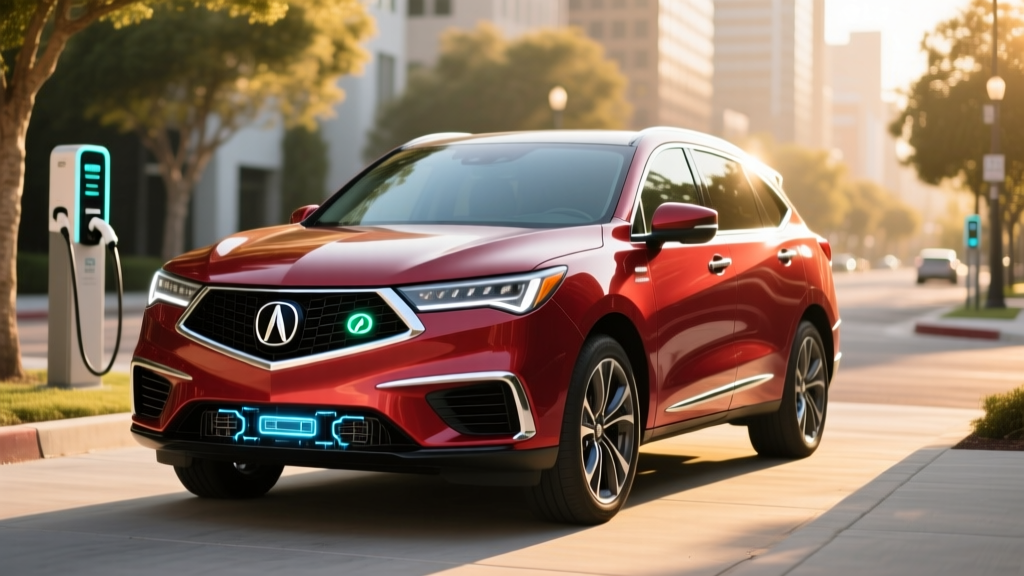
If you've searched for Acura MDX hybrid MPG ratings, you've likely hit a wall: Acura does not currently sell a hybrid version of its three-row luxury SUV in the United States. The 2026 MDX lineup is powered exclusively by turbocharged gasoline engines. That reality shapes this guide — we'll cover what Acura actually offers, why the MDX hybrid was discontinued, what MPG you can expect from the current powertrains, and which hybrid or plug-in hybrid three-row SUVs from rival brands actually deliver the fuel economy you're looking for.
Whether you're a current MDX owner hoping for a hybrid refresh or a cross-shopping buyer weighing Acura against the Toyota Grand Highlander Hybrid, BMW X5 xDrive50e, or Volvo XC90 Recharge, this guide gives you the exact numbers to make a data-driven decision.
Does a 2026 Acura MDX Hybrid Exist?
No. The 2026 Acura MDX is offered only with internal combustion engines. Acura previously sold the MDX Sport Hybrid (model years 2017–2020), which paired a 3.0-liter V6 with a three-motor system for a combined EPA rating of 26–27 MPG. That variant was discontinued after the third-generation MDX ended production, and Acura has not reintroduced a hybrid or plug-in hybrid (PHEV) variant for the current fourth-generation platform (2022–present).
Acura's parent company, Honda, has signaled a broader electrification strategy — including new hybrid systems rolling out across the Honda and Acura lineups through the late 2020s. However, as of the 2026 model year, no MDX hybrid or MDX PHEV has been officially announced. Any future hybrid MDX would likely use Honda's next-generation two-motor hybrid system, but specs remain speculative until Acura confirms a product plan.
HEV vs. PHEV — What's the Difference?
Conventional Hybrid (HEV): Uses a small battery (typically 1–2 kWh) recharged by regenerative braking and the gasoline engine. You never plug it in. Fuel economy improves 20–40% over a gas-only equivalent. Example: Toyota Grand Highlander Hybrid.
Plug-in Hybrid (PHEV): Carries a larger battery (15–30 kWh) that you charge via a wall outlet or public charger, providing 20–50 miles of electric-only driving before the gas engine engages. Example: BMW X5 xDrive50e. PHEVs qualify for the federal §30D tax credit if they meet battery-sourcing, MSRP, and income requirements; conventional HEVs do not.
2026 Acura MDX Powertrain Specs and EPA MPG
Since no hybrid MDX exists, here are the exact EPA fuel-economy figures for every 2026 MDX powertrain, sourced from fueleconomy.gov:
| Trim / Powertrain | Engine | HP | City MPG | Hwy MPG | Combined MPG |
|---|---|---|---|---|---|
| MDX (FWD) | 2.0L Turbo I4 | 257 | 19 | 26 | 22 |
| MDX (SH-AWD) | 2.0L Turbo I4 | 257 | 19 | 25 | 21 |
| MDX Type S | 3.0L Turbo V6 | 355 | 17 | 21 | 19 |
| Discontinued: MDX Sport Hybrid (2020) | 3.0L V6 + 3-Motor | 321 | 26 | 27 | 26 |
Real-world MPG note: Turbocharged engines in heavy SUVs are sensitive to driving style. Expect the SH-AWD model to return 19–21 MPG combined in mixed suburban/highway use. In stop-and-go city traffic, turbo engines without hybrid assist lose efficiency — you may see 16–17 MPG on short urban trips. This is precisely where a conventional hybrid system (which recaptures energy through regenerative braking and can run the electric motor at low speeds) delivers its biggest advantage, often beating EPA city estimates by 2–4 MPG in real-world driving.
Why the MDX Sport Hybrid Was Discontinued
The third-motor SH-AWD hybrid system in the 2017–2020 MDX Sport Hybrid was complex and costly to produce. It delivered a modest 5 MPG improvement over the gas V6 model but added roughly $2,000 to the MSRP and several hundred pounds of weight. As Acura shifted its performance branding toward turbocharged engines (the 2.0L turbo and 3.0L turbo V6), the hybrid was deprioritized.
Honda's corporate strategy also pivoted: the company invested heavily in its e:HEV two-motor hybrid system for mainstream models (Accord, CR-V) and directed its BEV efforts toward the Prologue (built on GM's Ultium platform). A next-generation MDX hybrid, if it arrives, will likely use a simpler and more cost-effective two-motor system rather than the torque-vectoring three-motor setup.
Hybrid and PHEV Three-Row SUV Alternatives: Spec Comparison
If fuel economy is your priority in a luxury or near-luxury three-row SUV, here's how the leading hybrid and PHEV competitors stack up against the 2026 MDX. Data sourced from fueleconomy.gov and manufacturer specifications.
| Vehicle | Type | Combined MPG / MPGe | EV Range (mi) | Total HP | Battery (kWh) | Base MSRP |
|---|---|---|---|---|---|---|
| 2026 Acura MDX SH-AWD | Gas | 21 MPG | — | 257 | — | $52,400 |
| Toyota Grand Highlander Hybrid MAX | HEV | 27 MPG | — | 362 | ~1.4 (NiMH) | $54,415 |
| Kia Sorento PHEV | PHEV | 79 MPGe / 34 MPG gas | 32 | 261 | 13.7 (NMC) | $51,090 |
| BMW X5 xDrive50e | PHEV | 50 MPGe / 22 MPG gas | 38 | 483 | 25.7 (NMC) | $73,800 |
| Volvo XC90 Recharge | PHEV | 55 MPGe / 24 MPG gas | 33 | 455 | 18.6 (NMC) | $76,850 |
Key takeaway: The Toyota Grand Highlander Hybrid MAX is the closest substitute for a hypothetical MDX hybrid — it seats seven, offers AWD, and returns 27 MPG combined without ever needing a plug. For luxury-badge buyers, the BMW X5 xDrive50e and Volvo XC90 Recharge deliver 33–38 miles of electric-only commuting before the gas engine kicks in.
PHEV Charging, Battery, and Electric-Only Range Explained
If you're considering a PHEV alternative to the MDX, understanding charging logistics is essential. Unlike full EVs, PHEVs do not require DC fast charging — and most don't support it.
| PHEV Model | Battery (kWh usable) | EV Range (EPA) | Level 1 (120V) Full Charge | Level 2 (240V) Full Charge | DC Fast Charge |
|---|---|---|---|---|---|
| Kia Sorento PHEV | 13.7 | 32 mi | ~11 hrs | ~3.5 hrs | No |
| BMW X5 xDrive50e | 25.7 | 38 mi | ~20 hrs | ~5 hrs (7.4 kW) | No |
| Volvo XC90 Recharge | 18.6 | 33 mi | ~14 hrs | ~5 hrs (3.7 kW) | No |
Practical charging reality: PHEV batteries are small enough that a standard 120V household outlet can replenish a Kia Sorento PHEV overnight (~11 hours). A Level 2 home charger (240V, typically 32–48 amps) cuts that to 3–5 hours — easily enough to start every morning with a full battery. None of these PHEVs support DC fast charging, which is fine: you're topping up a 13–26 kWh battery, not a 80+ kWh EV pack. A Level 2 installation typically costs $800–$2,000 including equipment and electrician labor, depending on panel proximity and local permit fees.
Federal Tax Credits: Do Hybrids or PHEVs Qualify?
Under the current IRS §30D Clean Vehicle Credit rules:
- Conventional hybrids (HEVs): Do NOT qualify for the federal §30D tax credit. The credit requires a minimum battery capacity of 7 kWh and plug-in capability.
- Plug-in hybrids (PHEVs): May qualify for up to $7,500, but eligibility depends on meeting all of the following criteria:
- MSRP cap: SUVs must have an MSRP at or below $80,000.
- Buyer income cap: Modified adjusted gross income must not exceed $150,000 (single), $225,000 (head of household), or $300,000 (joint).
- Battery sourcing: Critical minerals and battery components must meet phased-in domestic-sourcing thresholds that tighten annually through 2030.
- Final assembly: Vehicle must be assembled in North America.
- Point-of-sale transfer: As of 2024, eligible buyers can transfer the credit to the dealer at purchase, reducing the sale price directly rather than waiting for a tax refund.
Current PHEV eligibility snapshot (2026 model year): The Kia Sorento PHEV (assembled in Georgia) has historically qualified for partial or full credit depending on battery-sourcing compliance — verify current status at fueleconomy.gov before purchasing. The BMW X5 xDrive50e (assembled in South Carolina) and Volvo XC90 Recharge (assembled in Sweden) face different sourcing and assembly constraints; the XC90's non-North-American assembly generally disqualifies it from §30D. Always confirm with your dealer and a tax professional before relying on credit eligibility.
Battery Warranty, Reliability, and Replacement Cost
Hybrid & PHEV Battery Warranty Standards
Federal law mandates that hybrid and PHEV batteries carry a minimum warranty of 8 years / 100,000 miles. In California Air Resources Board (CARB) states — which include CA, CO, CT, ME, MD, MA, NJ, NY, OR, RI, VT, and WA — the warranty extends to 10 years / 150,000 miles.
Replacement cost if out of warranty:
- Conventional hybrid (HEV) battery: $2,000–$4,500 (e.g., Toyota Grand Highlander)
- PHEV battery pack: $5,000–$12,000 depending on capacity (e.g., BMW X5 xDrive50e at the higher end)
Real-world longevity: Modern hybrid batteries (especially NiMH in Toyota HEVs and NMC lithium-ion in PHEVs) routinely last 150,000–200,000+ miles with minimal degradation. Toyota's hybrid system in particular has an extensive reliability track record spanning two decades. PHEV batteries experience slightly more stress due to deeper charge/discharge cycles, but thermal management systems in BMW and Volvo PHEVs mitigate this effectively.
For the current gas-only 2026 Acura MDX, there is no hybrid battery to worry about — but you also miss out on the efficiency gains and regenerative braking benefits that extend brake life in hybrid vehicles. The MDX's conventional 12V starter battery follows standard automotive replacement intervals (3–5 years, $200–$350).
Hybrid vs. PHEV vs. Full EV: Which Is Right for You?
Choose Based on Your Driving Pattern
Choose a conventional hybrid (HEV) if: You want better MPG without changing your routine. No plug, no range anxiety, just 25–30+ MPG in a three-row SUV. Best for apartment dwellers without charging access, frequent road-trippers, and those who want simplicity. Top pick: Toyota Grand Highlander Hybrid (27 MPG combined, $54,415).
Choose a plug-in hybrid (PHEV) if: You have home charging (garage or driveway with a 120V or 240V outlet) and a commute under 35 miles. You'll drive on electricity most weekdays and use gas only for longer trips. You also want the potential §30D tax credit. Top pick: BMW X5 xDrive50e (38 mi EV range, 483 HP, $73,800) or Kia Sorento PHEV (32 mi, $51,090) for budget-conscious buyers.
Choose a full EV (BEV) if: You have reliable home Level 2 charging, your daily driving is under 250 miles, and you want zero tailpipe emissions with minimal maintenance. Three-row EV options are growing (Kia EV9, Rivian R1S) but carry higher upfront costs. Top pick: Kia EV9 (EPA range up to 304 mi, starting ~$54,900).
Real-World Ownership Costs: MDX Gas vs. Hybrid Alternatives
| 5-Year Cost (est.) | Acura MDX SH-AWD (21 MPG) | Grand Highlander Hybrid (27 MPG) | Kia Sorento PHEV (79 MPGe) |
|---|---|---|---|
| Purchase Price | $52,400 | $54,415 | $51,090 |
| Federal Tax Credit | $0 | $0 | Up to $7,500* |
| Fuel/Energy (75,000 mi) | $12,500 | $9,720 | $5,200** |
| Est. Maintenance | $3,200 | $2,800 | $2,500 |
| Net 5-Year Cost | $68,100 | $66,935 | $51,290 |
*Assumes full §30D eligibility. Verify at irs.gov. **Assumes 70% of miles driven on electricity at $0.14/kWh national average, 30% on gasoline at $3.50/gal. Fuel costs based on 15,000 miles/year.
The Sorento PHEV's tax credit and low electricity costs create a dramatic 5-year advantage — roughly $17,000 less than the MDX SH-AWD. The Grand Highlander Hybrid saves modestly on fuel without any charging infrastructure requirement. These numbers shift based on your local electricity rate, gas prices, and credit eligibility, but the directional math is clear: electrification pays off over time.
What to Watch: Will Acura Bring Back the MDX Hybrid?
Honda has committed to introducing its next-generation hybrid systems across more models, and Acura has confirmed that electrified vehicles will represent a growing share of its lineup by 2030. The most likely scenario for an MDX hybrid involves Honda's new two-motor system, potentially paired with the 2.0L turbo engine, targeting 28–30 MPG combined. A PHEV variant is also possible but would require a larger battery investment and North American battery sourcing to qualify for tax credits.
Until Acura makes an official announcement, any MDX hybrid specs discussed online are speculative. We'll update this guide when confirmed information becomes available.
✓ Reasons to Choose the Current MDX
- Best-in-class SH-AWD torque-vectoring handling
- Strong resale value and Acura reliability record
- Spacious third row and premium interior at a competitive price
- No charging logistics required
✗ Reasons to Look at Hybrid Alternatives
- 21 MPG combined is below-average for a $52K+ SUV in 2026
- No hybrid or PHEV option means higher fuel costs long-term
- No federal tax credit eligibility (gas-only)
- Competitors offer 27 MPG (HEV) or 32–38 mi EV range (PHEV)
Frequently Asked Questions
How many MPG does the Acura MDX get?
The 2026 Acura MDX with SH-AWD achieves an EPA-estimated 19 city / 25 highway / 21 combined MPG. The FWD model gets 19/26/22 MPG. The performance-oriented Type S drops to 17/21/19 MPG. There is no hybrid MDX available for the 2026 model year.
Does the Acura MDX come as a hybrid or plug-in hybrid?
No. Acura discontinued the MDX Sport Hybrid after the 2020 model year. The 2026 MDX is available only with turbocharged gasoline engines. No hybrid or PHEV variant has been announced.
What is the best hybrid three-row SUV alternative to the MDX?
The Toyota Grand Highlander Hybrid MAX (27 MPG combined, 362 HP, $54,415) is the closest substitute in size and seating. For luxury-brand buyers, the BMW X5 xDrive50e PHEV (38 mi EV range, $73,800) or Volvo XC90 Recharge (33 mi, $76,850) offer plug-in capability with premium interiors.
Do hybrid SUVs qualify for the federal tax credit?
Conventional hybrids (HEVs) do not qualify for the §30D federal tax credit. Only plug-in hybrids (PHEVs) and full EVs with at least 7 kWh of battery capacity are potentially eligible, subject to MSRP caps ($80,000 for SUVs), buyer income limits, battery-sourcing requirements, and North American final assembly rules. Check current eligibility at irs.gov.
How long do hybrid batteries last and what does replacement cost?
Modern hybrid batteries are designed to last the life of the vehicle — 150,000 to 200,000+ miles is typical. Federal law mandates an 8-year/100,000-mile hybrid battery warranty (10 years/150,000 miles in CARB states). Out-of-warranty replacement costs range from $2,000–$4,500 for conventional hybrids to $5,000–$12,000 for PHEVs.
Is it worth waiting for a future Acura MDX hybrid?
There is no confirmed timeline for an MDX hybrid. If fuel economy is a priority now, the Toyota Grand Highlander Hybrid or a PHEV like the Kia Sorento or BMW X5 are proven alternatives available today. If you're committed to the Acura brand and can accept 21 MPG, the current MDX remains a strong luxury SUV — just not an efficient one.