Does a 2026 Acura MDX Hybrid Actually Exist?
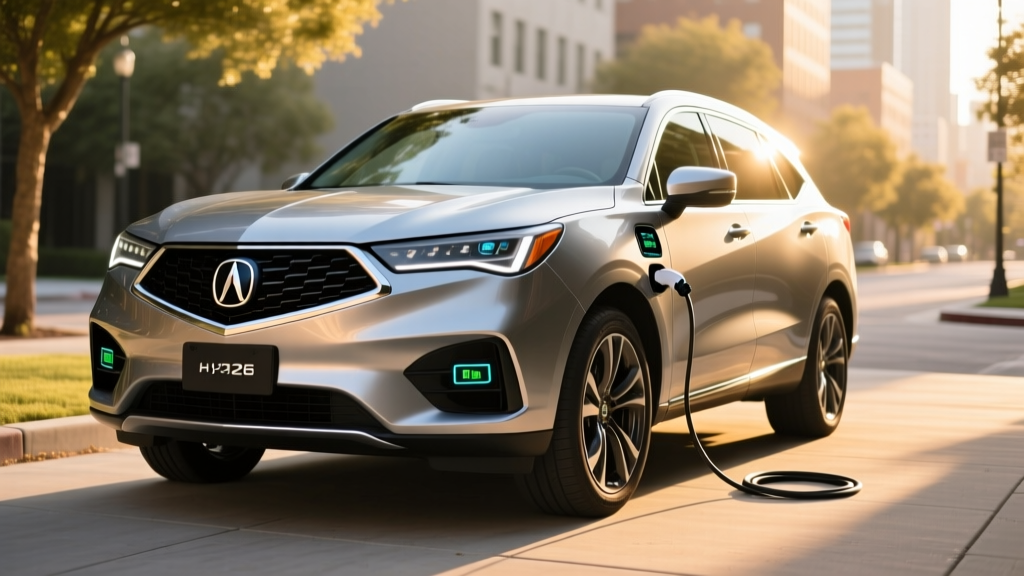
If you've been searching for an Acura MDX 2026 hybrid, here's the critical context you need before visiting a dealer: as of the 2026 model year, Acura has not released a hybrid or plug-in hybrid variant of the current-generation MDX (introduced for 2022). The third-generation MDX continues to be sold exclusively with a 3.5-liter V6 gasoline engine or, in Type S trim, a 3.0-liter turbocharged V6. The previous MDX Sport Hybrid — which paired a 3.0-liter V6 with a three-motor SH-AWD system — was discontinued after the 2020 model year.
That said, Honda's broader electrification strategy signals that a hybrid MDX is increasingly likely for a mid-cycle refresh or next generation. Honda has committed to offering hybrid versions across its core SUV lineup, and the current MDX platform is engineered to accommodate electrified powertrains. Industry reports suggest a hybrid MDX could arrive as early as the 2027 model year, potentially borrowing architecture from Honda's latest two-motor hybrid system.
This guide covers what we know, what a hybrid MDX would need to deliver to compete, and how the current gas MDX stacks up on efficiency — plus which hybrid and PHEV three-row SUVs you can actually buy today.
Current 2026 Acura MDX: Fuel Economy Baseline
Before projecting hybrid numbers, let's establish the gas-only MDX efficiency baseline. According to fueleconomy.gov, the 2026 MDX with front-wheel drive delivers:
| Drivetrain | City MPG | Highway MPG | Combined MPG | Annual Fuel Cost* |
|---|---|---|---|---|
| FWD (3.5L V6) | 19 | 26 | 22 | ~$2,450 |
| SH-AWD (3.5L V6) | 19 | 25 | 21 | ~$2,570 |
| Type S SH-AWD (3.0L Turbo V6) | 17 | 21 | 19 | ~$2,840 |
*Based on 15,000 miles/year at $3.60/gallon regular (FWD/SH-AWD) or premium (Type S). Your costs will vary with local fuel prices.
In real-world mixed driving, owners consistently report 21-23 MPG combined for the FWD model, with highway-heavy commutes occasionally touching 26-27 MPG. City-heavy driving in traffic typically drops to 17-18 MPG. These figures put the MDX in the middle of the luxury three-row SUV segment — behind the BMW X5 xDrive45e PHEV but ahead of the V8-powered competition.
HEV vs PHEV: What a Hybrid MDX Could Look Like
When Acura eventually introduces a hybrid MDX, buyers will likely face a choice between two architectures. Here's how they differ:
Conventional Hybrid (HEV)
- No plug required — the battery charges via regenerative braking and the engine
- Small battery: typically 1.0-2.0 kWh
- Electric-only driving: very limited, usually under 1 mile at low speeds
- Efficiency gain: 30-40% better MPG than gas-only, especially in city driving
- Example: Toyota Highlander Hybrid (36 MPG combined)
Plug-in Hybrid (PHEV)
- Plugs in to charge — Level 1 (120V) or Level 2 (240V) charging
- Larger battery: typically 15-25 kWh usable
- Electric-only range: 25-45 miles before the engine kicks in
- Efficiency: 50+ MPGe on electric, then HEV-level MPG after depletion
- Example: BMW X5 xDrive50e (38 miles electric, 50 MPGe)
The previous MDX Sport Hybrid used a conventional HEV setup with a 1.4 kWh lithium-ion pack and three electric motors integrated into the SH-AWD system. It achieved an EPA 26 MPG combined — a modest 4 MPG improvement over the gas model. A modern hybrid MDX would need to significantly beat that figure to justify the premium.
If Acura follows Honda's current direction, a next-generation hybrid MDX would likely use the brand's latest two-motor hybrid system (as seen in the Accord Hybrid and CR-V Hybrid), which delivers stronger electric-only low-speed operation and more seamless engine engagement. A PHEV variant is also plausible given Honda's stated electrification goals and the competitive pressure from plug-in luxury SUVs.
Projected Specs: What a 2027+ Hybrid MDX Would Need
Based on Honda's current hybrid architecture and the competitive landscape, here's what a next-generation hybrid MDX would likely deliver. These are projected/estimated figures based on industry analysis — not confirmed Acura specifications:
| Specification | HEV Variant (Est.) | PHEV Variant (Est.) |
|---|---|---|
| Powertrain | 2.0L turbo + 2-motor hybrid | 2.0L turbo + 2-motor + larger battery |
| Combined Horsepower | ~290-320 hp | ~340-380 hp |
| Battery Capacity | ~1.5 kWh (NiMH or Li-ion) | ~18-22 kWh usable (Li-ion) |
| EPA Combined MPG | ~28-32 MPG | ~27 MPG (after battery depletion) |
| MPGe (PHEV only) | N/A | ~55-65 MPGe |
| Electric-Only Range (PHEV) | N/A | ~30-40 miles |
| Level 2 Charge Time (PHEV) | N/A | ~2.5-3.5 hours (7.2 kW onboard charger) |
| DC Fast Charging | No | Unlikely (most PHEVs lack DCFC) |
| 0-60 mph | ~6.5-7.0 sec | ~5.5-6.0 sec |
| Estimated Starting MSRP | ~$55,000-$58,000 | ~$62,000-$66,000 |
For context, the Honda CR-V Hybrid currently achieves 40 city / 35 highway / 37 combined MPG using Honda's latest two-motor system. Scaling that efficiency to a 4,500-pound three-row SUV with Acura's premium insulation and features would likely yield high-20s to low-30s combined.
Real-World MPG: What Hybrid Owners Actually See
One of the most consistent patterns across hybrid SUVs is that real-world city MPG often exceeds the EPA estimate, while highway MPG may fall slightly short. This is the opposite of gas-only vehicles, and it's because hybrids recapture energy through regenerative braking in stop-and-go traffic — energy that gas vehicles simply waste as heat in the brake pads.
Based on owner data from hybrid SUVs in the MDX's class:
- City driving: Expect 1-3 MPG above EPA. Hybrids thrive at 20-40 mph with frequent stops.
- Highway driving: Expect 1-2 MPG below EPA at 75+ mph. Aerodynamic drag dominates, and the electric motor provides less benefit.
- Cold weather penalty: 10-15% MPG reduction in sub-30°F conditions. The engine runs more often to provide cabin heat and maintain battery temperature.
- Combined real-world: Most three-row hybrid SUV owners report within ±2 MPG of the EPA combined figure over a full year of mixed driving.
For a PHEV variant, the real-world calculus depends heavily on your daily commute. If you drive 30 miles round-trip and charge nightly, you might use zero gasoline for weeks. If you regularly take 200-mile road trips without charging, you'll see the post-depletion MPG figure — which is essentially conventional hybrid efficiency.
Tax Credits: Does a Hybrid MDX Qualify?
This is where the distinction between HEV and PHEV becomes financially significant.
Conventional Hybrid (HEV): No Federal Tax Credit
Under current IRS §30D rules, conventional hybrids do not qualify for the federal clean vehicle tax credit. The credit applies only to battery electric vehicles (BEVs) and plug-in hybrids (PHEVs) with a battery capacity of at least 7 kWh. A conventional HEV's small battery pack doesn't meet this threshold.
Plug-in Hybrid (PHEV): Potential Up to $7,500
A PHEV MDX could qualify for a federal tax credit of up to $7,500 under IRS §30D, but only if it meets all of the following requirements (current for 2026):
- MSRP cap: SUVs must be priced at or below $80,000
- Buyer income cap: AGI ≤ $300,000 (joint), $225,000 (head of household), $150,000 (individual)
- Battery sourcing: Critical minerals and battery components must meet escalating domestic-content thresholds — for 2026, these requirements are stringent
- Assembly: Final assembly must occur in North America
- Point-of-sale transfer: The credit can be transferred to the dealer at purchase, reducing the sale price directly
Given that the MDX is assembled in East Liberty, Ohio, the North American assembly requirement would likely be satisfied. However, battery sourcing rules remain the wildcard — many PHEVs from Japanese automakers have struggled to meet the critical-minerals threshold. Always verify current eligibility on fueleconomy.gov before purchasing, as qualified vehicle lists are updated regularly.
Some states offer additional rebates for PHEVs. California's CVRP, for instance, has offered up to $1,000-$2,000 for qualifying PHEVs depending on income. Check your state's energy office for current programs.
Battery Warranty, Reliability, and Replacement Costs
Hybrid Battery Warranty Standard
Federal law mandates that hybrid and PHEV battery packs carry a minimum warranty of 8 years / 100,000 miles (10 years / 150,000 miles in CARB states like California, New York, and others). Honda/Acura has historically met or exceeded this requirement.
The previous MDX Sport Hybrid's IMA battery carried a 10-year/100,000-mile warranty in all states. Acura owners can reasonably expect similar or better coverage on a future hybrid MDX.
On reliability: Honda's hybrid systems have proven among the most durable in the industry. The two-motor system in the Accord Hybrid and CR-V Hybrid has accumulated millions of real-world miles with minimal battery-related failures. Degradation in modern lithium-ion hybrid packs is typically 10-15% over 10 years — not enough to noticeably affect MPG, since the engine remains the primary power source.
Battery replacement cost: If a hybrid battery does need replacement out of warranty, expect:
- HEV battery: $2,000-$4,000 (small pack, simpler chemistry)
- PHEV battery: $6,000-$12,000 (larger pack, more cells)
For comparison, a full EV battery replacement can run $10,000-$20,000+. Hybrid batteries are smaller and less expensive to replace, and they tend to last the life of the vehicle in most cases. According to IIHS and long-term owner surveys, hybrid battery failure before 150,000 miles is uncommon in Honda/Acura products.
Competitors You Can Buy Today
If you need a three-row hybrid or PHEV SUV now, here's how the current alternatives compare:
| Model | Type | Combined MPG / MPGe | Electric Range | Starting MSRP |
|---|---|---|---|---|
| Toyota Grand Highlander Hybrid | HEV | 36 MPG (FWD) | N/A | ~$45,000 |
| Kia Sorento PHEV | PHEV | 79 MPGe / 34 MPG | 32 miles | ~$52,000 |
| BMW X5 xDrive50e | PHEV | 50 MPGe / 25 MPG | 38 miles | ~$72,000 |
| Volvo XC90 T8 Recharge | PHEV | 55 MPGe / 27 MPG | 35 miles | ~$78,000 |
| Mazda CX-90 PHEV | PHEV | 56 MPGe / 25 MPG | 26 miles | ~$51,000 |
| Acura MDX (gas, 2026) | Gasoline | 22 MPG (FWD) | N/A | ~$52,000 |
The Mazda CX-90 PHEV and Kia Sorento PHEV offer the closest premium-brand experience to what a hybrid MDX would target, at prices that could overlap with an MDX hybrid's likely MSRP. The BMW X5 PHEV is the segment benchmark but commands a significant price premium.
Why Wait for a Hybrid MDX
- Acura's build quality and dealer experience
- SH-AWD hybrid system could be class-leading
- Strong resale value typical of Acura SUVs
- Potential §30D credit if PHEV variant qualifies
Why Buy a Hybrid Competitor Now
- No waiting — hybrid MDX is unconfirmed for 2026
- Current gas MDX gets only 21-22 MPG combined
- Competitors like CX-90 PHEV offer 26+ miles electric
- Proven hybrid reliability data on existing models
Hybrid vs PHEV vs EV: Which Three-Row SUV Fits You?
Choose a conventional hybrid (HEV) if: You want better MPG with zero lifestyle changes. No charging needed — just fill up with gas less often. Best for apartment dwellers or anyone without home charging access. Expect 28-36 MPG combined in a three-row SUV.
Choose a plug-in hybrid (PHEV) if: You have home charging (even a standard 120V outlet works overnight) and a daily commute under 35 miles. You'll drive mostly on electricity during the week and use gas for road trips. The $7,500 federal credit (if eligible) can offset the price premium.
Choose a full EV if: You have reliable home Level 2 charging, rarely take trips over 250 miles (or are willing to plan DC fast-charging stops), and want the lowest per-mile fuel cost. Three-row EVs like the Kia EV9 offer 270-300 miles of range, but start around $55,000-$60,000 and require more charging infrastructure planning.
Frequently Asked Questions
How many MPG does the 2026 Acura MDX get?
The 2026 Acura MDX (gasoline) gets an EPA-estimated 19 city / 26 highway / 22 combined MPG with FWD, and 19/25/21 with SH-AWD. The Type S drops to 17/21/19. There is no hybrid MDX for 2026.
Is there a plug-in hybrid Acura MDX?
No. Acura has not offered a plug-in hybrid MDX as of the 2026 model year. The previous MDX Sport Hybrid (discontinued after 2020) was a conventional hybrid, not a PHEV. A PHEV variant may arrive with the next generation or mid-cycle refresh.
Would a hybrid MDX qualify for the $7,500 federal tax credit?
A conventional hybrid (HEV) would not qualify — the IRS §30D credit requires a plug-in vehicle with at least 7 kWh of battery capacity. A PHEV MDX could potentially qualify if it meets MSRP (≤$80,000 for SUVs), buyer income, battery sourcing, and North American assembly requirements. Verify on fueleconomy.gov before purchasing.
How long do hybrid batteries last and what does replacement cost?
Modern hybrid batteries from Honda/Acura typically last 150,000+ miles with minimal degradation. They carry a minimum 8-year/100,000-mile warranty (10 years/150,000 miles in CARB states). Out-of-warranty HEV battery replacement runs $2,000-$4,000; PHEV replacement would be $6,000-$12,000.
What's the best hybrid three-row SUV I can buy right now?
For pure efficiency, the Toyota Grand Highlander Hybrid leads at 36 MPG combined. For plug-in capability with premium features, the Mazda CX-90 PHEV (26 miles electric, ~$51,000) and BMW X5 xDrive50e (38 miles electric, ~$72,000) are top picks. The Kia Sorento PHEV offers 32 miles of electric range at ~$52,000.
Is the Acura MDX reliable?
The current-generation MDX has average to above-average reliability ratings. The gasoline V6 and 10-speed automatic are proven components. Acura's hybrid systems (in the previous MDX Sport Hybrid and current Honda models) have strong long-term reliability records. Check NHTSA for any active recalls or technical service bulletins.