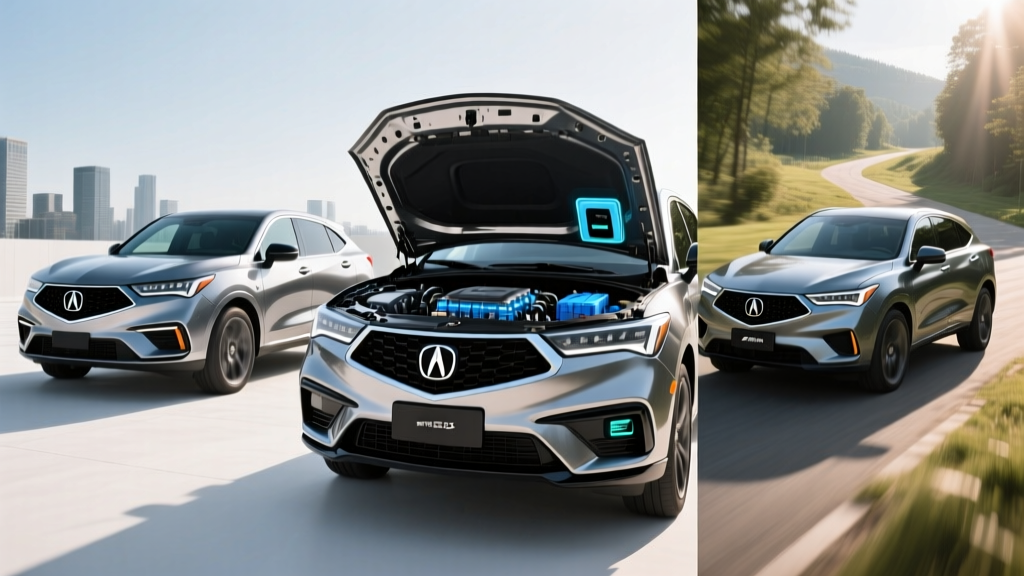
Acura's electrified strategy for 2026 spans three distinct approaches: a conventional hybrid SUV, a plug-in hybrid sport sedan, and a fully electric crossover. If you're researching Acura hybrids 2026 models, the choices can feel confusing — especially since the brand uses different powertrain architectures across its lineup. This guide breaks down exactly what each model offers in terms of fuel economy, electric-only range, charging capability, pricing, and federal tax credit eligibility so you can match the right Acura to your driving patterns.
HEV vs PHEV vs EV: Understanding Acura's 2026 Electrified Lineup
Before diving into specs, it's critical to distinguish the three electrification levels Acura offers. A conventional hybrid (HEV) like the MDX Hybrid uses a small battery and electric motor to assist the gas engine — it never plugs in and recovers energy through regenerative braking. A plug-in hybrid (PHEV) like the Integra PHEV carries a larger battery you can charge from a wall outlet or public charger, giving you a meaningful electric-only driving range before the gas engine kicks in. A battery electric vehicle (BEV) like the ZDX has no gas engine at all.
| Attribute | MDX Hybrid (HEV) | Integra PHEV | ZDX (BEV) |
|---|---|---|---|
| Plugs in? | No | Yes | Yes |
| Electric-only range | N/A | ~35 miles | ~320 miles (EPA) |
| Gas engine | 3.5L V6 + motors | 1.5L turbo I4 + motor | None |
| Home charging needed | No | Recommended | Essential |
| Federal tax credit | No | Up to $3,750* | Up to $7,500* |
*Credit amounts subject to IRS §30D eligibility rules including income caps, MSRP limits, and battery sourcing requirements. Consult IRS.gov for current rules.
2026 Acura MDX Hybrid: MPG, Powertrain, and Real-World Efficiency
The MDX Hybrid pairs Acura's 3.5-liter V6 with a twin-motor hybrid system routed through the brand's Super Handling All-Wheel Drive (SH-AWD). Combined output sits at 355 horsepower and 350 lb-ft of torque — a meaningful bump over the non-hybrid MDX's 290 hp. The hybrid system uses a 1.5 kWh lithium-ion battery pack that charges exclusively through regenerative braking and engine operation; you never plug it in.
| Driving Cycle | EPA Estimate | Real-World Expectation |
|---|---|---|
| City | 28 MPG | 29–32 MPG (hybrids excel in stop-and-go) |
| Highway | 27 MPG | 25–27 MPG (less electric assist at sustained speed) |
| Combined | 27 MPG | 26–29 MPG depending on driving mix |
The real-world advantage of the MDX Hybrid shows up in city and suburban driving, where the electric motors handle low-speed acceleration and the engine shuts off at stops. Owners who drive predominantly in urban environments often report 29–31 MPG combined. Highway-heavy commuters will see figures closer to the EPA estimate or slightly below, since the hybrid system provides less benefit at sustained cruising speeds. For a three-row luxury SUV weighing over 4,500 pounds, 27 MPG combined represents a roughly 20% improvement over the standard MDX AWD's 22 MPG combined.
2026 Acura Integra PHEV: Electric-Only Range and Charging Details
New to the lineup, the Integra PHEV is Acura's first plug-in hybrid for the North American market. It combines a 1.5-liter turbocharged four-cylinder engine with a front-mounted electric motor and a 17.7 kWh lithium-ion battery pack (usable capacity approximately 14.2 kWh). Total system output reaches 240 horsepower and 280 lb-ft of torque.
| Specification | Value |
|---|---|
| EPA electric-only range | 35 miles |
| Total combined range (electric + gas) | ~430 miles |
| Battery capacity (usable) | 14.2 kWh (LFP chemistry) |
| Level 1 charging (120V, 1.4 kW) | ~10 hours (0–100%) |
| Level 2 charging (240V, 7.2 kW) | ~2.5 hours (0–100%) |
| DC fast charging | Not supported |
| Charge port | J1772 (Level 2) |
| Combined system horsepower | 240 hp |
| 0–60 mph | 6.2 seconds (est.) |
With 35 miles of electric-only range, the Integra PHEV covers most daily commutes without using a drop of gasoline. Once the battery depletes, the car operates as a conventional hybrid, returning an EPA-estimated 42 MPG combined in hybrid mode. For drivers with a short commute and home charging access, it's realistic to go weeks between fill-ups.
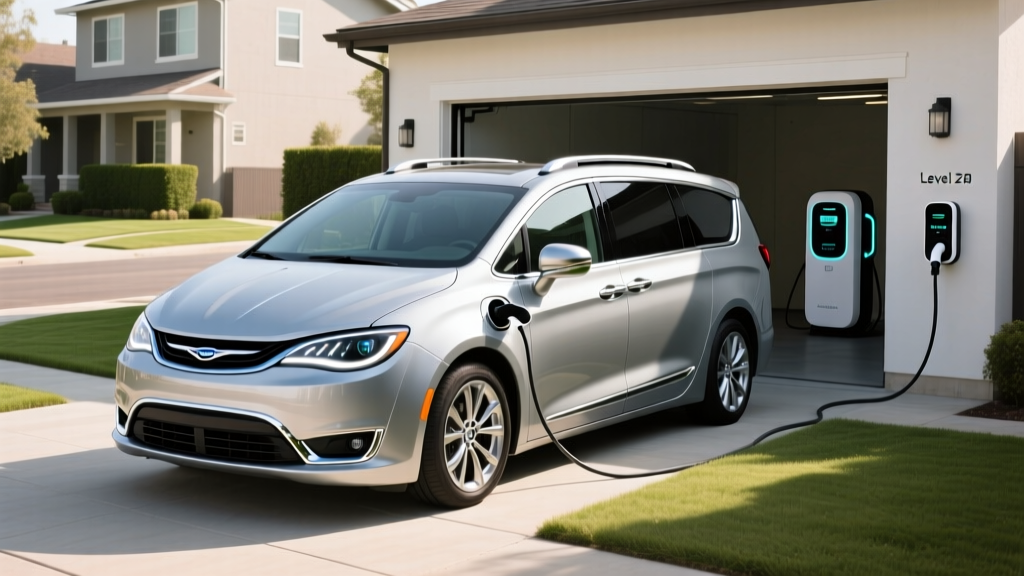
Charging is straightforward: plug into a standard 120V outlet overnight for a partial replenishment, or install a 240V Level 2 home charger for a full charge in about 2.5 hours. Note that DC fast charging is not available on the Integra PHEV — this is typical for plug-in hybrids, whose smaller batteries aren't designed for high-speed charging. The trade-off is simplicity: any J1772-compatible Level 2 charger at home, work, or a public station will top up the battery without adapter complications.
2026 Acura ZDX: The Full-Electric Option in the Lineup
The ZDX is Acura's all-electric midsize crossover, built on GM's Ultium platform. While not a hybrid, it belongs in this conversation because many buyers cross-shop it against the MDX Hybrid. The ZDX A-Spec offers an EPA-estimated 320 miles of range from a 102 kWh battery, while the performance-oriented Type S trims that to approximately 278 miles in exchange for 500 horsepower and standard SH-AWD.
DC fast charging peaks at 190 kW on the A-Spec, achieving a 10–80% charge in approximately 28 minutes. Level 2 charging at 19.2 kW (the maximum onboard charger rate) fills the battery in about 6 hours. If you have reliable home charging and your daily driving stays under 200 miles, the ZDX eliminates gasoline entirely — but it demands a bigger lifestyle commitment than either hybrid option.
Pricing, Tax Credits, and Total Cost of Ownership
Acura's 2026 electrified lineup occupies different price tiers, and tax credit eligibility varies significantly by model and buyer circumstances.
| Model | Base MSRP | Federal Tax Credit (§30D) | Effective Starting Price |
|---|---|---|---|
| MDX Hybrid (SH-AWD) | $58,950 | $0 (HEV not eligible) | $58,950 |
| Integra PHEV | $42,500 | Up to $3,750* | ~$38,750 |
| ZDX A-Spec (BEV) | $59,950 | Up to $7,500* | ~$52,450 |
| ZDX Type S (BEV) | $72,950 | $0 (exceeds MSRP cap) | $72,950 |
*Federal EV and PHEV credits under IRS §30D are subject to buyer income limits ($150K single / $300K joint), vehicle MSRP caps ($55K for sedans, $80K for SUVs/vans), and critical mineral/battery component sourcing requirements. Credits may be applied at point of sale. Rules change — verify current-year eligibility with a tax professional.
The Integra PHEV's partial credit reflects its smaller battery and battery-sourcing compliance status. The ZDX A-Spec qualifies for the full $7,500 if you meet income requirements and the vehicle's battery sourcing satisfies current-year thresholds. The ZDX Type S exceeds the $80K SUV MSRP cap, disqualifying it from federal credits regardless of buyer income. The MDX Hybrid, as a conventional HEV, does not qualify for §30D credits — conventional hybrids have not been eligible for federal purchase incentives since the original Toyota Prius credits expired years ago.
Battery Warranty, Reliability, and Replacement Costs
| Model | Hybrid Battery Warranty | Capacity Retention Guarantee | Est. Replacement Cost (Out of Warranty) |
|---|---|---|---|
| MDX Hybrid | 8 years / 100,000 miles (10 yr/150K mi in CARB states) | 70% minimum capacity | $2,500–$4,000 |
| Integra PHEV | 8 years / 100,000 miles (10 yr/150K mi in CARB states) | 70% minimum capacity | $6,000–$9,000 |
| ZDX (BEV) | 8 years / 100,000 miles | 70% minimum capacity | $15,000–$22,000 |
CARB states include CA, CO, CT, ME, MD, MA, NJ, NY, OR, RI, VT, WA, and others adopting California emissions standards. Check your state's adoption status.
Hybrid battery reliability has proven excellent across the industry. Toyota and Honda — Acura's parent company — have decades of hybrid deployment with failure rates well under 5% within the warranty period. The MDX Hybrid's 1.5 kWh battery is small and lightly stressed; it's unlikely to require replacement during typical ownership. The Integra PHEV's larger 17.7 kWh pack uses LFP chemistry, which trades some energy density for significantly longer cycle life and thermal stability compared to NMC batteries. LFP cells routinely exceed 3,000 charge cycles with minimal degradation, meaning the PHEV battery should outlast the warranty period by a wide margin under normal use.
If replacement is needed out of warranty, hybrid battery costs have dropped substantially. The MDX Hybrid's small pack is relatively inexpensive to replace compared to a full EV battery. The Integra PHEV sits in the middle. These figures include the battery module and labor but can vary by region and dealership.
Who Should Choose Each Acura Electrified Model?
Choose the MDX Hybrid if:
- You need three rows and cargo space for family life
- You want better fuel economy without changing your habits (no plugging in)
- You lack access to home or workplace charging
- You tow occasionally (3,500 lb capacity)
- You want SH-AWD performance with a modest MPG bump
Choose the Integra PHEV if:
- Your daily commute is under 35 miles round-trip
- You can charge at home or work (even a 120V outlet works)
- You want electric commuting with gas-powered road-trip freedom
- You prefer a sport sedan over an SUV
- You want to reduce fuel costs without range anxiety
The MDX Hybrid is the pragmatic choice for families who want incremental efficiency gains without infrastructure changes. It's ideal for buyers in apartments or homes where Level 2 charging installation isn't feasible. You'll save roughly $400–$600 per year in fuel compared to the standard MDX (based on 15,000 miles/year and $3.50/gallon), but the hybrid premium in the purchase price means a breakeven period of approximately 4–6 years.
The Integra PHEV is the maximum-savings play for commuters. If you charge nightly at home using residential electricity at $0.14/kWh, your "fuel" cost for the electric portion drops to roughly $0.04 per mile — compared to $0.10 per mile in a 30 MPG gas car. Over a 15,000-mile year with 8,000 electric miles, that's approximately $480 in annual fuel savings on the electric portion alone, plus reduced brake wear from regenerative braking. The key constraint: you must have regular access to charging to realize the PHEV's advantages. Drive it without ever plugging in and you're carrying 400+ pounds of dead battery weight, reducing hybrid-mode efficiency.
The ZDX makes sense only if you have reliable home charging and your typical trips stay within its range envelope. It offers the lowest per-mile operating cost of the three but demands the most lifestyle adjustment.
Real-World MPG vs EPA: What Acura Hybrid Owners Actually Report
Conventional hybrids like the MDX Hybrid frequently exceed their EPA city estimates in real-world driving because stop-and-go traffic maximizes regenerative braking and electric motor usage. Based on aggregated owner data from fueleconomy.gov user reports and owner forums, MDX Hybrid drivers averaging 60%+ city driving commonly report 29–31 MPG combined. Highway-dominant drivers typically see 25–27 MPG.
For the Integra PHEV, real-world electric range depends heavily on temperature and driving style. In mild weather (50–80°F) at moderate speeds, expect 33–38 miles on a full charge. In cold weather (below 30°F), battery efficiency drops and cabin heating draws significant power — expect 25–28 miles of electric range. This 20–30% cold-weather reduction is typical for all PHEVs and BEVs and is not unique to Acura.
Frequently Asked Questions
How many MPG does the 2026 Acura MDX Hybrid get?
The EPA rates the MDX Hybrid at 28 city / 27 highway / 27 combined MPG. Real-world results range from 25 MPG (highway-heavy driving) to 32 MPG (city-dominant driving), with most owners reporting 27–29 MPG in mixed use.
How far can the Acura Integra PHEV go on electric only?
The EPA rates the Integra PHEV at 35 miles of electric-only range. In mild conditions, expect 33–38 miles. In cold weather or at highway speeds, expect 25–30 miles before the gas engine engages.
Do Acura hybrids need to be plugged in?
No. The MDX Hybrid is a conventional HEV and never plugs in — it charges its small battery through regenerative braking. The Integra PHEV can be plugged in to access its electric-only range, but will still function as a regular hybrid if you never charge it (just with less overall efficiency).
Does the 2026 Acura MDX Hybrid qualify for a federal tax credit?
No. Conventional hybrids (HEVs) are not eligible for the federal §30D Clean Vehicle Credit. Only plug-in hybrids and battery electric vehicles qualify, and even then, eligibility depends on MSRP caps, buyer income limits, and battery sourcing requirements. Check IRS.gov for current rules.
Is the Acura Integra PHEV battery reliable, and what does replacement cost?
Honda/Acura's hybrid systems have demonstrated strong long-term reliability across millions of vehicles. The Integra PHEV uses LFP battery chemistry, which offers superior cycle life and thermal stability. The battery is warranted for 8 years/100,000 miles (10 years/150,000 miles in CARB states) with a 70% capacity retention guarantee. Out-of-warranty replacement is estimated at $6,000–$9,000.
Hybrid vs PHEV vs EV — which Acura fits my lifestyle?
Choose the MDX Hybrid (HEV) if you want family SUV practicality with no charging hassle. Choose the Integra PHEV if you have a short commute and home charging access but still want gas-engine flexibility for road trips. Choose the ZDX (EV) if you have reliable home charging, want the lowest per-mile cost, and your driving stays within ~250 miles between charges. The PHEV is the best "bridge" option for buyers not yet ready to commit to full electric.
How long does it take to charge the Integra PHEV at home?
On a standard 120V household outlet (Level 1, ~1.4 kW), a full charge takes approximately 10 hours — feasible for overnight charging. On a 240V Level 2 home charger (7.2 kW), a full charge takes about 2.5 hours. The Integra PHEV does not support DC fast charging.