If you've been browsing Acura's showroom and wondering whether the luxury brand offers electrified SUVs, you're not alone. Searches for hybrid luxury crossovers have surged as buyers look to cut fuel costs without sacrificing premium features. So, does Acura have a hybrid SUV in 2026? The answer is yes — but with important nuances about which models qualify, what kind of hybrid system they use, and whether a plug-in variant is available.
This guide covers every hybrid SUV in Acura's current lineup, complete with EPA fuel economy data, powertrain specifications, real-world efficiency expectations, battery warranty details, and tax credit eligibility. Whether you're cross-shopping the MDX Hybrid against a Lexus RX 350h or weighing a plug-in hybrid against a full battery-electric vehicle, you'll find the exact numbers you need here.
Acura's Hybrid SUV Lineup: What's Available in 2026
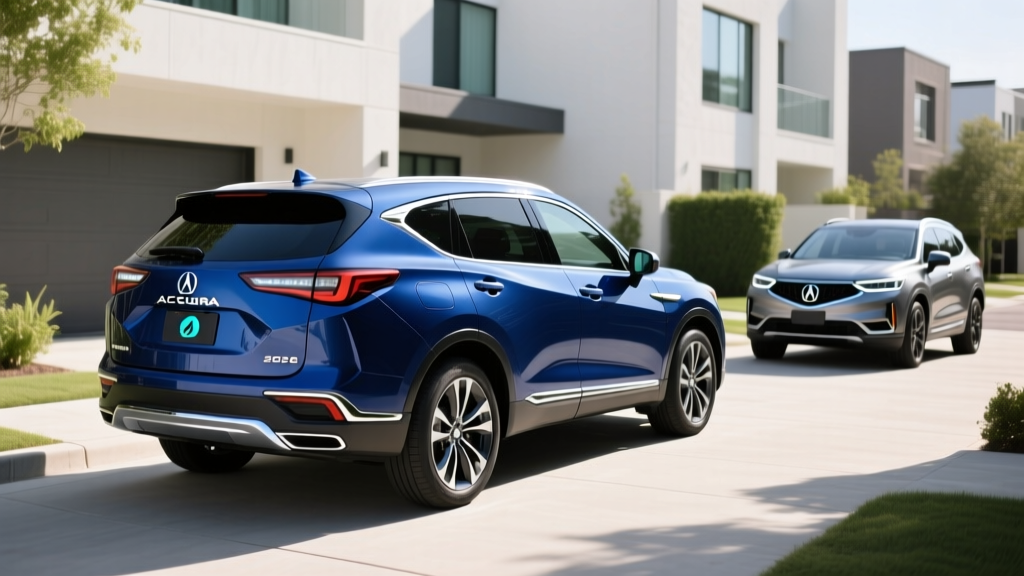
For the 2026 model year, Acura offers one primary hybrid SUV: the Acura MDX Sport Hybrid. This is a conventional hybrid (HEV), meaning it does not plug in. It uses a combination of a gasoline engine and electric motors to improve fuel economy and performance, with the battery recharged through regenerative braking and the engine itself.
The smaller Acura RDX remains available only with a turbocharged gasoline powertrain as of 2026 — Acura has not introduced a hybrid or plug-in hybrid variant for the RDX in the current generation. This puts Acura behind some competitors like Lexus, which offers hybrid versions across nearly its entire SUV range.
Acura has also not released a plug-in hybrid (PHEV) version of the MDX for the U.S. market. While some global markets have received PHEV variants of related Honda/Acura platforms, American buyers looking for an Acura PHEV SUV will need to wait or consider competitors.
HEV vs. PHEV: What's the Difference?
Conventional Hybrid (HEV): Uses a small battery (typically 1–2 kWh) recharged by the engine and regenerative braking. No plug needed. Improves MPG by 20–40% over gas-only equivalents. Example: Acura MDX Sport Hybrid.
Plug-in Hybrid (PHEV): Uses a larger battery (typically 15–25 kWh) that can be charged from a wall outlet or public charger. Offers 20–50 miles of electric-only driving before the gas engine engages. May qualify for federal tax credits. Example: Lexus RX 450h+, BMW X5 xDrive50e.
Acura currently offers HEV only — no PHEV SUVs in the U.S. market for 2026.
2026 Acura MDX Sport Hybrid: Full Specifications
The MDX Sport Hybrid pairs Acura's 3.0-liter V6 engine with a three-motor hybrid system and the brand's Sport Hybrid SH-AWD (Super Handling All-Wheel Drive). This is a performance-oriented hybrid system — it's designed as much for acceleration and handling as for fuel savings.
| Specification | 2026 Acura MDX Sport Hybrid |
|---|---|
| Powertrain | 3.0L V6 + 3-motor hybrid system |
| Combined Horsepower | 355 hp |
| Combined Torque | 350 lb-ft |
| Drivetrain | Sport Hybrid SH-AWD (standard) |
| Transmission | 7-speed dual-clutch automatic |
| Hybrid Battery | ~1.3 kWh lithium-ion (not plug-in) |
| 0-60 mph | ~5.7 seconds |
| Seating | 7 passengers (3 rows) |
| Cargo (behind 3rd row) | 16.3 cu ft |
| Towing Capacity | 5,000 lbs |
| Starting MSRP | ~$64,500 (Sport Hybrid trim) |
EPA Fuel Economy and Real-World MPG
Fuel economy is where hybrid buyers focus first. The 2026 Acura MDX Sport Hybrid carries EPA ratings that reflect its dual mission of performance and efficiency.
| Driving Cycle | EPA Estimate | Real-World Expectation |
|---|---|---|
| City | 28 MPG | 27–30 MPG (hybrids excel in stop-and-go) |
| Highway | 27 MPG | 25–27 MPG (less electric assist at sustained speed) |
| Combined | 27 MPG | 26–28 MPG |
Source: fueleconomy.gov
Real-world context: Conventional hybrids like the MDX Sport Hybrid often match or slightly exceed their EPA city ratings because regenerative braking recovers energy during frequent stops. Highway driving, where the gasoline engine does most of the work at sustained speeds, tends to come in at or just below the EPA estimate. Compared to the gas-only MDX (21 MPG combined with SH-AWD), the hybrid delivers roughly a 28% improvement in combined fuel economy.
For a driver covering 15,000 miles per year, that difference translates to approximately 130 fewer gallons of fuel annually — roughly $450–$550 in savings at $3.50/gallon regular unleaded (the MDX Hybrid requires premium fuel, which narrows the dollar savings somewhat).
How the MDX Sport Hybrid Compares to Competitors
The luxury three-row hybrid SUV segment is competitive. Here's how the MDX Sport Hybrid stacks up against key rivals on the metrics that matter.
| Model | Combined MPG | Horsepower | Type | Starting MSRP |
|---|---|---|---|---|
| Acura MDX Sport Hybrid | 27 | 355 | HEV | ~$64,500 |
| Lexus TX 500h | 27 | 366 | HEV | ~$64,000 |
| BMW X5 xDrive50e | N/A (PHEV) | 483 | PHEV | ~$75,000 |
| Volvo XC90 Recharge | 55 MPGe | 455 | PHEV | ~$78,000 |
| Lexus RX 350h (2-row) | 36 | 246 | HEV | ~$53,000 |
The MDX Sport Hybrid competes most directly with the Lexus TX 500h — both are three-row HEVs with similar MPG and pricing. The BMW and Volvo are plug-in hybrids with electric-only range and higher price tags. The Lexus RX 350h is far more efficient but seats only five.
Does the Acura MDX Hybrid Qualify for a Tax Credit?
This is one of the most common questions from hybrid shoppers, and the answer requires precision.
Federal Tax Credit Status: Not Eligible
The 2026 Acura MDX Sport Hybrid is a conventional hybrid (HEV), not a plug-in hybrid. Under IRS §30D rules, only plug-in electric vehicles (BEVs and PHEVs) with a minimum battery capacity of 7 kWh qualify for the federal clean vehicle credit. The MDX Sport Hybrid's ~1.3 kWh battery falls far below this threshold.
Bottom line: The MDX Sport Hybrid does not qualify for the $7,500 federal EV tax credit, nor does it qualify for the $4,000 used EV credit. No federal incentive is available for conventional hybrids.
Some states and municipalities offer their own incentives for hybrid vehicles, but these are typically modest ($250–$1,000) and vary widely. Check your state's energy office or department of environmental quality for current programs.
Source: IRS.gov — Clean Vehicle Credits
Battery Warranty, Reliability, and Replacement Cost
Hybrid battery longevity is a top concern for buyers, especially those planning to keep their vehicle beyond the warranty period. Here's what you need to know about the MDX Sport Hybrid's battery system.
Acura Hybrid Battery Warranty
- Hybrid Battery Coverage: 8 years / 100,000 miles (whichever comes first)
- Extended in CARB States: 10 years / 150,000 miles in states that follow California Air Resources Board emissions rules (CA, CO, CT, DE, ME, MD, MA, NJ, NY, OR, RI, VT, WA, and others adopting CARB standards)
- What's Covered: Defects in materials/workmanship and capacity loss below a defined threshold (typically 60–70% of original capacity)
- Powertrain Warranty: 6 years / 70,000 miles
Reliability outlook: Honda/Acura's hybrid systems have a strong track record. The three-motor Sport Hybrid system has been in use across the MDX and NSX lineups for years, and the lithium-ion battery pack is far smaller and less stressed than a full EV battery. Most hybrid batteries last well beyond their warranty period — 150,000+ miles is common with normal use.
Replacement cost: If the hybrid battery does need replacement out of warranty, expect a dealer-installed replacement to cost between $2,500 and $4,500 depending on labor rates and parts availability. This is significantly less than a full EV battery replacement ($8,000–$20,000+) because the hybrid battery is much smaller (~1.3 kWh vs. 70–100+ kWh in a BEV). Independent hybrid battery specialists can often refurbish or replace individual cells for $1,500–$2,500.
Hybrid vs. Plug-in Hybrid vs. Full EV: Which Is Right for You?
Choosing between a conventional hybrid, a PHEV, and a full battery-electric vehicle depends on your driving patterns, charging access, and budget. Here's a practical decision framework.
Choose the Acura MDX Sport Hybrid (HEV) If:
- You don't have access to home or workplace charging (apartment, street parking, no garage outlet)
- You want improved MPG with zero change to your refueling habits
- You regularly take long road trips and don't want to plan around charging stops
- You want the performance benefit of electric torque (355 hp, SH-AWD) without a price premium
- You prefer a lower purchase price vs. PHEV or BEV competitors
Consider a Plug-in Hybrid (PHEV) Instead If:
- You have Level 2 home charging and a commute under 30–40 miles round-trip
- You want to drive mostly on electricity during the week and use gas for weekend road trips
- You want to qualify for the federal §30D tax credit (up to $7,500, subject to MSRP caps, income limits, and battery sourcing rules)
- You're willing to pay a higher upfront price for lower operating costs
Consider a Full EV (BEV) Instead If:
- You have reliable home Level 2 charging
- Your daily driving is under 250 miles and you're comfortable with public DC fast charging for road trips
- You want the lowest per-mile fuel cost and minimal maintenance
- You want to maximize federal and state incentives
For many luxury SUV buyers without dedicated home charging — particularly urban apartment dwellers or those who park on the street — the MDX Sport Hybrid offers the path of least resistance. You get meaningful fuel savings, strong performance, and Acura's premium interior without any infrastructure requirements.
Pricing, Trims, and Total Cost of Ownership
The 2026 Acura MDX Sport Hybrid is offered in a single well-equipped trim, positioned above the standard MDX with SH-AWD.
| Cost Factor | MDX Sport Hybrid | MDX SH-AWD (Gas) |
|---|---|---|
| Starting MSRP | ~$64,500 | ~$56,000 |
| Federal Tax Credit | $0 | $0 |
| Annual Fuel Cost (15k mi/yr) | ~$2,500 (premium) | ~$3,100 (premium) |
| 5-Year Fuel Cost | ~$12,500 | ~$15,500 |
| 5-Year Fuel Savings (Hybrid) | ~$3,000 | |
The hybrid commands an ~$8,500 premium over the gas MDX SH-AWD at the base level. With roughly $600/year in fuel savings, the payback period on the hybrid premium is approximately 14 years at current fuel prices — meaning the hybrid is a performance and refinement upgrade first, and a cost-savings play second. The value proposition improves if fuel prices rise significantly or if you drive substantially more than 15,000 miles per year.
Pros and Cons of the Acura MDX Sport Hybrid
Pros
- 355 hp with SH-AWD — genuinely quick for a three-row SUV
- 27 MPG combined is solid for a 355-hp, 7-seat luxury vehicle
- No plug-in required — works with existing gas station habits
- 8-year/100k-mile hybrid battery warranty (10yr/150k in CARB states)
- Strong 5,000-lb towing capacity (hybrid battery doesn't compromise utility)
- Premium interior with Acura's latest tech suite
Cons
- No plug-in hybrid (PHEV) option — can't drive on electric only
- No federal tax credit eligibility
- ~$8,500 premium over gas MDX with long payback period on fuel alone
- Requires premium fuel, which reduces dollar savings vs. gas model
- RDX has no hybrid option at all (competitors like Lexus NX 350h exist)
- Hybrid battery adds weight, slightly reducing cargo space vs. gas-only rivals
Frequently Asked Questions
How many MPG does the Acura MDX Hybrid get?
The 2026 Acura MDX Sport Hybrid is EPA-rated at 28 MPG city, 27 MPG highway, and 27 MPG combined. In real-world driving, city MPG may slightly exceed the EPA estimate thanks to regenerative braking, while sustained highway driving typically comes in at 25–27 MPG. This represents a roughly 28% improvement over the gas-only MDX SH-AWD (21 MPG combined).
Does Acura make a plug-in hybrid SUV?
Not for the U.S. market as of 2026. The MDX Sport Hybrid is a conventional hybrid (HEV) that does not plug in. Acura has not announced a PHEV SUV for American buyers. If plug-in capability is a priority, consider the BMW X5 xDrive50e (38 miles electric-only) or Volvo XC90 Recharge (35 miles electric-only).
How far can the Acura MDX Hybrid go on electric only?
The MDX Sport Hybrid is not designed for electric-only driving. Its ~1.3 kWh battery is too small to propel the vehicle on electricity alone for meaningful distances. The electric motors assist the gasoline engine for improved acceleration and efficiency, but the V6 is always available. This is a key difference from PHEVs, which can drive 25–50 miles on battery alone.
Is the Acura MDX Hybrid reliable?
Acura's hybrid systems have a strong reliability track record, benefiting from Honda's decades of hybrid engineering (dating back to the original Insight in 1999). The MDX Sport Hybrid's three-motor system and lithium-ion battery are proven components. The hybrid battery is warranted for 8 years/100,000 miles (10 years/150,000 miles in CARB states), and most hybrid batteries last well beyond their warranty period.
What does it cost to replace the Acura MDX Hybrid battery?
Out-of-warranty hybrid battery replacement for the MDX Sport Hybrid typically costs $2,500–$4,500 at a dealer, including parts and labor. Independent hybrid specialists can often perform cell-level repairs or refurbished battery installations for $1,500–$2,500. This is far less expensive than a full EV battery replacement due to the MDX Hybrid's small (~1.3 kWh) battery pack.
Does the Acura MDX Hybrid qualify for any tax credit?
No. The federal §30D clean vehicle credit applies only to plug-in electric vehicles (BEVs and PHEVs) with at least 7 kWh of battery capacity. The MDX Sport Hybrid's ~1.3 kWh battery disqualifies it. Some states may offer small rebates for hybrid vehicles, but these are uncommon and vary by jurisdiction. Check your state's energy office for details.
Should I buy the Acura MDX Hybrid or wait for a PHEV?
If you need a three-row luxury hybrid SUV now and don't have home charging, the MDX Sport Hybrid is a strong choice. If you have Level 2 home charging and want electric-only commuting, you'll need to look at PHEV competitors (BMW X5 xDrive50e, Volvo XC90 Recharge) or wait to see if Acura introduces a PHEV MDX in future model years. Acura has not confirmed any PHEV plans for the MDX as of early 2026.
Does the Acura RDX have a hybrid option?
No. The 2026 Acura RDX is available only with a 2.0L turbocharged four-cylinder engine (272 hp) and no hybrid variant. If you want a compact luxury hybrid SUV, the Lexus NX 350h (39 MPG combined, HEV) and NX 450h+ (37 miles electric-only, PHEV) are the closest competitors.
Sources: EPA fuel economy data from fueleconomy.gov; federal tax credit rules from IRS.gov; vehicle specifications from Acura's official media site. All pricing and specifications are based on 2026 model year information available at time of publication and are subject to change. Verify tax credit eligibility with a qualified tax professional.