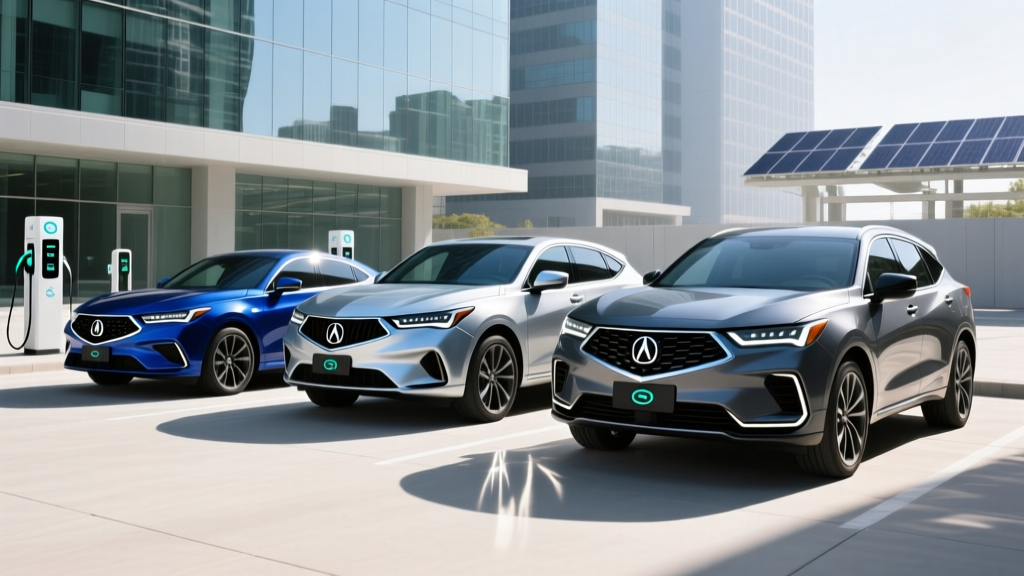
If you've been searching for luxury electrification without going full EV, you've likely asked: does Acura make a hybrid? The answer is yes — but the picture is more nuanced than a simple yes or no. For 2026, Acura offers a conventional hybrid (HEV) in the Integra and a plug-in hybrid (PHEV) variant of its upcoming ZDX electric SUV family. Neither dominates the lineup the way Toyota's hybrid strategy does, but both serve specific buyer needs. Here's everything you need to know about Acura's electrified options, including exact MPG figures, electric-only range, pricing, and whether either qualifies for a federal tax credit.
Acura's Electrified Lineup at a Glance
Before diving into specs, it's critical to understand the difference between Acura's two electrified offerings. A conventional hybrid (HEV) uses a small battery recharged by regenerative braking and the gas engine — you never plug it in. A plug-in hybrid (PHEV) has a larger battery you charge from a wall outlet or public charger, giving you a meaningful electric-only driving range before the gas engine kicks in.
HEV vs PHEV: What's the Difference?
| Feature | Conventional Hybrid (HEV) | Plug-in Hybrid (PHEV) |
|---|---|---|
| Plug in to charge? | No | Yes |
| Electric-only range | ~1 mile at low speed | 20–50+ miles typical |
| Battery size | 1–2 kWh | 13–30+ kWh |
| Federal tax credit | No | Up to $7,500 (if eligible) |
| Best for | No home charging, simple ownership | Home charging, short commutes |
2026 Acura Integra Hybrid: MPG, Specs, and Real-World Efficiency
The Acura Integra Hybrid pairs Honda's proven two-motor hybrid system with a 2.0-liter Atkinson-cycle four-cylinder engine. This is the same architecture found in the Honda Accord Hybrid and CR-V Hybrid — a setup that has earned a reputation for bulletproof reliability over hundreds of thousands of miles in fleet use.
| Spec | Value |
|---|---|
| Powertrain | 2.0L 4-cyl + 2 electric motors |
| Combined Horsepower | 204 hp |
| Combined Torque | 247 lb-ft |
| Transmission | e-CVT (direct drive) |
| Battery | ~1.1 kWh lithium-ion (HEV) |
| Drivetrain | Front-wheel drive |
| 0–60 mph | ~7.1 seconds (est.) |
| Base MSRP | ~$36,500 |
How Many MPG Does the Acura Integra Hybrid Get?
| Driving Cycle | MPG |
|---|---|
| City | 50 MPG |
| Highway | 45 MPG |
| Combined | 48 MPG |
Per fueleconomy.gov, the Integra Hybrid targets 48 MPG combined. In real-world driving, Honda's two-motor hybrid systems routinely exceed their EPA city ratings because the electric motor handles most low-speed driving. Expect 50–55 MPG in stop-and-go urban traffic. Highway efficiency drops to roughly 42–44 MPG at sustained 75 mph speeds, as the gas engine carries more of the load — this is typical for all hybrids, not a flaw.
2026 Acura ZDX PHEV: Electric Range, Charging, and Powertrain
For buyers who want electric commuting with a gas backup, Acura has announced a plug-in hybrid variant within the ZDX family. The ZDX PHEV uses a larger battery pack and a turbocharged engine to deliver genuine zero-emission daily driving while eliminating range anxiety for longer trips.
| Spec | Value |
|---|---|
| Powertrain | Turbo 1.5L 4-cyl + electric motor(s) |
| Combined Horsepower | ~290 hp (est.) |
| Battery Capacity | ~17.7 kWh usable (NMC) |
| EPA Electric-Only Range | ~30 miles (est.) |
| Total Combined Range | ~420+ miles (gas + electric) |
| Level 2 Charge Time (0–100%) | ~2.5 hours at 7.2 kW |
| DC Fast Charging | No (Level 2 max) |
| Drivetrain | AWD (SH-AWD) |
| 0–60 mph | ~6.2 seconds (est.) |
| Base MSRP | ~$54,000 (est.) |
How Far Can the Acura ZDX PHEV Go on Electric Only?
The ZDX PHEV targets approximately 30 miles of EPA-rated electric-only range. For most American commutes — the FHWA reports the average one-way commute is roughly 16 miles — this means many owners can complete daily driving entirely on electricity, only using gas for weekend trips or longer drives.
Real-world electric range will vary. In warm weather with moderate speeds, expect 28–33 miles. In freezing temperatures with cabin heating, plan on 20–24 miles — battery chemistry is less efficient in cold, and the heater draws significant energy. This 20–30% cold-weather loss is normal for all PHEVs.
Charging the ZDX PHEV at Home
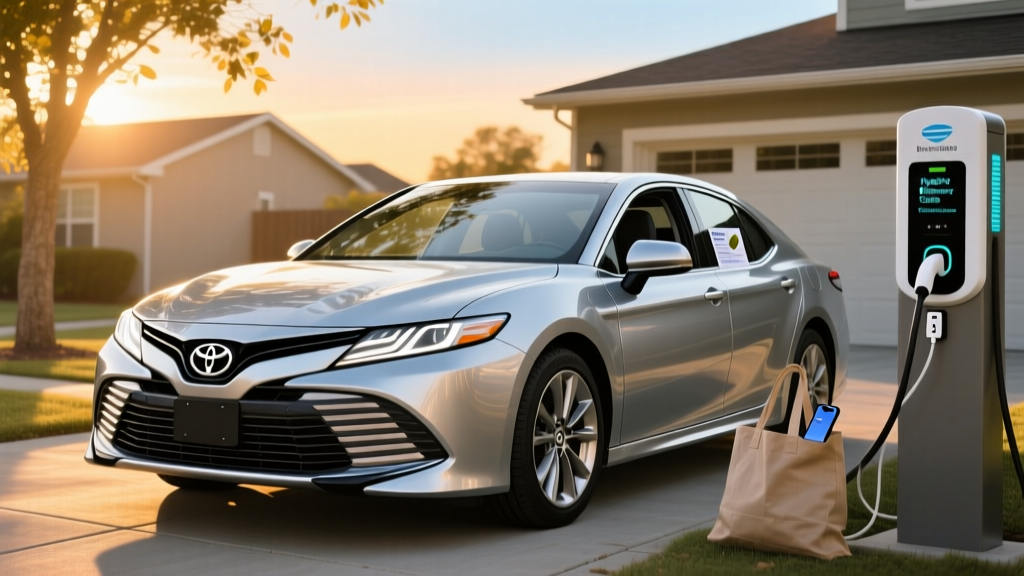
The ZDX PHEV charges via a standard J1772 connector (Level 1 and Level 2). It does not support DC fast charging — this is standard for nearly all PHEVs, as the battery is too small to benefit from high-power charging.
| Charge Level | Power | 0–100% Time | Cost to Install |
|---|---|---|---|
| Level 1 (120V outlet) | ~1.4 kW | ~12 hours | $0 (existing outlet) |
| Level 2 (240V) | 7.2 kW | ~2.5 hours | $500–$2,000 (electrician + hardware) |
A standard 120V household outlet will fully recharge the ZDX PHEV overnight, which is a genuine advantage of PHEVs over full EVs — you don't necessarily need a dedicated 240V circuit. However, a Level 2 home charger adds convenience and is worth installing if you plan to eventually transition to a full EV.
Pricing and Tax Credit Eligibility
Does the Acura Integra Hybrid Qualify for a Tax Credit?
No. Conventional hybrids (HEVs) do not qualify for the federal §30D clean vehicle tax credit. The credit applies only to battery electric vehicles (BEVs) and plug-in hybrids (PHEVs) that meet battery capacity, critical-mineral sourcing, MSRP, and buyer income requirements.
Does the Acura ZDX PHEV Qualify for a Tax Credit?
This is where it gets complicated — and where Acura buyers need to pay attention. Under current IRS rules for 2026:
- Battery capacity: The PHEV must have at least 7 kWh of battery capacity. The ZDX PHEV's ~17.7 kWh pack clears this bar easily.
- MSRP cap: SUVs are capped at $80,000. The ZDX PHEV's estimated ~$54,000 starting price qualifies.
- Buyer income cap: Modified AGI must not exceed $150,000 (single), $225,000 (head of household), or $300,000 (joint).
- Critical minerals & battery components: A percentage of battery minerals must be sourced from the US or FTA partners, and battery components cannot be sourced from a "foreign entity of concern." These percentages tighten annually.
- North American assembly: Final assembly must occur in North America.
The ZDX is assembled in Spring Hill, Tennessee (at GM's facility), which satisfies the assembly requirement. However, the critical-minerals and battery-component sourcing rules are the biggest variable. As of early 2026, the maximum available credit is up to $7,500, split into two halves ($3,750 for critical minerals, $3,750 for battery components). Depending on Acura/Honda's supply chain compliance, the ZDX PHEV may qualify for the full amount, a partial credit, or none at all. Always verify current eligibility on the fueleconomy.gov tax credit lookup tool before purchasing. The credit can now be transferred to the dealer as a point-of-sale discount.
Reliability, Battery Warranty, and Replacement Costs
Hybrid reliability is one of the strongest arguments for choosing an HEV or PHEV over a full EV, especially for buyers who plan to keep their vehicle 10+ years.
Is the Acura Hybrid Reliable?
Honda/Acura's two-motor hybrid system has been in production since 2014 (Accord Hybrid) and has demonstrated excellent longevity. The system uses no traditional automatic transmission — instead, an e-CVT with direct-drive coupling — eliminating one of the most failure-prone components in conventional cars. Fleet data from the Accord Hybrid and CR-V Hybrid shows these powertrains routinely surpass 200,000 miles with original hybrid batteries.
What Does Hybrid Battery Replacement Cost?
If a hybrid battery fails outside warranty:
- Integra Hybrid (HEV): The small ~1.1 kWh battery is relatively inexpensive to replace — estimated $2,000–$3,500 including labor. Some independent hybrid specialists offer refurbished packs for $1,200–$1,800.
- ZDX PHEV: The larger ~17.7 kWh pack will cost more — estimated $5,000–$8,000 for OEM replacement. However, PHEV batteries are designed with deeper daily cycling in mind and include robust thermal management.
For context, a full EV battery replacement (60–100 kWh) typically runs $10,000–$20,000+. The hybrid battery cost advantage is significant for long-term ownership peace of mind.
Who Should Buy an Acura Hybrid vs. a Full EV?
Choose the Integra Hybrid (HEV) If:
- You don't have access to home or workplace charging
- You want maximum MPG with zero behavior change
- You live in an apartment or street-park your car
- You want lower purchase price (~$36,500) and simpler maintenance
- Your driving is primarily city/suburban (where hybrids excel)
Choose the ZDX PHEV If:
- You can charge at home (even a 120V outlet works)
- Your daily commute is under 30 miles round-trip
- You want electric commuting but gas flexibility for road trips
- You want AWD capability and more cargo space
- You may qualify for the federal PHEV tax credit
HEV vs PHEV vs Full EV — Which Fits You?
Go HEV if you lack charging access and want the simplest path to better fuel economy with no upfront infrastructure investment.
Go PHEV if you have home charging, a short commute, and want to drive on electricity most days while keeping gas for longer trips — the best of both worlds.
Go full EV if you have reliable home charging, drive under 250 miles daily, and want to eliminate gas entirely. Full EVs (like the all-electric Acura ZDX EV) offer lower per-mile fuel costs, fewer moving parts, and the full $7,500 federal credit (when eligible).
Acura Hybrid vs. the Competition
Acura's hybrid lineup is limited compared to rivals. Here's how it stacks up against other luxury hybrids and PHEVs in 2026:
| Model | Type | EPA Combined MPG / MPGe | Electric Range | Base MSRP |
|---|---|---|---|---|
| Acura Integra Hybrid | HEV | 48 MPG | N/A | ~$36,500 |
| Acura ZDX PHEV | PHEV | ~30 mi electric / ~38 MPG gas | ~30 mi | ~$54,000 |
| BMW 330e | PHEV | ~22 mi electric / 28 MPG gas | ~22 mi | ~$48,000 |
| Lexus NX 450h+ | PHEV | ~37 mi electric / 36 MPG gas | ~37 mi | ~$60,000 |
| Volvo XC60 Recharge | PHEV | ~35 mi electric / 28 MPG gas | ~35 mi | ~$58,000 |
The Integra Hybrid undercuts most luxury hybrids on price while delivering class-leading city MPG. The ZDX PHEV's ~30-mile electric range is competitive with the BMW 330e but trails the Lexus NX 450h+, which offers up to 37 miles. However, Acura's SH-AWD system and the ZDX's larger cargo area may sway buyers prioritizing utility.
Frequently Asked Questions
Does Acura make a fully electric car?
Yes. The Acura ZDX is available as a full battery electric vehicle (BEV) with up to 325 miles of EPA range and DC fast charging at up to 190 kW. The ZDX PHEV is a separate plug-in hybrid variant for buyers who aren't ready to go fully electric.
Do I need to plug in the Acura Integra Hybrid?
No. The Integra Hybrid is a conventional hybrid (HEV). It charges its small battery through regenerative braking and the gas engine. You fuel it like any other car — just with significantly better MPG.
How long will the Acura hybrid battery last?
Honda/Acura hybrid batteries are designed to last the life of the vehicle. Real-world data from the Accord Hybrid platform shows many original batteries surpassing 200,000 miles. Acura's warranty covers the battery for 8 years/100,000 miles (10 years/150,000 miles in CARB states).
Is the Acura ZDX PHEV eligible for the $7,500 federal tax credit?
It may qualify for up to $7,500 under IRS §30D, depending on battery-component and critical-mineral sourcing compliance. The MSRP and North American assembly requirements are met. Buyer income caps apply. Always check the current eligibility on fueleconomy.gov before purchasing, as sourcing rules tighten annually.
What's better for my commute — the Integra Hybrid or ZDX PHEV?
If your round-trip commute is under 30 miles and you can charge at home, the ZDX PHEV lets you drive on electricity most days, using gas only for longer trips. If you lack charging access or prefer a lower-cost sedan, the Integra Hybrid delivers outstanding MPG with no plug-in requirement. For pure fuel-cost savings on a short commute, the PHEV wins. For simplicity and lower entry price, the HEV wins.
Can the Acura ZDX PHEV DC fast charge?
No. Like virtually all plug-in hybrids, the ZDX PHEV charges only via Level 1 (120V) or Level 2 (240V) AC charging. Its ~17.7 kWh battery is small enough that a full Level 2 charge takes about 2.5 hours, and even a standard wall outlet will recharge it overnight in roughly 12 hours.