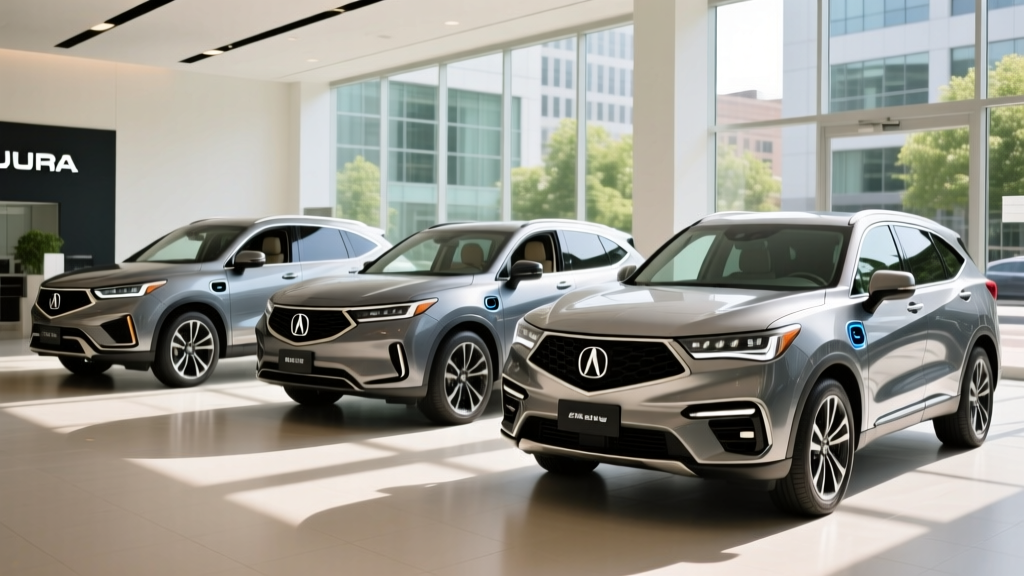
Acura's electrification strategy in 2025 centers on two distinct approaches: a conventional hybrid V6 for its three-row MDX SUV and a plug-in hybrid (PHEV) variant of the all-electric-platform ZDX. If you've been searching for a breakdown of Acura hybrid models 2025, the lineup is smaller than some competitors — but each model targets a specific buyer. The MDX Sport Hybrid delivers V6 power with meaningful fuel savings and zero plug-in hassle, while the ZDX Type S PHEV offers roughly 40 miles of electric-only commuting before its gas engine takes over for road trips.
This guide covers every Acura hybrid and plug-in hybrid available for the 2025 model year, with exact EPA figures, real-world expectations, battery warranties, and federal tax credit eligibility under current IRS §30D rules.
Acura's 2025 Hybrid Lineup at a Glance
Before diving into each model, here's how Acura's two electrified offerings stack up side by side. Note the fundamental difference: the MDX is a conventional hybrid (HEV) — it charges its own battery through regenerative braking and the engine, so you never plug it in. The ZDX Type S is a plug-in hybrid (PHEV) — it has a larger battery you charge from a wall outlet or public charger for daily electric-only driving.
| Spec | 2025 Acura MDX Sport Hybrid | 2025 Acura ZDX Type S PHEV |
|---|---|---|
| Powertrain Type | Conventional Hybrid (HEV) | Plug-in Hybrid (PHEV) |
| Engine | 3.0L Turbo V6 + 3 electric motors | 1.5L Turbo 4-cyl + 2 electric motors |
| Combined Horsepower | 355 hp | ~500 hp (est.) |
| 0–60 mph | 5.5 sec | ~4.5 sec (est.) |
| Drivetrain | SH-AWD (torque-vectoring) | AWD |
| EPA Combined MPG / MPGe | 26 MPG combined | ~68 MPGe combined (est.) |
| EPA City / Highway | 28 city / 25 highway | TBD — see real-world section |
| Electric-Only Range | N/A (not a PHEV) | ~38–42 mi (est.) |
| Battery Capacity | ~1.3 kWh (small buffer) | ~17.7 kWh usable (est.) |
| Plug-In Charging | No — self-charging | Yes — Level 1 & Level 2 |
| DC Fast Charging | No | No (AC charging only) |
| Starting MSRP | ~$64,500 | ~$75,000 (est.) |
| Federal Tax Credit (§30D) | Not eligible | Eligibility uncertain — see below |
2025 Acura MDX Sport Hybrid: MPG, Powertrain & Real-World Efficiency
The MDX Sport Hybrid pairs Acura's 3.0-liter turbocharged V6 with three electric motors integrated into its Super Handling All-Wheel Drive (SH-AWD) system. The result is 355 combined horsepower and a 0–60 mph time of approximately 5.5 seconds — brisk for a three-row luxury SUV. The hybrid system uses a compact lithium-ion battery (roughly 1.3 kWh) mounted under the cargo floor, so you don't sacrifice seating or cargo space versus the standard MDX.
EPA Fuel Economy
| Driving Cycle | EPA Estimate | Real-World Expectation |
|---|---|---|
| City | 28 MPG | 29–32 MPG (hybrids excel in stop-and-go) |
| Highway | 25 MPG | 23–25 MPG (less hybrid benefit at steady speed) |
| Combined | 26 MPG | 25–28 MPG depending on driving mix |
Who the MDX Sport Hybrid Is For
This is the right Acura hybrid if you want three-row luxury with V6 acceleration, don't have access to plug-in charging at home or work, and want to cut fuel costs by roughly 20–25% versus the standard MDX (rated at 21 MPG combined). The SH-AWD system's torque-vectoring rear axle also gives it genuine handling credibility that most three-row SUVs lack.
2025 Acura ZDX Type S PHEV: Electric-Only Range & Charging
The ZDX is Acura's first vehicle built on a dedicated EV platform (shared with the Chevrolet Blazer EV and Cadillac Lyriq via GM's Ultium architecture). For 2025, Acura offers the ZDX in fully electric form (the A-Spec and Type S EV) and is introducing a plug-in hybrid variant aimed at buyers who want daily electric commuting without full range-anxiety on road trips.
The ZDX Type S PHEV uses a 1.5-liter turbocharged four-cylinder engine paired with front and rear electric motors. Combined output targets approximately 500 hp in Type S trim. The PHEV battery is estimated at 17.7 kWh usable capacity, which should deliver roughly 38–42 miles of EPA-rated electric-only range — enough to cover the average American's daily round-trip commute of ~32 miles (FHWA NHTS data).
PHEV Charging Specs
| Charging Level | Power (kW) | Time (0–100% Battery) | Notes |
|---|---|---|---|
| Level 1 (120V household) | ~1.4 kW | ~12–14 hours | Overnight top-up only |
| Level 2 (240V home/public) | ~7.7 kW | ~2.5–3 hours | Recommended for daily use |
| DC Fast Charge | Not supported | N/A | PHEVs rarely include DCFC |
Total Range: Electric + Gas
Once the battery depletes, the ZDX PHEV operates as a conventional hybrid, with the gas engine and regenerative braking maintaining a small charge buffer. Estimated total combined range (electric + full gas tank) is approximately 420–460 miles. This makes it viable for road trips where charging infrastructure may be sparse — a key advantage over a pure BEV for rural or cross-country drivers.
Federal Tax Credit Eligibility for Acura Hybrids
Tax credit rules under IRS §30D are strict and change periodically. Here's where Acura's 2025 hybrids stand:
- MDX Sport Hybrid (HEV): Not eligible for the §30D New Clean Vehicle Credit. Conventional hybrids do not qualify — only BEVs and PHEVs with ≥7 kWh battery capacity are eligible.
- ZDX Type S PHEV: Eligibility is uncertain for 2025. The §30D credit requires: (1) MSRP ≤ $80,000 for SUVs, (2) buyer AGI ≤ $300,000 (joint) / $150,000 (single), (3) final assembly in North America, and (4) battery component and critical mineral sourcing thresholds that tighten annually. Acura's GM-sourced Ultium platform may satisfy assembly and sourcing requirements, but the Type S PHEV's estimated ~$75,000 MSRP sits close to the cap. Consult a tax professional and verify on the IRS eligible vehicle list before purchase.
- Point-of-Sale Transfer: If eligible, the §30D credit (up to $7,500) can be transferred to the dealer at purchase, reducing your out-of-pocket cost immediately rather than waiting for a tax refund.
Battery Warranty, Reliability & Replacement Costs
Reliability Track Record
Honda/Acura's hybrid systems have a strong reliability record spanning two decades (the Insight and Accord Hybrid predate most competitors). The MDX Sport Hybrid's three-motor SH-AWD system has been in production since the 2022 model year with no widespread battery failure reports. The ZDX PHEV's Ultium-based system is newer, so long-term data is limited, but GM's Ultium platform underpins hundreds of thousands of vehicles across multiple brands.
Battery Replacement Cost
Out-of-warranty hybrid battery replacement for the MDX Sport Hybrid is estimated at $3,000–$5,000 (parts and labor). For the ZDX PHEV's larger 17.7 kWh pack, expect $6,000–$9,000 if replacement is needed post-warranty. In practice, modern lithium-ion hybrid batteries rarely require full replacement within the first 10–12 years of ownership — degradation is gradual, and most units retain 80%+ capacity at 100,000 miles.
Hybrid vs PHEV vs Full EV: Which Acura Fits You?
Choose the MDX Sport Hybrid (HEV) if:
- You don't have home or workplace charging access
- You need three rows and prioritize cargo space
- You want a simpler ownership experience — no plugs, no charging apps
- Your driving is a mix of city and highway without a short fixed commute
Choose the ZDX Type S PHEV if:
- You have Level 2 charging at home and a commute under ~40 miles round-trip
- You want to drive on electricity most weekdays but take gas-powered road trips
- Performance matters (500 hp, sport-tuned suspension)
- You're willing to pay a premium (~$10K+ more) for PHEV technology
Consider a Full EV (ZDX A-Spec EV) if:
- You have reliable home charging and your trips rarely exceed 280 miles
- You want the lowest per-mile fuel cost (~$0.04–$0.06/mi on electricity vs ~$0.14/mi on gas)
- You want to maximize federal tax credit eligibility (the ZDX EV may qualify for the full $7,500)
Pricing Breakdown: 2025 Acura Hybrid Models
| Model & Trim | MSRP (est.) | Est. Tax Credit | Effective Price |
|---|---|---|---|
| MDX Sport Hybrid (base) | $64,500 | $0 (HEV ineligible) | $64,500 |
| MDX Sport Hybrid w/ Advance Pkg | $72,000 | $0 | $72,000 |
| ZDX Type S PHEV | ~$75,000 | Up to $7,500 (if eligible) | ~$67,500–$75,000 |
Note: State-level incentives vary significantly. California's CVRP, New York's Drive Clean Rebate, and other state programs may offer additional rebates for the ZDX PHEV. Check your state's energy office for current amounts.
Frequently Asked Questions
How many MPG does the 2025 Acura MDX Sport Hybrid get?
The EPA rates the MDX Sport Hybrid at 28 city / 25 highway / 26 combined MPG. In real-world city-heavy driving, many owners report 29–31 MPG combined thanks to regenerative braking. Highway-only trips at 75+ mph may return 22–24 MPG.
How far can the ZDX PHEV go on electric only?
Estimated EPA electric-only range for the ZDX Type S PHEV is approximately 38–42 miles. Cold weather (below freezing) can reduce this by 20–30%, bringing real-world winter electric range to roughly 27–34 miles. Highway-speed electric driving also depletes the battery faster than city use.
Does the Acura MDX hybrid need to be plugged in?
No. The MDX Sport Hybrid is a conventional hybrid (HEV). It charges its small battery through regenerative braking and the gas engine. You simply fill it with gas like any other vehicle — there is no plug, no charging cable, and no need for a home charger.
Is the Acura hybrid battery reliable, and what does replacement cost?
Acura's hybrid systems have a strong reliability record, backed by an 8-year/100,000-mile battery warranty (10 years/150,000 miles in CARB states). Out-of-warranty replacement costs range from $3,000–$5,000 for the MDX HEV battery and $6,000–$9,000 for the ZDX PHEV pack. Most hybrid batteries retain 80%+ capacity well past 100,000 miles.
Does the 2025 Acura ZDX PHEV qualify for the $7,500 federal tax credit?
Eligibility is not guaranteed. Under current IRS §30D rules, the vehicle must meet MSRP caps (≤$80,000 for SUVs), buyer income limits, North American final assembly, and battery sourcing requirements. The ZDX PHEV's pricing sits near the cap, and sourcing rules tighten annually. Verify eligibility on the IRS eligible vehicle list before purchasing, and consult a tax professional.
Should I buy the Acura hybrid, PHEV, or full EV?
If you lack home charging, the MDX Sport Hybrid (HEV) is your best option — zero behavior change required. If you can charge at home and commute under 40 miles daily, the ZDX PHEV lets you drive on electricity most days while keeping a gas engine for road trips. If you have reliable charging and rarely exceed 280 miles between stops, the fully electric ZDX EV offers the lowest running costs and strongest tax credit eligibility.
Pros
- MDX Hybrid: V6 power + 26 MPG with no plug-in requirement
- SH-AWD torque vectoring handles well for a three-row SUV
- ZDX PHEV: ~40 mi electric range covers most commutes
- Strong battery warranties (8–10 yr / 100–150K mi)
- Proven Honda/Acura hybrid reliability track record
Cons
- MDX Hybrid highway MPG (25) trails some turbo-diesel competitors
- ZDX PHEV pricing near $80K tax-credit cap
- No DC fast charging on the PHEV variant
- Limited hybrid model selection vs Lexus or BMW
- Tax credit eligibility for ZDX PHEV uncertain for 2025