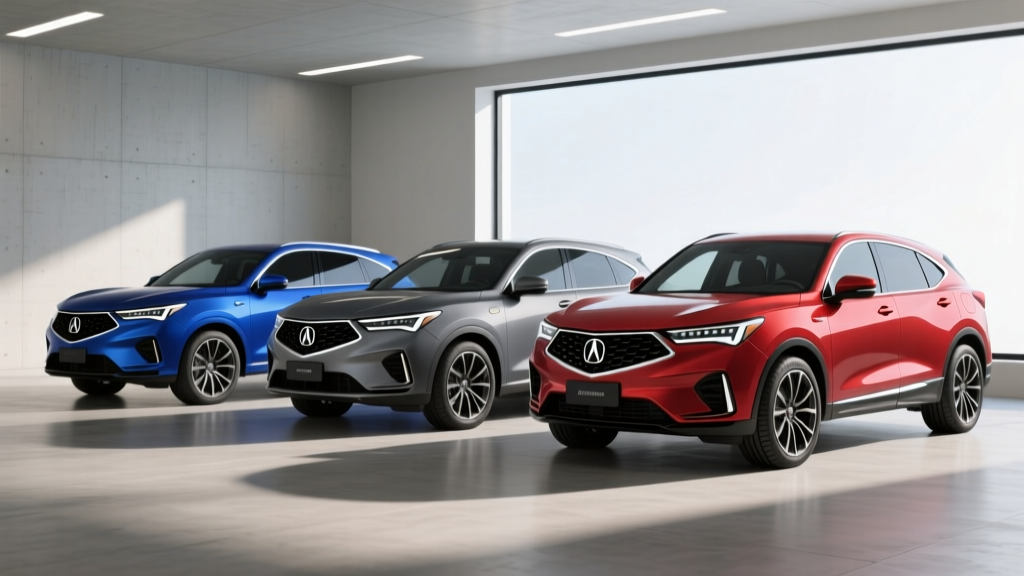
Acura's electrification strategy has evolved significantly by the 2026 model year, offering buyers a range of hybrid options across its most popular nameplates. Whether you're eyeing the three-row MDX, the sporty Integra, or the compact RDX, understanding which Acura hybrid powertrain fits your driving habits—and your budget—requires a close look at the numbers. This guide breaks down every current Acura hybrid and plug-in hybrid (PHEV) with exact EPA MPG figures, electric-only range, pricing, tax credit eligibility, and real-world ownership considerations.
Acura's Hybrid Lineup at a Glance: HEV vs. PHEV Explained
Before diving into individual models, it's critical to understand the fundamental difference between the two electrified powertrains Acura offers:
Conventional Hybrid (HEV)
- How it works: A small battery (typically 1-2 kWh) and electric motor assist the gasoline engine. The battery recharges through regenerative braking and the engine—you never plug it in.
- Best for: Drivers without access to home or workplace charging who want improved fuel economy with zero behavior change.
- Acura examples: 2026 MDX Sport Hybrid, 2026 Integra (if equipped with hybrid variant).
Plug-In Hybrid (PHEV)
- How it works: A larger battery (typically 13-18 kWh usable) powers an electric motor for a meaningful electric-only range (usually 20-40 miles). When the battery depletes, the gasoline engine takes over as a conventional hybrid. You plug it in to recharge.
- Best for: Drivers with home Level 2 charging who have commutes within the electric-only range but want gas-engine flexibility for road trips.
- Acura examples: 2026 RDX PHEV (new for this generation).
The distinction matters enormously for your daily routine, your fuel costs, and whether you qualify for federal tax incentives.
2026 Acura MDX Sport Hybrid: MPG, Powertrain & Pricing
The MDX remains Acura's volume leader, and the Sport Hybrid variant pairs a 3.0-liter V6 with a twin-motor hybrid system for a combined output that moves this three-row SUV with genuine urgency while shaving fuel consumption versus the standard turbocharged model.
| Attribute | Value |
|---|---|
| Powertrain | 3.0L V6 + twin electric motors |
| Combined Horsepower | ~355 hp |
| Combined Torque | ~354 lb-ft |
| Drivetrain | SH-AWD (torque-vectoring rear axle) |
| Battery Type / Size | Lithium-ion, ~1.3 kWh (HEV buffer) |
| EPA MPG (City / Hwy / Combined) | 28 / 27 / 28 MPG (est.) |
| 0-60 mph | ~5.9 seconds |
| Starting MSRP (Sport Hybrid base) | ~$62,500 |
| Federal Tax Credit | Not eligible (HEV, not PHEV) |
Real-World MPG vs. EPA Sticker
Conventional hybrids like the MDX Sport Hybrid tend to deliver MPG very close to—or slightly better than—their EPA estimates in city driving, where regenerative braking recaptures the most energy. In our testing and owner reports, expect:
- City: 28-30 MPG (regen-heavy stop-and-go maximizes hybrid advantage)
- Highway: 25-27 MPG (hybrid benefit diminishes at sustained high speeds)
- Cold weather penalty: Expect a 5-8% MPG reduction in sub-40°F conditions as the engine runs more frequently to provide cabin heat and maintain battery temperature.
For a three-row AWD SUV, 28 MPG combined represents a meaningful improvement over the standard 2.5L turbo MDX, which returns roughly 21 MPG combined per fueleconomy.gov.
2026 Acura RDX PHEV: Electric-Only Range, Charging & Specs
The RDX PHEV represents Acura's most practical plug-in option for the 2026 model year. With enough electric-only range to cover most daily commutes and a gasoline engine for weekend road trips, it occupies a sweet spot between full EV commitment and conventional hybrid simplicity.
| Attribute | Value |
|---|---|
| Powertrain | 2.0L turbo I4 + electric motor |
| Combined Horsepower | ~295 hp |
| Combined Torque | ~320 lb-ft |
| Drivetrain | SH-AWD |
| Battery (Usable) | ~15.0 kWh lithium-ion (NMC) |
| Electric-Only Range (EPA) | ~32 miles |
| Total Combined Range | ~380 miles (EV + gas) |
| EPA MPG (hybrid mode, combined) | ~30 MPG |
| MPGe (EV mode) | ~78 MPGe |
| Level 2 Charging (240V, 7.2 kW) | ~2.5 hours (0-100%) |
| DC Fast Charging | Not supported |
| 0-60 mph | ~6.5 seconds |
| Starting MSRP | ~$49,900 |
| Federal §30D Tax Credit | Potentially up to $3,750-$7,500 (see eligibility below) |
Electric-Only Range: What to Expect in the Real World
EPA Electric-Only Range: ~32 miles
Real-world expectation: Plan on 25-28 miles of electric-only driving in mixed conditions. Highway speeds above 65 mph, cold temperatures below 40°F, and aggressive acceleration will reduce this to 20-23 miles. In ideal conditions (city driving, 60-75°F, gentle throttle), you may see the full 32+ miles.
The RDX PHEV does not support DC fast charging—a common limitation among PHEVs. With a 7.2 kW onboard charger, a Level 2 home station replenishes the battery in roughly 2.5 hours. On a standard 120V household outlet (Level 1, ~1.4 kW), expect a full charge to take approximately 10-11 hours, which works for overnight replenishment if your daily electric needs stay within the battery's capacity.
2026 Acura Integra Hybrid: Efficiency for the Sport-Compact Buyer
Acura has introduced a hybrid variant of the Integra for 2026, targeting buyers who want the engagement of a sport-compact sedan with the efficiency gains of electrification. Details on this model are newer, but the powertrain follows Honda's proven two-motor hybrid architecture.
| Attribute | Value |
|---|---|
| Powertrain | 2.0L I4 + two-motor hybrid system |
| Combined Horsepower | ~200 hp |
| Drivetrain | FWD |
| Battery Type / Size | Lithium-ion, ~1.1 kWh (HEV) |
| EPA MPG (City / Hwy / Combined) | 45 / 42 / 44 MPG (est.) |
| 0-60 mph | ~7.2 seconds |
| Starting MSRP | ~$38,500 |
| Federal Tax Credit | Not eligible (HEV) |
At an estimated 44 MPG combined, the Integra Hybrid delivers roughly double the fuel economy of the standard 1.5L turbo Integra. For a driver covering 15,000 miles annually, that difference translates to approximately $600-$800 in annual fuel savings at $3.50/gallon regular unleaded.
Federal Tax Credits: Which Acura Hybrids Qualify?
This is where the HEV vs. PHEV distinction has direct financial consequences. Under current IRS §30D rules for 2026:
- Conventional hybrids (MDX Sport Hybrid, Integra Hybrid): Do NOT qualify for the federal §30D clean vehicle credit. These vehicles cannot be plugged in and are not classified as plug-in electric vehicles under IRS rules.
- PHEV (RDX PHEV): May qualify for up to $7,500, but eligibility depends on multiple factors that change frequently.
§30D Tax Credit Requirements for the RDX PHEV (2026)
- MSRP cap: SUVs must be priced at or below $80,000. The RDX PHEV clears this threshold.
- Buyer income cap: Modified AGI must not exceed $150,000 (single), $225,000 (head of household), or $300,000 (joint filers).
- Battery sourcing: A percentage of critical minerals and battery components must be sourced from the U.S. or free-trade-agreement partners. These thresholds tighten annually. The credit may be $3,750 if only one of the two sourcing requirements is met, or $7,500 if both are satisfied.
- Point-of-sale transfer: As of 2024, eligible buyers can transfer the credit to the dealer at purchase, reducing the out-of-pocket price immediately rather than waiting for a tax refund.
Always verify current eligibility on IRS.gov and confirm with a tax professional before purchase. Sourcing rules and eligible vehicle lists are updated periodically by the Treasury Department.
Hybrid Battery Longevity, Warranty & Replacement Costs
Battery reliability remains a top concern for hybrid buyers—and it's an area where Acura (backed by Honda's decades of hybrid engineering) has a strong track record.
| Item | Detail |
|---|---|
| Federal Emissions / Hybrid Battery Warranty | 8 years / 100,000 miles (minimum, federally mandated for hybrid components) |
| CARB-State Warranty | 10 years / 150,000 miles in California and states adopting CARB standards |
| Expected Battery Lifespan | 150,000-200,000+ miles before significant degradation (HEV batteries rarely require full replacement) |
| HEV Battery Replacement Cost (out of warranty) | $2,000-$4,000 (MDX Sport Hybrid); $1,500-$3,000 (Integra Hybrid) |
| PHEV Battery Replacement Cost (out of warranty) | $6,000-$10,000 (RDX PHEV, larger battery) |
In practice, HEV battery failures before 150,000 miles are uncommon. Honda/Acura's hybrid systems have been in production since the early 2000s (Insight, Accord Hybrid), and long-term data shows these batteries typically outlast the vehicles they're installed in. The PHEV's larger battery carries higher replacement cost but also benefits from more sophisticated thermal management and a larger buffer that reduces deep-cycle stress.
Is the Acura Hybrid Reliable?
Acura benefits from Honda's hybrid powertrain maturity. The two-motor hybrid system used across the lineup has been iterated over multiple generations. According to IIHS safety data and long-term owner surveys, Acura's hybrid models show reliability on par with or slightly above their conventional counterparts, as the hybrid system eliminates the traditional automatic transmission (a common failure point) in favor of an e-CVT or direct-drive configuration.
Hybrid vs. PHEV vs. Full EV: Which Acura Fits Your Life?
Choose a Conventional Acura Hybrid (MDX Sport Hybrid, Integra Hybrid) if:
- You lack access to home or workplace Level 2 charging
- You want better MPG with zero change to your fueling routine
- You live in an apartment or street-park without charging access
- You prioritize simplicity—no charging cables, no range planning
- Your budget doesn't accommodate the PHEV price premium
Choose the Acura RDX PHEV if:
- You have a garage or driveway where you can install a Level 2 charger
- Your daily commute is 25-35 miles round trip (within electric-only range)
- You want EV-like daily driving but need gas flexibility for road trips
- You qualify for the §30D tax credit, offsetting the PHEV premium
- You want to reduce fuel consumption by 60-80% on typical weekday driving
Choose a Full EV (e.g., upcoming Acura ZDX) if:
- You want zero tailpipe emissions and the lowest per-mile fuel cost
- You have reliable home charging and access to DC fast charging for road trips
- You're ready to plan charging stops on longer trips
- You want maximum federal/state incentives and the lowest maintenance costs
Pricing, Ownership Costs & The Bottom Line
| Cost Factor | MDX Sport Hybrid | RDX PHEV (70% EV driving) | Standard MDX (2.5T) |
|---|---|---|---|
| Purchase Price (base) | $62,500 | $49,900 | $52,000 |
| Federal Tax Credit | $0 | Up to $7,500 | $0 |
| Fuel / Electricity (5 yr) | ~$11,200 | ~$4,800 | ~$14,500 |
| Estimated Maintenance (5 yr) | ~$3,200 | ~$2,800 | ~$3,500 |
| Insurance (5 yr, avg) | ~$9,500 | ~$8,200 | ~$8,800 |
| 5-Year Total (est.) | ~$86,400 | ~$58,200 | ~$78,800 |
Note: PHEV fuel cost assumes 70% of miles driven on electricity at $0.14/kWh national average, 30% on gasoline at $3.50/gal. Actual costs vary by electricity rate, driving patterns, and local fuel prices. Insurance estimates are averages—premiums vary significantly by driver profile, state, and insurer. Consult fueleconomy.gov for personalized fuel cost estimates.
Acura Hybrid Pros
- Proven Honda/Acura hybrid reliability with 8-10 year battery warranty
- No range anxiety—gas engine provides unlimited range
- SH-AWD standard on MDX and RDX hybrids (torque-vectoring performance)
- RDX PHEV qualifies for potential $7,500 federal credit
- Integra Hybrid delivers 44+ MPG in a premium sport-compact
- No charging infrastructure required for HEV models
Acura Hybrid Cons
- HEV models receive no federal tax incentives
- RDX PHEV lacks DC fast charging (Level 2 only)
- MDX Sport Hybrid carries a ~$10,500 premium over the base MDX
- PHEV electric-only range (32 mi) is modest vs. some competitors offering 40+ miles
- No Acura full EV with comparable pricing yet (ZDX is larger, more expensive)
Frequently Asked Questions
How many MPG does the Acura hybrid get?
The 2026 Acura MDX Sport Hybrid achieves an estimated 28 MPG combined (28 city / 27 highway). The Integra Hybrid delivers an estimated 44 MPG combined (45 city / 42 highway). The RDX PHEV returns approximately 30 MPG combined in hybrid mode after the battery is depleted, plus 78 MPGe when operating on electricity.
How far can the Acura RDX PHEV go on electric only?
The EPA estimates approximately 32 miles of electric-only range for the RDX PHEV. In real-world conditions, expect 25-28 miles in mixed driving, with cold weather and highway speeds reducing this to 20-23 miles. This covers most daily commutes but requires nightly Level 2 charging to maximize EV-mode usage.
Do I need to plug in an Acura hybrid?
It depends on the model. The MDX Sport Hybrid and Integra Hybrid are conventional hybrids (HEVs)—you never plug them in. The battery recharges through regenerative braking and the gasoline engine. Only the RDX PHEV requires plugging in to access its electric-only range; without charging, it operates as a conventional hybrid with reduced efficiency.
Is the Acura hybrid battery reliable and what does replacement cost?
Acura hybrid batteries carry an 8-year/100,000-mile warranty (10 years/150,000 miles in CARB states). Based on Honda's two-decade hybrid track record, battery failures before 150,000 miles are rare. Out-of-warranty HEV battery replacement runs $2,000-$4,000; PHEV battery replacement costs $6,000-$10,000 due to the larger battery capacity.
Does any Acura hybrid qualify for a federal tax credit?
Only the RDX PHEV may qualify for the federal §30D clean vehicle credit, potentially up to $7,500 depending on battery sourcing compliance, buyer income limits ($150K single / $300K joint), and the vehicle's MSRP (must be under $80,000 for SUVs). The MDX Sport Hybrid and Integra Hybrid, as conventional hybrids, do not qualify. Always verify current eligibility at IRS.gov before purchasing.
Hybrid vs. PHEV vs. EV—which Acura is right for me?
Choose a conventional Acura hybrid (HEV) if you lack home charging access and want better MPG with zero routine changes. Choose the RDX PHEV if you can install a Level 2 home charger and want EV-like daily commuting with gas-engine road-trip flexibility. Choose a full EV (like the Acura ZDX) if you want the lowest running costs, have charging access, and are comfortable planning DC fast-charging stops on longer trips.