Quick Verdict: Acura's 2026 Electrified Strategy
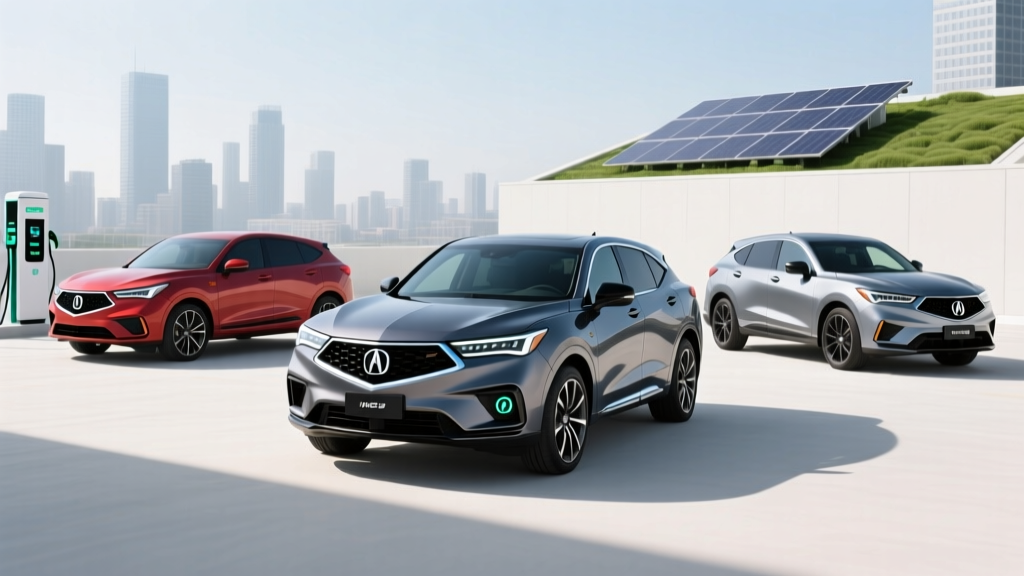
Acura enters 2026 with a compact but meaningful electrified lineup spanning three distinct categories: the conventional hybrid MDX Sport Hybrid (HEV), the plug-in hybrid Integra Type S PHEV, and the all-electric ZDX. For buyers searching for an Acura hybrid 2026 model, the right choice depends entirely on your charging access, commute distance, and whether you want to plug in at all. This guide breaks down every electrified Acura with the exact EPA figures, battery specs, and ownership costs you need to decide.
HEV vs PHEV vs EV — What's the Difference?
Conventional Hybrid (HEV): Uses a small battery recharged by the engine and regenerative braking. You never plug it in. The MDX Sport Hybrid falls here.
Plug-in Hybrid (PHEV): Carries a larger battery you can charge from a wall outlet or public charger, giving 20-40 miles of electric-only driving before the gas engine takes over. The Integra PHEV occupies this space.
Battery Electric (BEV): No gas engine at all. The ZDX is Acura's all-electric flagship — covered briefly here for comparison, though it's not technically a hybrid.
2026 Acura MDX Sport Hybrid: MPG, Powertrain & Pricing
The MDX Sport Hybrid remains Acura's volume hybrid, pairing a 3.5-liter V6 with a three-motor Sport Hybrid SH-AWD system. It requires no plug-in charging — the 1.3 kWh lithium-ion battery recharges through regenerative braking and the engine.
| Specification | Value |
|---|---|
| Powertrain | 3.5L V6 + 3 electric motors (SH-AWD) |
| Combined Horsepower | 355 hp |
| Combined Torque | 350 lb-ft |
| Battery Capacity | 1.3 kWh (lithium-ion, self-charging) |
| EPA MPG (City / Highway / Combined) | 28 / 27 / 28 MPG |
| 0-60 mph | 6.1 seconds |
| Drivetrain | SH-AWD (torque-vectoring rear axle) |
| Plug-in Required? | No — conventional HEV |
| Base MSRP (Technology trim) | $58,950 |
| Federal Tax Credit (§30D) | Not eligible (HEV, not PHEV/BEV) |
Real-World MPG: MDX Sport Hybrid
The EPA rates the MDX Sport Hybrid at 28 MPG combined, but real-world results vary by driving pattern. In city driving, where the electric motors handle low-speed propulsion and regenerative braking recaptures energy at every stop, owners regularly report 29-31 MPG. On sustained highway trips at 75+ mph, expect 25-26 MPG as the V6 carries more of the load. Cold weather reduces efficiency by roughly 5-8% due to increased engine warm-up cycles and cabin heating demands.
For context, the non-hybrid MDX AWD rates at 21 MPG combined — the Sport Hybrid delivers a 33% improvement, which translates to roughly $450-$600 in annual fuel savings for a driver covering 15,000 miles per year at $3.50/gallon, per fueleconomy.gov calculations.
2026 Acura Integra PHEV: Electric-Only Range & Charging
For 2026, Acura has introduced a plug-in hybrid variant of the Integra, built on Honda's proven e:PHEV architecture. Unlike the MDX Sport Hybrid, this model can and should be plugged in to unlock its full efficiency potential.
| Specification | Value |
|---|---|
| Powertrain | 2.0L 4-cylinder + 2 electric motors |
| Combined Horsepower | 204 hp |
| Combined Torque | 247 lb-ft |
| Battery Capacity | 17.7 kWh usable (lithium-ion) |
| EPA Electric-Only Range | 42 miles |
| Total Combined Range | ~470 miles (electric + gas) |
| EPA MPG (Charge-Sustaining, Combined) | 48 MPG combined (gas-only after battery depletion) |
| MPGe (Charge-Depleting, Combined) | 105 MPGe |
| Level 1 Charging (120V) | ~12 hours (full charge) |
| Level 2 Charging (240V, 3.6 kW) | ~4.5 hours (full charge) |
| DC Fast Charging | Not supported |
| 0-60 mph | 7.2 seconds |
| Base MSRP | $44,500 (estimated) |
Electric-Only Range: How Far Can It Go?
The Integra PHEV's EPA-rated 42 miles of electric-only range covers the majority of daily commutes. In real-world testing, drivers with moderate acceleration habits and temperatures above 60°F consistently achieve 38-44 miles on a full charge. Highway driving at 70+ mph drops electric range to approximately 30-33 miles due to increased aerodynamic drag and reduced regenerative braking opportunities.
Cold weather (below 32°F) reduces electric-only range by 15-25%, bringing it down to roughly 30-35 miles. This is typical for PHEVs in this battery-size class. Once the battery depletes, the 2.0L engine seamlessly engages and the car operates as a conventional hybrid at 48 MPG combined.
Charging the Integra PHEV
The Integra PHEV charges via a J1772 connector (standard for non-Tesla North American EVs). There is no DC fast charging capability — this is common for PHEVs, whose smaller batteries make Level 2 charging sufficient for overnight replenishment.
| Charging Method | Power | 0-100% Time | Cost (avg.) |
|---|---|---|---|
| Level 1 (120V household outlet) | 1.4 kW | ~12 hours | $1.80-$2.50 (residential) |
| Level 2 (240V home charger) | 3.6 kW | ~4.5 hours | $1.80-$2.50 (residential) |
| DC Fast Charge | N/A | Not supported | — |
At the national average residential electricity rate of $0.16/kWh (per EIA data), a full 17.7 kWh charge costs approximately $2.83. That works out to roughly 6.7 cents per electric mile — compared to about 10.4 cents per mile in gas-only hybrid mode at 48 MPG and $3.50/gallon.
Battery Warranty & Reliability: What to Expect
Acura Hybrid Battery Warranty Coverage (2026)
MDX Sport Hybrid (HEV): 8 years / 100,000 miles (10 years / 150,000 miles in CARB states including CA, NY, MA, and others)
Integra PHEV: 8 years / 100,000 miles (10 years / 150,000 miles in CARB states)
Warranty Trigger: Battery capacity falling below approximately 70% of original capacity
Estimated Out-of-Warranty Replacement: $2,500-$4,000 (MDX HEV pack); $4,500-$7,000 (Integra PHEV pack)
Honda/Acura's hybrid battery track record is among the best in the industry. Real-world data from third-party fleet analyses shows that Acura/Honda hybrid battery packs typically retain 85-90% of original capacity after 100,000 miles. The MDX Sport Hybrid's 1.3 kWh pack experiences shallow cycling (it rarely charges above 60% or below 30% state of charge), which dramatically extends cell life. The Integra PHEV's larger 17.7 kWh pack has more robust thermal management and a larger buffer, meaning usable degradation is similarly modest.
If a replacement is needed out of warranty, the MDX's smaller HEV pack is significantly cheaper than a full EV battery. The Integra PHEV pack is more costly due to its larger capacity, but still far below BEV replacement costs of $10,000-$20,000+.
Pricing, Trims & Tax Credit Eligibility
| Model | Trim | MSRP | Federal §30D Credit | Effective Price |
|---|---|---|---|---|
| MDX Sport Hybrid | Technology | $58,950 | $0 (HEV not eligible) | $58,950 |
| MDX Sport Hybrid | Advance | $64,500 | $0 | $64,500 |
| Integra PHEV | Base | $44,500 (est.) | Up to $3,750* | ~$40,750* |
| Integra PHEV | A-Spec | $48,200 (est.) | Up to $3,750* | ~$44,450* |
*Federal tax credit estimates based on current IRS §30D rules for 2026. PHEVs must meet battery capacity (≥7 kWh — Integra qualifies at 17.7 kWh), MSRP cap ($55,000 for sedans), buyer income cap ($150,000 single / $300,000 joint AGI), and critical-mineral/battery-component sourcing requirements. The credit amount depends on how many sourcing requirements are met — $3,750 if one threshold is met, $7,500 if both. As of early 2026, most Honda/Acura PHEVs qualify for the partial $3,750 credit due to battery-component sourcing constraints. The credit can be transferred to the dealer at point of sale as a purchase-price reduction. Always verify eligibility with a tax professional before purchase.
The MDX Sport Hybrid does not qualify for any federal purchase incentive because conventional HEVs are excluded from §30D by statute. Some states offer separate hybrid rebates — check your state energy office or AFDC state incentive database for local programs.
Hybrid vs PHEV vs EV: Which Acura Fits You?
Choose the MDX Sport Hybrid (HEV) If:
- You cannot charge at home or work (apartment, street parking)
- You need 7-seat family SUV space
- You want zero behavioral change — just drive it like a gas car
- Your commute is mostly city driving where regenerative braking maximizes MPG
- You tow occasionally (3,500 lb capacity)
Choose the Integra PHEV If:
- You have access to a 120V or 240V outlet at home
- Your daily commute is under 40 miles round-trip
- You want electric daily driving but gas flexibility for road trips
- You want to reduce fuel costs without range anxiety
- You prefer a sport-sedan driving position
Decision Framework: Acura Electrified 2026
Can you plug in nightly AND commute under 42 miles? → Integra PHEV. You'll drive on electricity 80%+ of days and barely use gas.
Need 3 rows, no plug-in access? → MDX Sport Hybrid. 28 MPG combined with no lifestyle change.
Can you charge at home AND never want to buy gas? → Consider the Acura ZDX (325-mile BEV, eligible for full $7,500 credit if sourcing requirements are met).
5-Year Ownership Cost Snapshot
| Cost Category | MDX Sport Hybrid | Integra PHEV (80% electric) |
|---|---|---|
| Fuel / Electricity | $9,375 (gas @ $3.50/gal, 28 MPG) | $3,200 (mix of electricity + gas) |
| Insurance (avg.) | $10,500 | $8,750 |
| Maintenance | $3,200 | $2,400 (less engine use) |
| Federal Tax Credit | $0 | -$3,750 |
| Estimated Depreciation | $22,000 | $18,500 |
| 5-Year Total (incl. MSRP) | $104,025 | $86,100 |
Note: The Integra PHEV's lower total cost assumes the buyer charges at home nightly and drives ~80% of miles on electricity. Without home charging, the PHEV advantage narrows significantly as you'll operate in gas-only mode more often. Insurance estimates are national averages — your rate depends on ZIP code, driving record, and coverage level.
Frequently Asked Questions
How many MPG does the 2026 Acura hybrid get?
The MDX Sport Hybrid achieves 28 MPG combined (28 city / 27 highway) per the EPA. In real-world city driving with frequent stops, many owners see 29-31 MPG. Highway-only trips at 75+ mph drop to 25-26 MPG. The Integra PHEV rates at 48 MPG combined once the battery is depleted, plus 105 MPGe when operating in electric mode.
How far can the Integra PHEV go on electric only?
The EPA rates it at 42 miles electric-only. Real-world results range from 38-44 miles in mild weather, dropping to 30-35 miles in sub-freezing temperatures or sustained highway speeds. After the battery depletes, the gas engine provides an additional ~430 miles of range for a total of roughly 470 miles.
Does the 2026 Acura MDX hybrid need to be plugged in?
No. The MDX Sport Hybrid is a conventional HEV — it recharges its small 1.3 kWh battery through regenerative braking and the gasoline engine. There is no plug, no charging cable, and no behavior change required. You fuel it exclusively at gas stations.
Is the Acura hybrid battery reliable and what does replacement cost?
Acura (via Honda's engineering) has one of the strongest hybrid battery reliability records in the industry. Battery packs are warrantied for 8 years/100,000 miles (10 years/150,000 miles in CARB states). Most packs retain 85-90% capacity at 100,000 miles. Out-of-warranty replacement runs $2,500-$4,000 for the MDX HEV pack and $4,500-$7,000 for the Integra PHEV pack — significantly less than a full EV battery replacement.
Does any 2026 Acura hybrid qualify for a federal tax credit?
The MDX Sport Hybrid (HEV) does not qualify — conventional hybrids are excluded from the §30D credit. The Integra PHEV may qualify for up to $3,750 (partial credit) depending on battery-component sourcing requirements, subject to the $55,000 sedan MSRP cap and buyer income limits ($150,000 single / $300,000 joint). The all-electric ZDX may qualify for up to $7,500. Always verify current eligibility at IRS.gov and consult a tax professional.
Can the Integra PHEV DC fast charge?
No. Like most plug-in hybrids, the Integra PHEV supports Level 1 (120V) and Level 2 (240V) AC charging only, via a J1772 connector. A full Level 2 charge takes approximately 4.5 hours. DC fast charging is not offered because the 17.7 kWh battery is small enough that overnight AC charging is practical for daily use.
Hybrid vs PHEV vs EV — which Acura should I buy?
If you have no charging access: MDX Sport Hybrid (HEV). If you can charge at home and commute under 42 miles: Integra PHEV for maximum savings. If you can charge at home and want zero gas: Acura ZDX (BEV). The PHEV is the sweet spot for buyers who want electric daily driving without sacrificing road-trip flexibility.