Active Hybrid Explained: How Today's Hybrids Actually Work
If you've searched for fuel-efficient vehicles lately, you've likely encountered the term active hybrid. It isn't a single model or a trademarked system — it's a descriptor for modern hybrid powertrains that actively manage energy flow between a gasoline engine and one or more electric motors in real time. Unlike early 2000s hybrids that leaned heavily on the engine with minimal electric assist, today's active hybrid systems continuously recalculate the optimal power split based on throttle input, battery state of charge, speed, and terrain.
The result is a vehicle that can shut off its engine entirely at low speeds, recover kinetic energy during braking, and seamlessly blend power sources without any driver intervention. But the term covers two fundamentally different architectures, and choosing the wrong one can cost you thousands in missed efficiency or unnecessary charging equipment.
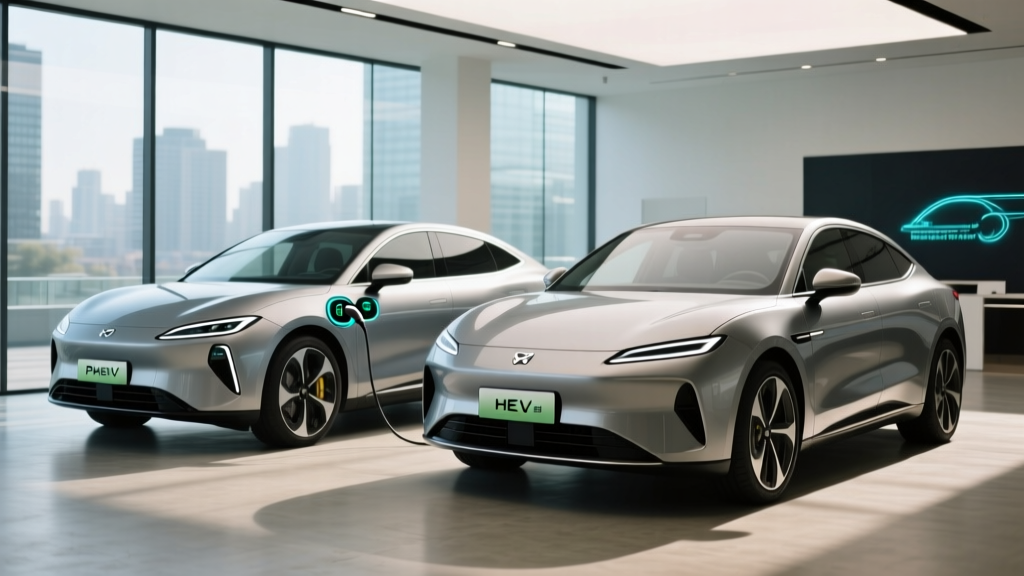
HEV vs PHEV: The Two Types of Active Hybrids
| Attribute | Conventional Hybrid (HEV) | Plug-in Hybrid (PHEV) |
|---|---|---|
| Plug-in charging? | No — self-charging via regen & engine | Yes — plug in to access electric-only range |
| Battery size | 0.5–1.5 kWh (small buffer) | 10–25+ kWh usable |
| Electric-only range | Less than 1 mile at very low speed | 25–50+ miles at highway speed |
| Fuel economy when battery depleted | EPA combined 40–55 MPG typical | EPA combined 30–45 MPG (gas-only mode) |
| Federal tax credit (§30D) | Not eligible | Up to $7,500 if requirements met |
| Best for | Drivers without home/workplace charging | Drivers who can charge daily and want EV-like commutes |
Both architectures qualify as active hybrids because both use predictive energy management. The critical difference: an HEV never needs a plug and delivers consistent MPG regardless of your habits, while a PHEV rewards daily charging with near-zero fuel use on commutes but loses much of its advantage if you never plug in.
Real-World MPG: What Active Hybrids Actually Deliver
One of the most misunderstood aspects of active hybrids is how EPA ratings translate to daily driving. Unlike pure EVs, which often fall short of EPA range on the highway, conventional hybrids frequently exceed their EPA city rating in real-world stop-and-go driving. That's because city driving maximizes regenerative braking and low-speed electric assist — exactly where these systems excel.
| Model | Type | City MPG | Highway MPG | Combined MPG | Real-World Note |
|---|---|---|---|---|---|
| Toyota Prius LE | HEV | 57 | 56 | 57 | Owners report 55–62 MPG in mixed suburban driving |
| Hyundai Sonata Hybrid | HEV | 44 | 51 | 47 | Highway-biased; closer to 49 MPG on flat interstate |
| Honda Accord Hybrid | HEV | 51 | 44 | 48 | City-dominant; expect 45–52 MPG in urban cycles |
| Toyota RAV4 Prime | PHEV | 94 MPGe (EV mode) | 84 MPGe | 94 MPGe / 38 MPG gas | 42 mi EV range; 38 MPG once battery depletes |
| Chrysler Pacifica Hybrid | PHEV | 82 MPGe (EV mode) | 70 MPGe | 82 MPGe / 30 MPG gas | 32 mi EV range; heavier minivan loses efficiency on gas-only highway |
| Ford Escape PHEV | PHEV | 105 MPGe (EV mode) | 93 MPGe | 101 MPGe / 40 MPG gas | 37 mi EV range; 41–44 MPG gas-only in suburban driving |
Source: EPA estimates via fueleconomy.gov. Real-world figures reflect aggregated owner reports and independent testing; individual results vary with climate, terrain, and driving style.
For highway-dominant drivers, the gap between HEV and PHEV narrows considerably. A PHEV's electric motor provides less benefit at sustained 70+ mph speeds, and once the battery depletes, you're carrying extra battery weight on gasoline alone. If your commute is mostly interstate driving and you can't charge at work, a conventional HEV may actually deliver better overall fuel economy.
Electric-Only Range and Total Range for PHEVs
The electric-only range of a plug-in active hybrid determines how much of your daily driving can be done without burning a drop of gasoline. For 2026 model-year PHEVs, expect anywhere from 25 to 50+ miles on battery power alone, depending on battery capacity and vehicle weight.
| Model | Battery (kWh usable) | EV-Only Range (EPA) | Total Range (EV + Gas) | Level 2 Charge Time | DC Fast Charge? |
|---|---|---|---|---|---|
| Toyota RAV4 Prime | 14.9 kWh | 42 miles | ~600 miles | ~2.5 hours | No |
| Ford Escape PHEV | 14.4 kWh | 37 miles | ~520 miles | ~3.5 hours | No |
| Jeep Wrangler 4xe | 17.3 kWh | 22 miles | ~370 miles | ~2 hours | No |
| BMW X5 xDrive50e | 25.7 kWh | 38 miles | ~440 miles | ~4 hours | No |
| Toyota Prius Prime | 13.6 kWh | 44 miles (SE trim) | ~600 miles | ~4 hours | No |
A critical pattern in the table above: virtually no PHEVs support DC fast charging. The batteries are too small to justify the cost and thermal management complexity of DC hardware. You'll charge exclusively on Level 1 (standard 120V outlet, roughly 4–8 hours for a full charge) or Level 2 (240V, typically 2–4 hours). This is perfectly adequate for overnight home charging, but it means you can't top up at a highway fast-charging station during a road trip.
When the battery depletes, the PHEV seamlessly transitions to hybrid mode, functioning exactly like a conventional HEV — just typically with slightly lower MPG due to the added weight of the larger battery pack.
Powertrain Performance: Engine Meets Electric Motor
Active hybrids don't just save fuel — many deliver genuinely strong performance by combining engine and motor torque. The electric motor provides instant low-end torque while the gasoline engine contributes sustained high-speed power. Here's how several popular models stack up:
- Toyota Prius (HEV): 2.0L 4-cylinder + dual motors, 196 combined HP, 0–60 mph in ~7.0 seconds
- Toyota RAV4 Prime (PHEV): 2.5L 4-cylinder + dual motors, 302 combined HP, 0–60 mph in ~5.7 seconds
- Honda Accord Hybrid: 2.0L 4-cylinder + dual motors, 204 combined HP, 0–60 mph in ~7.5 seconds
- BMW X5 xDrive50e (PHEV): 3.0L inline-6 + electric motor, 483 combined HP, 0–60 mph in ~4.6 seconds
- Ford Escape PHEV: 2.5L 4-cylinder + electric motor, 210 combined HP, 0–60 mph in ~7.8 seconds
The RAV4 Prime is a standout example of how active hybrid technology can deliver sports-SUV acceleration alongside 42 miles of electric commuting. That 302 HP figure comes from running both the engine and motors simultaneously under hard acceleration — something a conventional gas-only RAV4 (203 HP) simply can't match.
Battery Longevity, Warranty, and Replacement Costs
Battery degradation is the single biggest concern for hybrid buyers, and it's where the data is most reassuring. Unlike pure EVs with large, expensive battery packs, hybrid batteries are relatively small and operate within a narrow state-of-charge window — typically between 40% and 80% — which dramatically reduces chemical stress and extends cycle life.
Hybrid Battery Warranty Standards (2026)
Federal law mandates that hybrid battery packs carry a minimum warranty of 8 years / 100,000 miles in all 50 states. In California Air Resources Board (CARB) states — including California, New York, Massachusetts, and several others — that warranty extends to 10 years / 150,000 miles for PZEV-classified components.
Most manufacturers meet or exceed these minimums:
- Toyota: 10 years / 150,000 miles on all hybrid batteries (nationwide, 2020+ models)
- Honda: 8 years / 100,000 miles (extended in CARB states)
- Hyundai/Kia: 10 years / 100,000 miles for original owners
- Ford: 8 years / 100,000 miles
- BMW: 8 years / 80,000 miles
Source: Manufacturer warranty documentation. Confirm terms at fueleconomy.gov hybrid comparison.
If your hybrid battery does fail outside warranty, replacement costs vary significantly:
- HEV battery replacement: $2,000–$4,500 (smaller pack, simpler chemistry)
- PHEV battery replacement: $5,000–$12,000 (larger pack, more complex thermal management)
In practice, hybrid battery failures before 150,000 miles are uncommon. Toyota's hybrid synergy drive system has accumulated over two decades of real-world data, with many Prius taxis exceeding 300,000 miles on the original battery. The key longevity factor is avoiding prolonged storage at extreme states of charge — driving your hybrid regularly is actually the best battery maintenance strategy.
Pricing, Tax Credits, and Total Cost of Ownership
Active hybrids carry a price premium over their gas-only equivalents, but that premium has narrowed considerably. Here's the current landscape:
| Model | Base MSRP | Gas-Only Equivalent | Hybrid Premium | Federal §30D Credit |
|---|---|---|---|---|
| Toyota Prius LE (HEV) | $29,445 | N/A (hybrid only) | — | Not eligible |
| Toyota Prius Prime SE (PHEV) | $34,295 | Prius LE | $4,850 | Up to $3,750* |
| Toyota RAV4 Prime SE (PHEV) | $44,965 | RAV4 LE ($30,445) | $14,520 | Up to $7,500* |
| Honda Accord Hybrid Sport (HEV) | $34,995 | Accord LX ($29,290) | $5,705 | Not eligible |
| Ford Escape PHEV (PHEV) | $40,400 | Escape ($30,995) | $9,405 | Up to $3,750* |
*Federal tax credit caveats: PHEV credit amounts under IRS §30D depend on battery capacity, critical mineral sourcing, and component manufacturing requirements. For 2026, the credit phases based on how many sourcing requirements the vehicle meets — $3,750 for meeting critical minerals OR battery components, $7,500 for meeting both. Additionally:
- Buyer AGI must not exceed $150,000 (single) / $300,000 (joint filing)
- PHEV MSRP must be under $80,000 for SUVs/pickups/vans, $55,000 for sedans
- Credit can be transferred to the dealer as a point-of-sale discount
- Conventional HEVs do NOT qualify for §30D — they use no plug-in capability
Verify current eligibility at IRS.gov clean vehicle credits. Rules are subject to change.
For total cost of ownership, the math favors PHEVs if you can charge at home and your commute falls within the electric-only range. A RAV4 Prime owner driving 30 miles round-trip and charging nightly might use under 100 gallons of gasoline per year. That same driver in a gas RAV4 (28 MPG combined) would burn roughly 390 gallons annually — a difference of ~$800–$1,000 per year at $3/gallon.
Active Hybrid vs PHEV vs Full EV: Which Fits Your Life?
The decision between a conventional active hybrid (HEV), a plug-in hybrid (PHEV), and a battery electric vehicle (BEV) comes down to three questions: Can you charge at home? How far do you drive daily? And how often do you take long road trips?
Choose Based on Your Situation
Choose a conventional HEV if: You lack reliable home or workplace charging, you want maximum simplicity with no behavioral changes, your daily driving is unpredictable, or you want the lowest possible purchase price with strong fuel economy. You'll get 40–57 MPG combined without ever thinking about it.
Choose a PHEV if: You can install a Level 2 charger at home (or have reliable workplace charging), your daily commute is under 40 miles round-trip, you take road trips a few times per year and want zero range anxiety, and you want to capture the §30D tax credit. You'll drive on electricity most days and use gasoline only for longer trips.
Choose a full EV if: You have home charging, your daily driving is under 250 miles, you're willing to plan around charging stops on road trips, and you want the lowest per-mile energy cost and minimal maintenance. You'll eliminate gasoline entirely but accept a higher upfront cost and some trip-planning overhead.
Pros and Cons of Active Hybrid Ownership
Advantages
- No plug required for HEVs — works with existing fueling habits
- Regenerative braking reduces brake pad wear by 30–50%
- City MPG often exceeds EPA estimates in real-world driving
- Proven long-term reliability with 20+ years of hybrid data
- No range anxiety — gasoline infrastructure everywhere
- PHEVs offer EV-like daily commuting with gas-car road trip flexibility
- Strong combined HP from engine + motor synergy (RAV4 Prime: 302 HP)
Limitations
- HEVs don't qualify for federal §30D tax credit
- PHEVs add $5,000–$15,000 in upfront cost vs gas equivalents
- PHEV gas-only MPG is lower than dedicated HEVs (extra battery weight)
- No DC fast charging on any current PHEV
- Higher insurance premiums on some hybrid models (10–15% above gas equivalent)
- Battery replacement, while rare, costs $2,000–$12,000 out of warranty
- HEVs still produce tailpipe emissions — not zero-emission vehicles
Frequently Asked Questions
How many MPG does an active hybrid get?
It depends on the model and driving conditions. The 2026 Toyota Prius LE achieves an EPA-estimated 57 MPG combined (57 city / 56 highway), while the Honda Accord Hybrid delivers 48 MPG combined (51 city / 44 highway). In real-world driving, city-dominant routes often yield higher-than-EPA results thanks to regenerative braking. Highway-dominant routes may fall 2–5 MPG below the combined rating.
How far can a PHEV go on electric only?
Current PHEVs offer 22–50 miles of electric-only range. The Toyota Prius Prime leads at 44 miles (SE trim), the RAV4 Prime delivers 42 miles, and the Ford Escape PHEV manages 37 miles. Heavier vehicles like the Jeep Wrangler 4xe offer less (22 miles). Once the battery depletes, the vehicle continues as a conventional hybrid with no interruption.
Do conventional hybrids need to be plugged in?
No. Conventional hybrids (HEVs) are entirely self-charging. The battery is replenished through regenerative braking and by the gasoline engine. You fuel them exactly like a gas car — the hybrid system operates automatically with no driver action required. Only plug-in hybrids (PHEVs) benefit from external charging.
Is an active hybrid reliable, and what does battery replacement cost?
Modern hybrid systems are among the most reliable powertrains available. Toyota's hybrid system has been in continuous production since 1997 with incremental improvements. Hybrid batteries are warrantied for 8–10 years / 100,000–150,000 miles depending on manufacturer and state. Out-of-warranty HEV battery replacement runs $2,000–$4,500; PHEV replacement costs $5,000–$12,000. Most hybrid batteries last well beyond 150,000 miles under normal use.
Does an active hybrid qualify for a tax credit?
Only plug-in hybrids (PHEVs) are eligible for the federal §30D clean vehicle credit — conventional hybrids (HEVs) do not qualify because they cannot be plugged in. PHEV credit amounts range from $3,750 to $7,500 depending on battery sourcing requirements, and are subject to buyer income caps ($150K single / $300K joint) and MSRP caps ($55K sedans / $80K SUVs). The credit can be applied as a point-of-sale discount. Check current eligibility at IRS.gov.
Which is better for me — an active hybrid, a PHEV, or a full EV?
If you cannot charge at home, choose a conventional HEV for effortless fuel savings. If you can charge at home and commute under 40 miles daily, a PHEV lets you drive on electricity most days while keeping gas for road trips. If you have home charging and want the lowest operating cost with zero tailpipe emissions, a full EV is the most economical long-term choice — but requires trip planning for drives beyond ~250 miles.