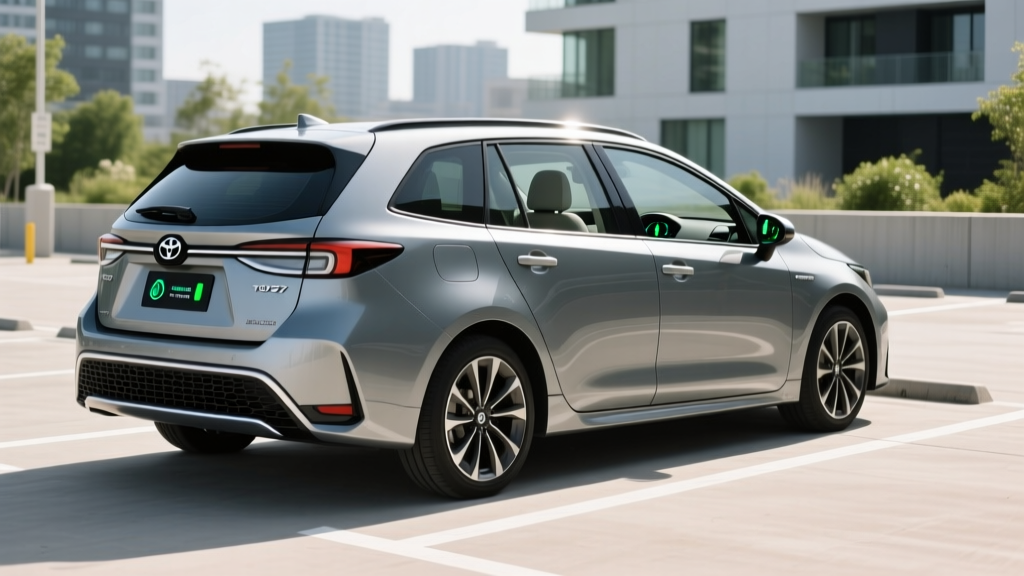
The Toyota Corolla Hybrid sedan has been a staple of fuel-efficient commuting since its US debut, but wagon buyers have long looked across the Atlantic—or to the used market—for a practical, electrified hauler. The 2027 Toyota Corolla Hybrid Wagon (sold as the Corolla Touring Sports Hybrid in European and Japanese markets) represents Toyota's latest iteration of the compact hybrid wagon formula: exceptional fuel economy, all-wheel-drive capability, and cargo versatility in a package that undercuts most crossover SUVs on price and efficiency.
As of early 2026, Toyota has not officially confirmed a US-market Corolla Hybrid Wagon for the 2027 model year. What follows is based on the confirmed global-spec Corolla Touring Sports Hybrid, Toyota's fifth-generation hybrid powertrain data, and strong industry reporting pointing toward a North American introduction. All US pricing and availability details should be treated as preliminary and estimated until Toyota's official announcement.
HEV vs. PHEV: Understanding What the Corolla Hybrid Wagon Is
Before examining specs, it's essential to understand the powertrain type. The 2027 Corolla Hybrid Wagon is a conventional hybrid electric vehicle (HEV), not a plug-in hybrid (PHEV). This distinction matters for your daily routine, fuel costs, and tax-credit eligibility.
Conventional Hybrid (HEV)
- No plug required — the battery charges via regenerative braking and the gasoline engine
- Small battery (~1.0–1.5 kWh usable)
- Cannot drive on electric power alone for meaningful distances
- Optimizes MPG across all driving conditions
- No federal EV tax credit eligibility under §30D
- Lower upfront cost, simpler ownership
Plug-In Hybrid (PHEV)
- Must be plugged in to access full benefits
- Larger battery (typically 8–20 kWh)
- 20–50 miles of electric-only range before the engine engages
- Can operate as a full EV for short commutes
- May qualify for up to $7,500 federal tax credit (subject to §30D rules)
- Higher upfront cost, requires home charging access
The Corolla Hybrid Wagon falls firmly in the HEV column. You never plug it in. You simply fill it with gasoline and drive—the hybrid system handles the rest, seamlessly blending electric motor assist with the gasoline engine to maximize efficiency. This is the same architecture that has made the Prius and Corolla Hybrid sedan so popular among buyers who want maximum MPG without changing their fueling habits.
Powertrain and Performance Specs
The 2027 Corolla Hybrid Wagon is expected to use Toyota's fifth-generation hybrid system, the same powertrain family found in the current Prius and Corolla Hybrid sedan but tuned for the wagon's slightly larger dimensions and cargo-hauling duties.
| Specification | Estimated Value |
|---|---|
| Engine | 2.0L 4-cylinder Atkinson-cycle |
| Engine Output | ~150 hp / 138 lb-ft torque |
| Electric Motor (front) | ~83 hp permanent magnet |
| Electric Motor (rear, AWD) | ~41 hp (e-AWD) |
| Combined System Horsepower | ~196 hp |
| Transmission | eCVT (planetary gearset) |
| Drivetrain | Electronic AWD (e-AWD) standard |
| Hybrid Battery | ~1.0 kWh lithium-ion (NiMH on base trims possible) |
| 0–60 mph (est.) | ~7.2 seconds |
The e-AWD system deserves specific attention. Unlike mechanical all-wheel drive with a driveshaft and center differential, Toyota's e-AWD uses a dedicated rear electric motor that engages automatically when the system detects front-wheel slip—during rain, snow, or hard acceleration from a stop. It adds roughly 100 pounds and has minimal impact on fuel economy, but it provides genuine all-weather confidence that front-drive competitors can't match. This system has proven effective in the RAV4 Hybrid and Prius AWD, and its inclusion in the Corolla Hybrid Wagon would make it one of the few AWD wagons available under $35,000.
Fuel Economy: EPA Estimates and Real-World MPG
Fuel economy is the headline act here. Based on the global-spec Corolla Touring Sports Hybrid with the 2.0L fifth-gen system and extrapolating from EPA data for the mechanically similar Corolla Hybrid sedan, here are the projected figures:
| Driving Cycle | EPA Estimate | Real-World Expectation |
|---|---|---|
| City | 53 MPG | 54–58 MPG |
| Highway | 46 MPG | 42–47 MPG |
| Combined | 50 MPG | 48–54 MPG |
At 50 MPG combined and a 11.4-gallon fuel tank (estimated), the Corolla Hybrid Wagon should deliver a total range of approximately 570 miles between fill-ups. That's Los Angeles to San Francisco and back on a single tank, with fuel to spare. For context, a comparable gas-only compact wagon or crossover would deliver 320–380 miles on a tank.
Annual fuel cost at 15,000 miles per year and $3.40/gallon regular unleaded: approximately $1,020. A gas-only competitor at 30 MPG combined would cost roughly $1,700 annually—a savings of $680 per year, or $3,400 over five years, with the hybrid.
How Does the Corolla Hybrid Wagon Compare to the Corolla Hybrid Sedan?
US buyers already have access to the Corolla Hybrid sedan, so why consider the wagon? The differences are substantial in practicality, modest in mechanicals.
| Attribute | Sedan (Confirmed US) | Wagon (Estimated US) |
|---|---|---|
| Combined MPG (EPA) | 50 MPG | ~50 MPG |
| Combined HP | 138 hp (1.8L) | ~196 hp (2.0L) |
| Cargo (behind rear seats) | 13.1 cu ft | ~21 cu ft |
| Cargo (seats folded) | N/A (sedan trunk) | ~55 cu ft |
| AWD Availability | Optional | Standard (est.) |
| Starting MSRP | ~$24,000 | ~$28,000–$30,000 |
The wagon's likely 2.0L hybrid powertrain would give it a meaningful power advantage over the sedan's 1.8L system—196 hp versus 138 hp is the difference between adequate and genuinely quick for highway merging and mountain passes. The cargo advantage is even more dramatic: 55 cubic feet with seats folded rivals compact crossovers like the Honda CR-V and Toyota RAV4, but with a lower load floor, better aerodynamics, and 10–15 MPG better fuel economy.
Pricing, Trims, and Tax Credit Eligibility
Based on global pricing for the Corolla Touring Sports Hybrid and typical US-market adjustments, here is the estimated trim and pricing structure:
| Trim Level | Estimated MSRP | Key Features |
|---|---|---|
| LE | $28,500 | 8" touchscreen, TSS 3.0, 16" alloys, cloth seats |
| SE | $30,500 | Sport-tuned suspension, 18" wheels, SofTex seats |
| XLE | $33,000 | 10.5" display, heated seats, power liftgate, JBL audio |
Federal Tax Credit: Does the Corolla Hybrid Wagon Qualify?
No. The Corolla Hybrid Wagon, as a conventional HEV, does not qualify for the IRS §30D Clean Vehicle Credit. The federal credit of up to $7,500 applies exclusively to battery electric vehicles (BEVs) and plug-in hybrids (PHEVs) that meet battery-component and critical-mineral sourcing requirements, MSRP caps ($55,000 for sedans/wagons, $80,000 for SUVs/trucks), and buyer income limits ($150,000 single / $300,000 joint for new vehicles).
Conventional hybrids like the Corolla Hybrid Wagon have not qualified for any federal purchase incentive since the original Hybrid Synergy Drive credits expired over a decade ago. However, some states and utilities offer rebates or HOV-lane access for hybrids—check your state's energy office or AFDC incentive database for local programs. These vary widely by jurisdiction and change frequently.
Battery Longevity, Warranty, and Replacement Cost
Toyota's hybrid battery track record is among the best in the industry. The Prius, now in its fifth generation and on the road since 2000 in the US, has demonstrated that Toyota's hybrid batteries routinely last 150,000–200,000+ miles with minimal capacity loss. The battery in a conventional HEV is relatively small (~1.0 kWh) and operates within a narrow state-of-charge window (typically 40–80%), which dramatically reduces stress and degradation compared to the deep cycling a full EV battery endures.
What If the Battery Does Need Replacement?
Based on current Toyota hybrid battery replacement costs:
- Dealer replacement (new OEM battery): $2,000–$3,500 including labor
- Refurbished/remanufactured battery: $1,000–$2,000 including labor
- Individual module replacement: $300–$800 (independent hybrid specialists can replace only the failed cells)
For context, replacing the hybrid battery in a Corolla Hybrid is roughly equivalent to a timing-belt service and water-pump replacement on a conventional gas car—it's a known maintenance item at high mileage, not a catastrophic failure. The vast majority of Toyota hybrid owners never replace the battery during their ownership.
The 12V auxiliary battery (which powers accessories and starts the hybrid system) is a separate maintenance item. In Toyota hybrids, this is typically an AGM battery costing $200–$350 to replace every 4–6 years, identical to any conventional vehicle.
Hybrid vs. PHEV vs. EV: Which Powertrain Fits Your Life?
The Corolla Hybrid Wagon occupies a specific niche. Here's a decision framework to determine whether it's the right electrified vehicle for your situation:
Choose the Corolla Hybrid Wagon (HEV) If:
- You don't have reliable access to home or workplace charging (apartment, street parking, no garage outlet)
- You want maximum MPG without changing any fueling habits
- Your budget is under $35,000 and you want AWD
- You regularly drive 400+ miles between stops and don't want to plan around charging
- You live in a cold climate where EV range loss of 20–30% in winter is a dealbreaker
- You want proven long-term reliability with a 10-year/150,000-mile hybrid warranty
Choose a PHEV (e.g., Toyota Prius Prime) If:
- You can install a Level 2 home charger and your daily commute is under 40 miles
- You want to drive on electricity most days but still take gas-powered road trips
- You want to qualify for the up-to-$7,500 federal tax credit (subject to §30D eligibility)
- You're willing to pay a $5,000–$8,000 premium over a conventional hybrid
Choose a Full EV (e.g., Tesla Model Y, Hyundai Ioniq 5) If:
- You have reliable home Level 2 charging and your daily driving is under 250 miles
- You want zero tailpipe emissions and the lowest per-mile fuel cost (~$0.04/mi on residential electricity vs. ~$0.07/mi in this hybrid)
- You want the strongest federal and state incentives (up to $7,500 federal + state rebates)
- You're willing to plan road trips around DC fast-charging stops
- You want the lowest maintenance costs (no oil changes, no engine, no exhaust system)
Reliability, Safety, and Ownership Costs
Toyota consistently ranks at or near the top of long-term reliability studies. The hybrid powertrain, with its eCVT planetary gearset (no traditional belt-and-pulley CVT to fail), has fewer moving parts than a conventional automatic transmission. There are no spark plugs to replace on schedule (Toyota's Atkinson-cycle engines use iridium plugs rated to 120,000 miles), no alternator (the hybrid motor-generator handles that function), and no starter motor. Regenerative braking significantly extends brake pad life—60,000–100,000 miles on original pads is common for Toyota hybrid owners.
Toyota Safety Sense 3.0 (TSS 3.0) is expected to be standard on all trims, including:
- Pre-Collision System with Pedestrian Detection
- Full-Speed Range Dynamic Radar Cruise Control
- Lane Departure Alert with Steering Assist
- Lane Tracing Assist
- Automatic High Beams
- Road Sign Assist
These are SAE Level 1–2 driver-assistance features—they support the driver but do not replace active attention and control. The driver must remain engaged at all times. This is not autonomous driving.
Estimated 5-year total cost of ownership advantages over a gas-only compact wagon or crossover:
- Fuel savings: ~$3,400 over 5 years (at 15,000 mi/yr, $3.40/gal)
- Brake savings: ~$400–$600 (fewer pad replacements due to regen braking)
- Maintenance savings: ~$300–$500 (no transmission fluid changes, extended plug intervals)
- Insurance: Comparable to gas counterparts (hybrids don't carry the insurance premiums that some EVs do)
Frequently Asked Questions
How many MPG does the 2027 Corolla Hybrid Wagon get?
Based on the fifth-generation Toyota hybrid system and global-spec testing, the estimated EPA rating is 53 city / 46 highway / 50 combined MPG. Real-world city driving often exceeds the EPA estimate, reaching 54–58 MPG in stop-and-go conditions. Highway driving at 75+ mph may yield 42–47 MPG.
Is the 2027 Corolla Hybrid Wagon confirmed for the US market?
As of early 2026, Toyota has not officially confirmed the Corolla Hybrid Wagon for the United States. The wagon body style (Corolla Touring Sports) is sold in Europe, Japan, and other markets. Strong industry reporting and Toyota's pattern of expanding hybrid offerings in the US suggest an announcement is plausible, but all specs and pricing here are estimated until confirmed.
Does the Corolla Hybrid Wagon need to be plugged in?
No. The Corolla Hybrid Wagon is a conventional hybrid (HEV). It charges its own battery through regenerative braking and the gasoline engine. You never plug it in—you simply fill it with regular unleaded gasoline.
Does the Corolla Hybrid Wagon qualify for any federal tax credit?
No. The IRS §30D Clean Vehicle Credit applies only to plug-in vehicles (BEVs and PHEVs). Conventional hybrids like the Corolla Hybrid Wagon do not qualify for the $7,500 federal credit. Some state or utility incentives may apply—check local programs.
How long will the hybrid battery last, and what does replacement cost?
Toyota's hybrid batteries are designed to last the life of the vehicle. Real-world data from Prius and Camry Hybrid owners shows batteries routinely reaching 150,000–200,000+ miles. Toyota covers the hybrid battery for 10 years/150,000 miles. If replacement is needed outside warranty, expect $2,000–$3,500 for a new OEM battery or $1,000–$2,000 for a refurbished unit.
Is the Corolla Hybrid Wagon better than a RAV4 Hybrid?
It depends on your priorities. The RAV4 Hybrid offers more interior space, higher ground clearance, and stronger towing capacity (1,750 lbs). The Corolla Hybrid Wagon offers better fuel economy (~50 vs. ~40 MPG combined), a lower purchase price ($28K vs. $33K+), a lower center of gravity for better handling, and easier parking in tight urban environments. If you don't need SUV ride height or towing, the wagon is the more efficient and affordable choice.
What is the cargo capacity of the Corolla Hybrid Wagon?
Based on the global-spec Corolla Touring Sports, expect approximately 21 cubic feet behind the rear seats and 55 cubic feet with the rear seats folded flat. This is competitive with compact crossovers and substantially more than the Corolla sedan's 13.1-cubic-foot trunk.