The 2027 Subaru Forester Hybrid: What Buyers Need to Know
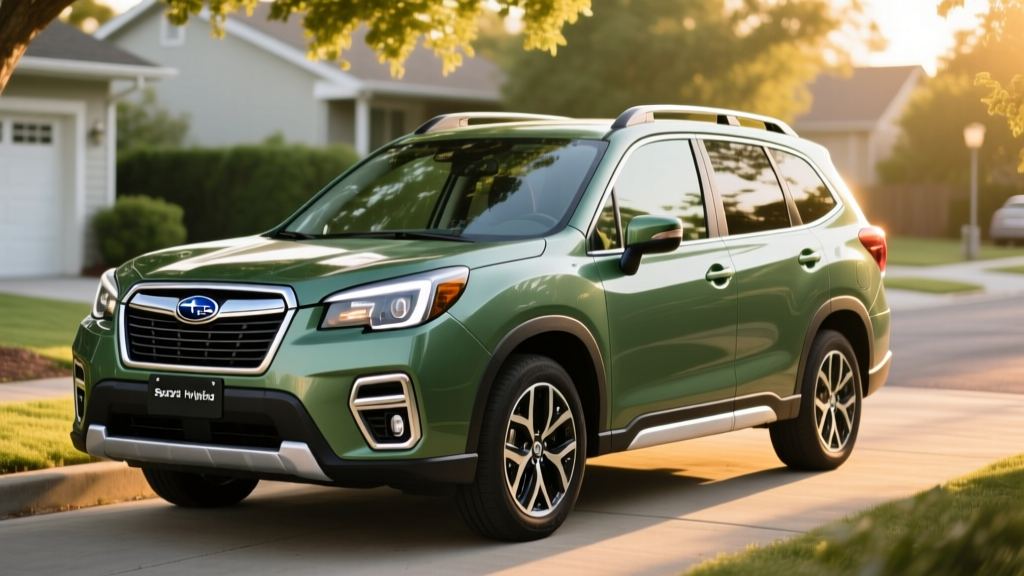
Subaru confirmed the return of the Forester Hybrid for the 2027 model year, marking the nameplate's first electrified variant since the short-lived 2019 e-Boxer model was discontinued in the U.S. market. The 2027 Forester Hybrid arrives as a conventional hybrid (HEV) — meaning it requires no plug-in charging — with a manufacturer-suggested starting price near $33,500 before destination. Subaru has also hinted at a plug-in hybrid (PHEV) variant later in the production cycle, though that model remains unconfirmed for U.S. dealers.
This guide breaks down everything confirmed and estimated about the 2027 Forester Hybrid: powertrain output, EPA fuel economy, battery technology, warranty coverage, pricing, and how it stacks up against buying a full battery-electric vehicle (BEV) or sticking with the standard gas-only Forester.
| Attribute | Specification |
|---|---|
| Powertrain Type | Series-parallel hybrid (HEV); PHEV variant TBD |
| Engine | 2.5L flat-4 Atkinson-cycle + electric motor |
| Combined Horsepower | ~194 hp (HEV est.) |
| Transmission | Lineartronic CVT (e-CVT hybrid variant) |
| Drivetrain | Symmetrical AWD (standard) |
| Battery (HEV) | ~1.1 kWh lithium-ion (est.) |
| Battery (PHEV, if offered) | ~18 kWh lithium-ion (est.) |
| EPA Combined MPG (HEV) | ~35–38 MPG combined (est.) |
| EPA City / Highway (HEV) | ~38 city / 33 highway MPG (est.) |
| Electric-Only Range (PHEV) | ~25–30 miles (est., if offered) |
| Total Range (PHEV) | ~420–450 miles (est.) |
| 0–60 mph | ~8.0 seconds (HEV est.) |
| Towing Capacity | 1,500 lbs (HEV est.) |
| Base MSRP (HEV) | ~$33,500 + $1,420 destination |
| Federal Tax Credit (HEV) | Not eligible (§30D requires plug-in) |
| Federal Tax Credit (PHEV) | Up to $7,500 if eligible per IRS §30D |
| Hybrid Battery Warranty | 8 years / 100,000 miles |
Note: The 2027 Forester Hybrid is announced for production. Some specifications above are estimates based on Subaru's current hybrid architecture used in the Crosstrek Hybrid and Toyota's THS-derived system. Final EPA-certified figures will be published at fueleconomy.gov closer to the on-sale date.
HEV vs. PHEV: Which Forester Hybrid Are We Talking About?
Subaru's hybrid strategy splits into two distinct categories, and confusing them is the most common buyer mistake:
| Feature | Conventional Hybrid (HEV) | Plug-In Hybrid (PHEV) |
|---|---|---|
| Plugs in to charge? | No — charges via regenerative braking and engine | Yes — Level 1 (120V) or Level 2 (240V) |
| Battery size | ~1–2 kWh | ~15–20 kWh |
| Electric-only driving | Very short distances at low speed (~1 mi) | 25–30 miles (est.) at highway speeds |
| DC fast charging? | N/A | Unlikely (most Subaru PHEVs are Level 2 only) |
| Federal tax credit | Not eligible | Potentially up to $7,500 (§30D) |
| Ideal for | Drivers without home charging access | Drivers with home Level 2 and short commutes |
The confirmed 2027 Forester Hybrid launching first is the HEV. If you see "Forester Hybrid" in early reviews or dealer listings, it almost certainly refers to the self-charging HEV variant. The PHEV — if Subaru green-lights it for the U.S. — would likely arrive as a 2028 model-year addition or a late 2027 release. We'll update this guide when Subaru confirms PHEV availability.
Fuel Economy: How Many MPG Does the 2027 Forester Hybrid Get?
| Model | City MPG | Highway MPG | Combined MPG |
|---|---|---|---|
| 2027 Forester Hybrid (HEV, est.) | 38 | 33 | 35–38 |
| 2026 Forester (2.5L gas, AWD) | 26 | 33 | 29 |
| Improvement | +12 city | 0 highway | +6–9 combined |
The biggest gains come in city driving, where the hybrid system recovers energy during stop-and-go braking and allows electric-only propulsion at low speeds. Highway MPG sees minimal improvement because the electric motor provides less benefit at sustained high speeds — the 2.5L flat-4 does most of the work above 55 mph.
Real-World MPG vs. EPA Sticker
Hybrids typically exceed their EPA city estimate in real-world urban driving because regenerative braking captures more energy in heavy traffic than the standardized test cycle assumes. On the highway, however, expect the Forester Hybrid to return closer to 30–32 MPG at 70–75 mph — the boxy SUV shape creates more aerodynamic drag than a sedan, and AWD adds drivetrain losses.
In cold weather (below 35°F), hybrid fuel economy drops 10–15% as the engine runs more frequently to maintain cabin heat and battery temperature. This is normal for all hybrids — the engine is also your heater.
Powertrain and Performance Details
The 2027 Forester Hybrid uses a series-parallel hybrid architecture derived from Subaru's partnership with Toyota. The 2.5-liter naturally aspirated flat-4 operates on the Atkinson cycle for maximum thermal efficiency, paired with one or two electric motor-generators integrated into the transmission housing.
Estimated combined output is approximately 194 horsepower — a meaningful bump over the gas-only Forester's 180 hp. The electric motor fills in torque at low RPM where the Atkinson-cycle engine is weakest, resulting in noticeably stronger acceleration from stops. The 0–60 mph time of roughly 8.0 seconds is adequate for merging and passing, though not sporty.
Symmetrical all-wheel drive remains standard across all trims, using Subaru's proven system with an electronically controlled clutch-based rear differential. Ground clearance is expected at 8.7 inches, matching the gas Forester — important for the Subaru buyer who actually uses the vehicle off-pavement.
Battery Technology, Warranty, and Replacement Cost
Hybrid Battery Warranty
Subaru covers the hybrid battery pack for 8 years or 100,000 miles (whichever comes first), consistent with federal emissions-component warranty requirements. In California Air Resources Board (CARB) states, that extends to 10 years or 150,000 miles.
The warranty covers battery capacity loss below a manufacturer-defined threshold (typically 60–70% of original capacity) and any cell or module failure.
Battery Chemistry and Size
The HEV variant uses a small lithium-ion pack (~1.1 kWh usable capacity) positioned under the rear cargo floor. This battery is never fully charged or fully depleted — the hybrid control system maintains it between roughly 40–80% state of charge (SoC) at all times, which dramatically extends cell life. Most hybrid batteries outlast the vehicle itself under this shallow-cycling regime.
If a PHEV variant is offered, it will carry a larger ~18 kWh lithium-ion pack. PHEV batteries cycle more deeply (from near-full to near-empty daily), so degradation is more noticeable over 8–10 years, though still manageable. Expect 85–90% capacity retention after 100,000 miles based on data from comparable Toyota-derived PHEV systems.
Battery Replacement Cost
Out-of-warranty hybrid battery replacement for the Forester HEV is estimated at $2,500–$4,000 including labor, based on current Subaru and Toyota hybrid battery pricing. Individual module replacement (if only one cell group fails) can cost $500–$1,200. PHEV battery replacement, if ever needed, would run $5,000–$8,000 due to the larger pack size.
For context, most hybrid batteries last 150,000–200,000+ miles before meaningful degradation. The Consumer Reports reliability surveys consistently rate Toyota/Subaru hybrid systems among the most durable powertrains sold.
Pricing, Trims, and Tax Credit Eligibility
The 2027 Forester Hybrid is expected to start at approximately $33,500 (base Premium trim) plus $1,420 destination, placing it roughly $2,500–$3,000 above the equivalent gas-only Forester Premium. Higher trims (Limited, Touring, Wilderness Hybrid if offered) will push the MSRP toward $38,000–$42,000.
Federal Tax Credit: Does It Qualify?
The conventional hybrid (HEV) does not qualify for the federal §30D clean vehicle tax credit. IRS rules require a vehicle to have a plug-in capability and a minimum battery capacity of 7 kWh to be eligible. The HEV's ~1.1 kWh pack and lack of a charge port make it ineligible regardless of price or income.
If Subaru offers a PHEV variant, eligibility for the up-to-$7,500 credit would depend on:
- MSRP cap: SUVs must be priced at or below $80,000 (likely met)
- Buyer income cap: AGI ≤ $150,000 single / $300,000 joint filers
- Battery sourcing: Critical minerals and battery components must meet phased-in domestic/FRTA-sourcing thresholds per current-year IRS §30D rules
- Assembly: Final assembly must occur in North America
The point-of-sale transfer option allows dealers to apply the credit as an immediate discount at purchase rather than waiting for tax filing. Always confirm eligibility at the time of purchase — sourcing requirements tighten annually.
State and Local Incentives
Some states offer rebates for conventional hybrids (rare) or PHEVs (more common). Check your state energy office or the Alternative Fuels Data Center for current programs. These vary significantly by jurisdiction and change frequently.
Who Should Buy the Forester Hybrid vs. a Full EV or Gas Car?
Forester Hybrid (HEV) Pros
- No charging infrastructure needed — just fill up with gas
- Significant city MPG improvement over gas model
- Standard AWD with 8.7" ground clearance
- Lower upfront cost than a BEV or PHEV
- Proven hybrid reliability from Toyota-derived system
- No range anxiety in extreme cold or remote areas
Forester Hybrid (HEV) Cons
- No federal tax credit eligibility
- Highway MPG barely improves over gas model
- No electric-only commuting capability
- Higher MSRP than gas Forester ($2,500–$3,000 premium)
- Still produces tailpipe emissions
- Towing capacity likely limited to 1,500 lbs
Choose the Forester Hybrid (HEV) If:
You want better fuel economy without changing your refueling habits. You live in an apartment or area without reliable home or public charging. You regularly drive in extreme cold, tow a small trailer, or travel to remote areas where charging infrastructure is sparse. You plan to keep the vehicle 10+ years and value Subaru's AWD and safety reputation.
Choose the Forester PHEV (If Offered) If:
You have access to Level 2 home charging and your daily commute is under 25 miles round-trip. You want to drive on electricity most days but need gas flexibility for weekend road trips. You qualify for the federal tax credit, which could make the PHEV cost-competitive with the HEV after incentives.
Choose a Full EV (Like the Solterra or Ioniq 5) If:
You have reliable home Level 2 charging, your daily driving is under 250 miles, you want zero tailpipe emissions, and you want the lowest per-mile "fuel" cost. Electricity at $0.13/kWh averages about $0.04/mile vs. $0.14/mile for the Forester Hybrid at 35 MPG and $3.50/gallon gas.
Stick With the Gas Forester If:
The hybrid's $2,500–$3,000 premium doesn't pencil out for your mileage. If you drive fewer than 10,000 miles per year, the fuel savings may not offset the higher purchase price within your ownership period. The gas Forester at 29 MPG combined still costs roughly $1,810/year in fuel at 12,500 miles — the hybrid saves about $400–$500/year, meaning a 5–6 year payback.
Reliability and Long-Term Ownership Outlook
Subaru's hybrid system, derived from Toyota's Hybrid Synergy Drive architecture, is among the most field-proven electrified powertrains in production. Toyota has sold over 25 million hybrid vehicles globally since 1997, and the core architecture's failure rates are exceptionally low. The Forester Hybrid benefits directly from this engineering lineage.
Key reliability advantages of the hybrid over the gas-only Forester include:
- No traditional starter motor — the hybrid motor-generator handles engine starts, eliminating a common failure point
- Regenerative braking reduces wear on friction brake pads, often extending pad life to 80,000–100,000+ miles
- e-CVT transmission has no belts, clutches, or torque converter — fewer moving parts than a conventional automatic
- Engine runs less overall, reducing wear on internal components
The primary long-term cost variable is the hybrid battery, but as noted above, most packs last well beyond 150,000 miles with the shallow-cycling strategy Subaru and Toyota employ. IIHS and NHTSA safety ratings for the 2027 Forester are pending crash-test completion and will be updated when published.
Frequently Asked Questions
How many MPG does the 2027 Forester Hybrid get?
The 2027 Forester Hybrid (HEV) is estimated at 38 city / 33 highway / 35–38 combined MPG. Final EPA figures will be confirmed closer to the on-sale date. Real-world city driving may exceed the EPA estimate; highway driving at 75 mph may return 30–32 MPG.
How far can the Forester PHEV go on electric only?
A PHEV variant has not been confirmed for the U.S. market. If offered, estimates based on Subaru's current PHEV architecture suggest 25–30 miles of electric-only range, sufficient for most daily commutes. Total combined range (electric + gas) would exceed 420 miles.
Does the Forester Hybrid need to be plugged in?
No. The conventional hybrid (HEV) charges its battery entirely through regenerative braking and the gasoline engine. You never plug it in — just fill up at any gas station. Only a future PHEV variant would require plug-in charging.
Is the hybrid battery reliable and what does replacement cost?
Yes. The hybrid battery is covered for 8 years / 100,000 miles (10 years / 150,000 miles in CARB states). Out-of-warranty replacement is estimated at $2,500–$4,000 for the HEV. Most hybrid batteries last 150,000–200,000+ miles before significant degradation.
Does the 2027 Forester Hybrid qualify for any tax credit?
The conventional hybrid (HEV) does not qualify for the federal §30D tax credit — that credit requires plug-in capability and a minimum 7 kWh battery. A future PHEV variant could qualify for up to $7,500 if it meets MSRP, income, and battery-sourcing requirements. Check current IRS rules at purchase time.
How does the Forester Hybrid compare to the Toyota RAV4 Hybrid?
The RAV4 Hybrid is the Forester Hybrid's most direct competitor, offering 41 city / 38 highway / 39 combined MPG and starting near $33,000. The Forester Hybrid offers standard AWD (Toyota charges more for AWD on some trims), more ground clearance (8.7" vs. 8.1"), and Subaru's EyeSight safety suite. The RAV4 Hybrid currently has the edge in EPA fuel economy and market availability.
Will the Forester Hybrid have a Wilderness trim?
Subaru has not confirmed a Wilderness Hybrid variant for 2027. The gas-only Forester Wilderness continues with enhanced off-road hardware. A hybrid Wilderness would be a strong fit for the brand's outdoor-oriented buyers, but no announcement has been made.