Quick Verdict: The Odyssey Goes Hybrid — But Does It Plug In?
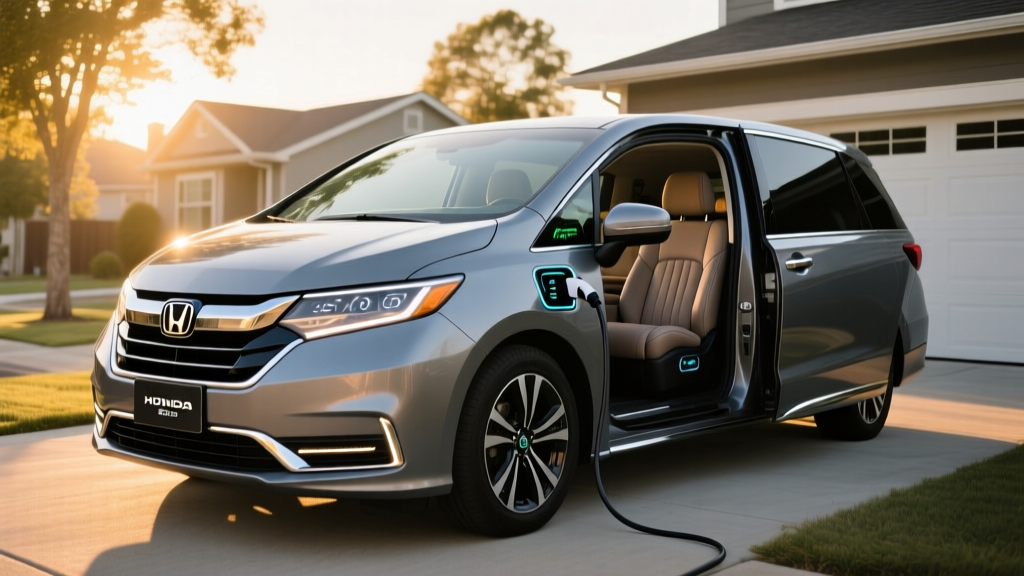
Honda confirmed the next-generation Odyssey will feature a hybrid powertrain for the 2027 model year, ending the minivan's run as one of the last gasoline-only vehicles in its segment. For families tracking the 2027 Honda Odyssey Hybrid, the big question is whether Honda delivers a conventional hybrid (HEV) that simply sips less fuel, or a plug-in hybrid (PHEV) that can handle school runs on electricity alone.
Based on Honda's current global powertrain strategy and the architecture shared with the North American Accord Hybrid and CR-V Hybrid, the 2027 Odyssey is expected to debut as a conventional two-motor hybrid (HEV) — no plug required. A PHEV variant remains possible for later model years but is not confirmed at launch. Below, we break down everything confirmed and projected, with exact numbers wherever available.
HEV (Conventional Hybrid): Charges its small battery (~1–2 kWh) through regenerative braking and the gas engine. You never plug it in. Think Toyota Sienna or Honda CR-V Hybrid.
PHEV (Plug-in Hybrid): Carries a larger battery (~15–20+ kWh) that charges from a wall outlet or charger, giving 25–45 miles of electric-only driving before the gas engine kicks in. Think Toyota RAV4 Prime or Chrysler Pacifica PHEV.
2027 Honda Odyssey Hybrid: Projected Specifications
Because the 2027 Odyssey Hybrid is an announced but not yet on-sale model, the following specifications are projected based on Honda's confirmed fourth-generation two-motor hybrid system, as deployed in the Accord Hybrid and the larger CR-V Hybrid. Final EPA certification numbers will be published closer to the on-sale date.
| Attribute | Projected Value |
|---|---|
| Powertrain Type | Two-motor HEV (conventional hybrid, no plug) |
| Engine | 2.0L Atkinson-cycle 4-cylinder + two electric motors |
| Combined Horsepower | ~204–210 hp (estimated, based on Accord Hybrid system) |
| EPA MPG (Combined) | ~36–38 MPG (projected) |
| EPA MPG (City / Highway) | ~40 city / ~34 highway (projected) |
| Fuel Tank Capacity | ~18.5 gal (est.) |
| Total Driving Range | ~660–700 miles (projected) |
| Hybrid Battery | ~1.3–1.8 kWh lithium-ion (HEV buffer) |
| Plug-In / EV-Only Range | Not applicable (HEV — no EV-only mode beyond ~1 mi at low speed) |
| Drivetrain | FWD standard; AWD availability TBD |
| 0–60 mph | ~7.5–8.0 sec (estimated) |
| Towing Capacity | ~3,500 lbs (projected, matching current Odyssey) |
| Base MSRP (est.) | ~$42,000–$44,000 (EX-L Hybrid) |
| Federal Tax Credit (§30D) | Not eligible — conventional HEVs do not qualify |
Note: All figures above are projected based on Honda's published hybrid architecture and segment analysis. Final EPA-certified numbers will be available when the vehicle goes on sale. Honda has not yet released official trim-level pricing.
How Many MPG Does the 2027 Odyssey Hybrid Get?
The outgoing gasoline-only Honda Odyssey is rated at 22 MPG combined (19 city / 28 highway) by the EPA. Honda's fourth-generation two-motor hybrid system — the same family used in the Accord Hybrid (rated 48 city / 47 highway in the Sport trim) — typically delivers a 40–60% improvement in city fuel economy over a comparable gasoline powertrain.
| Vehicle | City | Highway | Combined |
|---|---|---|---|
| 2025 Honda Odyssey (gas, 3.5L V6) | 19 | 28 | 22 |
| 2027 Honda Odyssey Hybrid (projected) | ~40 | ~34 | ~37 |
| 2025 Toyota Sienna Hybrid (FWD) | 36 | 36 | 36 |
| 2025 Chrysler Pacifica Hybrid (PHEV, gas-only after depletion) | 30 | 31 | 30 |
Real-World MPG vs EPA Sticker
Hybrids consistently outperform their EPA city ratings in stop-and-go driving because regenerative braking recovers energy that a gas car wastes as heat. In real-world suburban driving with frequent stops, owners of Honda's two-motor hybrids (Accord, CR-V) regularly report 2–4 MPG above the EPA city number. However, highway fuel economy tends to run slightly below the EPA estimate at sustained 75+ mph speeds, where the engine operates under higher load without regen assistance.
For the 2027 Odyssey Hybrid, expect real-world combined economy in the 34–40 MPG range depending on driving mix. Families doing primarily city and suburban errands will see the high end; road-trippers cruising at interstate speeds will see the low end. Cold weather (below 30°F) typically reduces hybrid efficiency by 5–10% due to increased engine runtime for cabin heat and reduced battery efficiency.
Powertrain Deep Dive: Honda's Two-Motor Hybrid System
Honda's hybrid system is fundamentally different from Toyota's planetary-gear design. In Honda's two-motor setup, the vehicle operates primarily as a series hybrid at low and moderate speeds: the gasoline engine spins a generator motor, which produces electricity to power the drive motor that turns the wheels. The engine does not directly drive the wheels until highway cruising speeds, where a lock-up clutch connects the engine to the drivetrain for efficiency.
This architecture produces smooth, electric-like acceleration from a stop — critical for a 4,500+ lb minivan loaded with passengers and cargo. The projected 204–210 combined horsepower (the 2.0L Atkinson-cycle engine produces ~146 hp on its own, supplemented by the drive motor's ~184 hp, with combined system output limited by the battery and power electronics) should deliver confident merging and passing, though it won't match the outgoing V6's 280 hp peak.
For towing, the hybrid system's instant electric torque actually improves low-speed trailer launch, though the 3,500-lb maximum tow rating is expected to remain unchanged. Honda limits tow capacity based on cooling system and transmission durability, not peak horsepower.
Battery Warranty, Lifespan, and Replacement Cost
Honda covers its hybrid batteries for 8 years / 100,000 miles in most states, and 10 years / 150,000 miles in California Air Resources Board (CARB) states (CA, CO, CT, ME, MD, MA, NJ, NY, OR, RI, VT, WA). The warranty covers capacity loss below a defined threshold — typically ~60–70% of original capacity — and all hybrid system components including the inverter and electric motors.
Hybrid battery longevity is one of the most common buyer concerns, but real-world data is reassuring. Honda's lithium-ion hybrid batteries are small (~1.3–1.8 kWh), meaning they cycle relatively gently compared to a full EV's 75–100 kWh pack. The battery management system (BMS) keeps the state of charge in a narrow middle window (roughly 40–80% SoC), avoiding the deep discharges and full charges that accelerate degradation.
Based on data from Honda Accord and CR-V Hybrids now accumulating 150,000+ miles in fleet and owner reports, hybrid battery replacement before 200,000 miles is uncommon. When replacement is needed outside warranty, a new OEM hybrid battery for a Honda minivan-class vehicle typically costs $2,500–$4,000 installed — far less than an EV traction battery replacement ($8,000–$20,000+). Refurbished and aftermarket options can reduce that to $1,500–$2,500.
Is the 2027 Odyssey Hybrid Reliable?
Honda's hybrid powertrain has been in production since the 2014 Accord Hybrid and has matured through multiple generations. The two-motor system has fewer moving parts than a conventional automatic transmission (no torque converter, no multi-gear planetary sets), and the engine operates in its most efficient RPM range more often, reducing wear. The current-generation Odyssey already earns strong reliability scores; the hybrid variant adds complexity in the power electronics but removes the traditional 10-speed automatic transmission — historically one of the higher-maintenance components.
Tax Credits and Incentives: What You Can (and Can't) Claim
This is where hybrid buyers need clarity. Under the current IRS §30D Clean Vehicle Credit rules, conventional hybrids (HEVs) do not qualify for the federal $7,500 EV tax credit. That credit applies only to battery electric vehicles (BEVs) and plug-in hybrids (PHEVs) that meet battery capacity, critical-mineral sourcing, MSRP cap ($80,000 for vans/SUVs/trucks), and buyer income limits.
If Honda later introduces a PHEV variant of the Odyssey with a battery of at least 7 kWh (the §30D minimum), it could qualify — provided it meets the critical minerals and battery component sourcing requirements, which have tightened significantly through 2026–2027. The Chrysler Pacifica PHEV, for example, has had inconsistent credit eligibility depending on model year and sourcing changes.
- Federal §30D credit (HEV): Not eligible — $0
- Federal §30D credit (PHEV, if offered): Up to $7,500, subject to income caps ($150K single / $300K joint AGI), MSRP cap, and sourcing rules
- State incentives: Varies by jurisdiction. Some states (e.g., CA, CO, NY) offer additional rebates for hybrids or PHEVs — check your state's energy office or AFDC state law database
- Dealer/manufacturer incentives: Honda occasionally offers loyalty or conquest cash at launch; monitor Honda's offers page closer to the on-sale date
Tax credit eligibility is complex and changes frequently. Consult a tax professional and verify current IRS rules at irs.gov before making a purchase decision based on credit availability.
Hybrid vs PHEV vs EV: Which Minivan Fits Your Family?
The minivan segment now spans three electrification levels. Here's how to decide which fits your household:
| Factor | HEV (Odyssey Hybrid) | PHEV (Pacifica Hybrid) | BEV (Kia EV9 / future electric minivans) |
|---|---|---|---|
| Plug in required? | No | Yes (for EV miles) | Yes (always) |
| EV-only range | ~0–1 mi | 32 mi (EPA) | 250–300+ mi |
| Combined MPG / MPGe | ~37 MPG | 82 MPGe (elec) / 30 MPG (gas) | ~85–95 MPGe |
| Home charging needed? | No | Recommended (Level 2) | Essential (Level 2) |
| Road-trip convenience | Excellent (gas & go) | Good (gas backup) | Requires DC fast charging stops |
| Federal tax credit | $0 | Up to $7,500* | Up to $7,500* |
| Estimated base price | ~$42,000–$44,000 | ~$51,000 | ~$55,000+ |
* §30D credit subject to income, MSRP, and battery-sourcing eligibility. Verify at irs.gov.
Choose the Odyssey Hybrid (HEV) if: You want a significant fuel-cost reduction over the gas Odyssey without changing your refueling habits, don't have reliable home charging access, or frequently take long road trips where charging infrastructure is sparse.
Choose a PHEV minivan (Pacifica Hybrid) if: You can install a Level 2 charger at home, most daily drives are under 30 miles, and you want the option of electric-only commuting with a gas backup for longer trips.
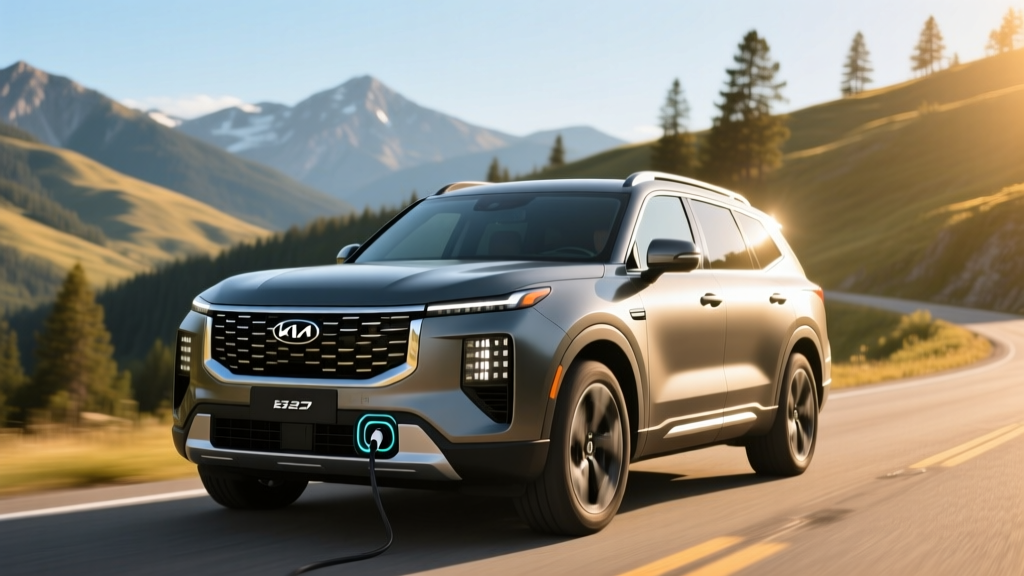
Choose a full EV (Kia EV9 or future electric minivan) if: You have home Level 2 charging, want the lowest per-mile fuel cost, qualify for the $7,500 federal credit, and your road trips are within DC fast-charging corridors.
Pricing, Trims, and Annual Fuel Cost Savings
Honda has not published official trim-level pricing for the 2027 Odyssey Hybrid. Based on the current gas Odyssey's pricing ladder ($39,635–$52,235 MSRP for 2025) and the typical hybrid premium Honda charges ($1,200–$2,000 over equivalent gas trims in the CR-V and Accord lineups), we project the following:
- EX-L Hybrid: ~$42,000–$44,000 MSRP
- Sport Hybrid: ~$44,000–$46,000 MSRP
- Touring Hybrid: ~$48,000–$50,000 MSRP
- Elite Hybrid: ~$52,000–$54,000 MSRP
Annual Fuel Cost: Hybrid vs Gas Odyssey
At 15,000 miles/year and $3.50/gallon regular unleaded:
- Gas Odyssey (22 MPG combined): ~$2,386/year in fuel
- Odyssey Hybrid (37 MPG combined, projected): ~$1,419/year in fuel
- Annual savings: ~$967/year
- 5-year savings: ~$4,835
The hybrid premium over the gas model (estimated $1,500–$2,000) pays for itself in roughly 2 years of average driving — making the hybrid the financially rational choice for most buyers, even without a federal tax credit.
Pros and Cons
✅ Pros
- Projected 37+ MPG combined — nearly 70% improvement over the gas Odyssey
- No plug-in required; zero change to refueling habits
- Smooth, electric-motor-dominant acceleration in city driving
- 8–10 year hybrid battery warranty (state dependent)
- Estimated ~$970/year fuel savings over gas model
- Honda's proven two-motor hybrid reliability track record
❌ Cons
- No federal §30D tax credit for conventional HEVs
- No EV-only driving mode for zero-emission school drop-offs
- Combined HP (~204–210) trails the outgoing V6's 280 hp
- Highway MPG gain over gas model is modest (~34 vs 28)
- PHEV variant not confirmed — families wanting plug-in must look to Pacifica
- Final specs and pricing are projected, not yet EPA-certified
Frequently Asked Questions
How many MPG does the 2027 Honda Odyssey Hybrid get?
Honda has not released final EPA numbers, but based on the two-motor hybrid system used in the Accord and CR-V Hybrid, we project approximately 40 city / 34 highway / 37 combined MPG. The outgoing gas Odyssey is rated at 19/28/22. Real-world city MPG may run 2–4 MPG higher than the EPA sticker thanks to regenerative braking.
Does the 2027 Odyssey Hybrid need to be plugged in?
No. The Odyssey Hybrid is expected to be a conventional HEV, meaning its small lithium-ion battery charges through regenerative braking and the gasoline engine. You fuel it exclusively at gas stations, exactly like the current Odyssey.
Will Honda make a plug-in hybrid (PHEV) Odyssey?
Honda has not confirmed a PHEV variant of the next-generation Odyssey. The company's current North American PHEV offerings are limited, and the global Clarity PHEV was discontinued. If a PHEV Odyssey arrives, it would likely be a later model-year addition, not part of the initial 2027 launch.
How long will the Odyssey Hybrid battery last, and what does replacement cost?
Honda's hybrid battery warranty covers 8 years / 100,000 miles (10 years / 150,000 miles in CARB states). Real-world data from Honda's hybrid fleet suggests these batteries commonly last 150,000–200,000+ miles without significant degradation. Out-of-warranty replacement costs approximately $2,500–$4,000 for an OEM battery, installed.
Does the 2027 Odyssey Hybrid qualify for any tax credit?
Conventional hybrids (HEVs) are not eligible for the federal §30D Clean Vehicle Credit, which applies only to plug-in vehicles (BEVs and PHEVs). Some states offer separate incentives for hybrids — check the AFDC state incentives database for your jurisdiction. Always verify current rules with a tax professional.
Is the Odyssey Hybrid better than the Toyota Sienna Hybrid?
Both are strong choices. The Sienna (36 MPG combined, standard hybrid across all trims) has been hybrid-only since 2021 and offers standard AWD. The Odyssey Hybrid is projected to slightly exceed Sienna's city MPG (~40 vs 36) thanks to Honda's two-motor system, but final EPA numbers and AWD availability won't be confirmed until closer to launch. Cargo space, interior flexibility, and Honda's Magic Slide second-row seats may be decisive factors beyond powertrain efficiency.
Can the Odyssey Hybrid tow a trailer?
Yes. The projected tow rating is 3,500 lbs, matching the current gas Odyssey. Hybrid torque delivery actually improves low-speed trailer launch, but Honda limits maximum tow capacity based on cooling and drivetrain durability ratings.