Quick Verdict: A Luxury PHEV That Commutes on Electrons
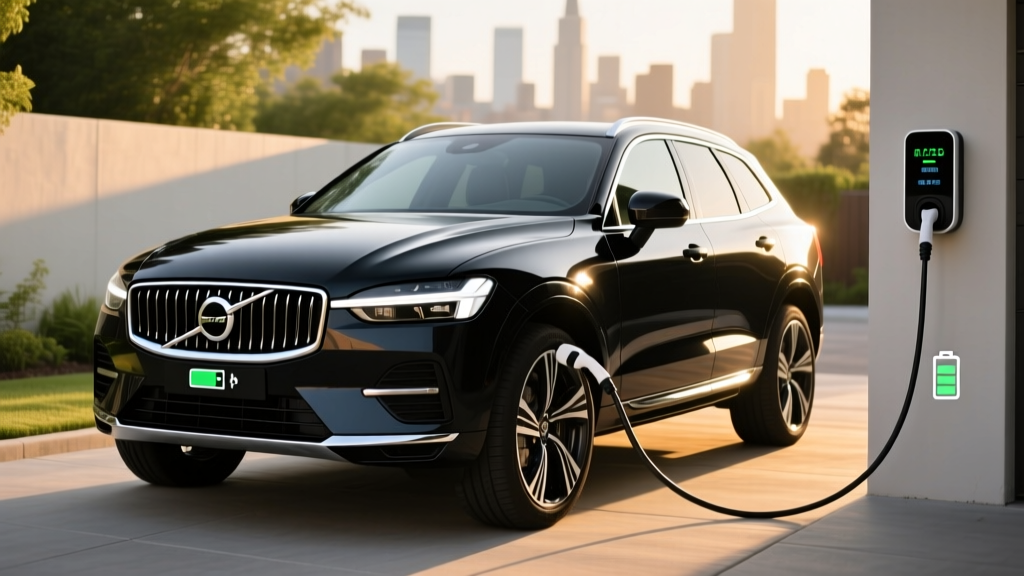
The 2026 Volvo XC60 plug-in hybrid (officially the XC60 Recharge) occupies a narrow but valuable lane: a compact luxury SUV that handles a typical 30-mile round-trip commute on battery power alone, then burns gasoline for weekend road trips without range anxiety. With 455 combined horsepower, a 18.8 kWh battery delivering an EPA-rated 35 miles of electric-only driving, and a starting MSRP of $59,050, it targets buyers who want electrification without committing to a full battery-electric vehicle.
But the XC60 Recharge is not a bridge to nowhere. Its fuel economy, charging limitations, and tax-credit eligibility require careful evaluation before signing a lease or purchase agreement. Here is every number that matters.
HEV vs PHEV: What the XC60 Recharge Actually Is
Volvo sells the XC60 in two electrified flavors for 2026, and confusing them is easy at the dealership:
XC60 Mild Hybrid (B5/B6 — HEV)
- 48-volt mild-hybrid system assists the gas engine
- Cannot plug in; regenerates energy during braking
- No electric-only driving capability
- EPA combined: ~26-28 MPG depending on drivetrain
- No federal plug-in tax credit eligibility
XC60 Recharge (T8 — PHEV)
- 18.8 kWh lithium-ion traction battery + electric motor on rear axle
- Plugs into Level 1 (120V) or Level 2 (240V) charging equipment
- 35 miles EPA electric-only range before the gas engine engages
- 63 MPGe combined (electric + gas); 28 MPG combined on gas alone
- May qualify for partial federal or state PHEV incentives
This review focuses exclusively on the XC60 Recharge plug-in hybrid. If you see a "B5" or "B6" badge on an XC60, that is the mild hybrid — a fundamentally different powertrain with no plug and no electric range.
Range, Efficiency, and the Numbers Behind 63 MPGe
The EPA rates the 2026 Volvo XC60 Recharge at 35 miles of electric-only range and 63 MPGe (miles per gallon equivalent) when operating in hybrid mode with a charged battery. Once the battery depletes to its hold threshold, the 2.0-liter turbocharged and supercharged four-cylinder engine takes over, delivering an EPA-rated 28 MPG combined.
| Metric | Value |
|---|---|
| Electric-only range | 35 miles (EPA) |
| Combined MPGe (charge-sustaining + EV) | 63 MPGe |
| Gas-only city MPG | 27 MPG |
| Gas-only highway MPG | 29 MPG |
| Gas-only combined MPG | 28 MPG |
| Total combined range (EV + gas) | ~470 miles |
| Fuel tank capacity | 15.9 gallons |
Real-world expectations: In mixed suburban driving with moderate temperatures (60-75°F), owners typically report achieving 32-37 miles on a full charge — close to the EPA sticker. Highway driving at 75+ mph reduces electric range to roughly 25-28 miles due to aerodynamic drag. In cold weather (below 30°F), expect electric range to drop 20-30% to approximately 24-28 miles, as the battery's usable capacity shrinks and cabin heating draws significant energy. The XC60 Recharge uses a resistive PTC heater rather than a heat pump, which amplifies cold-weather range loss compared to PHEVs equipped with heat pump systems.
EPA sticker: 35 miles electric-only | Real-world highway (70 mph): ~26-28 miles | Cold weather (20°F): ~24-28 miles | Ideal city/suburban (65°F): 33-37 miles
On the gas side, the 28 MPG combined rating is accurate for mixed driving. Highway-only trips at 65-70 mph can yield 30-31 MPG, while aggressive city driving with frequent stops may drop to 24-25 MPG. These figures are competitive with non-plug-in luxury compact SUVs but unremarkable compared to dedicated hybrid platforms like the Toyota RAV4 Hybrid (39 MPG combined).
Powertrain: 455 Horsepower From Two Sources
The XC60 Recharge pairs a 2.0-liter turbocharged and supercharged inline-four engine with a 143-horsepower electric motor integrated into the rear axle. This creates an all-wheel-drive system where the front wheels are engine-driven and the rear wheels are electrically driven — no mechanical driveshaft connects them.
| Specification | Value |
|---|---|
| Engine | 2.0L turbo + supercharged I-4 |
| Engine horsepower | 312 hp @ 5,800 rpm |
| Engine torque | 295 lb-ft @ 1,800-4,800 rpm |
| Electric motor (rear axle) | 143 hp / 228 lb-ft |
| Combined system output | 455 hp / 523 lb-ft |
| Transmission | 8-speed automatic (Geartronic) |
| Drivetrain | eAWD (electric rear axle) |
| 0-60 mph | 4.5 seconds |
| Battery capacity (gross / usable) | 18.8 kWh / ~16.1 kWh |
| Battery chemistry | NMC (nickel manganese cobalt) |
| Towing capacity | 3,500 lbs (with tow package) |
The 455-horsepower figure is not marketing inflation — it is genuinely quick for a 4,700-pound luxury SUV. The instant torque from the rear electric motor fills the low-rpm gap that turbo lag typically creates, resulting in confident merging and passing. Volvo's "Power" drive mode keeps both systems active for maximum output, while "Pure" mode defaults to electric-only driving up to approximately 87 mph.
Charging: Level 2 Only, No DC Fast Charging
This is the XC60 Recharge's most consequential limitation for daily usability. The vehicle supports Level 1 (120V) and Level 2 (240V) AC charging only. There is no DC fast-charging port — you cannot pull up to a 150 kW Electrify America station and top off in 15 minutes.
| Charging Level | Power (kW) | 0-100% Time | Miles Added per Hour |
|---|---|---|---|
| Level 1 (120V, 12A) | ~1.4 kW | ~12-13 hours | ~5-6 miles |
| Level 2 (240V, 16A) | ~3.7 kW | ~5 hours | ~14-15 miles |
| Level 2 (240V, 32A) | ~3.7 kW (onboard limit) | ~5 hours | ~14-15 miles |
| DC Fast Charge | Not supported | N/A | N/A |
The onboard charger is capped at approximately 3.7 kW. Even if you connect to a 48-amp Level 2 home charger capable of delivering 11.5 kW, the XC60 Recharge will only accept 3.7 kW. This means a full charge from empty takes roughly 5 hours regardless of whether your home charger is rated at 16 amps or 48 amps.
Practical implication: For overnight home charging, 5 hours is perfectly adequate — plug in when you arrive home at 7 PM and the battery is full well before morning. The limitation matters only if you hoped to charge at public Level 2 stations during the workday or shopping trips. A 2-hour stop at a mall charger will add roughly 28-30 miles of electric range, not a full battery.
The charging port uses a standard J1772 connector (the North American AC standard). No adapter is needed for home Level 2 chargers or public AC stations. For home installation, a dedicated 240V/20A circuit with a NEMA 6-20 outlet or a hardwired Level 2 EVSE (such as a ChargePoint Home Flex or Wallbox Pulsar Plus) is recommended. Expect home electrical installation costs of $500-$2,000 depending on panel proximity and local permit requirements — consult a licensed electrician for a site-specific quote.
Pricing, Trims, and Tax Credit Reality
The 2026 Volvo XC60 Recharge is available in three trim levels. Pricing includes the mandatory $1,195 destination charge:
| Trim | Starting MSRP | Key Features |
|---|---|---|
| Core | $59,050 | 19" wheels, panoramic roof, Google built-in, 360° camera |
| Plus | $63,050 | Harman Kardon audio, head-up display, pilot assist w/ steer |
| Ultimate | $67,650 | Nappa leather, Bowers & Wilkins audio, air purifier, 20" wheels |
Federal Tax Credit Eligibility (§30D)
The federal plug-in vehicle tax credit under IRS §30D is complex for PHEVs in 2026, and the XC60 Recharge faces significant eligibility hurdles:
- Battery capacity requirement: Met (18.8 kWh exceeds the 7 kWh minimum)
- MSRP cap: Met — the $80,000 SUV cap applies, and all XC60 Recharge trims fall below it
- Buyer income cap: AGI must not exceed $150,000 (single), $225,000 (head of household), or $300,000 (joint)
- Critical minerals requirement: A percentage of battery minerals must be sourced from the US or FTA partners — Volvo's global supply chain makes this variable by production batch
- Battery component manufacturing: Battery cells and modules must meet North American assembly thresholds — Volvo's battery sourcing may or may not satisfy this depending on model-year production
- Point-of-sale transfer: If eligible, the credit can be applied as a price reduction at the dealer rather than claimed on your tax return
Honest assessment: The XC60 Recharge's eligibility for the full $7,500 federal credit is uncertain and may vary by production date and battery sourcing. Some buyers may qualify for $3,750 (meeting only one of the two sourcing requirements), while others may receive the full $7,500 or nothing at all. Before purchasing, check the latest eligibility list on fueleconomy.gov and confirm with your dealer which credit tier the specific VIN qualifies for. State-level incentives (such as California's CVRP, Colorado's state credit, or utility rebates) may provide additional savings — consult your state energy office for current programs.
Battery Warranty, Reliability, and Long-Term Costs
Hybrid/PHEV battery warranty: 8 years / 100,000 miles (whichever comes first), covering defects and capacity loss below a specified threshold. In states that follow California Air Resources Board (CARB) emissions standards (including CA, NY, NJ, MA, CT, and others), the warranty extends to 10 years / 150,000 miles.
Volvo's PHEV powertrain has been in production since the 2016 model year (SPA platform), providing a decade of field data. The 18.8 kWh battery pack uses NMC (nickel manganese cobalt) chemistry, which offers high energy density but is more sensitive to prolonged high-state-of-charge storage and extreme temperatures than LFP chemistry.
Degradation expectations: Based on owner-reported data from 2019-2024 XC60 and XC90 Recharge models, typical battery degradation is 8-12% over the first 5 years or 60,000 miles. This translates to electric-only range dropping from 35 miles to approximately 30-32 miles over that period — noticeable but not debilitating. Volvo's battery management system maintains a top and bottom buffer (roughly 2.7 kWh combined) to protect cell longevity, meaning the usable 16.1 kWh is already a conservative subset of the 18.8 kWh gross capacity.
Out-of-warranty replacement cost: If the traction battery requires replacement after the warranty period, expect a dealer-installed cost of $8,000-$12,000 based on current Volvo PHEV battery pricing. This is a significant expense, though it is comparable to BMW and Mercedes-Benz PHEV battery replacement costs. Third-party hybrid battery refurbishment services may offer lower-cost options in the future as these vehicles age.
Overall reliability ratings for the XC60 Recharge are mixed. The powertrain itself is robust, but Volvo's infotainment system (Google Android Automotive OS) has drawn complaints for occasional software glitches, slow response times, and over-the-air update interruptions. The IIHS has awarded the XC60 its Top Safety Pick+ rating, and NHTSA gives it a 5-star overall safety rating — strong credentials for family buyers.
Who Should Buy the XC60 Recharge — And Who Shouldn't
Pros
- 35-mile EV range covers most daily commutes gas-free
- 455 hp provides genuinely quick acceleration (4.5s 0-60)
- Standard AWD with no mechanical driveshaft complexity
- Luxury interior quality, IIHS Top Safety Pick+
- No range anxiety for road trips — 470-mile total range
- 3,500-lb towing capacity (competitive for the segment)
Cons
- No DC fast charging — 5-hour Level 2 only
- 3.7 kW onboard charger limits public Level 2 usefulness
- 28 MPG on gas alone is average, not exceptional
- Resistive heater (no heat pump) hurts cold-weather EV range
- Starting price of $59,050 is steep before incentives
- Federal tax credit eligibility is uncertain for 2026
Choose the XC60 Recharge if:
- Your daily round-trip commute is under 35 miles and you can charge at home every night
- You want a luxury compact SUV with strong acceleration and AWD
- You take regular road trips and are not ready for full EV charging logistics
- You value Volvo's safety reputation and Scandinavian interior design
Choose a full EV (e.g., BMW iX, Volvo EX60) if:
- You have reliable home charging and your trips rarely exceed 250 miles
- You want lower per-mile energy costs and zero tailpipe emissions
- You want DC fast charging for road trips (200+ kW capability)
Choose the XC60 mild hybrid (B5) if:
- You cannot install a home charger (apartment, street parking)
- Your commute exceeds 50 miles daily — the PHEV battery won't cover it
- You want a lower entry price (~$48,000) and simpler powertrain
Frequently Asked Questions
How many MPG does the 2026 Volvo XC60 plug-in hybrid get?
The EPA rates the XC60 Recharge at 63 MPGe combined when using both battery and gas. On gasoline alone (after the battery depletes), it achieves 27 city / 29 highway / 28 combined MPG. Real-world gas-only driving typically ranges from 24-31 MPG depending on conditions.
How far can the XC60 Recharge go on electric power only?
The EPA rates it at 35 miles of electric-only range. In real-world conditions, expect 26-28 miles on the highway, 33-37 miles in suburban driving, and 24-28 miles in cold weather below 30°F.
Can the XC60 Recharge DC fast charge?
No. The XC60 Recharge supports only AC charging — Level 1 (120V) and Level 2 (240V). The onboard charger is limited to 3.7 kW, meaning a full charge takes approximately 5 hours on Level 2 regardless of the charger's rated capacity.
Does the 2026 XC60 Recharge qualify for the $7,500 federal tax credit?
Eligibility under IRS §30D depends on battery sourcing requirements that vary by production batch. The MSRP and battery capacity requirements are met, but the critical minerals and battery component manufacturing rules may limit the credit to $3,750 or disqualify certain vehicles entirely. Check fueleconomy.gov for the latest VIN-specific eligibility before purchasing.
How long will the PHEV battery last and what does replacement cost?
Volvo warranties the battery for 8 years/100,000 miles (10 years/150,000 miles in CARB states). Typical degradation is 8-12% over 5 years. Out-of-warranty replacement costs approximately $8,000-$12,000 at a dealer.
Is the XC60 Recharge reliable?
The powertrain has proven durable since the SPA platform's 2016 debut. The primary reliability concerns involve the Android Automotive infotainment system, which has drawn complaints for software bugs. The IIHS Top Safety Pick+ and NHTSA 5-star ratings reflect strong crash safety.
Hybrid vs PHEV vs EV — which should I choose?
A conventional hybrid (HEV) requires no plug and saves fuel through regenerative braking — best for drivers without home charging. A PHEV like the XC60 Recharge offers 25-35 miles of electric driving for short commutes plus a gas engine for long trips — ideal for home-charging-capable drivers with mixed routines. A full EV (BEV) offers the lowest operating costs and zero tailpipe emissions but requires reliable charging access and route planning for trips over 250 miles.
Sources: fueleconomy.gov — Federal Tax Credit Eligibility, Volvo USA — XC60 Recharge Specifications, IRS — Clean Vehicle Credit (§30D)