Quick Verdict: The 2026 Tucson Plug-In Hybrid at a Glance
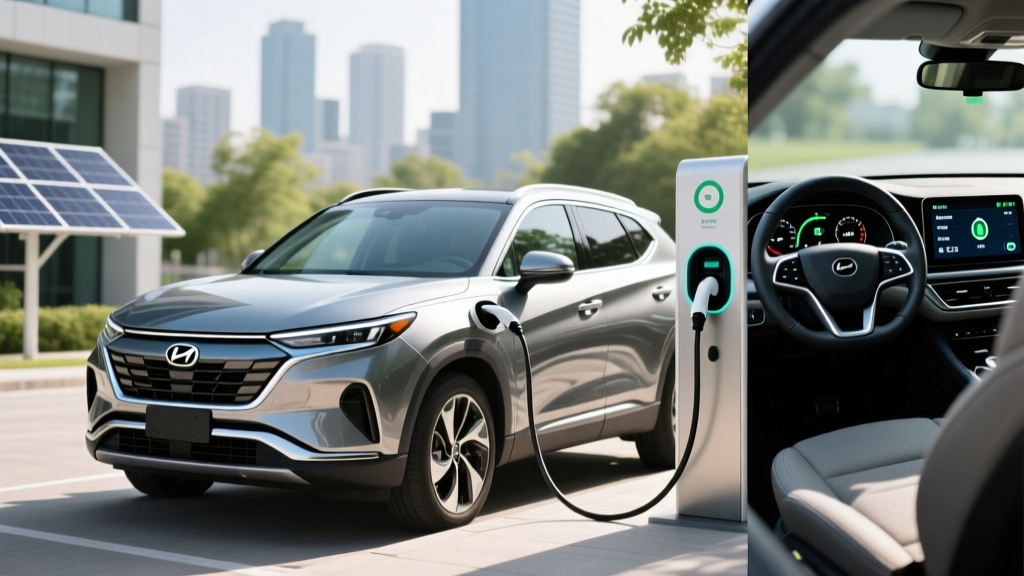
The 2026 Hyundai Tucson Plug-In Hybrid occupies a practical middle ground between a conventional gas SUV and a full battery-electric vehicle. With an EPA-estimated 33 miles of electric-only driving, 268 combined horsepower, and a starting MSRP around $39,785, it targets commuters who want daily electric driving without the range-commitment of a BEV. The PHEV pairs a 1.6-liter turbocharged four-cylinder with a front-mounted electric motor and a 13.8 kWh battery pack — enough to cover most errands and school runs on electricity alone, then seamlessly transition to hybrid operation for longer trips.
Whether you qualify for the federal §30D tax credit depends on battery-sourcing requirements, your income, and MSRP caps under current IRS rules. This guide breaks down every spec that matters — real-world MPG, charging logistics, battery longevity, and who should actually consider this PHEV over a full EV or the standard Tucson Hybrid.
| Spec | Value |
|---|---|
| EPA Electric-Only Range | 33 miles |
| EPA MPGe (combined electric+gas) | 80 MPGe |
| EPA MPG (hybrid mode, combined) | 35 MPG combined / 35 city / 35 hwy |
| Total Combined Range | ~440 miles |
| Battery Capacity | 13.8 kWh (lithium-ion polymer) |
| Combined Horsepower | 268 hp / 258 lb-ft torque |
| Engine | 1.6L turbocharged GDI 4-cylinder (178 hp) |
| Electric Motor | 66.9 kW (90 hp) front-mounted |
| Level 2 Charge Time (10–100%) | ~2 hours at 7.2 kW |
| DC Fast Charging | Not available |
| Drivetrain | HTRAC AWD (standard) |
| 0–60 mph | ~7.1 seconds |
| Base MSRP (SE trim) | $39,785 (incl. destination) |
| Battery & Powertrain Warranty | 10 years / 100,000 miles |
HEV vs PHEV: Which Tucson Are You Actually Looking At?
Hyundai sells two electrified Tucsons alongside the gas-only model. Understanding the difference is critical before you walk into a dealership:
Tucson Hybrid (HEV): Uses a small battery (~1.49 kWh) recharged entirely by the engine and regenerative braking. You never plug it in. It delivers strong city MPG through electric assist but cannot drive on electricity alone for meaningful distances. EPA-rated at 38 MPG combined.
Tucson Plug-In Hybrid (PHEV): Carries a much larger 13.8 kWh battery that you charge via a wall outlet or Level 2 station. It can travel up to 33 miles on electricity alone before the gas engine engages. Once the battery depletes, it operates as a conventional hybrid at ~35 MPG combined.
The PHEV makes sense if you have access to overnight charging at home or work and your daily commute falls within that ~33-mile electric envelope. If you cannot charge regularly, the PHEV becomes a heavier, more expensive version of the standard HEV — you'll still get decent MPG, but you're paying for battery capacity you never use.
Fuel Economy: EPA Numbers and Real-World MPG
| Mode | City | Highway | Combined |
|---|---|---|---|
| Electric + Gas (MPGe) | — | — | 80 MPGe |
| Hybrid-only (MPG, battery depleted) | 35 | 35 | 35 |
| Tucson HEV (comparison) | 38 | 38 | 38 |
Real-world expectations: Hybrids and PHEVs in hybrid mode tend to meet or slightly exceed their EPA city estimates because regenerative braking recaptures energy in stop-and-go traffic. On the highway, where regen opportunities are fewer and aerodynamic drag dominates, expect the Tucson PHEV to deliver roughly 32–34 MPG in hybrid mode at sustained 70–75 mph speeds. In cold weather (below 30°F), the gasoline engine will engage sooner to provide cabin heat, reducing electric-only range by roughly 20–30% — expect ~23–26 electric miles in winter conditions.
If your daily round-trip commute is under 30 miles and you charge nightly, you could go weeks without visiting a gas station. The EPA's 80 MPGe figure reflects this blended usage scenario. According to fueleconomy.gov, the Tucson PHEV's annual fuel cost estimate assumes 15,000 miles driven per year with a mix of electric and gasoline operation.
Electric-Only Range Reality Check: The EPA rates the Tucson PHEV at 33 miles electric-only. In mild weather with conservative acceleration, owners report 30–35 miles. Highway driving at 70+ mph, aggressive acceleration, or cold temperatures will reduce this to 22–27 miles. The PHEV does not have a dedicated "EV-only" range-extending mode that preserves battery — once depleted, the gas engine takes over automatically.
Charging: Level 2 at Home, No DC Fast Charging
The Tucson PHEV charges exclusively via AC power — Level 1 (120V household outlet) or Level 2 (240V). It does not support DC fast charging. This is typical for compact PHEVs; the 13.8 kWh battery is small enough that Level 2 charging is practical overnight.
| Charge Level | Power (kW) | 0–100% Time | Infrastructure Needed |
|---|---|---|---|
| Level 1 (120V standard outlet) | ~1.4 kW | ~10 hours | Standard 3-prong outlet |
| Level 2 (240V, 32A) | 7.2 kW | ~2 hours | Home wallbox or public L2 station |
Practical charging advice: A Level 1 outlet will replenish the battery overnight for most users — plugging in at 9 PM yields a full charge by 7 AM. If you need faster turnaround (for example, charging between an afternoon errand and an evening commute), a Level 2 home charger cuts the time to roughly two hours. A basic Level 2 wallbox costs $300–$600 for equipment, with installation running $500–$2,000 depending on your electrical panel's proximity to the parking spot. Always consult a licensed electrician for final installation specifications.
Public Level 2 chargers at grocery stores, workplaces, and shopping centers are compatible via the standard J1772 connector. Because the Tucson PHEV cannot DC fast-charge, you won't find it at highway fast-charging corridors — and that's fine, since its 440-mile total range means highway road trips rely on the gas engine, not charging stops.
Powertrain and Performance: 268 HP With AWD Standard
The 2026 Tucson PHEV pairs a 1.6-liter turbocharged GDI four-cylinder engine (178 hp, 195 lb-ft) with a 66.9 kW (90 hp) electric motor integrated into the transmission housing. Combined system output is 268 horsepower and 258 lb-ft of torque, routed through a 6-speed automatic transmission to Hyundai's HTRAC all-wheel-drive system.
HTRAC AWD is standard on every PHEV trim — a notable advantage over competitors that offer FWD-only PHEV configurations. The system can route torque to the rear wheels when slip is detected, making the Tucson PHEV a capable choice for light snow and rain.
The 0–60 mph time of approximately 7.1 seconds places the Tucson PHEV in the mid-pack for compact crossover PHEVs. Acceleration from a stop feels brisk thanks to the electric motor's instant torque delivery, though passing power at highway speeds tapers as the turbo four-cylinder and electric motor share the load. The 6-speed automatic is a deliberate choice over a CVT; shifts are perceptible but smooth, and there's none of the rubber-band drone associated with continuously variable transmissions.
Pricing, Trims, and Federal Tax Credit Eligibility
The 2026 Tucson Plug-In Hybrid is available in two trims:
- SE: Starting at approximately $39,785 (including destination). Includes HTRAC AWD, 10.25-inch touchscreen, wireless Apple CarPlay/Android Auto, Hyundai SmartSense ADAS suite, heated front seats, and LED headlights.
- Limited: Starting at approximately $46,585. Adds leather seats, panoramic sunroof, Bose premium audio, ventilated front seats, highway driving assist, digital key, and blind-spot view monitor.
Both trims fall well under the $80,000 MSRP cap for SUVs under the current IRS §30D federal tax credit rules.
Federal §30D Tax Credit — Eligibility Checklist for the Tucson PHEV:
- MSRP cap: Must be under $80,000 for SUVs — Tucson PHEV qualifies ✓
- Buyer income limits: AGI must not exceed $150,000 (single), $225,000 (head of household), or $300,000 (married filing jointly)
- Battery component sourcing: A percentage of battery components must be manufactured or assembled in North America, and critical minerals must meet sourcing thresholds — these percentages increase annually and may affect eligibility depending on the specific build batch
- Point-of-sale transfer: Under current rules, you can transfer the credit to the dealer at purchase to reduce your out-of-pocket cost, rather than waiting to claim it on your tax return
- Assembly: Vehicle must undergo final assembly in North America — the Tucson PHEV is assembled in Montgomery, Alabama ✓
Credit amount varies based on battery sourcing compliance. Consult IRS.gov §30D guidelines and a qualified tax professional before relying on credit availability. Rules are subject to change.
Battery Warranty, Longevity, and Replacement Costs
Hyundai Hybrid/PHEV Battery Warranty: 10 years / 100,000 miles for the original owner (and transferable to subsequent owners under the 5-year/60,000-mile new-vehicle warranty umbrella). The warranty covers battery capacity loss below a specified threshold — typically around 70% of original capacity — as well as defects in the hybrid system components including the electric motor, inverter, and onboard charger.
PHEV battery degradation is generally modest. The 13.8 kWh lithium-ion polymer pack is engineered with a usable buffer — the vehicle's battery management system (BMS) prevents full 0% or 100% states at the cell level, reducing stress. Industry data from sources like IIHS and long-term fleet studies suggest PHEV batteries of this size retain 85–92% of original capacity after 8–10 years of typical use.
Battery replacement cost: If the battery does require replacement outside of warranty, expect a cost in the range of $5,000–$8,000 including parts and labor for a PHEV pack of this capacity. This is significantly less than a full BEV battery replacement ($10,000–$20,000+) because the PHEV pack is roughly one-sixth the size. However, the vast majority of PHEV owners will never need an out-of-warranty battery replacement — Hyundai's 10-year/100,000-mile coverage spans the typical ownership period.
Reliability outlook: Hyundai's hybrid powertrain has demonstrated strong reliability in recent model years. The 1.6L turbo engine is a proven unit shared across the Hyundai/Kia lineup, and the electric motor and transmission have fewer moving parts than a conventional automatic. Hyundai's hybrid system avoids the complexity of a dedicated planetary-gear power-split device (as used in Toyota's system), instead using a simpler parallel-hybrid architecture with the motor sandwiched between the engine and transmission.
Who Should Buy the Tucson PHEV — and Who Shouldn't
Pros
- 33 miles electric-only covers most daily commutes without using gas
- Standard HTRAC AWD on every trim
- 440+ mile total range eliminates range anxiety on road trips
- No DC fast-charging dependency — a standard 120V outlet works overnight
- Industry-leading 10-year/100,000-mile hybrid battery warranty
- Qualifies for potential federal tax credit (subject to sourcing rules)
- Spacious cargo area (~38.7 cu ft behind rear seats)
Cons
- No DC fast-charging capability
- Hybrid-mode MPG (35) is slightly lower than the Tucson HEV (38)
- Electric-only range drops to ~23–26 miles in cold weather
- Limited trim starts near $47K — premium for a compact crossover
- Tax credit eligibility depends on battery-sourcing compliance, which varies by build
- Only ~33 miles electric — not enough for drivers wanting a full EV experience
Decision Framework: Is the Tucson PHEV Right for You?
Choose the Tucson PHEV if: You have home or workplace charging access, your daily round-trip commute is under 35 miles, you want the option of gas-free daily driving without committing to a full EV, you need AWD for snow/rain, and you take road trips where charging infrastructure is sparse.
Choose the Tucson HEV instead if: You cannot charge at home or work, your daily driving exceeds 50 miles, you want the lowest purchase price and highest hybrid-mode MPG, and you don't care about electric-only operation.
Choose a full EV (like the Ioniq 5) instead if: You have reliable home Level 2 charging, your daily driving is under 250 miles, you want zero tailpipe emissions, you want to access DC fast-charging for road trips, and you're ready to fully leave gasoline behind.
Frequently Asked Questions
How many MPG does the 2026 Tucson Plug-In Hybrid get?
The EPA rates the Tucson PHEV at 80 MPGe when combining electric and gasoline operation. Once the battery is depleted, it operates as a conventional hybrid at an EPA-estimated 35 MPG combined (35 city / 35 highway). In real-world city driving with frequent stops, hybrid-mode MPG can reach 36–38 thanks to aggressive regenerative braking. Highway hybrid-mode MPG typically settles around 32–34 at sustained speeds above 70 mph.
How far can the Tucson PHEV go on electric only?
The EPA estimates 33 miles of electric-only range. In mild weather (50–80°F) with moderate driving, expect 30–35 real-world electric miles. Cold weather (below 30°F), highway speeds, and aggressive acceleration reduce this to approximately 22–27 miles. The gasoline engine engages automatically when the battery depletes — no driver intervention is needed.
Does the 2026 Tucson PHEV qualify for a federal tax credit?
It may qualify for up to $7,500 under IRS §30D, depending on current battery-sourcing and critical-mineral requirements, your adjusted gross income, and the specific build's compliance. The Tucson PHEV is assembled in Alabama (meeting the North American final-assembly requirement) and falls under the $80,000 SUV MSRP cap. However, the battery component and critical-mineral sourcing thresholds tighten each year, and not every build batch may qualify. Always verify current eligibility at IRS.gov and consult a tax professional before purchase.
Is the Tucson PHEV reliable, and what does battery replacement cost?
Hyundai's hybrid powertrain has demonstrated strong reliability, and the PHEV system uses a proven 1.6L turbo engine with fewer wear components than a conventional drivetrain. The hybrid battery and powertrain are covered by a 10-year/100,000-mile warranty — one of the longest in the industry. Out-of-warranty battery replacement is estimated at $5,000–$8,000, though most owners will never need one given the warranty coverage and typical PHEV battery longevity of 10–15 years.
Do I need to install a special charger at home for the Tucson PHEV?
No. The Tucson PHEV comes with a Level 1 charging cable that plugs into any standard 120V household outlet, fully recharging the battery in about 10 hours — sufficient for overnight charging. For faster replenishment (~2 hours), you can install a Level 2 (240V) wallbox. Equipment costs $300–$600, and professional installation by a licensed electrician typically runs $500–$2,000 depending on your electrical panel's capacity and distance from the parking area.
Hybrid vs PHEV vs EV — which Tucson variant fits my lifestyle?
If you can't charge at home and drive 40+ miles daily, the standard Tucson HEV (38 MPG, no plug) is the most practical and affordable choice. If you have charging access and a sub-35-mile commute, the PHEV lets you drive most days on electricity while keeping a gas engine for longer trips. If you have Level 2 home charging, rarely drive more than 250 miles in a day, and want to eliminate gasoline entirely, consider a full EV like the Hyundai Ioniq 5 (303 miles EPA range, DC fast-charging capable).