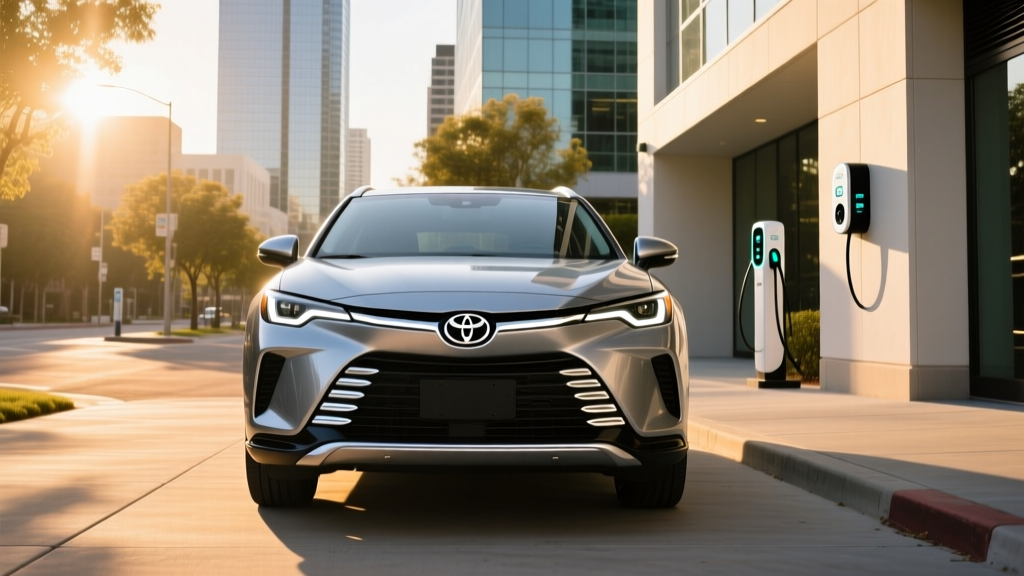
The Toyota Venza has always occupied a specific niche: a stylish, midsize hybrid crossover that prioritizes fuel efficiency and refinement over cargo-hauling or off-road pretensions. For 2026, the Venza continues as a hybrid-only nameplate, leaning into Toyota's fifth-generation hybrid system to squeeze more efficiency out of every gallon. If you are researching the 2026 Venza hybrid as your next vehicle, this guide covers everything from EPA fuel economy to real-world MPG, powertrain specs, battery longevity, and whether a conventional hybrid, plug-in hybrid, or full EV better fits your lifestyle.
2026 Venza Hybrid: The Quick Verdict
The 2026 Toyota Venza is a conventional hybrid electric vehicle (HEV) — not a plug-in. That distinction matters enormously. You never plug it in; the gasoline engine and regenerative braking keep a small battery charged. The tradeoff is simplicity: no charging cables, no range anxiety, no home electrical upgrades. You just drive, and the hybrid system silently optimizes the balance between electric motor and 2.5-liter four-cylinder engine to maximize fuel economy.
EPA Fuel Economy vs. Real-World MPG
Fuel economy is the headline reason buyers choose the Venza. Here is the official EPA data alongside what you can expect in actual driving conditions.
| Metric | City | Highway | Combined |
|---|---|---|---|
| EPA Estimate | 40 MPG | 37 MPG | 39 MPG |
| Real-World Expectation | 38–43 MPG | 33–36 MPG | 36–40 MPG |
Source: fueleconomy.gov
Why real-world MPG varies: Toyota's hybrid system excels in stop-and-go city driving, where the electric motor handles low-speed propulsion and regenerative braking recaptures energy. Many owners report exceeding the 40 MPG city EPA estimate in warm-weather urban commuting. Highway driving, however, leans harder on the gasoline engine at sustained speeds, so expect 33–36 MPG at 70–80 mph. Cold weather (below 35°F) reduces efficiency by 5–12% as the engine runs more frequently to maintain cabin heat and battery temperature.
Powertrain and Performance Specs
The 2026 Venza uses Toyota's fifth-generation hybrid synergy drive, pairing a 2.5-liter Dynamic Force four-cylinder engine with front and rear electric motors for standard electronic all-wheel drive (AWD).
| Engine | 2.5L 4-cylinder Dynamic Force (176 hp / 163 lb-ft) |
| Front Electric Motor | 88 kW (118 hp) |
| Rear Electric Motor | 40 kW (54 hp) |
| Combined Net Horsepower | 219 hp |
| Hybrid Battery | 1.6 kWh lithium-ion (sealed NiMH in prior gens; Li-ion for Gen 5) |
| Drivetrain | Electronic AWD (eAWD) — standard all trims |
| Transmission | eCVT (electronically controlled continuously variable) |
| 0–60 mph | ~7.4 seconds |
| Towing Capacity | Not rated (not recommended for towing) |
The 219 combined horsepower is adequate for highway merging and passing, though the Venza is tuned for smoothness, not sportiness. The eCVT eliminates shift shock entirely, and the transition between electric-only and engine-assisted driving is nearly imperceptible. The rear electric motor provides AWD traction without a mechanical driveshaft, reducing weight and improving packaging.
HEV vs. PHEV vs. EV: Which Powertrain Fits You?
The Venza is only offered as a conventional hybrid (HEV). If you are cross-shopping, here is how the three electrified powertrain types compare.
| Factor | HEV (Venza) | PHEV (e.g., RAV4 Prime) | BEV (e.g., Tesla Model Y) |
|---|---|---|---|
| Plug in to charge? | No | Yes (optional but recommended) | Yes (required) |
| Electric-only range | ~1 mile at low speed | 25–42 miles | 250–330 miles |
| Fuel economy (combined) | 39 MPG | 38 MPG (gas) / 94 MPGe (electric) | N/A — electricity only |
| Home charging needed? | No | Strongly recommended (Level 2) | Yes — Level 2 strongly recommended |
| Federal tax credit (§30D) | No | Up to $7,500 (if eligible) | Up to $7,500 (if eligible) |
| Starting MSRP range | $36,000–$44,000 | $44,000–$52,000 | $44,000–$55,000 |
| Best for | No home charging; road trips; simplicity | Home charging + short commutes + road trips | Home charging; lowest running cost; max emissions reduction |
- Choose the Venza HEV if you lack reliable home-charging access, frequently drive over 300 miles between stops, or want a lower purchase price with no behavioral change.
- Choose a PHEV if you can install a Level 2 charger at home, your daily commute is under 40 miles round-trip, and you still want a gas engine for road trips.
- Choose a BEV if you have home charging, want the lowest per-mile fuel cost (~$0.04/mile vs. ~$0.12/mile for the Venza at $4.00/gal), and can plan around DC fast charging on road trips.
2026 Venza Pricing by Trim
The Venza is offered in three trims for 2026. All include standard AWD, Toyota Safety Sense 3.0, a 12.3-inch infotainment display, and wireless Apple CarPlay/Android Auto.
| Trim | MSRP | Key Features |
|---|---|---|
| LE | $36,420 | 18" alloy wheels, heated front seats, 8-way power driver seat, 6 speakers |
| XLE | $39,670 | SofTex seats, power liftgate, wireless charging pad, ambient lighting |
| Limited | $43,820 | Panoramic fixed-glass roof, 10" HUD, JBL 9-speaker audio, ventilated front seats, 360° camera |
All prices include destination charge. Add approximately $1,200–$1,800 for popular option packages (e.g., Technology Package on XLE with digital rearview mirror and rain-sensing wipers).
Does the 2026 Venza Hybrid Qualify for a Federal Tax Credit?
No. The 2026 Toyota Venza is a conventional hybrid (HEV), not a plug-in hybrid (PHEV) or battery electric vehicle (BEV). Under current IRS §30D Clean Vehicle Credit rules, only vehicles with a battery capacity of at least 7 kWh that can be recharged from an external power source qualify. The Venza's 1.6 kWh battery is charged exclusively by the engine and regenerative braking — it has no charge port.
Some states offer rebates or HOV-lane access for conventional hybrids, but these programs are increasingly rare and vary by jurisdiction. Check your state's energy office or DMV for current incentives.
Hybrid Battery Longevity, Warranty, and Replacement Cost
Battery reliability is the single most common concern among first-time hybrid buyers. Here is what the data shows.
- Hybrid battery warranty: 10 years / 150,000 miles (whichever comes first) in all 50 states — this covers capacity loss below a defined threshold and defects.
- Hybrid system components warranty: 8 years / 100,000 miles — covers the inverter, electric motors, and eCVT.
How long do Toyota hybrid batteries actually last? Based on fleet data from Toyota's Prius and Camry Hybrid platforms (which share the same Gen 5 hybrid architecture), the lithium-ion traction battery routinely exceeds 150,000 miles with less than 10–15% capacity degradation. The Venza's battery is small (1.6 kWh usable) and is never deeply cycled — Toyota's hybrid management system keeps the state of charge between roughly 40% and 80%, which dramatically extends cell life. Most Toyota hybrid batteries outlast the vehicle itself.
Replacement cost if out of warranty: A new OEM hybrid battery pack for a Toyota midsize hybrid currently runs $2,500–$3,800 installed at a dealership. Independent hybrid specialists often offer refurbished packs for $1,500–$2,200. This is a fraction of the $8,000–$18,000 replacement cost for a full EV traction battery.
Reliability and Safety Ratings
Toyota's hybrid powertrain is among the most proven in the industry, with over 25 years of production history and tens of millions of units on the road. The Venza shares its TNGA-K platform and hybrid system with the RAV4 Hybrid and Camry Hybrid — both consistently top Consumer Reports and J.D. Power reliability rankings in their segments.
For crash safety, check the latest NHTSA and IIHS ratings once 2026 model-year testing is published. The previous-generation Venza earned an IIHS Top Safety Pick rating, and Toyota Safety Sense 3.0 (standard on all trims) includes pre-collision braking with pedestrian detection, full-speed adaptive cruise control, lane-tracing assist, and automatic high beams.
Pros, Cons, and the Bottom Line
✓ Pros
- 39 MPG combined with standard AWD — excellent for the class
- No plug-in charging required — zero lifestyle change
- Refined, quiet hybrid powertrain with seamless engine/motor transitions
- Generous 10-year/150,000-mile hybrid battery warranty
- Well-equipped from the base LE trim
- Strong Toyota resale value and reliability track record
✗ Cons
- No federal tax credit eligibility (HEV, not PHEV/BEV)
- Cargo space (28.8 cu ft behind rear seats) trails RAV4 Hybrid (37.5 cu ft)
- Not rated for towing
- Highway MPG drops noticeably above 75 mph
- Limited trim availability — Toyota produces fewer Venzas than RAV4s
- No spare tire — tire-inflation kit only
Frequently Asked Questions
How many MPG does the 2026 Venza hybrid get?
The EPA rates the 2026 Venza hybrid at 40 MPG city, 37 MPG highway, and 39 MPG combined. In real-world city driving, many owners report 38–43 MPG. Highway driving at 70–80 mph typically yields 33–36 MPG.
Does the Venza hybrid need to be plugged in?
No. The Venza is a conventional hybrid (HEV). Its battery charges through the gasoline engine and regenerative braking. There is no charge port on the vehicle.
How far can the Venza drive on electric power alone?
Only about 0.5–1 mile at very low speeds (under 25 mph) in ideal conditions. This is not a vehicle designed for electric-only commuting — for that capability, you need a PHEV with 25–42 miles of electric range.
Is the 2026 Venza hybrid reliable?
Toyota's hybrid system has an exceptionally strong reliability record spanning 25+ years. The Venza uses the same proven Gen 5 hybrid architecture found in the RAV4 Hybrid and Camry Hybrid. The hybrid battery is warranted for 10 years / 150,000 miles, and real-world data shows these batteries frequently exceed 150,000 miles with minimal degradation.
What does a Venza hybrid battery replacement cost?
If replacement is needed outside the 10-year/150,000-mile warranty, expect to pay $2,500–$3,800 for a new OEM battery at a dealer, or $1,500–$2,200 for a refurbished pack from an independent hybrid specialist.
Does the 2026 Venza qualify for any tax credit?
The Venza does not qualify for the federal §30D Clean Vehicle Credit because it is a conventional hybrid without plug-in capability. Some states may offer minor hybrid incentives — check your state energy office. If the $7,500 federal credit is a priority, consider a PHEV like the RAV4 Prime or a BEV.
Venza hybrid vs. RAV4 hybrid — which should I choose?
Choose the Venza if you prioritize a quieter, more car-like ride, standard premium features, and slightly better fuel economy (39 vs. 38 MPG combined). Choose the RAV4 Hybrid if you need more cargo space (37.5 vs. 28.8 cu ft), towing capability (up to 1,750 lbs), a broader dealer network, or the PHEV option (RAV4 Prime with 42 miles electric range and potential tax credit eligibility).