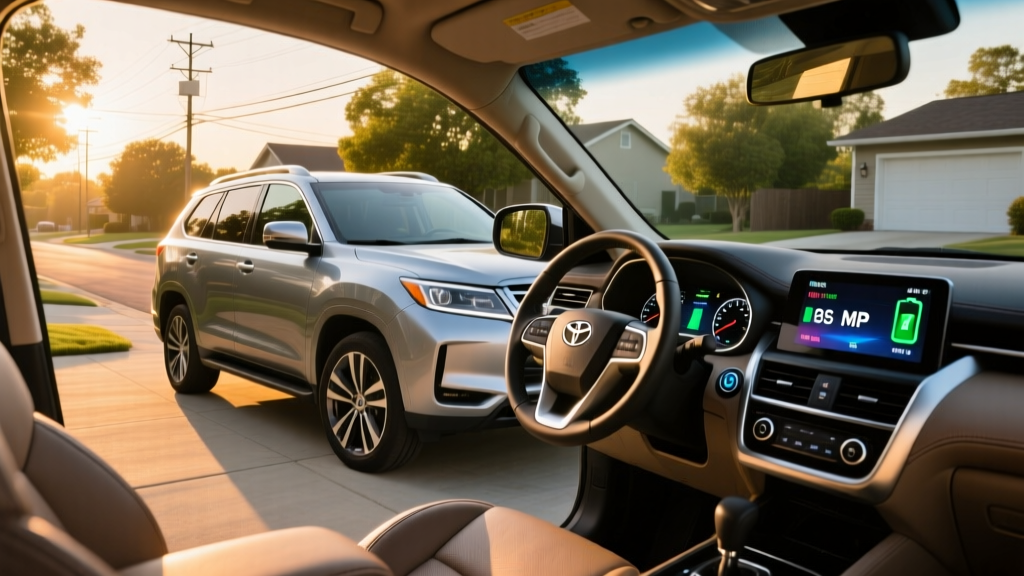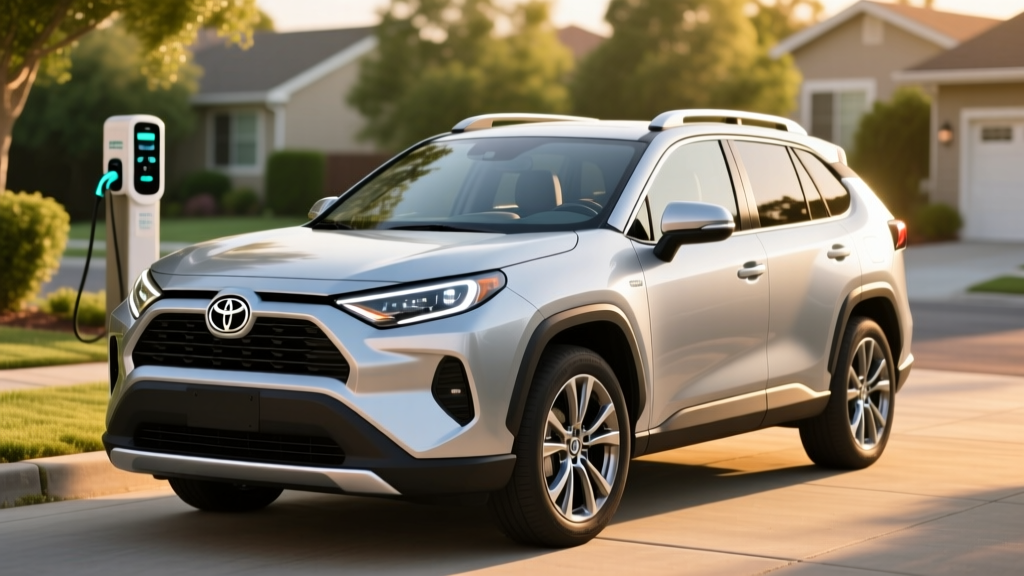
The Toyota RAV4 Hybrid has been the best-selling hybrid SUV in America for years, and the 2026 model year carries that momentum forward with meaningful updates. Among the trim lineup, the 2026 Toyota RAV4 Hybrid SE sits in a compelling sweet spot — it delivers the sport-tuned suspension and styling cues of the SE badge while retaining the fuel-sipping efficiency that defines Toyota's hybrid system. If you're cross-shopping compact SUVs and want to avoid the upfront cost and charging logistics of a full battery-electric vehicle, this trim deserves a close look.
But what does ownership actually look like? Below, we break down the real-world MPG you can expect, the powertrain engineering, battery longevity data, and whether any federal or state incentives apply — all the numbers a research-driven buyer needs before signing a purchase agreement.
2026 RAV4 Hybrid SE: Core Specifications at a Glance
| Specification | Value |
|---|---|
| Powertrain | 2.5L 4-cyl + 3 electric motors (AWD-i) |
| Combined Horsepower | 219 hp (net system) |
| Drivetrain | Electronic On-Demand AWD |
| EPA MPG (City / Hwy / Combined) | 41 / 38 / 39 MPG |
| Fuel Tank Capacity | 14.5 gallons |
| Total Driving Range (EPA est.) | ~565 miles |
| 0–60 mph | ~7.4 seconds |
| Cargo Volume (behind rear seats) | 37.5 cu ft |
| Towing Capacity | 1,750 lbs |
| Starting MSRP (est.) | ~$36,500 |
| Hybrid Battery Warranty | 10 years / 150,000 miles |
The SE trim distinguishes itself from the LE and XLE with a sport-tuned suspension, 18-inch black alloy wheels, a blacked-out grille, paddle shifters, and a leather-trimmed steering wheel. Mechanically, the hybrid powertrain is identical across all RAV4 Hybrid trims, so you don't sacrifice efficiency for the sport appearance.
Fuel Economy: EPA Ratings vs. Real-World MPG
| Driving Cycle | EPA Rating | Real-World Expectation |
|---|---|---|
| City | 41 MPG | 42–45 MPG (hybrids excel in stop-and-go) |
| Highway | 38 MPG | 34–37 MPG (sustained 70+ mph, A/C load) |
| Combined | 39 MPG | 37–42 MPG depending on driving mix |
The counterintuitive reality of hybrid fuel economy is that city MPG often exceeds the EPA sticker. Toyota's Hybrid Synergy Drive recovers significant energy through regenerative braking during stop-and-go traffic, and the engine shuts off entirely at low speeds when the battery has sufficient charge. Owners who commute in congested urban environments routinely report 42–45 MPG on the RAV4 Hybrid, based on aggregated data from fueleconomy.gov user reports and owner forums.
Highway driving tells a different story. At sustained speeds above 70 mph, aerodynamic drag dominates and the electric motors contribute less proportionally. Expect 34–37 MPG on long interstate trips, particularly with roof cargo boxes or in high headwinds. Cold weather (below 30°F) will also reduce efficiency by roughly 5–10% as the engine runs more frequently to generate cabin heat and maintain battery temperature.
Hybrid vs. Plug-In Hybrid: Which RAV4 Is Right for You?
Toyota offers the RAV4 in two electrified flavors for 2026, and confusing them is one of the most common buyer mistakes. Here's the distinction:
| Attribute | RAV4 Hybrid (HEV) | RAV4 Prime (PHEV) |
|---|---|---|
| Plug-in Charging Required? | No — self-charging via regen + engine | Yes — plug in for EV range |
| Battery Capacity | ~1.6 kWh (NiMH) | 18.1 kWh (Li-ion) |
| Electric-Only Range | Not applicable (EV assist only) | 42 miles EPA (est.) |
| Combined Horsepower | 219 hp | 302 hp |
| Combined MPG / MPGe | 39 MPG | 94 MPGe (EV mode) / 38 MPG (hybrid mode) |
| 0–60 mph | ~7.4 sec | ~5.7 sec |
| DC Fast Charging? | No | No (Level 2 only, ~2.5 hrs) |
| Starting MSRP (est.) | ~$33,000 (LE) | ~$44,500 (SE) |
| Federal Tax Credit (§30D) | Not eligible | Eligibility varies — see below |
The conventional RAV4 Hybrid (HEV) never plugs in. Its small battery recharges through regenerative braking and the gasoline engine. You drive it exactly like a gas car — fill up at the station — but the hybrid system slashes fuel consumption, especially in city driving.
The RAV4 Prime (PHEV) has a much larger battery that you charge by plugging in. It can drive approximately 42 miles on electricity alone before the gasoline engine kicks in. If your daily commute is under 40 miles round-trip and you can charge at home, you may go weeks without visiting a gas station. When the battery depletes, it operates as a conventional hybrid.
• Choose the RAV4 Hybrid (HEV) if you lack home charging access, want the lowest purchase price, and drive a typical mix of city and highway.
• Choose the RAV4 Prime (PHEV) if you can install a Level 2 home charger, commute under 42 miles daily, and want EV-like daily driving with gas-engine road-trip flexibility.
• Choose a full BEV (like the Toyota bZ4X or Tesla Model Y) if you want zero tailpipe emissions, minimal maintenance, and have reliable home + workplace charging.
Powertrain Deep Dive: How the 219-hp Hybrid System Works
The 2026 RAV4 Hybrid SE uses Toyota's fifth-generation hybrid system, pairing a 2.5-liter Dynamic Force 4-cylinder engine (176 hp, 163 lb-ft on its own) with three electric motor-generators:
- MG1 (front): Functions primarily as a generator, converting engine power to electricity and starting the engine
- MG2 (front): The primary drive motor, delivering electric torque to the front wheels and capturing energy during regenerative braking
- MG-R (rear): A dedicated rear-axle motor that provides electronic on-demand AWD without a mechanical driveshaft
The combined net system output is 219 horsepower. That's competitive with turbocharged rivals like the Honda CR-V Hybrid (204 hp) and notably stronger than the non-hybrid RAV4's 203 hp. The electric motors deliver instant torque from a standstill, which makes the SE feel responsive in city driving — the sport-tuned suspension and paddle shifters (which simulate stepped gear ratios in the eCVT) reinforce that character.
The eCVT (electronically controlled continuously variable transmission) is a planetary gearset, not a belt-driven CVT. It's mechanically simple, proven durable, and avoids the "rubber-band" feel that older CVTs produced. Toyota has refined the software mapping to reduce engine drone during hard acceleration.
Pricing, Trims, and Tax Credit Eligibility
The 2026 RAV4 Hybrid SE is positioned mid-lineup in the RAV4 Hybrid family. Estimated pricing (including destination charge):
- RAV4 Hybrid LE: ~$33,000
- RAV4 Hybrid XLE: ~$34,500
- RAV4 Hybrid SE: ~$36,500
- RAV4 Hybrid XSE: ~$38,500
- RAV4 Hybrid Limited: ~$41,500
Federal Tax Credit Status
The conventional RAV4 Hybrid (HEV) does not qualify for the federal §30D Clean Vehicle Credit. Under current IRS rules, only plug-in electric vehicles (BEVs and PHEVs) with sufficient battery capacity and meeting critical-mineral and battery-component sourcing requirements are eligible. A self-charging hybrid like this one is excluded regardless of its efficiency.
For the RAV4 Prime (PHEV), eligibility for up to $7,500 under §30D depends on several factors that shift annually:
- Buyer modified adjusted gross income must fall below caps ($150K single / $300K joint)
- Vehicle MSRP must not exceed $80,000 for SUVs
- Battery components and critical minerals must meet phased-in domestic-sourcing thresholds
- The credit can now be transferred to the dealer at point of sale, reducing your purchase price directly
Because sourcing requirements tighten each year, confirm the RAV4 Prime's eligibility status at the time of purchase via the IRS clean vehicle credit page and your tax professional.
State and Local Incentives
Some states offer rebates or HOV-lane access for hybrids and PHEVs independently of federal rules. California's CVRP, for instance, has historically offered rebates for PHEVs (not conventional HEVs) based on income. Check your state energy office or fueleconomy.gov's incentives tool for current programs in your jurisdiction.
Battery Longevity, Warranty, and Replacement Costs
Hybrid battery anxiety is one of the most persistent concerns among first-time hybrid buyers, but the data is reassuring. Toyota's hybrid battery packs — particularly the nickel-metal hydride (NiMH) units used in the RAV4 Hybrid HEV — have demonstrated exceptional longevity in real-world fleets. Taxi services and high-mileage owners have documented RAV4 Hybrid batteries exceeding 200,000 miles without replacement. The battery operates in a relatively narrow state-of-charge window (roughly 40–80%), which dramatically reduces degradation compared to full-cycle EV battery use.
If replacement is needed out of warranty, a new OEM hybrid battery for the RAV4 Hybrid currently costs approximately $3,000–$4,500 installed, depending on dealership pricing. Refurbished or reconditioned packs are available for $1,500–$2,500 from third-party suppliers. Compare this to a full EV battery replacement, which can exceed $10,000–$15,000.
The broader powertrain — engine, eCVT, electric motors — is covered under Toyota's 5-year/60,000-mile powertrain warranty, with the hybrid-specific components (inverter, control module) falling under the 8-year/100,000-mile hybrid system warranty (extended to 10/150,000 for the battery itself).
Reliability Track Record and Ownership Costs
Toyota's hybrid systems have been in mass production since the 1997 Prius, and the RAV4 Hybrid specifically has been on sale since the 2016 model year. This isn't experimental technology — it's one of the most thoroughly validated powertrains in the automotive market.
Key reliability advantages of the hybrid system over a conventional gas RAV4:
- No traditional starter motor — MG1 starts the engine, eliminating a common failure point
- No alternator — the motor-generators handle all electrical generation
- Regenerative braking reduces wear on friction brake pads, with many owners reporting 80,000+ miles on original pads
- eCVT planetary gearset has no belts, clutches, or bands to wear — it's fundamentally simpler than a conventional automatic transmission
Toyota's Safety Sense 3.0 suite comes standard on the SE trim, including pre-collision braking with pedestrian detection, full-speed adaptive cruise control, lane-tracing assist, and road-sign recognition. The RAV4 has consistently earned top marks from the IIHS and NHTSA.
5-Year Total Cost of Ownership Estimate
Assuming 15,000 miles/year, $3.50/gallon regular unleaded, and the RAV4 Hybrid SE at 39 MPG combined:
- Annual fuel cost: ~$1,346 (vs. ~$2,100 for a 25 MPG gas SUV)
- 5-year fuel savings vs. gas equivalent: ~$3,770
- Maintenance: Lower than average — no transmission fluid changes at typical intervals, reduced brake wear
- Insurance: Comparable to gas RAV4, typically 3–5% higher than non-hybrid compact SUVs
The hybrid premium over a gas RAV4 is typically $1,500–$2,500 at purchase, which most owners recoup through fuel savings within 2–4 years depending on mileage.
Pros, Cons, and the Verdict
- 39 MPG combined — and often better in city driving
- 219 hp with standard AWD — no efficiency penalty for all-weather capability
- 565+ mile range per tank eliminates refueling stops on road trips
- No charging infrastructure needed — works with existing gas stations
- 10-year/150,000-mile hybrid battery warranty
- Sport-tuned suspension on SE adds genuine driving engagement
- Strong resale value — RAV4 Hybrids hold value exceptionally well
- No federal tax credit for conventional HEV
- Highway MPG drops to mid-30s at sustained speed
- eCVT can drone under hard acceleration despite improvements
- 1,750-lb towing capacity trails turbocharged gas rivals
- SE trim's firm suspension may not suit all buyers on rough roads
- Infotainment, while improved, still lags behind some competitors in responsiveness
Frequently Asked Questions
How many MPG does the 2026 RAV4 Hybrid SE actually get?
The EPA rates it at 41 city / 38 highway / 39 combined. In real-world driving, city commuters often see 42–45 MPG thanks to regenerative braking, while highway-heavy drivers should plan for 34–37 MPG. Cold weather and aggressive driving reduce these figures by roughly 5–10%.
Do I need to plug in the RAV4 Hybrid?
No. The RAV4 Hybrid is a conventional hybrid (HEV), not a plug-in. It charges its own battery through regenerative braking and the gasoline engine. You fuel it exclusively at gas stations. Only the RAV4 Prime (PHEV) requires plug-in charging to access its 42-mile electric-only range.
How far can the RAV4 Prime go on electric only?
The RAV4 Prime (PHEV variant) offers an EPA-estimated 42 miles of electric-only range on a full charge. This covers most daily commutes. Once depleted, it seamlessly switches to hybrid mode at 38 MPG combined. Note: this applies to the Prime, not the RAV4 Hybrid SE reviewed here.
Is the hybrid battery reliable, and what does replacement cost?
Toyota's hybrid batteries have an outstanding reliability record, with many exceeding 200,000 miles without issues. The battery is warranted for 10 years / 150,000 miles. Out-of-warranty replacement costs approximately $3,000–$4,500 for an OEM pack, or $1,500–$2,500 for a refurbished unit. The narrow state-of-charge operating window significantly extends battery life compared to full EV packs.
Does the 2026 RAV4 Hybrid SE qualify for any tax credit?
The conventional RAV4 Hybrid (HEV) does not qualify for the federal §30D Clean Vehicle Credit, which is limited to plug-in vehicles. Some states offer modest incentives for hybrids — check your state energy office. The RAV4 Prime (PHEV) may qualify for up to $7,500 federally, subject to income caps, MSRP limits, and battery-sourcing rules that change annually. Consult IRS.gov and a tax professional for your specific situation.
Hybrid vs. PHEV vs. full EV — which should I choose?
Choose the RAV4 Hybrid (HEV) if you want maximum simplicity, no charging hassle, and the lowest purchase price. Choose the RAV4 Prime (PHEV) if you can charge at home and want electric-only commuting with gas backup. Choose a full EV if you want the lowest operating costs, zero tailpipe emissions, and have reliable charging access. For most buyers without home charging, the HEV is the most practical path to significant fuel savings.