Quick Verdict: The MPG King Holds Its Crown
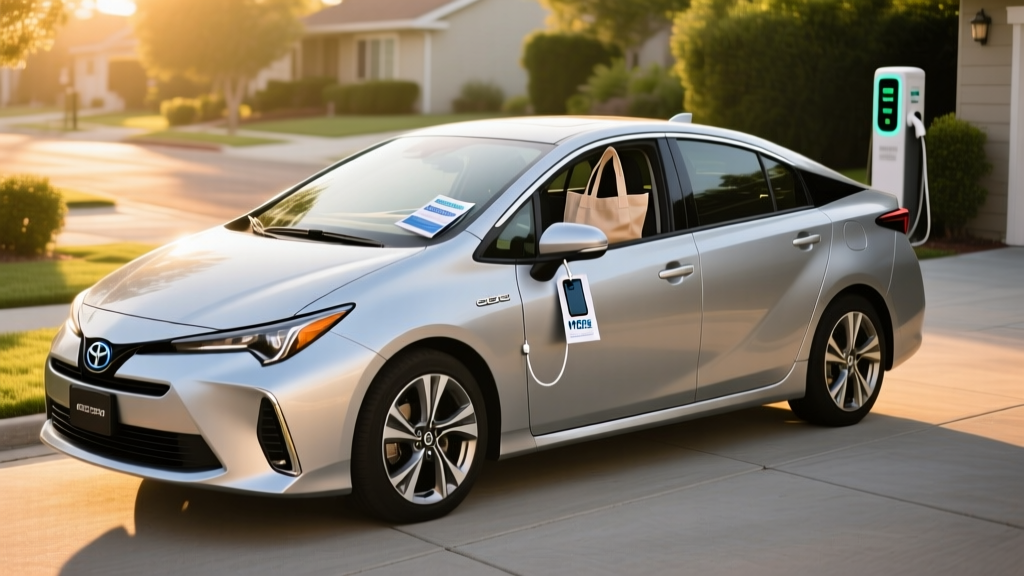
The Toyota Prius has defined the hybrid segment for over two decades, and the 2026 model continues to set the bar for fuel efficiency in a non-plug-in vehicle. With an EPA-estimated 57 MPG combined on the LE trim, the Prius remains the benchmark buyers reference when searching for toyota prius hybrid mpg data. But sticker numbers don't tell the full story — real-world driving patterns, climate, and trim-level weight all shift the equation. This guide breaks down every efficiency figure, powertrain spec, and ownership cost you need before signing.
2026 Toyota Prius MPG: EPA Estimates vs. Real-World Results
The EPA publishes separate city, highway, and combined ratings for every trim. Here's how the 2026 Prius lineup stacks up, per fueleconomy.gov:
| Trim | Drivetrain | City MPG | Highway MPG | Combined MPG | Annual Fuel Cost* |
|---|---|---|---|---|---|
| LE | FWD | 57 | 56 | 57 | $850 |
| XLE | FWD | 52 | 52 | 52 | $950 |
| XLE AWD-e | AWD | 49 | 50 | 49 | $1,000 |
| Limited | FWD | 52 | 52 | 52 | $950 |
| Limited AWD-e | AWD | 49 | 50 | 49 | $1,000 |
*Based on 15,000 miles/year at $3.50/gallon regular unleaded. Your costs will vary with local fuel prices.
Real-World MPG: What Owners Actually See
The Prius is one of the rare vehicles where real-world city driving can match or exceed the EPA sticker. Hybrids recapture energy during stop-and-go driving through regenerative braking, so urban commuters frequently report 58–62 MPG on the LE trim in moderate climates. Highway driving is a different story: at sustained 75+ MPH speeds, aerodynamic drag reduces efficiency. Expect 48–52 MPG on the highway in the LE, and roughly 44–48 MPG in the heavier Limited AWD-e.
HEV vs. PHEV: Which Prius Is Right for You?
Toyota offers the Prius in two distinct powertrain flavors. Understanding the difference is critical before you shop:
| Attribute | Prius (HEV) | Prius Prime (PHEV) |
|---|---|---|
| Plug-in charging required? | No — refuels at gas station only | Optional — charges via plug or gas engine |
| EPA combined MPG (gas only) | 57 (LE) | 48 (SE) |
| Electric-only range | N/A (very low-speed only) | 44 miles (SE) |
| Combined MPGe (electric + gas) | N/A | 127 MPGe |
| Battery capacity | ~1.0 kWh (small buffer) | 13.6 kWh usable |
| Level 2 charge time (0–100%) | N/A | ~4 hours |
| DC fast charging | N/A | No |
| Combined horsepower | 194 hp (FWD) / 196 hp (AWD) | 220 hp |
| Starting MSRP | ~$29,450 | ~$34,675 |
| Federal tax credit (§30D) | Not eligible | Up to $3,750* |
*Prius Prime §30D credit amount depends on critical-mineral and battery-component sourcing requirements. Confirm current eligibility at irs.gov and with your tax professional. The credit can be transferred to the dealer at point of sale.
How Far Can the Prius Prime Go on Electric Only?
The 2026 Prius Prime SE delivers an EPA-estimated 44 miles of electric-only range. The XSE and XSE Premium trims, which ride on larger 19-inch wheels, drop to approximately 38–40 miles. For commuters with a sub-40-mile round trip and home Level 2 charging, this means months of gas-free daily driving. Once the battery depletes, the Prime operates as a conventional hybrid, returning 48 MPG combined.
Powertrain and Performance Specs
| Spec | Prius HEV (FWD) | Prius HEV (AWD-e) | Prius Prime (PHEV) |
|---|---|---|---|
| Engine | 2.0L 4-cylinder | 2.0L 4-cylinder | 2.0L 4-cylinder |
| Combined net horsepower | 194 hp | 196 hp | 220 hp |
| 0–60 mph | ~7.2 sec | ~7.0 sec | ~6.6 sec |
| Transmission | eCVT | eCVT | eCVT |
| Towing capacity | Not rated | Not rated | Not rated |
The current-generation Prius uses Toyota's fifth-generation hybrid system with a 2.0-liter Dynamic Force engine. The AWD-e models add a rear-mounted electric motor that engages automatically during acceleration and low-traction conditions up to approximately 43 MPH. The Prime's larger battery and more powerful motor combination bumps output to 220 hp, making it the quickest Prius Toyota has ever produced.
Battery Reliability, Warranty, and Replacement Cost
Is the Prius Hybrid Battery Reliable?
Toyota's hybrid synergy drive system has accumulated billions of real-world miles across multiple generations, and the Prius is widely regarded as one of the most reliable vehicles in Toyota's lineup. The current generation uses a lithium-ion hybrid battery pack, which is lighter and more energy-dense than the nickel-metal hydride (NiMH) packs in older models.
Hybrid batteries in the Prius are not stressed the same way full EV batteries are — they operate in a narrow state-of-charge window (roughly 40–80%), which significantly reduces degradation. Many Prius taxis and fleet vehicles have exceeded 200,000 miles on the original hybrid battery.
Battery Replacement Cost
If your hybrid battery does fail outside of warranty, expect to pay between $2,500 and $4,500 for a replacement, depending on whether you choose a new OEM pack, a refurbished unit, or a third-party option. Independent hybrid-specialty shops often offer refurbished battery installations for $2,000–$3,000. For the Prius Prime's larger 13.6 kWh pack, replacement costs are higher — typically $5,000–$8,000 out of warranty.
Pricing, Trims, and Tax Credit Eligibility
| Trim | Drivetrain | MSRP (approx.) | Federal Tax Credit |
|---|---|---|---|
| LE | FWD | $29,450 | None (HEV) |
| XLE | FWD | $33,400 | None (HEV) |
| XLE AWD-e | AWD | $34,800 | None (HEV) |
| Limited | FWD | $36,700 | None (HEV) |
| Limited AWD-e | AWD | $38,100 | None (HEV) |
| Prime SE | FWD | $34,675 | Up to $3,750* |
| Prime XSE | FWD | $37,975 | Up to $3,750* |
| Prime XSE Premium | FWD | $40,675 | Up to $3,750* |
Critical tax credit note: The conventional Prius HEV does not qualify for the federal §30D clean vehicle credit — that credit is reserved for plug-in vehicles (BEVs and PHEVs). The Prius Prime may qualify for a partial credit (up to $3,750) depending on current battery-sourcing and critical-mineral requirements. Eligibility also depends on your adjusted gross income (capped at $150K single / $300K joint) and the vehicle's MSRP (capped at $55,000 for sedans). Always verify current rules at irs.gov and consult a tax professional.
Who Should Buy the Prius HEV vs. Prime vs. a Full EV?
Choose the Prius HEV if:
- You have no access to home or workplace charging
- Your budget is under $35,000
- You want maximum MPG with zero behavior change
- You drive a mix of city and highway miles
- You want the lowest total cost of ownership in a non-EV
Choose the Prius Prime (PHEV) if:
- You can install a Level 2 charger at home
- Your daily commute is under 40 miles round-trip
- You want gas-free weekday driving + road-trip flexibility
- You want the federal tax credit (if eligible)
- You're not ready to commit to a full EV
Choose a full BEV if:
- You have reliable home Level 2 charging
- You want zero tailpipe emissions and minimal maintenance
- Your daily driving is under 250 miles
- You want the full $7,500 federal credit (on eligible models)
- You want the lowest per-mile "fuel" cost
5-Year Cost of Ownership Snapshot
| Cost Category | Prius LE (HEV) | Prius Prime SE (PHEV) | Gas Sedan Baseline (30 MPG) |
|---|---|---|---|
| Fuel / electricity | $4,250 | $2,800** | $8,750 |
| Maintenance | $2,100 | $1,900 | $3,200 |
| Insurance (avg.) | $6,500 | $6,800 | $6,000 |
| Depreciation (est.) | $9,200 | $10,500 | $10,800 |
| Federal tax credit | $0 | -$3,750 | $0 |
| Total (approx.) | $22,050 | $18,250 | $28,750 |
**Assumes 70% of Prime miles driven on electricity at $0.14/kWh. Actual costs vary by driving pattern, electricity rate, and credit eligibility.
Frequently Asked Questions
How many MPG does the 2026 Toyota Prius get?
The 2026 Prius LE achieves an EPA-estimated 57 MPG city, 56 highway, and 57 combined. Higher trims (XLE, Limited) return 52 combined. The AWD-e variants drop to 49 combined. In real-world city driving, many owners report matching or exceeding the EPA city figure thanks to regenerative braking.
Does the Prius hybrid need to be plugged in?
No. The conventional Prius HEV charges its small battery entirely through the gas engine and regenerative braking. You refuel at a gas station like any other car. Only the Prius Prime (PHEV) benefits from plug-in charging — and even the Prime can operate purely on gasoline if you never plug it in.
How long does the Toyota Prius hybrid battery last?
Toyota warranties the hybrid battery for 10 years or 150,000 miles in all states. In practice, many Prius hybrid batteries last well beyond 200,000 miles because the system keeps the battery in a narrow, low-stress charge window. Replacement, if needed out of warranty, typically costs $2,500–$4,500.
Is the Prius Prime worth the extra cost over the regular Prius?
It depends on your charging access and commute. If you can charge at home and your daily driving is under 40 miles, the Prime lets you drive almost entirely on electricity on weekdays while keeping a gas engine for road trips. The potential $3,750 federal tax credit narrows the price gap. If you can't charge at home, the standard HEV is the better value.
Does the Toyota Prius qualify for a federal tax credit?
The conventional Prius HEV does not qualify for the §30D federal clean vehicle credit — it's not a plug-in vehicle. The Prius Prime PHEV may qualify for up to $3,750, subject to battery-sourcing requirements, your income level, and MSRP caps. Check current eligibility at irs.gov and confirm with your tax advisor before purchase.
How does Prius MPG compare to a full EV's efficiency?
A full EV like the Tesla Model 3 or Hyundai Ioniq 6 achieves 130–140 MPGe combined and costs roughly $0.04–$0.06 per mile to charge at home (at $0.14/kWh). The Prius LE at 57 MPG costs roughly $0.06–$0.07 per mile on gasoline (at $3.50/gallon). The per-mile cost gap is narrow, but EVs eliminate oil changes, have fewer moving parts, and produce zero tailpipe emissions. The Prius wins when home charging isn't available or you frequently drive 300+ mile trips.