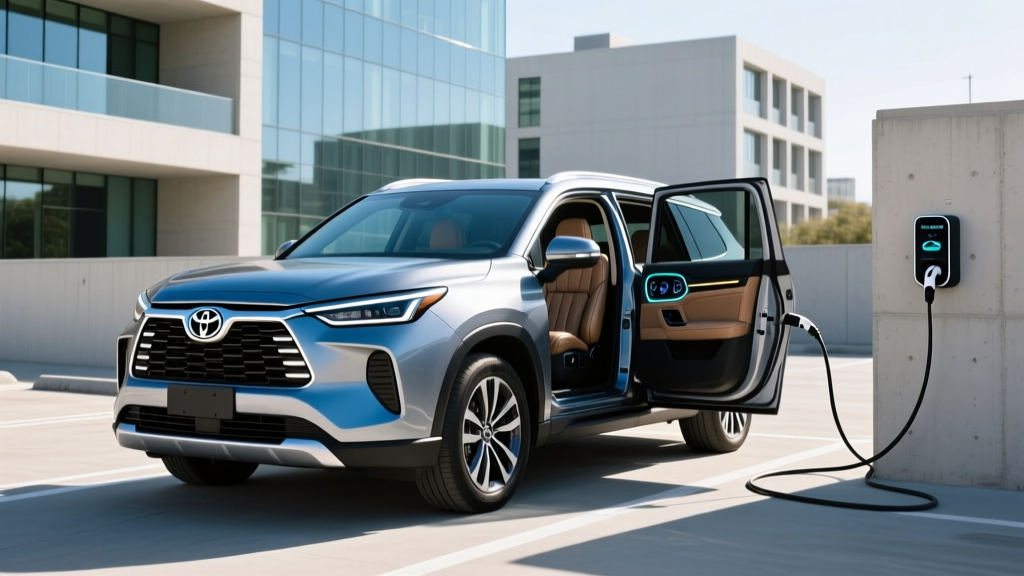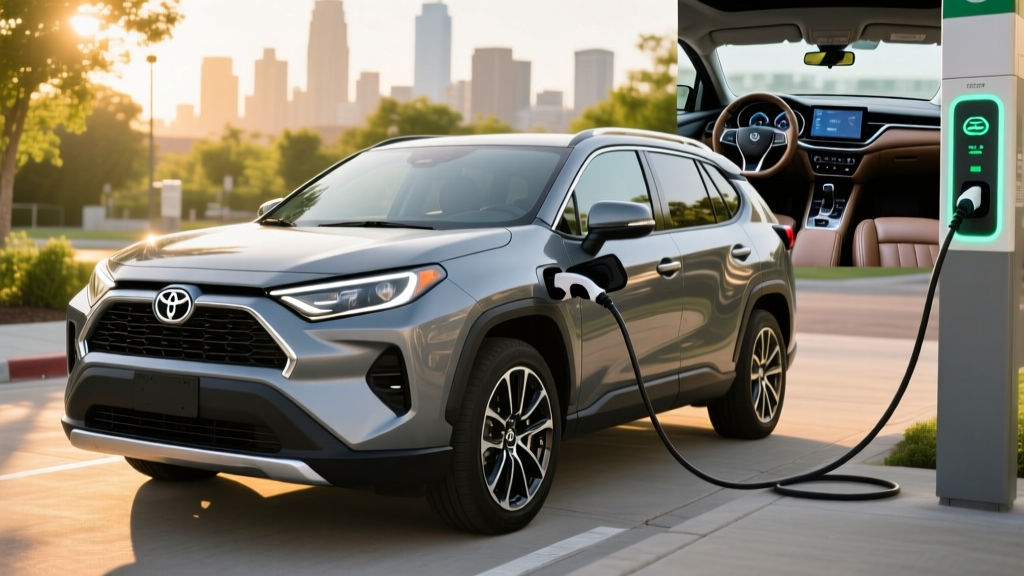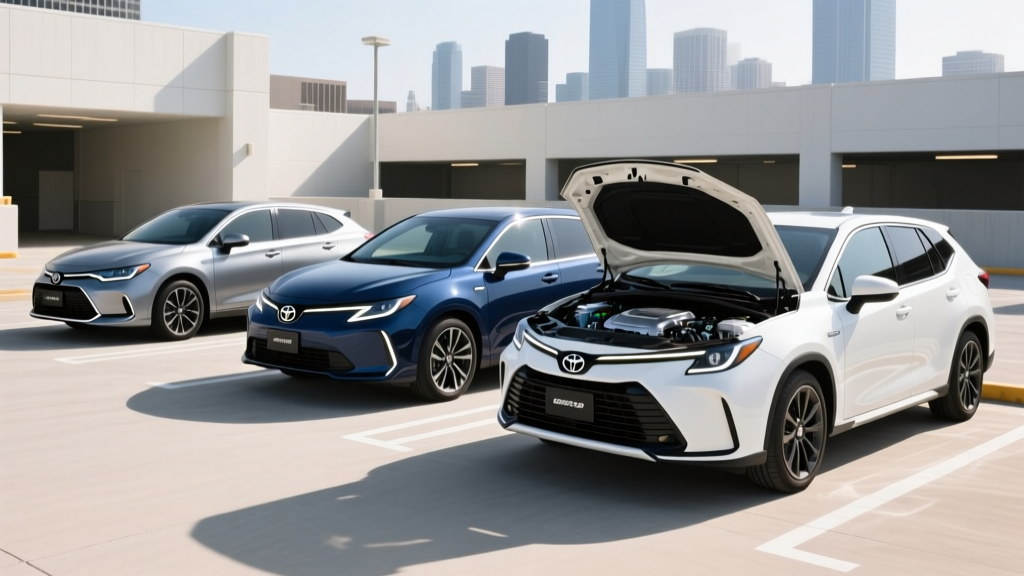
Toyota didn't just popularize the hybrid — it built a 2026 lineup so thoroughly electrified that nearly every nameplate in its showroom offers some form of hybridization. For buyers searching through the hybrid cars of Toyota, the decision isn't whether Toyota makes a hybrid that fits their life. It's figuring out which one, and whether a conventional hybrid (HEV) or a plug-in hybrid (PHEV) is the smarter buy.
This guide breaks down the current Toyota hybrid and PHEV lineup with exact EPA figures, real-world efficiency notes, battery warranties, pricing, and federal tax credit eligibility — everything you need before signing a purchase agreement.
HEV vs PHEV: Know the Difference Before You Shop
Toyota sells two fundamentally different electrified powertrains, and confusing them is the single most common mistake buyers make at the dealership.
| Feature | Conventional Hybrid (HEV) | Plug-In Hybrid (PHEV) |
|---|---|---|
| Plugs in to charge? | No — self-charging via regen & engine | Yes — has a charge port |
| Electric-only driving | Very short, low-speed only (~1 mi) | 25–44 miles at full highway speed |
| Battery size | ~1–2 kWh (small buffer) | 13.6–18.1 kWh usable |
| Federal tax credit | None | Up to $7,500 (§30D, subject to sourcing & income rules) |
| Home charging needed? | No | Strongly recommended for full benefit |
| Best for | Apartment dwellers, no home charging | Homeowners with a garage outlet or Level 2 |
If you cannot install any form of home charging, an HEV is the correct choice. A PHEV without regular plug-in access becomes a heavier, slightly less efficient conventional hybrid — you pay a premium for electric range you never use.
2026 Toyota Hybrid Lineup: EPA MPG and Pricing at a Glance
The table below captures the core Toyota hybrid passenger vehicles for the 2026 model year. All MPG figures are EPA-published estimates sourced from fueleconomy.gov.
| Model | Type | Combined HP | EPA City / Hwy / Combined MPG | PHEV EV Range | Starting MSRP |
|---|---|---|---|---|---|
| Prius | HEV | 194 hp (FWD) / 196 hp (AWD) | 57 / 56 / 57 | — | $29,445 |
| Prius Prime | PHEV | 220 hp | 52 / 48 / 52 (hybrid) · 127 MPGe (EV) | 44 mi | $34,395 |
| Camry Hybrid | HEV | 225 hp (FWD) / 232 hp (AWD) | 51 / 49 / 51 | — | $30,490 |
| Corolla Hybrid | HEV | 138 hp | 53 / 46 / 50 | — | $24,795 |
| RAV4 Hybrid | HEV | 219 hp | 41 / 38 / 39 | — | $33,575 |
| RAV4 Prime | PHEV | 302 hp | 40 / 36 / 38 (hybrid) · 94 MPGe (EV) | 42 mi | $44,915 |
| Highlander Hybrid | HEV | 243 hp | 36 / 35 / 36 | — | $42,220 |
| Grand Highlander Hybrid | HEV | 243 hp | 36 / 34 / 35 | — | $46,780 |
| Sienna | HEV | 245 hp | 36 / 36 / 36 | — | $39,285 |
Two takeaways from this table. First, the Prius remains the efficiency king — 57 MPG combined is genuinely difficult to beat at any price point. Second, Toyota's PHEVs (Prius Prime and RAV4 Prime) carry meaningful premiums but deliver 42–44 miles of electric-only range, enough to cover most daily commutes without burning a drop of gasoline.
Real-World MPG: What the EPA Sticker Doesn't Tell You
Toyota hybrids, like all hybrids, benefit from regenerative braking and low-speed electric assist. This means real-world city MPG often exceeds the EPA city estimate, while highway driving — where the engine runs continuously — tends to land slightly below the EPA highway number.
In mixed suburban driving with moderate stop-and-go, owners of the Camry Hybrid and Prius routinely report 48–54 MPG on forums and fuel-tracking apps, aligning with or slightly exceeding EPA figures. Highway-only trips at 75+ mph typically yield 44–48 MPG for the Prius and 42–46 for the Camry Hybrid.
PHEV Deep Dive: Prius Prime and RAV4 Prime Electric Range, Charging, and Battery
Toyota's two plug-in hybrids share a philosophy — modest battery, long electric range, no DC fast charging — but target different buyers.
| Spec | Prius Prime | RAV4 Prime |
|---|---|---|
| Usable battery | 13.6 kWh (lithium-ion) | 18.1 kWh (lithium-ion) |
| EPA electric-only range | 44 miles | 42 miles |
| Combined range (EV + gas) | ~440 miles | ~440 miles |
| Level 1 charge time (120V, 12A) | ~11 hours | ~12 hours |
| Level 2 charge time (240V, 32A) | ~4 hours | ~2.5 hours |
| DC fast charging | No | No |
| Charge port | J1772 | J1772 |
| Combined system output | 220 hp | 302 hp |
| 0–60 mph | 6.6 sec | 5.7 sec |
The absence of DC fast charging is a deliberate Toyota engineering choice. The batteries are sized for overnight Level 2 home charging and daily commuting — not road-trip fast charging. On longer trips, both vehicles seamlessly switch to hybrid mode, and their hybrid MPG remains competitive (52 combined for Prius Prime, 38 for RAV4 Prime).
For PHEV owners, a Level 2 home charger (240V, ~$500–$800 installed for a basic 32-amp unit) unlocks the full value proposition. Relying solely on a 120V outlet means 11–12 hours for a full charge — feasible only if the car sits parked overnight for extended periods.
Battery Warranty, Lifespan, and Replacement Costs
Hybrid battery longevity is the top concern for used-hybrid buyers and long-term owners. Toyota addresses this with one of the strongest warranties in the segment.
10 years / 150,000 miles — whichever comes first.
Covers the hybrid traction battery against defects and capacity loss below a defined threshold.
Applies to all Toyota HEV and PHEV models. Transferable to subsequent owners.
In practice, Toyota hybrid batteries have proven exceptionally durable. Data from fleet operators and long-term owners shows that first-generation Prius batteries routinely lasted 150,000–200,000 miles before meaningful degradation. Modern lithium-ion packs in the current-generation Prius, Camry, and RAV4 hybrids are expected to match or exceed the vehicle's useful life.
If replacement is needed out of warranty, expect the following approximate costs at a Toyota dealer:
- Prius / Corolla Hybrid: $2,500–$3,500
- Camry Hybrid / RAV4 Hybrid: $3,000–$4,500
- Prius Prime / RAV4 Prime (larger PHEV pack): $5,000–$7,000
Independent hybrid specialists and refurbished battery options can reduce these costs by 30–50%, though warranty coverage varies. For most buyers, the 10-year/150,000-mile warranty eliminates this concern entirely during typical ownership.
Tax Credits: Which Toyota Hybrids Qualify?
This is where the HEV vs PHEV distinction directly affects your wallet.
- Conventional hybrids (Prius, Camry Hybrid, Corolla Hybrid, RAV4 Hybrid, Highlander Hybrid, Sienna): Do NOT qualify for the federal §30D new clean vehicle credit. These vehicles have no plug and are not classified as plug-in electric vehicles under IRS rules.
- Prius Prime and RAV4 Prime (PHEVs): May qualify for up to $7,500 under §30D, but eligibility depends on three factors — battery critical-mineral sourcing, buyer adjusted gross income, and MSRP caps ($55,000 for sedans, $80,000 for SUVs/vans). As of the 2026 tax year, the Prius Prime (MSRP ~$34,395–$40,595) meets the MSRP cap. The RAV4 Prime (MSRP ~$44,915–$48,690) also falls under the $80,000 SUV cap. However, battery-sourcing requirements have tightened significantly since 2024, and not all PHEV configurations may meet the critical-minerals threshold.
The §30D credit can now be transferred to the dealer at point of sale, reducing your purchase price directly rather than waiting for a tax refund. Always verify current eligibility on IRS.gov before signing — sourcing rules and eligible-vehicle lists are updated periodically, and a tax professional should confirm your personal eligibility based on income and filing status.
Who Should Buy a Toyota Hybrid vs a Full EV or Gas Car?
Choose a Toyota HEV (Prius, Camry Hybrid, RAV4 Hybrid) if:
- You rent or live in a condo/apartment with no charging access
- You want maximum MPG with zero behavioral change — no plugging in, no route planning
- Your budget is under $40,000 and you want proven long-term reliability
- You regularly take long road trips and don't want to plan around charging stations
Choose a Toyota PHEV (Prius Prime, RAV4 Prime) if:
- You have a garage or driveway where you can install a Level 2 charger (or even a dedicated 120V outlet)
- Your daily commute is under 40 miles round-trip — you'll drive on electricity most days
- You want EV-like daily driving with the safety net of a gas engine for weekend trips
- You may qualify for the §30D federal tax credit, narrowing the price gap with the HEV
Choose a full battery-electric vehicle (BEV) instead if:
- You have reliable home Level 2 charging and your daily driving is under 250 miles
- You want to eliminate gasoline entirely and minimize maintenance (no oil changes, no engine)
- You're eligible for the full §30D credit on a qualifying BEV, making total cost of ownership competitive
- You're comfortable with public DC fast charging for road trips, or you fly/drive short distances
Pros and Cons of the 2026 Toyota Hybrid Lineup
Pros
- Class-leading reliability — Toyota's hybrid system is the most proven in the industry with 25+ years of refinement
- Excellent real-world MPG — Prius at 57 combined, Camry Hybrid at 51, with city driving often exceeding EPA estimates
- 10-year / 150,000-mile hybrid battery warranty across the entire lineup
- No charging infrastructure required for HEVs — works with your existing routine
- PHEVs offer 42–44 miles of electric-only range, covering most commutes gas-free
- Strong resale value — Toyota hybrids consistently rank at the top of retained-value studies
Cons
- No DC fast charging on PHEVs — Level 2 only, limiting on-the-go flexibility
- RAV4 Prime pricing starts near $45,000 — a significant premium over the RAV4 Hybrid
- Conventional hybrids do not qualify for the federal §30D tax credit
- Infotainment and driver-assist tech is functional but less advanced than some competitors
- Highlander Hybrid and Grand Highlander Hybrid MPG (35–36 combined) trails smaller models substantially
Frequently Asked Questions
How many MPG does the best Toyota hybrid get?
The 2026 Toyota Prius achieves an EPA-estimated 57 MPG combined (57 city / 56 highway). The Corolla Hybrid follows at 50 combined, and the Camry Hybrid at 51 combined. Real-world city driving often yields 2–5 MPG above the EPA estimate thanks to regenerative braking, while sustained highway speeds above 70 mph typically return 2–4 MPG below the EPA highway figure.
How far can the Toyota PHEVs go on electric only?
The Prius Prime delivers 44 miles of EPA-rated electric-only range, while the RAV4 Prime provides 42 miles. Both can sustain highway speeds in EV mode — this isn't limited to neighborhood driving. In cold weather (below 30°F), expect roughly 35–38 miles from the Prius Prime and 33–36 from the RAV4 Prime due to battery efficiency loss and cabin heating demands.
Do Toyota hybrids need to be plugged in?
No. Conventional Toyota hybrids (Prius, Camry Hybrid, Corolla Hybrid, RAV4 Hybrid, Highlander Hybrid, Sienna) charge their own batteries through regenerative braking and the gasoline engine. You never plug them in. Only the PHEV models — Prius Prime and RAV4 Prime — have a charge port and benefit from plugging in.
Are Toyota hybrids reliable, and what does battery replacement cost?
Toyota's hybrid powertrain is among the most reliable in the automotive industry, backed by over 25 years of continuous development since the original 1997 Prius. The hybrid battery is warrantied for 10 years / 150,000 miles. Out-of-warranty replacement costs range from approximately $2,500 for a Prius to $7,000 for a RAV4 Prime PHEV pack. Most owners never need a replacement during typical ownership.
Does any Toyota hybrid qualify for a federal tax credit?
Only Toyota's plug-in hybrids — the Prius Prime and RAV4 Prime — may qualify for the federal §30D new clean vehicle credit of up to $7,500. Eligibility depends on battery critical-mineral sourcing compliance, buyer income limits ($150,000 single / $300,000 joint AGI), and MSRP caps. Conventional Toyota hybrids do not qualify. Verify current eligibility at IRS.gov and consult a tax professional.
Should I buy a Toyota hybrid or a full electric vehicle?
If you lack home charging access, drive more than 300 miles regularly, or want the lowest-complexity ownership experience, a Toyota HEV is the right call. If you can charge at home and want to eliminate most gasoline use while retaining road-trip flexibility, a Toyota PHEV bridges the gap. A full BEV (like a Tesla Model Y or Hyundai Ioniq 5) makes sense if you have home Level 2 charging, your daily driving stays under 250 miles, and you're ready to adopt public fast charging for longer trips.
The hybrid cars of Toyota in 2026 represent the most mature, proven hybrid lineup on the market. Whether you choose a 57-MPG Prius that never needs a plug or a RAV4 Prime that covers your commute on electricity and your road trips on gasoline, Toyota's hybrid system has the longevity data and warranty backing to make the purchase a low-risk decision. The real question isn't whether a Toyota hybrid is worth it — it's which one fits your daily driving pattern.